Monday, June 22, 2020

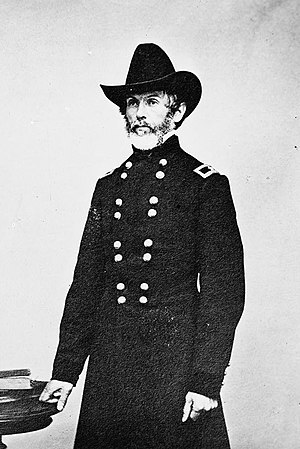
Profile of Isaac Newton Teagarden

       
Anti-Slavery Image
LOC


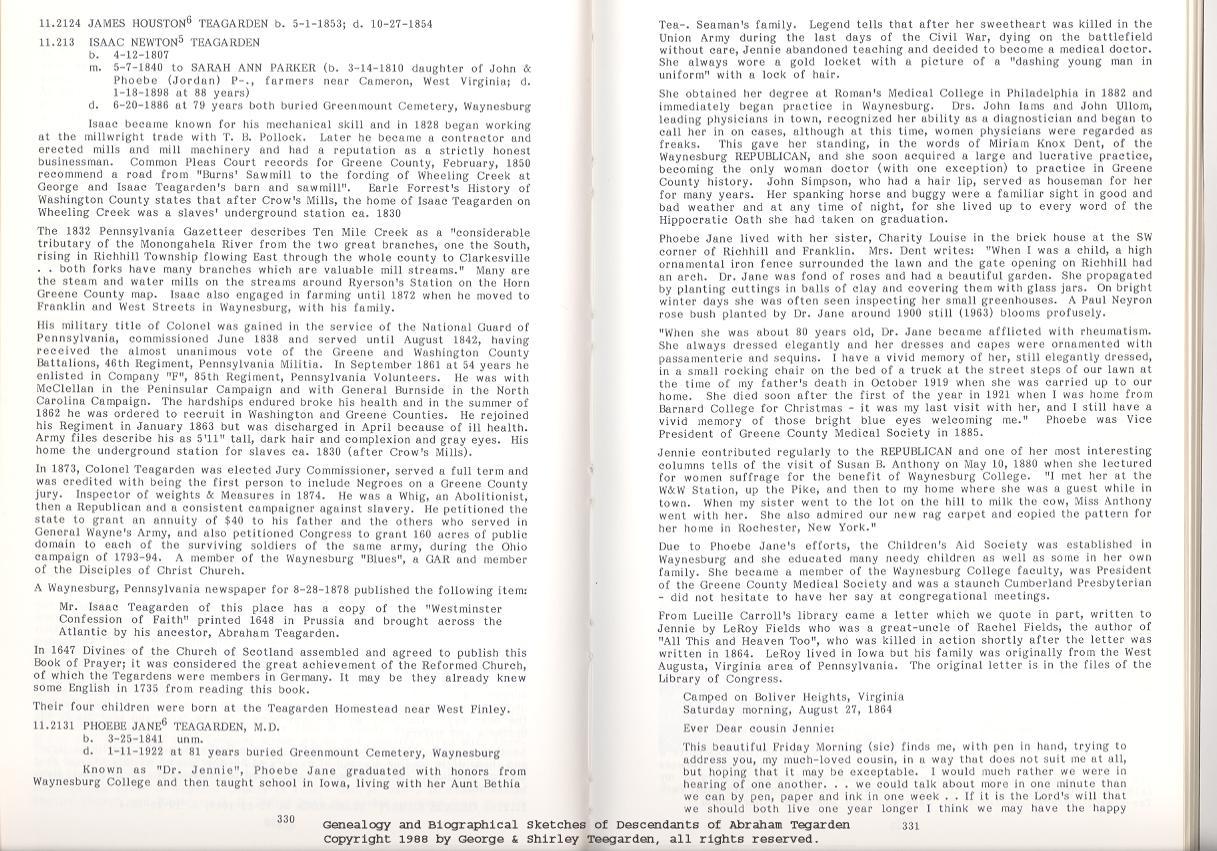
          The oldest private to enlist into the 85th Pennsylvania in the fall of 1861 appears to have been Isaac Newton Teagarden of Greene County. Teagarden was 54 years old when he volunteered to join Captain John Morris' Company F. Teagarden served in the regiment for 18 months before receiving a medical discharge on April 4, 1863 at New Bern, North Carolina.  Prior to his discharge, he had been sent home to western Pennsylvania on a recruiting mission. He returned to his regiment in early 1863 in North Carolina; but at his age, the rigors of army life proved to be too onerous, and he was discharged three months later. 
LOC

   
        Why would someone well into his sixth decade volunteer fight in the Civil War? For Teagarden, unlike most of the younger men who enlisted to preserve the Union,  the reason seems to be the cause of abolition. Even though the freeing of the slaves was not a direct cause of the war, Teagarden surely saw the conflict as an opportunity to permanently end the "peculiar institution."
      Teargarden was a well-known citizen of Greene County in the decades prior to the war, although he was not necessarily a popular one. 


Waterwheel
Practical Hand Book for Millwrights 1910
      Teagarden was born in 1807 on the family homestead along Wheeling Creek in Richhill Township. He had eleven brothers and sisters. A brief biographical entry noted that Teagarden, "was educated in the public schools, and passed his early life on the home farm. In 1828, having reached his majority, he began working at the millwright trade under the instruction of T. P. Pollock, with whom he continued several years, becoming an expert workman. After leaving the employ of his instructor he began taking contracts for the erection of mills and mill machinery, and became one of the most noted of the early millwrights…His services were constantly in demand and many of the mills of those early days in Greene and Washington counties were monuments to his skill as a builder. Several years prior to the civil war he abandoned his trade and contracting business, returning to his boyhood vocation, farming, carrying on extensive operations until 1872, when he removed to Waynesburg, which was his residence until death.
        Teagarden was a member of the 46th Pennsylvania State Militia between 1837-1842. The men of this volunteer military unit hailed from Greene and Washington Counties. Teagarder was overwhelmingly elected  to serve as the unit's colonel for a period of time. Normally, someone with Teagarden's military background could have expected an offer to be an  officer on the level of lieutenant or even captain at the start of the Civil War. But due to Teagarden's political beliefs, he was probably shunned as an officer candidate and had to enter the service as a private. 
        In the 1840's, Teagarden helped found a local chapter of the Abolition Party. He must have realized that his views would be extremely suspect in his home county. With state borders to its south and west along the slave state of Virginia, there was fear than slave emancipation would cause an influx of cheap labor into Greene County that would have a negative impact on the white residents there. 
        But Teagarden was more than just an early spokesman for emancipation. His  home was
American Anti-Slavery Almanac 1838
reportedly a stopover for the Underground Railroad. He later joined the Republican Party in 1856; a main plank of the new party was opposition to the spread of slavery into western territories. The biographical entry stated that, "Prior to the formation of the Republican party, Colonel Teagarden was a Whig and strongly opposed to slavery, ranking among the then despised Abolitionists. He voted the Abolition ticket, when there were but three others in Greene county to do so. Newspapers and periodicals were then fewer in number and this deficiency was supplied by the local debating schools. In the schoolhouses and some of the churches in western Greene and southwestern Washington counties he met the champions of slavery, both preachers and laymen in debate, and while not eloquent, he was a most forceful convincing debater, and through these debates did much to create, build up and strengthen anti-slavery sentiment" 
      Following the war, with the Republican Party in ascendancy in Pennsylvania (if not Greene County, a Democrat Party stronghold), Teagarden was appointed Sealer of Weights and Measures and held this office from 1874-1883.
 

     Significantly, Teagarden was elected to be Jury Commissioner for Greene County in 1873; Teagarden saw to it that African-Americans in the county could serve on juries for the first time.
         "In all official positions, whether military or civil Colonel Teagarden was strict and fearless in the performance of duty, never swerving to gain the applause of men. The censure and odium he incurred when he placed the names of colored men in the jury wheel, but served to render him more zealous of their rights and privileges in the future. His comrades of John F. McCullough Post, Grand Army of the Republic, bore him to his last resting place, the military company, Waynesburg Blues, acting as escort.” 
            Teagarden and his wife, Sarah Ann Parker Teagarden, had three children: Phoebe Jane, Charity Louise, a teacher and John, a lawyer). Dr. Jane Teagarden was the first female doctor in Waynesburg, and for many years, the only female physician in Greene County. Captain John Parker Teagarden continued the family tradition of military service by serving in the 28th Pennsylvania Volunteers during the Spanish-American War.
       Isaac Newton Teagarden died on June 20, 1886 at the age of 79 and is buried in the Green Mount Cemetery in Waynesburg, Greene County. 

Monday, June 15, 2020

"If I Never Get Home, I Hope to Meet You in Heaven."

  •          
  • Clarksville, Greene County
    from J.A. Caldwell Greene County 1876
    (Pryor household may be in pink section of map)


            One of the saddest stories in the history of the 85th Pennsylvania was that of Wilson and Robert Pryor. They were father and son, both members of Company D from Clarksville, Greene County. The remaining members of their family, particularly Wilson's wife, Catherine, were dealt a cruel fate during the course of the war.

          Wilson and Robert enlisted together into Company D of the 85th Pennsylvania in September of 1861. Wilson was 49 years of age; his son was 18. They served in the regiment together from training camp  in Uniontown, PA,  to fort construction in Washington, DC and  through the Peninsula Campaign in Virginia.

      There are hints that young Robert was the male figurehead of the family for his mother and younger siblings even before the pair went off to war. Wilson Pryor seems to have had an alcohol problem for many years before his enlistment. Robert may have wanted his father in Company D with him to perhaps help him cope with life; their service would also provide a steady income in order to send money home to Clarksville to support the rest of the family.

        Wilson Pryor apparently was ailing during the Peninsula Campaign. Robert wrote home to his mother sometime in the summer of 1862 that, "Pap [Wilson] wants you to try and stay where you are till he gets home if you can. That is if he ever gets home. I hope to God we may both get home safe again. If I ever get home safe you shall never want for anything, but if I never get home I hope to meet you in heaven."

        After 14 months in the regiment, Wilson Pryor was sent home on a medical discharge in early 1863. Mr. Pryor was in poor health when he died a few months later on June 4, 1863. The cause of death was an apparent suicide by hanging in his hometown. He was buried in the Burson Cemetery in Clarksville, Greene County.

         A local newspaper recorded Pryor's death in this blunt manner.  Wilson Prior of Clarksville, in this [Greene] County, committed suicide in an old, unoccupied dwelling of that village on Thursday last. It is supposed he was laboring under mental aberration. His body was not found till Monday morning, when an inquest was held. The deceased was a returned volunteer, and left a large family of children.”'

        In the months between is father's discharge and his death, Mrs. Pryor had to go to efforts to conceal the money sent home by her son. Catherine later stated in an affidavit that Wilson Pryor "...was of intemperate habits [drinking] and that in order to prevent him from squandering the money sent by Robert Pryor, her said son, it was necessary for her to conceal the fact of having received said money from her husband."


Harper's Weekly  February 28,  1863

           The affidavit also stated that Robert was supporting his family even before joining the 85th Pennsylvania regiment. "[he contributed]...two hundred dollars...by laboring at home for his parents." During his nearly three years in the service, he sent $115 home to Catherine as well. The strain to provide for his mother and siblings only increased in the months following his father's death. Plus Robert had to deal with the harsh conditions of the war itself.


           In the late summer of 1863, with his regiment stationed on Morris Island, SC, Robert and his regiment were digging trenches to prepare for a third assault on Fort Wagner. Robert wrote home that, "We are now in sight of Charleston and its defenses. we go within 100 yards of their forts every night and are very much exposed to their shell and canister. One day there was a shell come over and blowed one man all to pieces and wounded 5 men."


LOC


         Writing from Folly Island, SC in the spring of 1863, Robert discussed with his mother the death of his father. Robert wrote, "You said it was reported around Greene County that Pap tryed to hang himself [while he was] in the army. There is nothing of it. It is a lie...Let me know if you can get a house and a lot of about 3 or 4 acres. I don't want you to go back to the old place."

         Several months later, Robert wrote, "You told me Pap was in his right mind when he killed himself. I don't believe he was or he would not have done it."

         Robert, however, added a warning for his younger brother, David. "Tell David to never touch whiskey, Mother. I want you to raise them children wright. I know you can do it and keep on good terms with all the neighbors...Let's quit talking about Pap."

         Robert Pryor remained with the regiment through the Siege of Charleston, South Carolina, and then the  Bermuda Hundred Campaign in Virginia in 1864. 

        At the Second Battle of Deep Bottom, Robert was captured. He may have been a part of a contingent of troops who, after capturing a Confederate earthwork, became overzealous and pursued the retreating enemy into Confederate lines where they were taken prisoner.

         Robert died in captivity from exposure and malnutrition at the infamous


Andersonville prison camp in Georgia. 

        Along with fellow Company D comrade James Meeks, it was assumed the pair had been killed at Second Deep Bottom. But another captured member of Company D, Joseph Burson, lived long enough upon his release to disclose the fates of Meeks and Pryor to his father.


LOC


        Just prior to his capture, Pryor wrote home to his mother that, "I expect to be home in two months. my time is out the 15 of September, that is when my inlistment runs out."

         Corporal Burson of Company D was exchanged but died on the way back to western Pennsylvania. Catherine Pryor received a letter from Burson's uncle informing him of Robert's death in Andersonville. It said, "I received a letter from my brother last night [Joseph] is lying in bed in Annapolis [hospital]. He tells me your son Robert Pryor is dead. My brother said he died of starvation."  

The fate of Catherine Pryor and her family is unknown.                                                                   


Monday, June 8, 2020

The 85th PA in the Battle of Williamsburg


   [NOTE: A more detailed account of the 85th Pennsylvania at the Battle of Williamsburg, with numerous primary source accounts, is found in my book, Such Hard and Severe Service: The 85th Pennsylvania in the Civil War published by Monongahela Books of Morgantown.] 

          Williamsburg in Virginia is of course well known for a 300-acre living-history 18th century colonial village that is a top tourism attraction in the commonwealth. The former Virginia capital is lesser known as the site of a significant Civil War battle in 1862.
        Perhaps because of the popularity of Williamsburg as a colonial tourist destination, the city's Civil War significance has often been overlooked.


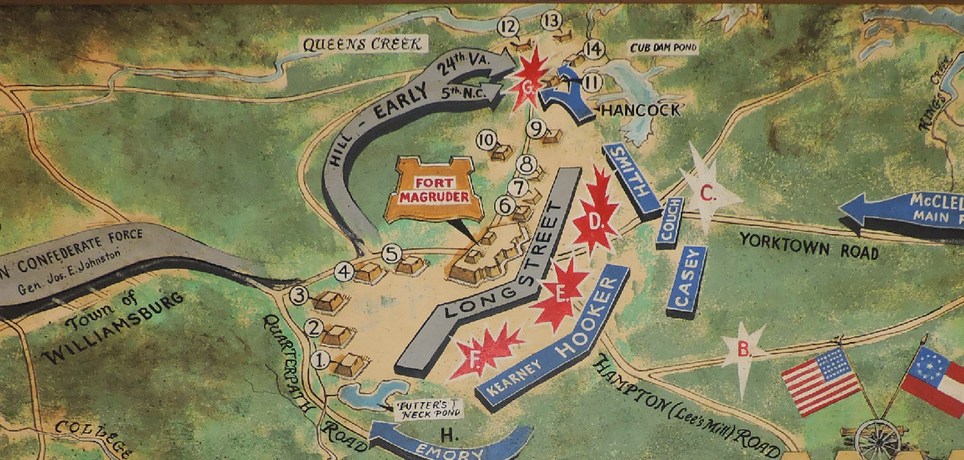
85th PA (green) approaches Fort Magruder
Modern Map Overlay of Williamsburg Battle
Courtesy of
  Williamsburg Battlefield Association
        But that appears to be changing. The American Battlefield Trust website notes that 69 acres of the Civil War battle site have been preserved. The website states, "Much of the battlefield has been lost to development along U.S. Route 60, but historic markers along the side of the highway tell the story of the battle. Fort Magruder, one of the Confederate defensive positions, remains today on Penniman Road east of town  and is marked by a stone monument and some interpretive waysides."
        The Williamsburg Battlefield Association is currently involved in efforts to preserve 29 additional acres of the battlefield with a long-term goal of saving 400 acres of undeveloped land.  
       Williamsburg was the site of the first pitched battle of the the Peninsula Campaign that involved over 70,000 troops. It was also the first engagement for the 85th Pennsylvania, 
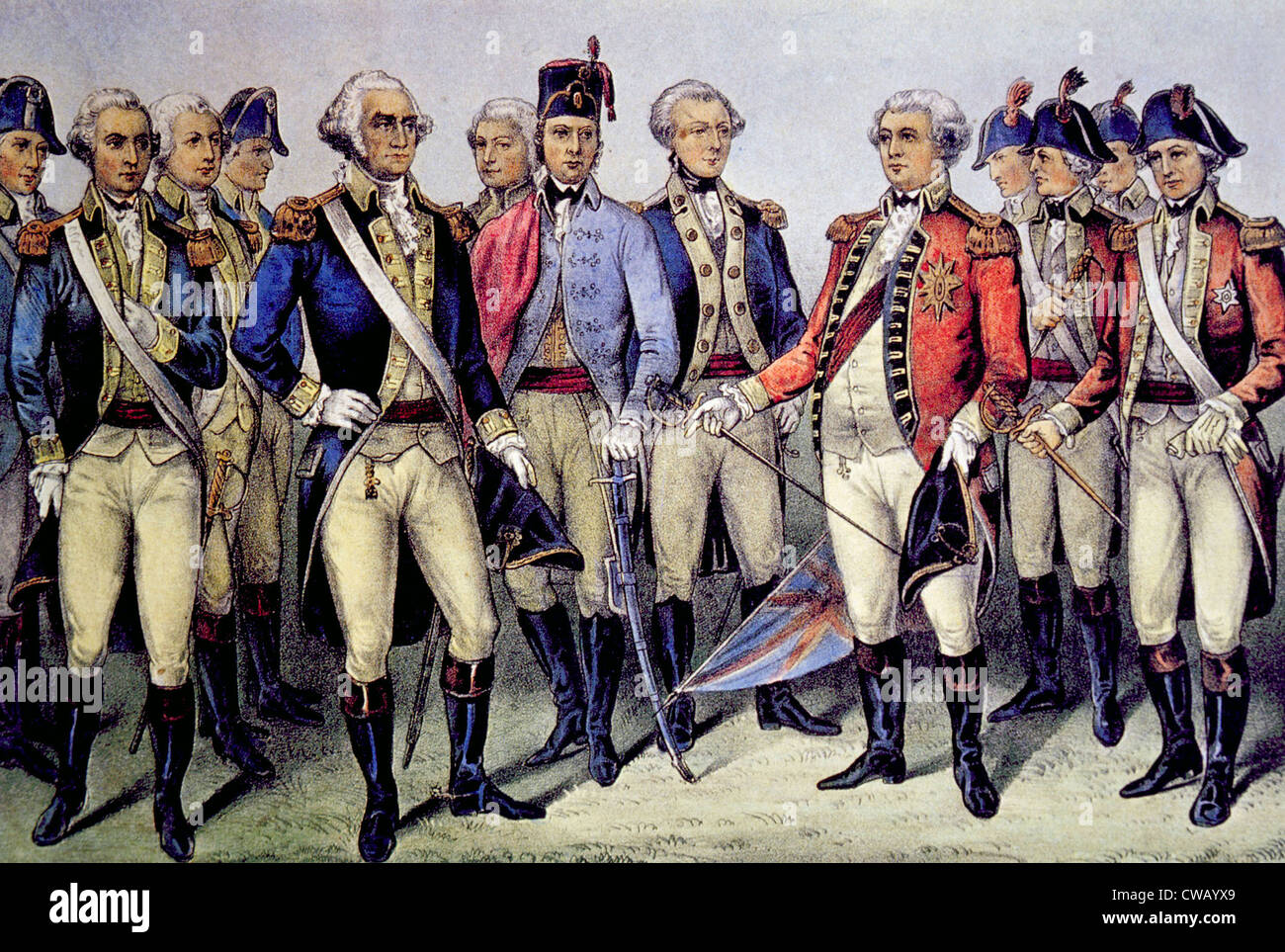
        The battle was fought on May 5, 1862. Major General George B. McClellan had spent a month placing siege guns around Confederate forces at Yorktown. He anticipated bombarding the position into submission and ending the Civil War at the same site where George Washington's Continental Army along with significant French land and sea forces had accomplished a victory over the British 81 years earlier to effectively win the American Revolution.
       But when McClellan opened up a barrage upon Yorktown on May 4, it was discovered that General Joseph Johnston's Confederate command had abandoned the fort, retreating up the Virginia peninsula between the York and James Rivers towards Richmond.
   
Robert Know Sneden 1862 Map of Fort Magruder         LOC
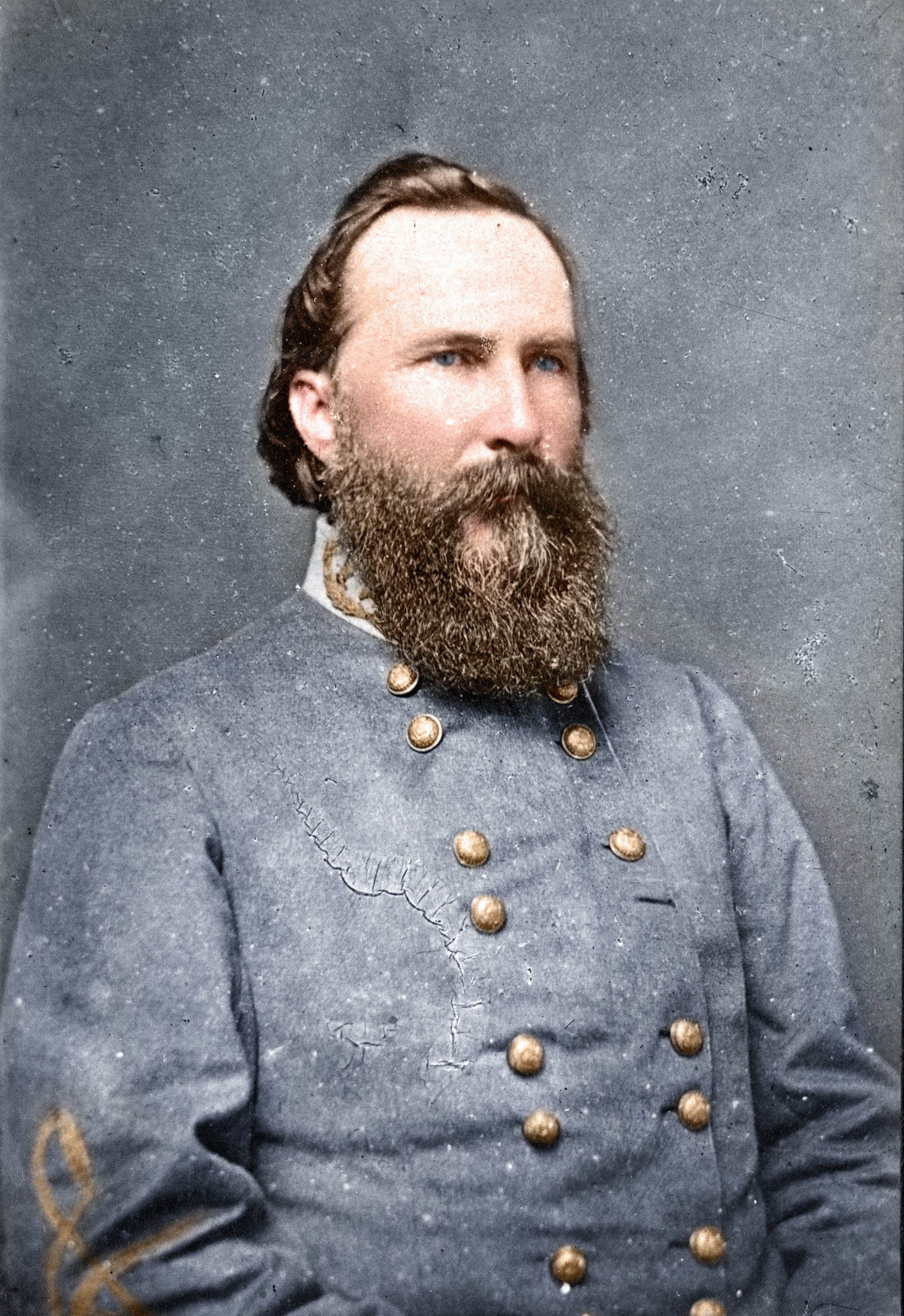
              Confederate General James Longstreet was tasked with delaying McClellan's Army of the Potomac which was in pursuit to allow time for Johnston's supply wagons to clear the area. The battle of Williamsburg, mainly involving the Union divisions of Joseph Hooker and Phillip Kearney, focused around the Confederate position at Fort Magruder, and ended with no decisive winner. Casualties totaled about 4,000 soldiers, about 56% on the Union side.
       The role of the 85th Pennsylvania was minimal. As the battle raged, their regiment was called up in a reserve capacity. They forged ahead to within sight of Fort Magruder and were halted. They fired a musket round at an unseen target through the trees. They were shelled, but most of the Confederate projectiles landed harmlessly behind them.
       The 85th Pennsylvania suffered two casualties. Captain John Morris of Company F suffered a minor injury as he was grazed by a shell fragment in the cheek. However, Sergeant Daniel Miller of Company K lost his legs when hit by another shell. He spent three agonizing weeks in a hospital before finally dying in early June.
       Although they did not play a consequential role, Williamsburg was important to the 85th Pennsylvania for several reasons. First, it was their initial taste of being fired upon and witnessing dead and wounded soldiers.
       Corporal William Elliott Finley described the role of his his regiment.

Corporal William Elliott Finley
from A Soldier's Life (1867)


"Just in front of it [the regiment] lay an open space which must be crossed to gain the woods beyond where the rebels were concealed. Sweeping across this, it caught the enemy's fire. A shell from Fort Magruder went hissing through its ranks and exploding, a fragment struck Captain [John] Morris upon the cheek. He only grew a little whiter and marched sternly on while the blood spurted from the wound. A little farther on, a rifle shot struck a Company 'K' man [Sergeant Daniel Miller] and uttering a cry threw up his hands, staggered and fell. Many a heart beat faster;many a cheek grew paler. They had seen the first man fall in battle."


Colonel Joshua B. Howell

          Secondly, the regiment remembered their colonel, Joshua B. Howell, boldly volunteering his regiment when a superior officer asked for a regiment to rush to the battle site.
         Private Milton McJunkin of Company D wrote home that, “Well we moved off double quick until we got on an open field joining the woods…While standing there, Genr’l Sumner rode up in great haste and hollowed Col. have you a regt you can rely upon. The old col without takeing time to give him an answer yelled out forward 85th. So we started off double quick down the road to the scene of action. The old Col was rideing back and forth along the line with a smile on his face, saying now me boys give them the bayonet.” [Ron Palm, Richards Sauers and Patrick Schroeder, The Bloody 85th: The Letters of Milton McJunkin, a Western Pennsylvania Soldier in the Civil War, [page 59]

           Third, the men remembered the frigid cold that they experienced the night of May 5 when they stood in formation. 
          Private John Neill of Company A remembered, 

A Halt in Line of Battle
copper plate edging, Edwin Forbes, 1876
"I have been cold many a time before and since, but never to the same extent. We dared not break ranks or we could not have re-formed in the blackness of the darkness; and between midnight and morning I could hear the teeth rattle to the upper end of our Company, and to me it seemed that my insides shook about and that I could tell where every bone joined to every other all over my body... I forgot to state that we were yet without food, and remained so till the evening of the next day, and guess my digestive apparatus had upset in the shaking of the night before."

          Lieutenant John E. Michener of Company D summarized the 85th Pennsylvania's experience in a letter to a western Pennsylvania newspaper.


Waynesburg (PA) Messenger  5-28-1862

Monday, June 1, 2020

Chaplain John N. Pierce on the Battle of Seven Pines


                 On the 49th anniversary of the Battle of Seven Pines [also known as Fair Oaks] in 1911, John Nicholson Pierce, the first chaplain of the 85th Pennsylvania, wrote a remembrance for his local newspaper in Missouri. Pierce got a few of his facts wrong, but the gist of his story is correct. Facts are inserted not to diminish Pierce's narrative but to provide a truer account of events that day.
        It is interesting that Pierce's focus was not solely on the performance of his own regiment in the fray. He also highlighted on the role of two commands of artillery in the engagement, one in Silas Casey's Division and the other in the division of Darius Couch. These two divisions were a part of the IV Corps commanded by General Erasmus Keyes.
        One is left to speculate how Pierce occupied his time during the battle -- whether he stayed on the sidelines or delivered ammunition and/or water as army chaplains sometimes did.
        Pierce left the regiment later in 1862. He lived in Oklahoma after the war before settling in Missouri. He died in 1926 at the age of 91.   

John N. Pierce
Courtesy of Bill Parr
         We skirmished all the way up to Savage Station and Fair Oaks, our division [Casey's] being on the advance. Now we were near enough to Richmond to hear the church bells ring.
          Nearly every day our pickets were fired on, and in this way we lost some men. But the real storm of battle did not break until the last day of May. While our men were at dinner [lunch], a shell fell in our camp near the colonel's headquarters, and the battle was on.
          We had sight guns in our battery, commanded by a fine captain [actually Colonel Guilford Bailey] and supported by the division of infantry.
          When the action was over, one-hundred out of one-hundred and twenty-six horses in the artillery, and the captain and most of his men lay dead on the field. We lost six guns. But in front of those guns, I counted sixty-seven dead men of the seventh Georgia [actually the 6th GA] alone and terrible was the harvest of death on both sides. Some of the bravest and best of the 85th went down on that bloody field.
         Casey's division received the shock of this battle. Couch's division lay nearly half a mile in our rear. They did not join in the fight until we were crushed. But when the Johnnies came up to them they were prepared. Their part of the artillery was commanded by a very young West Pointer [27-year old Robert Mayhew West] , who held his fire until the enemy coming five lines deep, was within three hundred yards, firing as they came, and hurting the infantry supporting the guns.
 Union Artillery at Seven Pines      LOC
        But when the enemy was ready to charge, the guns sent one sheet of terrible flame so effective that the charging host stopped and staggered and before they could reform another volley of grape and canister struck them so terribly that there was little left before those guns but slaughtered men.
        That day there were but two divisions, Casey and Couch, between the Chickahominy and Richmond.
        Lee and Johnston rushed down sixty thousand strong on the two divisions, mustering about fourteen thousand. [Confederate General Joseph Johnston had 60,000 men in his command. He intended to utilize around 50,000 in the attack. Because of miscommunication, just under 40,000 were engaged.]
        The roar of the battle roused our men on the other side of the Chickahominy, which was swollen by the great rains, far beyond its banks.
        Hooker, Heintzelman, and Sedgwick, Sumner and others [Heintzelman was already on that side of the river] by Herculean effort, crossed the river in the night [late afternoon] and turned the tide of battle next morning. We soon recovered all the ground lost the day before and might have gone into Richmond.
Edwin Sumner's Division Crossing Chickahominy River to Seven Pines
Century Magazine, 1885
       That the young men may have some correct notions of what it cost to put down the rebellion, allow me to say that the division that I belonged to had thirteen thousand men reported for duty April 1, forty-nine-years ago. In sixty days marching and fighting the enemy's guns and the malaria of the swamps cut our fighting strength from thirteen thousand to twelve hundred. That is war.

                                                                                                                 ONE OF THE BOYS

The Republican
Clinton, Missouri
May,1911    Page 1

Wednesday, May 20, 2020

Two Views of McClellan from Soldiers in the 85th PA

     
General George Brinton McClellan
Frank Leslie's Illustrated Newspaper
  
      The standard view of Union General George B. McClellan is that he had good organizational skills but was a poor field general. For the first six months or so when he was in charge of the Union army in 1861-62, McClellan was very popular with his troops, including the 85th Pennsylvania regiment. As they trekked up the Virginia peninsula in the spring of 1862, morale was high and a quick victory was anticipated. The prevailing view was not IF Richmond fell but WHEN. McClellan's leadership was thought to be a key component of an impending Union victory in the war.
      This positive view of "Little Mac" was shared by most of the men of the 85th Pennsylvania until McClellan unfairly shamed them (and the rest of their division led by General Silas Casey) for allegedly retreating like cowards at Seven Pines (VA) on May 31, 1862. Of course Casey's outnumbered troops had held off a substantial Confederate attack for several hours until help arrived, but this information never got to McClellan, who made his rash statement mainly based on the report of III Corps General Samuel Heintzelman.
      Heintzelman, who was in charge of McClellan's two corps on the south side of the Chickahominy River that day when the Confederates attacked, apparently needed a scapegoat for being unprepared for the rebel offensive. General Casey became a convenient patsy. 
      The 85th Pennsylvania, in Casey's division (of Erasmus Keyes' IV Corps) was stationed far in front of the rest of Heintzelman's command,  with flanks exposed. Casey's Division was McClellan's least experienced division, decimated by disease. Why McClellan would place them at the front of his 120,000 may army, just three miles from his goal of Richmond, the Confederate capital, is a mystery. Casey's men became an inviting target for General Joseph Johnston and his Confederate troops. 
Headstone of Private Joseph Wilgus
Company B     85th PA
Seven Pines National Cemetery
       On the day of the attack, Casey's men were outnumbered at least 2-to-1, maybe 3-to-1. Yes, Casey's men eventually did retreat, but only after holding off the rebels for several hours in time for Union reinforcements to arrive. They actually helped save McClellan from a disastrous defeat. Had Johnston's plan worked, he would have had 3-2 numerical advantage over McClellan on the south side of the Chickahominy River. Plus a heavy downpour the night before the attack had swelled the Chickahominy River, making it doubtful McClellan would be able to have more troops cross the river to reinforce his two corps under Heintzelman's command. McClellan was fortunate not to have suffered a devastating loss.  
       On the second day of the two-day battle, which ended with no decisive winner, McClellan informed Secretary of War Edwin Stanton that all of his troops had fought hard, with the exception of Casey's Division. Relying on Heintzelman's cover-my-rear-end assessment, McClellan said Casey's men "had given way unaccountably and discreditably." As if to emphasize his words, McClellan later stated in the same report, "With the exception of Casey's division, our men behaved splendidly." 
         McClellan's report, which went public on June 2 was based on Heintzelman's input. Besides Casey and Keyes who immediately voiced strenuous objections to the report, the press began to be seriously question McClellan's unjust claims. This prompted McClellan to backtrack two weeks after the battle, stating, "My dispatch...was based upon official statements made to me before I arrived on the battle-field...From statements made to me subsequently...I am induced to believe that portions of the division behaved well and made a most gallant stand against superior numbers..." 
          For the regiments involved like the 85th Pennsylvania, it was a case of too little, too late. Casey was soon sacked and spent the rest of the war in Washington, DC.
         Coupled with McClellan's retreat from the Virginia peninsula a month later following the Seven Days' Battles, McClellan's reputation within the ranks of the 85th Pennsylvania took a severe hit.
        Lieutenant John E. Michener of Company D, once a staunch supporter, of Little Mac, had this to say in a letter written home several months after the battle. Michener wrote the following to his brother and sister back home in Fredericktown, Washington County in August of 1862.
Lieutenant John E. Michener

           "Madam rumor says that Burnside is likely to relieve McClellan of his command. Altho' I have ever been a friend of McClellan's, vindicating him whenever assailed, I have now lost confidence in him, believing him to be unequal for the great task before him. My ardent attachment to him had blinded my eyes to all his blundering errors of the past. Ye Gods! What has he done? Visit the rude cabins from Newport News to the Chickahominy Swamp and there view innumerable mounds --the unmarked spots, where rest the remains of patriotic soldiers! Then go to the battlefields of Fair Oaks [Seven Pines], Mechanicsville, White Oak Swamp and Malvern Hill, and as you gave upon the bleaching bones of the brave men that gave their lives to their County, you will have an answer! I am in favor of a man who is for a vigorous prosecution of this war. Pope and Burnside have both proven themselves active generals, and I would prefer being under either of them."


          On the other hand, one man in the 85th Pennsylvania who stayed loyal to McClellan was Sergeant Marquis Lafayette Gordon of Company H. Gordon penned the following brief story several decades after the war.
          Part of Gordon's allegiance was political. Gordon's family back home in Greene County, PA, were loyal Democrats. Gordon's father, John, had run for county school superintendent several times as a Democrat. McClellan eventually ran against Abraham Lincoln as the candidate of the Democrat Party in the election of 1864 and lost, although he carried Gordon's home county of Greene County.
          Part of Gordon's fealty may also have been that he missed the Battle of Seven Pines while recovering from a disease in a New York City hospital.
           Nonetheless, here is a vignette  imparted by Gordon as to McClellan's affection for the common soldier. The article was published about seven months after McClellan's death in October of 1885. It ironically was also published within a few days of the 25th anniversary of the Battle of Seven Pines.
         The article was entitled, "McClellan's Kindness." Gordon rejoined his regiment at the beginning of August. The 85th regiment crossed the Chickahominy River on August 16, and General McClellan and his staff passed by on August 19.


Sergeant M.L. Gordon

          "Reference is frequently made to the peculiar personal attachment which General McClellan’s troops had for him. The following incident may be worthy of record as illustrating one of the causes of this attachment:
         “In August, 1862, during the march of the Army of the Potomac, from Harrison’s Landing to Fort Monroe. The 85th Regiment Pennsylvania Volunteers was halted midday just before crossing the pontoon bridge across the Chickahominy. It was extremely hot, and the road very dusty. A group of tired soldiers flung themselves on the ground to rest, not knowing they were on the leeward side of the road.
         "Presently the clanking of sabers told of the approach of a body of mounted men. Just as they reached us the leader drew up and said quietly: “Better cross to the other side lads, or you will be covered with dust.”
         "It was a slight act, but it showed that the commander of the army – for such we recognized him to be, just as he and his staff moved on – was not indifferent to the comfort of the humblest soldier.”


Monday, May 18, 2020

Musician William Barker of Company B

 
Waynesburg (PA) Messenger     July 17, 1867
          The subject of the unfortunate accident mentioned in the news article above is a former member of the 85th Pennsylvania regiment, William J. Barker. The accident highlights several ironies in Barker's life.
         Barker enlisted into Company B of the 85th Pennsylvania as a 16-year old drummer boy in the fall of 1861, He was a musician in the company along with 18-year old fife player Eli Crumrine.
Unidentified Civil War Drummer   LOC
Although a great majority of the soldiers from Company B came from Washington County, Barker was one of a handful of men in the unit from the town of Brownsville in Fayette County.
       Barker's date of enlistment is October 11, 1861. This relatively late date may be the reason he had not joined the already established Company C of Captain John C. Wilkinson, which was composed of boys and men mostly from Brownsville and the surrounding area.
      Barker survived the war and returned home to Brownsville three years later while still in his teens at the end of 1864.
         Barker had been born in Chester County, PA in 1845 to parent Matthew and Jane. At some point prior the outbreak of the war, the family moved across the state to Brownsville. Following the war, Barker returned to Brownsville and worked as a glass blower but soon headed to Pittsburgh where he spent most of his life. He was engaged in various artistic professions for the next several decades, including work in glass art and editing an art publication. In the last few decades of his life, he found work as a machinist.
        Barker died in 1910 and is buried in the Homewood Cemetery in Pittsburgh.
   

Mexican War six-pound cannon     LOC
The first irony surrounding the Fourth of July accident in 1867 shortly after the war had to do with the cannon itself. It had been brought back to Brownsville as a war prize confiscated during the Mexican War (1846-1848).
    Another news article of the accident, this from a Pittsburgh newspaper, offers more information about Barker's mishap.
Pittsburgh Daily Commercial      July 15, 1867

         Although this article states that Barker's injuries were potential fatal, he survived the event and lived another 53 years. Also, his partner in the event, William Norcross, is mistakenly mentioned as a former member of the 85th Pennsylvania. Norcross was 50 years old at the time of the accident and may have been a Mexican War veteran,but he was not a former member of Barker's regiment. 
       The end of this article mentions that a similar explosion occurred 18 years earlier on the same spot of ground. That accident killed Samuel Austin, a Mexican War veteran and a former member of the Second Pennsylvania Volunteers. 
         James Hadden offered more information about Austin's war record and this first accident in his history of his hometown entitled A History of Uniontown (1913).  It is not stated, although perhaps probable, that the same cannon was involved in both accidents.

          This article mentions the site of the accident as Brubaker Hill. At this location was a tavern that was a stopover for travelers along Route 40. It is located near the present site of a Dairy Queen and Dollar General store. It is also close to the Redstone Cemetery, where several veterans of the 85th Pennsylvania are buried. 
        The second irony involves the manner of Barker's death in Pittsburgh in 1910. After surviving the war and the cannon accident, Barker died as the result of another accident at the age of 65. The manner of his death is recounted in the following obituary.

Pittsburgh Daily Post   2-10-1910


Monday, May 11, 2020

Private Henry K. Atchison of Company G

     
Canning Jar by Henry K. Atchison
Circa 1860
Courtesy of  crockerfarm.com

From the 1890 Veterans Schedule
Special Census of Civil War Veterans
           About 20 or so members of the 85th Pennsylvania regiment suffered the amputation of an arm or leg during the war. One who did and survived was Henry K. Atchison of Company G, who suffered the loss of his right arm in 1864. Atchison did not suffer from a gunshot wound; his arm was not cut off by a doctor. His arm was instantly detached by an artillery shell while Atchison was sitting calmly in camp.
        Atchison was born in 1820 and was 41 years of age when he enlisted into the 85th Pennsylvania in 1861. Like his colonel, Joshus B. Howell, Atchison was born in New Jersey. His parents were Robert and Jane Parshall Atchison. While growing up Henry learned the pottery trade from his father. [Samuel Bates, History of Greene County, 762-3]
        At age 35, he moved to New Geneva, PA in Fayette County and continued his trade for the next six years. He lived in Butler County, PA before moving to Greene County just before the outbreak of the Civil War. He enlisted in Company G, a unit from Greene County, that eventually became part of Howell's 85th regiment.
        Atchison was nearing the end of his three-year enlistment when he was wounded. The regiment spent the summer stationed in the Bermuda Hundred peninsula of Virginia between the James and Appomattox Rivers south of Richmond.
       In August of 1864, they had just returned to their camp near Ware Bottom Church from a grueling week-long campaign north of the James River that culminated in the Second Battle of Deep Bottom that resulted in scores of casualties in the regiment.
      Just three days after their return, they were ordered to march to the Petersburg,VA front upon the orders of General Benjamin Butler of the Army of the James. When the regiment got there in late August, they prepared to attack the Petersburg defenses but the attack was called off. They instead were sent to Fort Morton, perhaps a mile from the famous Battle of the Crater where one month earlier, Union forces ignited a massive explosion beneath a Confederate position but failed in the follow-up assault to pierce the enemy position.
Fort Morton   LOC
        Fort Morton was perhaps less than a mile from the Crater across a valley, In the valley was a stream where soldiers from both sides would meet and exchange items during lulls in the shelling.
     Colonel Howell described the position in a letter to his family. "...here we are in front of the celebrated city of Petersburgh. My command is a mile and a quarter from the city. The steeples of the churches and the clock are plainly in sight of my forts. The celebrated Burnside mine and crater are directly in front of us. About 300 yards from us are two of my forts. We are under heavy fire of artillery and musketry the entire day and night --shell and ball (rifle and artillery) fly about headquarters with a 'perfect looseness.' An orderly's horse was shot this morning just in front of my quarters. A shell exploded over my quarters about 30 paces beyond it in front whilst I was asleep yesterday morning." [Book of John Howell and His Descendants, Volume II, 452]
     Indeed their position seemed to be perilous. Two privates, John Cairney and Joseph Banks, were struck with the same bullet from a Confederate sharpshooter as they were delivering food to the soldiers on the picket line.
   
LOC
      There are several versions of Atchison's wounding which occurred on September 1, 1864 that all basically tell the same story. The first comes from Sergeant M.L. Gordon who was a member of Atchison's company
         "We were right in front of the mine that had exploded a few weeks before. Here firing was going on almost all the time, day and night. Our camp was in easy range of the enemy's guns. One day I was standing in camp, talking to a friend named Myers Titus, when a cannon-ball came over, struck in a tent near us, where 'Skeety' Atkinson [sic] was writing, cut his arm off near the shoulder, and passed on between my friends and me as we were talking."  [M.L. Gordon, Experiences in the Civil War, 20]
        Regimental historian Luther S. Dickey recorded that, "...on September 1, Private Henry K. Atchison of Company G, while sitting in camp making our muster rolls, had an arm shot off by a solid shot or unexploded shell from the enemy's artillery." [Dickey, History of the Eighty-Fifth Regiment Pennsylvania Volunteer Infantry, 374]
        A soldier from another regiment in their brigade, Homer Plimpton of the 39th Illinois, mentioned Atchison's wounding in his journal. "...an old man of the 85th Pa. was struck in the shoulder by a fragment of a shell while making out company payroll in the captain's tent. The arm was so shattered that it hung merely by the nerve and artery and a small bridge of integument. It was removed at the shoulder joint and although he was sixty years of age [actually 44] he bids fair to make a good recovery." [The Civil War Journals of Col. Homer A. Plimpton, John L. Dodson, ed. 2012, p . 354]
      Atchison survived the wound. He was a prominent potter prior to the war. Several of his pre-war creations have recently been sold at online auctions for thousands of dollars.They can be seen here,  here and here.
       Atchison began receiving a government pension for the loss of his arm in 1874. By 1883, he was receiving a payment of $24 per month.
        After the war, he is still listed as a potter in the 1870 census. More likely is that he was either running the family business or training two of his sons in the trade. Sons James and Henry are listed as potters still living with their parents.


        Ten years later, Atchison is listed in the census as a "U.S. Storekeeper," [below] a government position that often went to soldiers who had suffered from amputations in the war. A third son, Charles,was now listed as a potter.


        Atchison died in 1893 at the age of 73 and is buried in the Monongahela Hill Cemetery in Greensboro, PA in Greene County.
 
Headstone Application


Monday, May 4, 2020

The 85th Pennsylvania and the Peninsula Campaign


Map by Hal Jespersen       www.cwmaps.com
 
     [NOTE: The participation of the 85th Pennsylvania is described in more detailed fashion in a Chapter 4 of my book, "Such Hard and Severe Service: The 85th Pennsylvania in the Civil War."
          I am also currently chronicling the 85th Pennsylvania during the Peninsula Campaign on my Facebook blog called "85th Pennsylvania Civil War Page." That blog  follows the regiment on a day to day basis.]

          The Peninsula Campaign was the costliest military campaign in which the 85th Pennsylvania was ever involved. Seventy-eight men died during the approximately four-month operation from April to early July of 1862. Two thirds of the deaths resulted from diseases. Another seventy-two men were medically discharged and sent home.
General George B. McClellan   LOC
          After initially being stationed in Washington, DC in 1861-62, the 85th Pennsylvania sailed away from the nation's capital in the spring of 1862 to participate in the Peninsula Campaign. This was General George B. McClellan's grand effort to capture the Confederate capital city of Richmond, VA by executing an amphibious landing at Fort Monroe and marching up the Virginia peninsula between the James and York rivers towards their objective seventy miles away.
        Due to McClellan's delays, misjudgment of the enemy strength and the emergence of Robert E. Lee as the leader of the Army of Northern Virginia, the Union campaign ended in failure. McClellan withdrew his army from the peninsula in July of 1862. It took two years for the Union to once again threaten the capital city of the Confederacy.
       The Peninsula Campaign had long-term repercussions, mainly the cold realization for the Union that the war would not end quickly. President Lincoln called for a draft in which the states would provide 300,000 additional troops to subdue the rebellion.
       The Peninsula Campaign would comprise a series of battles beginning with the Yorktown siege and Battle of Williamsburg in early May, at Seven Pines and then the Seven Days Battles. The 85th Pennsylvania was heavily involved in the first-day fighting at Seven Pines but sent to the rear for the ensuing Seven Days Battles. Finally, the 85th Pennsylvania was among the Union regiment which were tasked with helping guard McClellan's retreat to Harrison's Landing in July.
       At the outset, the march up the peninsula took its toll on McClellan's army. This was especially true for the regiments (including the 85th) of General Silas Casey's Division of Erasmus Keyes' IV Corps. Casey's Division was the most inexperienced in McCellan's army, not yet fully trained when they left Washington, DC. Casey's men lacked basic supplies for weeks and often had to haul supplies over rain-soaked and muddy roads.
       The 85th regiment marched out of Newport News at the bottom of the peninsula on April 16 and
Soldiers Assisting with Lowe's Balloon    LOC
were soon encamped at Camp Winfield Scott near Warwick Court House. They were stationed here for two weeks on McClellan's left flank while Union forces prepared for a siege of Yorktown, famous of being the site of the British defeat at the hands of George Washington's Continental Army in 1781 that effectively ended the Revolutionary War. Immediately upon arriving at Warwick Court House, Company A of the 85th Pennsylvania was detailed to help Professor Thaddeus Lowe launch his observation balloon on April 17.
         McClellan finally struck at Yorktown on May 4, only to find the much smaller Confederate force had abandoned the fortification the previous night. As the Confederates were marching away from Yorktown,  Union forces caught up to their rearguard. The Battle of Williamsburg ensued on May 5. During this battle, casualties numbered 4000 (2300 on the Union side).With Colonel Joshua B. Howell of the 85th Pennsylvania replacing the severely ill brigade leader General William Keim, the regiment was called into a line of attack in a reserve role. Although they stayed aligned in formation during a cold night of freezing rain and were targeted by Confederate artillery, the regiment was not called upon to enter the battle. Two of their men were wounded by shells; one (Sergeant Daniel Miller of Company K, the regiment's first man to fall in battle) fatally.
         The IV Corps of General Erasmus Keyes, which included the divisions of Casey and Darius Couch, continued towards Richmond and crossed the Chickahominy River in late May. The III Corps of Samuel Heintzelman soon followed. While the III Corps stayed close to the Chickahominy, Keyes' Corps advanced. Couch's Division established a camp at Seven Pines; Casey's Division advance another 3/4 of a mile and set up a camp at Fair Oaks. Why McClellan would place his smallest and least-experienced division at the vanguard of his army just three miles from Richmond in an exposed position remains a mystery.
      Noting the vulnerable position of McClellan's split army, Confederate General Joseph Johnston decided to attack the two Union corps on the last day of May following a torrential rainstorm that swelled the Chickahominy. This would make it difficult or perhaps impossible for McClellan to reinforce Keyes and Heintzelman across the suddenly fast-moving waters of the  Chickahominy.
Map by Hal Jespersen           www.cwmaps.com
     Despite being severely reduced by disease and being outnumbered 2-to-1 or 3-to-1, Casey's Division valiantly held off the Confederates for 2-3 hours before being enveloped on three sides and retreating. For this they were severely rebuked by McClellan, who was far behind the fight hobbled by an attack of malaria. But because of the effort of Casey's men, the Union had time to get additional men into the fight from across the Chickahominy that stabilized the field for the Union and kept the Confederates from swallowing up nearly half of McClellan's army.   
        The two-day battle of Seven Pines ended with no decisive winner. It did result in 11,000 casualties, mostly on the Confederate side. It was the largest battle in the East up until that time and the closest ever fought near Richmond.
        Casey's Division, which took more casualties than any other Union division on the first day of the fight,was sent to the rear for the next month. Silas Casey, erroneously scapegoated for retreating on the first day, was replaced by John J. Peck.
       For three weeks, the 85th Pennsylvania was stationed on McClellan's extreme left near White Oak Swamp. The had no tents or knapsacks, which were left behind at Seven Pines. Scores of men got sick in this environment and many died. Camp hospitals were filled; their doctors were called away to help with the wounded from the Seven Days Battles. The 85th Pennsylvania did no fighting during the Seven Days Battles; instead they were tasked with several reconnaissance missions and with digging entrenchments, They were in a reserve role for the final encounter Malvern Hill.
       When McClellan decided to abandon the peninsula, his army was ordered to march from Malvern Hill to Harrison's Landing for the withdrawal. Peck's division was tasked with guarding the withdrawal. The irony did not escape the 85th Pennsylvania and other regiments from Casey's former command. Once shamed for retreating from Seven Pines,  it was now their task to monitor the retreat of the rest of McClellan's huge army.
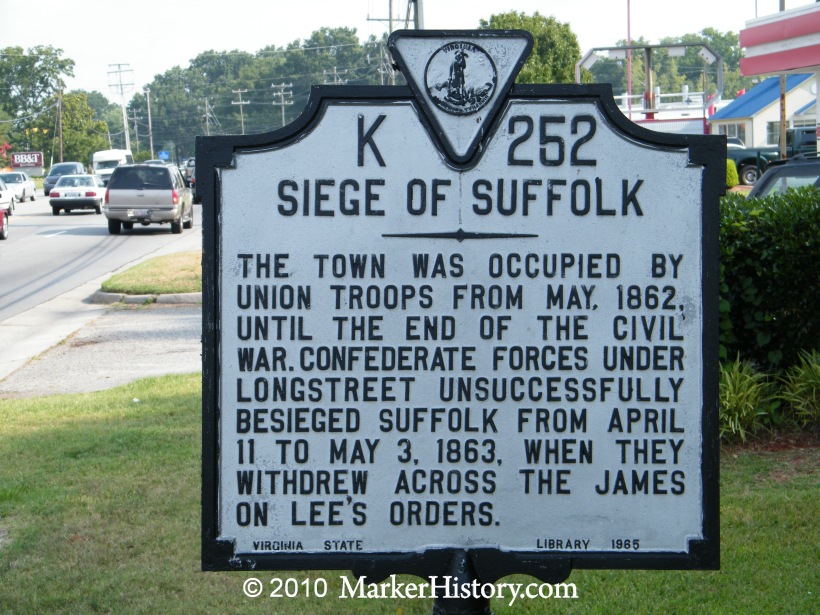
    The 85th Pennsylvania, now part of a brigade led by General Henry Wessells who was named Keim's permanent replacement, marched back down the peninsula to Hampton, VA. While the rest of McClellan's army was shipped to northern Virginia for the Battle of Second Bull Run, Wessells' Brigade was sent to Suffolk, VA where they spent the next four months.
Union Retreat from Harrison's Landing, VA
Frank Leslie's Illustrated