Showing posts with label Mexican War. Show all posts

Sunday, May 9, 2021

The Peripatetic Life of Lt. Colonel Norton McGiffin


Norton McGiffin
Property of Ronn Palm Museum of Civil War Images
Gettysburg, PA


         Shortly after the 85th Pennsylvania regiment was organized in the fall of 1861, 37-year old Norton McGiffin of Washington, PA was elected to be the first lieutenant colonel of the regiment. McGiffin would be second-in-command to Colonel Joshua B. Howell, who organized the unit. McGiffin was elected by the officers and was endorsed by the rank-and-file. He was an obvious choice, having served in the Mexican War before going on to a political career in his home county. 

         But after only seven months of service with the 85th Pennsylvania, McGiffin was forced to resign in the spring of 1862 due to illness. He was replaced as lieutenant colonel by another resident of "Little Washington," Henry A. Purviance.  

          During the months of April and May of 1862, when the regiment had just arrived in Virginia for the Peninsula Campaign, 33 men were dismissed for medical reasons. Twelve men had already died from diseases, mainly typhoid fever. 

        Regimental historian Luther S. Dickey wrote, “Lieut. Col. Norton McGiffin’s resignation was accepted, owing to impaired health. This caused universal regret among both officers and men, as he was highly esteemed by all, not only as an efficient officer, but as a most estimable, chivalrous man. The fact that he had served throughout the Mexican War and in the three months’ service before coming to the 85th Regiment had given him great military prestige, and as he was imperturbable in temperament and never gave way to excitement under the most trying circumstances. His final departure was regarded as a distinct loss to the Regiment.”

        McGiffin's time with the 85th regiment was brief; he and the 85th had peripherally participated in just one battle thus far at Williamsburg on May 5 where two of their men were wounded. Although his Civil War record was abbreviated,  McGiffin's overall life was nonetheless one of the most varied and interesting of any of the thousand men who served in the regiment from southwestern Pennsylvania

Siege of Puebla

         McGiffin was one of the few members of the 85th Pennsylvania who had previously participated in battle.  A graduate of Washington [PA] College (now Washington and Jefferson College), he was 22 when that war broke out. McGiffin was planning for a career as a lawyer as he clerked for Judge Nathan Ewing in Uniontown in the 1840's, Then the Mexican War changed the course of his life. During this conflict, he was a private in Company K of the First Pennsylvania Infantry, known as the "Duquesne Grays." McGiffin participated in engagements at Puebla, Vera Cruz and Mexico City, where he stormed the fortress castle of Chapultapec. He was wounded during street fighting at the Siege  of Puebla (1847).  

    Manaen Sharp of the 85th Pennsylvania wrote this brief account of McGiffin's service in the Mexican War around 1900. 

      "[During the Mexican War] McGiffin saw as hard service as any in the greater war of the Rebellion. At the taking of Puebla, after fighting for six weeks, his company was ordered to drive out some cavalry occupying a cross street. He had just been relieved from a 24-hour's picket service, which excused him for the day, but he volunteered to go with the company of 58 muskets. They succeeded in driving the enemy nearly a mile when they ran into as hot a place as could be imagined. They were overpowered and driven back with a loss of 14 killed and 28 wounded, making 2/3 of the company disabled in a few minutes. Comrade McGiffin was hit on the back of the head by something thrown from the top of a building. He recovered from the shock barely in time to dodge something like a crowbar that barely missed him, and striking a heavy door, buried itself 3 inches and stuck fast there."  [Sharp, Amity in the Great American Conflict, 1903]

        McGiffin went home to Little Washington shortly before the end of the war due to his injury. At a banquet at the end of the war held in nearby Canonsburg, McGiffin was presented with a silver-mounted pistol. 


Court House, Sheriff's Residence and Jail
Boyd Crumine's History of Washington County

        A decade after c
oming home from Mexico, McGiffin was elected to be treasurer (1849) of Washington County before being voted to be county sheriff in 1858. He was in that office when the Civil War began in 1861. McGiffin immediately resigned to join the 12th Pennsylvania for three months. Following the expiration of that term of service, he joined the 85th Pennsylvania.

        After the Civil War, McGiffin moved with his family across the state border and lived for four years as a farmer in Ohio County, West Virginia. He moved back to Washington County in 1870.

          Upon his return, McGiffin attended the organizational meeting in Uniontown, Fayette County in 1873 for the postwar regimental association. This group of former members of the 85th regiment would conduct reunions for the next 45 years. McGiffin was elected to be the first president of the association.

         McGiffin went on to hold a wide variety of political positions, both elected and appointed. He was voted into the Pennsylvania State House of Representatives in 1880 and served one year.
  
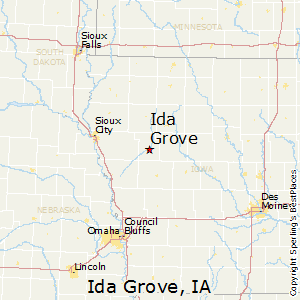
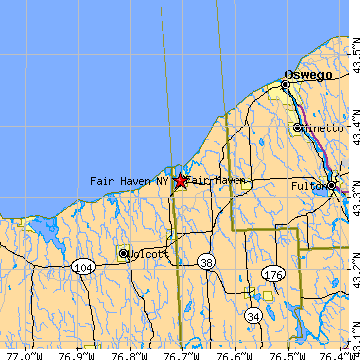
        After his term in the state house, McGiffin lived for four years in Ida Grove, Iowa as a farmer. He then lived for the next four years in Fair Haven, New York near Lake Ontario.


James G. Blaine
LOC


         For the next stage of his life, McGiffin was appointed U.S. Consul at Port Rowan, Ontario, Canada by United States Secretary of State James G. Blaine, a classmate at Washington and Jefferson. This was shortly followed by an appointment to the same position at Port Hope, Canada for two years. In the 1890's, he found his way back home to Little Washington.

        McGiffin died on July 30, 1905 in his home town. He is buried in the city's Washington Cemetery. He was the last survivor of the Mexican War from Washington County. 

           McGiffin had many interesting events and triumphs in his personal life. Several of his children, however, did not fare as well. In 1872, his 17-year old son, Thomas, shot a school principal, Welty J. Wilson, at the Union school in Washington, PA. The story has several versions. All stated that Wilson intercepted a note that young McGiffin had written to a female student. Thomas shot him in the hip when Wilson would not return the note.

          A local version of the incident in a Little Washington newspaper was sympathetic to Thomas. "Young M'Giffin," it said, "has borne the reputation of a quiet and peaceable boy of warm-hearted and generous impulses, and is one of the last who would have been suspected of being involved in a matter of this kind." [Washington Reporter, February 7. 1872, page 1]

         Another Washington County newspaper noted, "there are several sides to the story --one of which accuses the Teacher with reading the note before the whole school and also...making fun of McGiffin's 'love sickness;' also of giving the note to some students  to take to the College and there make it public. If this be so, much of the sympathy will learn toward the boy, as no young man of spirit could quietly brook such a needless insult. Shooting however is not the remedy and must be severely frowned upon. Shooting is getting too terribly common--nearly one half the boys of town and country carry loaded revolvers." [Monongahela Republican, February 8, 1872, page 3]

         On the other hand, the newspaper from Warren, Ohio, the hometown of the teacher, came down hard on the teen. "universal sympathy is extended to Mr. Wilson, as well as to the afflicted parents of the hot-headed young man...we cannot refrain from adding that Mr. Wilson was undoubtedly right in refusing to permit the delivery of the note...the murderous attempt on his life was without just cause or provocation...Young McGiffin should be retired to a state prison or a lunatic asylum for several years until his blood has cooled off and his head become level." [Western Reserve Chronicle, Warren, Ohio, February 14, 1872, page 3]

        Wilson survived and lived until 1925. Thomas eventually moved to Hawaii where he spent the last four decades of his life. He died in 1922 at the age of 68, survived by his wife, Malina, and several children.

         Norton McGiffin's second son, Philo Norton McGiffin, became the most famous member of the family. Philo was a graduate of the U.S. Naval Academy. While at Annapolis, he earned the reputation of an unrepentant prankster. But he also demonstrated personal bravery that would mark his life by rescuing two children from a burning home. Furthermore, during a training session, when it seemed his ship's mast might collapse, he dashed up the rigging to secure the spar and prevent disaster. 

            Unable to gain a commission in the U.S. Navy because of it's small size at the time, Philo became a noted officer in the Chinese navy as an instructor and advisor. Philo McGiffin was the first American to command a modern battleship in wartime at the Battle of the Yalu during the First Sino-Japanese War in the 1890’s. 

Philo McGiffin
Nimitz Library U.S. Naval Academ
y


         Philo suffered numerous wounds during the battle as he personally put out fires, directed artillery and directed movements of his ship, all while receiving fire from four Japanese gunboats. He was in severe pain for the rest of his life. Returning to the United States, he wrote a review of the battle and delivered a few lectures, but finally succumbed to his painful wounds. He shot himself in 1897 and died at the age of 36.

           A few years earlier before the Battle of the Yalu, Philo wrote, "I don't want to be wounded and hate to think of being dreadfully mangled and then being patched up with half my limbs and senses gone, yet a triumph of surgical skill. No I prefer to step down or up or out of this world when my time comes." [The Fall River [MA] Daily Herald, October 2, 1894, page 5]

         Seven years later in 1905, Norton McGiffin was honored on his 80th birthday in Little Washington by the city's G.A.R Post. He was presented with "a fine Morris chair." A letter signed by the members of the post included the following tribute:

       "We congratulate you, sir, that at your very birth, you entered at once upon the inheritance of an honored name, for from that early time when your brave grandfather [Nathaniel] marched in the Pennsylvania line and suffered with [George] Washington at Valley Forge, through him and after him your honored father [Thomas], in his turn filling for many years a large and varied place in business and professional life, the name you bear has occupied a bright and prominent place upon the pages of our country's history." [Pittsburgh Weekly Gazette, January 24, 1904, page 13]


Monday, May 18, 2020

Musician William Barker of Company B

 
Waynesburg (PA) Messenger     July 17, 1867
          The subject of the unfortunate accident mentioned in the news article above is a former member of the 85th Pennsylvania regiment, William J. Barker. The accident highlights several ironies in Barker's life.
         Barker enlisted into Company B of the 85th Pennsylvania as a 16-year old drummer boy in the fall of 1861, He was a musician in the company along with 18-year old fife player Eli Crumrine.
Unidentified Civil War Drummer   LOC
Although a great majority of the soldiers from Company B came from Washington County, Barker was one of a handful of men in the unit from the town of Brownsville in Fayette County.
       Barker's date of enlistment is October 11, 1861. This relatively late date may be the reason he had not joined the already established Company C of Captain John C. Wilkinson, which was composed of boys and men mostly from Brownsville and the surrounding area.
      Barker survived the war and returned home to Brownsville three years later while still in his teens at the end of 1864.
         Barker had been born in Chester County, PA in 1845 to parent Matthew and Jane. At some point prior the outbreak of the war, the family moved across the state to Brownsville. Following the war, Barker returned to Brownsville and worked as a glass blower but soon headed to Pittsburgh where he spent most of his life. He was engaged in various artistic professions for the next several decades, including work in glass art and editing an art publication. In the last few decades of his life, he found work as a machinist.
        Barker died in 1910 and is buried in the Homewood Cemetery in Pittsburgh.
   

Mexican War six-pound cannon     LOC
The first irony surrounding the Fourth of July accident in 1867 shortly after the war had to do with the cannon itself. It had been brought back to Brownsville as a war prize confiscated during the Mexican War (1846-1848).
    Another news article of the accident, this from a Pittsburgh newspaper, offers more information about Barker's mishap.
Pittsburgh Daily Commercial      July 15, 1867

         Although this article states that Barker's injuries were potential fatal, he survived the event and lived another 53 years. Also, his partner in the event, William Norcross, is mistakenly mentioned as a former member of the 85th Pennsylvania. Norcross was 50 years old at the time of the accident and may have been a Mexican War veteran,but he was not a former member of Barker's regiment. 
       The end of this article mentions that a similar explosion occurred 18 years earlier on the same spot of ground. That accident killed Samuel Austin, a Mexican War veteran and a former member of the Second Pennsylvania Volunteers. 
         James Hadden offered more information about Austin's war record and this first accident in his history of his hometown entitled A History of Uniontown (1913).  It is not stated, although perhaps probable, that the same cannon was involved in both accidents.

          This article mentions the site of the accident as Brubaker Hill. At this location was a tavern that was a stopover for travelers along Route 40. It is located near the present site of a Dairy Queen and Dollar General store. It is also close to the Redstone Cemetery, where several veterans of the 85th Pennsylvania are buried. 
        The second irony involves the manner of Barker's death in Pittsburgh in 1910. After surviving the war and the cannon accident, Barker died as the result of another accident at the age of 65. The manner of his death is recounted in the following obituary.

Pittsburgh Daily Post   2-10-1910


Monday, April 20, 2020

Profile of Principal Musician Henry L. Regar

   
Henry L.Regar
Courtesy of John Regar

         When Henry L. Regar died at the age of 86 in 1912 in his hometown of Connellsville, Fayette County, it marked the end of an era. Regar was the last surviving Pennsylvanian who had served in both the Mexican War and the Civil War. A drummer boy during the Mexican War, he rejoined the 85th Pennsylvania during the Civil War and became the drum major of the regimental band.
          A 1903 profile stated, "It takes quite an effort to imagine that the quiet, peaceful tailor who cuts and rips and sews in Mace & Co.'s department store helped charge the City of Mexico with the gallant Eleventh infantry and fought with McClellan at Coal [sic] Harbor and Malvern Hill." [Weekly Courier, Connellsville, PA, 2-13-1903]
        The article exaggerated on a few points. General George B. McClellan was not at "Cold" Harbor, and neither was Regar and the rest of the 85th Pennsylvania for that matter. Nonetheless, the point was that a resident of Connellsville at that time would not have assumed that the soft-spoken Regar was a veteran of two wars.
        He enlisted into Company H of the 85th Pennsylvania as a musician in 1861. Regar was 35 years of age but felt the desire to serve his country once again. Near the end of 1862, he was promoted to one of two principal musicians in the regimental band along with Samuel Woods of Company C.
        After the Civil War, besides working as a tailor, Regar worked in the theatrical business for twenty years. He is buried in the Hill Grove Cemetery in Connellsville, Fayette County.
        Regar was born in 1826 in Connellsville to parents Solomon and Rebecca Vance Regar [the name has also been variously spelled, Reger, Reager, Regour and Reggar] Henry was about 20 years of age when he left Fayette County to join the 11th United States Infantry regiment during the Mexican War.
        A newspaper account from the 20th century stated that Regar tried to enlist into a Connellsville regiment but was turned down as being too young at age 14. [Again this appears to be an exaggeration. Interestingly, the same article states that Regar was 87 at the time of this profile (1912), making his birth year around 1826. If he had tried to enlist at age 14, he would have been born around 1832]. The article goes on to state that Regar then went to Pittsburgh and successfully joined the 11th U.S. Volunteers. [Daily Courier, 2-26-1912]
       The 11th infantry was under the command of Colonel Albert C. Ramsey in the brigade of Brigadier General George Cadwalader and included future Civil War officers William Taliaferro and John Gregg. Taliaferro, from Virginia, became a Confederate general in the Civil War. Gregg earned the rank of brevet general for the Union in the cavalry by the end of the Civil War. Most of the men in the regiment were from Pennsylvania; some came from Virginia and Delaware.
       The 11th participated in the battles of Cerro Gordo, Chapultapec and Mexico City. Regar remembered,
        “I served throughout the war in Company K, Eleventh United States Infantry.  The Eleventh Regulars lost over two-thirds of its members in the battles in and around the City of Mexico…The bloody climax…came when the regiment entered the city, crowding the aqueduct and battering down the heavy gates of the city. Once inside, the fighting coursed up the plaza…fighting their way from square to square and from street to street…Of the 800 men which started in the campaign with the regiment, only 200 were left. My regiment followed the defeated and retreating Mexican Army, after the battle and capture of the City of Mexico, over the mountains and into the Valley of Lerna.” [Weekly Courier, 2-12-1903]
Thomas Knox, Decisive Battles Since Waterloo, 1887

         A Pennsylvania soldier from the 11th regiment gave this account about a fight at Molina del Rey in September of 1847.

         "The 11th was ordered to charge the battery....The 11th had to charge over the same ground where fell so many of our gallant troops....They advanced steadily, but now the enemy is vomiting his grapeshot and canister upon them, and they leave a train of dead and dying. Do they falter? No -- their gallant commander is waving his sword, and they are now rushing forward at a full run...Did you hear that shout? Comes it from the Mexican ranks? No! That is true Pennsylvania shout,and tells of danger defied, and glory to be won. Here they go, onward, up to the enemy's guns.  Huzza for the old Keystone! The Mexicans are giving way before our gallant little band..." [Public Ledger, Philadelphia, 11-8-1847]

        In the Civil War, Regar stayed with his regiment for three years until his enlistment expired.

        “I entered the service as a private. I was afterward promoted to Corporal, and later, after the battle of Fair Oaks [Seven Pines], was made Drum Major for bravery in action. This position, although on the non-commissioned staff, I did not like. I accepted it at the suggestion of the Colonel [Joshua B. Howell], who promised me a commission, but the commission never came my way.” [Weekly Courier, 2-13-1903]

LOC
       After the war, Regar worked as a tailor and was a member of the Connellsville school board for two terms. He was also a member of the Silver Coronet Band of Connellsville. The group, clad in gray uniforms with red-plumed helmets, won numerous competitions. They participated in the Philadelphia Centennial in 1876 and the inauguration of Pennsylvania Governor Henry M. Hoyt in 1878. [Daily Courier, 3-1-1913]


         In 1906, during the centennial celebration for the town of Connellsville, double-war veteran Regar was an honored guest who was part of an automobile parade through the city streets. [Daily Courier, 11-17-1952]
Decorated Street of Connellsville for 1906 Parade
Centennial History of the Borough of Connellsville, Pennsylvania 1806-1906

             Regar's obituary in 1912 mentioned that he "was an entertaining conversationalist and had a host of friends in and around Connellsville." He was married to his wife, Rebecca Robbins Regar, for 64 years and was the father of seven children. The story also mentioned that he was wounded during both wars. [Daily Courier, 9-21-1912]
            In a 1903 profile of Regar by a local newspaper, Regar stated, "My opinion of the two wars is that the Mexican was more terrific and successful for it was fought from start to finish without a single drawback of defeat, although at all times we were fighting against long odds. i will say in conclusion, however, that I want to live to see the time when wars are over and when arbitration will settle disputes, for war is of the devil and not of God."