Showing posts with label musician. Show all posts

Friday, August 25, 2023

Eli Crumrine Makes His Move


Eli Crumrine
Photograph Subject Files
American Heritage Center, University of Wyoming
Annals of Wyoming, Vol. 58, p. 13, 1986

      One effect of the Civil War, an unbelievably bloody affair,  is that it gave soldiers the opportunity to experience lands and peoples with whom they would otherwise have been unfamiliar. The men in the 85th Pennsylvania, for example, traveled across the south from Virginia to Georgia and back. If they survived, they came home more worldly (and perhaps haunted) than they otherwise would have been because of this experience.

       This made it easier for many to move soon after the end of the war, often to the West to take advantage of settling on cheap farmland in states like Indiana or Nebraska. Many 85th veterans made the move to these and other states like Iowa, Missouri, Kansas. Some ventured to Oklahoma, Texas, the Dakotas and even farther away to the west coast. They were mainly young men in their 20's or early 30's in search of economic opportunity.

       Only one member of the regiment settled in Wyoming, and he relocated there more than 20 years after the war ended. [Two other 85th soldiers had connections to Wyoming, which will be explored later in this article.]  He was Eli Crumrine, a Civil War musician from East Bethlehem, Washington County, who enlisted at age 18 into Company B. His postwar journey for the far reaches of the United States came later in life when he was 43 years old. Crumrine was an established professional in banking for 20 years in western Pennsylvania with as a wife and three young children. However, his chose to head off for Laramie in Albany County, Wyoming where he spent the last 26 years of his life. 

Boyd Crumrine
Commemorative Biographical Record
of Washington County
(Chicago, 1893), p.209

         Eli was one of five Crumrines associated with the 85th PA.   All five  survived the war. The other four were his cousins; only Boyd and Bishop were brothers to each other. [Bishop was turned down trying to enlist into the 85th which was full at the time. He instead joined the 4th PA Artillery] The other cousins in the 85th were Jackson and Daniel Crumrine. Following the war, Boyd Crumrine became one of the most prominent attorneys and historians in Washington County. Bishop [Topeka] and Jackson [Alton] moved to different cities in Kansas. Daniel went home to Washington County and became a farmer. Daniel lived until 1929, one of the longest living men from the regiment.

      Eli enlisted as a fife player in Company B in 1861 and eventually became part of the regimental band. On the last day of 1863, while the 85th PA was stationed on Hilton Head Island in South Carolina, some new instruments arrived and the regimental band was reorganized. Historian Luther S. Dickey wrote, " Three silver fifes, eight tenor and one bass drum arrived today for the Regimental band; the re-organized band is as follows : Sergt. Samuel Woods, Company E, and Corp. Henry L. Regar, Company H, principal musicians; Robert B. Thompson, Company A, Eli Crumrine, Company B, and John Stuck, Company I, fifers; John W. Ingles, Company A, Isaiah Jordan, Company D, Daniel Swan and James McCuen, Company F, drummers." [p. 303] 

Civil War Fife Player  LOC
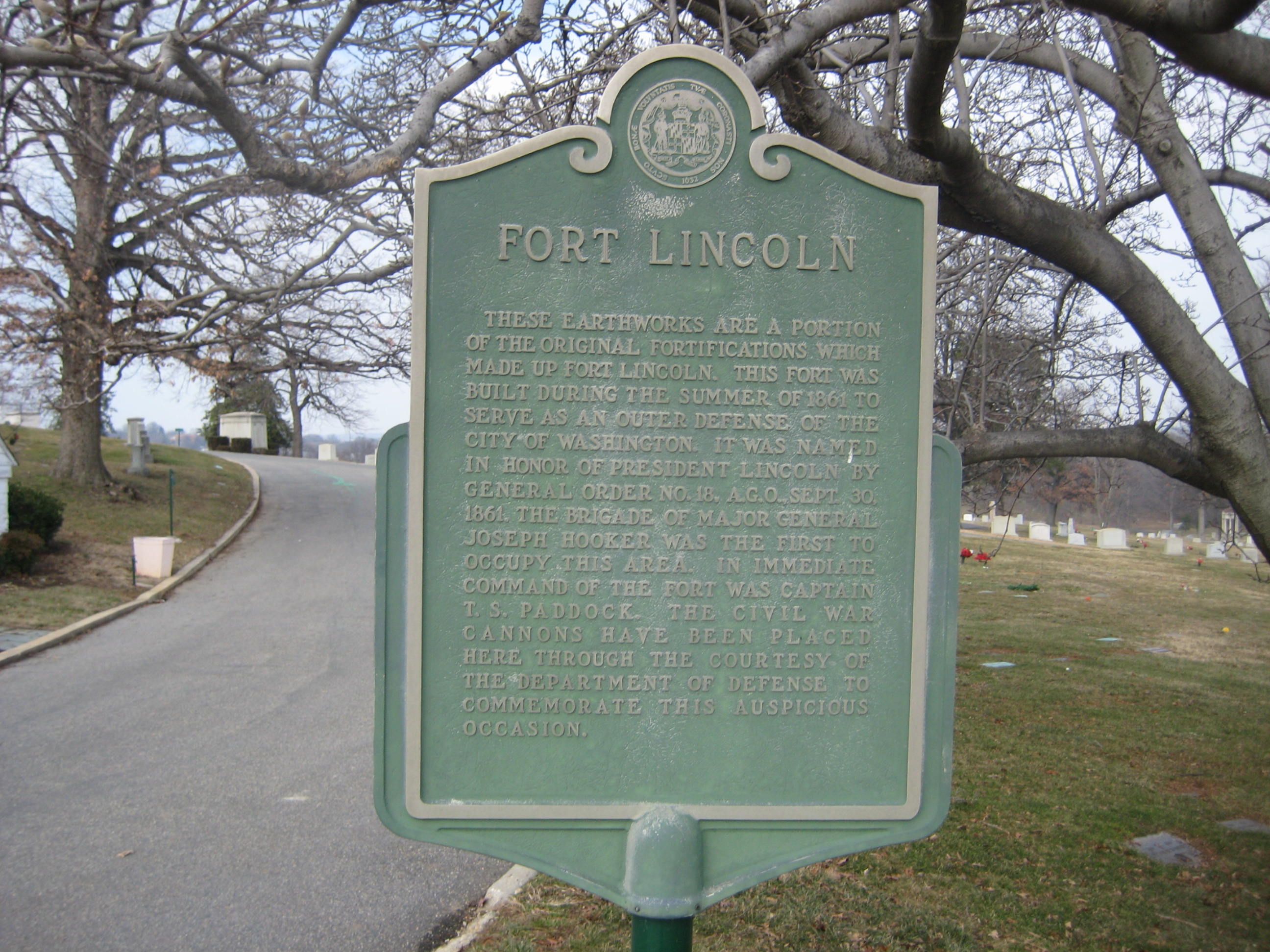
        Music was important in the daily life of most regiments. Any early contribution of the 85th musicians, however, was nearly catastrophic. It almost provoked a confrontation with fellow Union troops at Fort Lincoln near Washington, D.C., in late 1861. As described by Private Milton McJunkin of Company D, "“as we passed Fort Lincoln on our way to camp Casey we came very near being cut to pieces by our own men...right opposite Fort Lincoln was a very pretty place to rest and the officers [of the 85th] told the drummers to give the boys the long roll which is invariably to arms[.] it was not 2 seconds until we had 4 pieces of artillery leveled on us, and our colors was all that saved us from being tore all to smash[.] [The Bloody 85th by Patrick Schroeder, Ronn Palm and Richard Sauers, 2000, p.9]

      The soldiers in Fort Lincoln, hearing what they thought was an attack cadence, nearly mistook the 85th for Confederates. From then on, the music provided by the musicians of the 85th conformed to military standards. 

         Besides sounding out camp orders, musicians also performed impromptu concerts in camp. [A list of Civil War marching songs can be found here.] The Kennedy Center website states that Civil War musicians could be divided into two general categories: field musicians and members of regimental bands.

     "Field musicians included the fife-and-drum corps with the marching units and the buglers that accompanied both the cavalry and the infantry. These musicians marked the activities of daily wartime life, including wake up, lights-out, roll call, and drills. The music also helped organize the movement of the troops and even conveyed combat orders to soldiers, who were trained to recognize these commands..."

      "Larger [regimental] bands performed as commanding officers inspected and addressed the troops; they would also present regular concerts and entertain soldiers in camp. The bands helped maintain morale and reinforce spirit and resolve. Musicians also did whatever was needed--staffed ambulances, tended wounded, and even fought as the war raged on."

Lemuel Thomas headstone
Hampton (VA) National Cemetery
Contributed by Ron Stewart
findagrave.com

       For one 85th musician, 24-year old Lemuel Thomas of Company C, helping wounded soldiers during the Battle of Second Deep Bottom in Virginia in August of 1864 cost him his young life. Regimental historian Luther S. Dickey wrote, "Musician Lemuel Thomas of Company C, was on duty with Surgeon [Samuel] Kurtz of the Regiment assisting in caring for the wounded. Surgeon Kurtz was standing with an arm resting against a tree when a cannon ball from a battery of the enemy ricocheted, striking the heel of his shoe and then bounded to the head of Musician Thomas, fracturing his skull from which he died the following day. Although painfully wounded by the enemy's missile Surgeon Kurtz remained on duty." [p.355]

       Most aspiring soldiers like Eli from East Bethlehem joined Company D of the 85th PA. Eli, however, joined Company B, perhaps to be with his cousin, Boyd, who hailed from Washington City. Ironically, Boyd's time in the 85th PA was brief. After being promoted to quartermaster of the entire regiment, Boyd transferred to another regiment where he spent most of the remainder of his service posted at Fort Delaware, a prison-of-war camp for Confederates and northern lawbreakers.

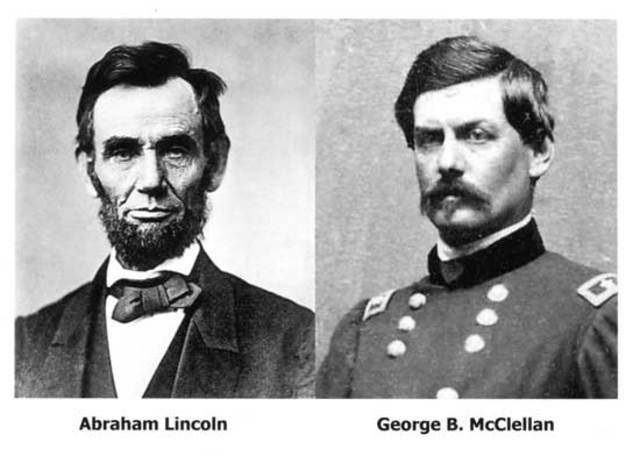
       The only wartime primary source we have from Eli is a letter he wrote home near the end of his three-year enlistment to a local newspaper describing camp polling numbers for the presidental election of 1864. It was the first time absentee voting was allowed. Some states like Pennsylvania allowed soldiers to vote in the field. Other states required the soldiers to return home in order to vote. Overall, the vote of soldiers was 4-1 in favor of Abraham Lincoln's re-election bid over George McClellan.

Pennsylvania soldiers voting in camp 1864
Harper's Weekly, 10-29-1864
       Eli wrote, "On yesterday, the 39th Regiment of Illinois volunteers held an election, also the 11th Maine held one and the results are a fair sample of the whole army. The 39th polled 150 votes in all; out of these 135 were for Lincoln...The 11th polled 362 votes in all; out of these 281 were for Lincoln. These results plainly show that Father Abraham will yet reside another four years at the White House. God grant that he may. The 85th will go for Old Abe." [Washington (PA) Observer and Reporter, October 26, 1864, p.2]

       So long after the war ended, why would an established middle-aged man pick up his family and move to a relatively remote part of the county? 

Albany County (Wyoming) National Bank in Laramie
Courtesy of Albany County Historical Society
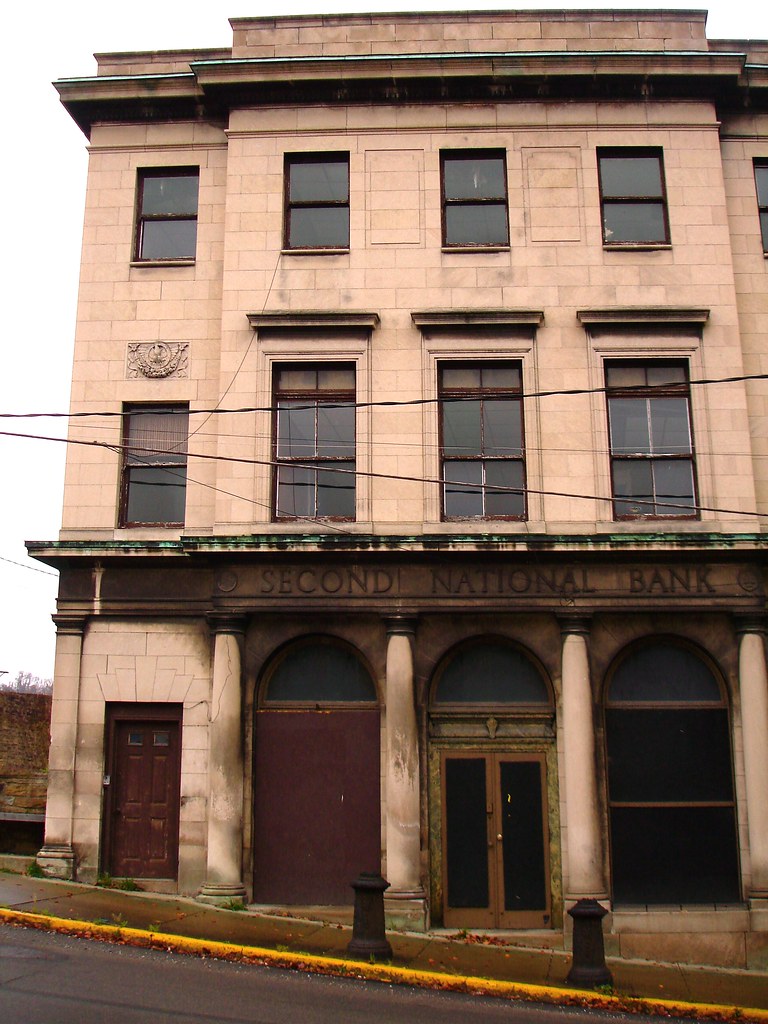
       First, however, the question arises as to how the new bank in Wyoming even became aware of a cashier in Brownsville, PA. A news story helped answer that question. "His [Eli's] first employment was with the First National Bank of Brownsville, later with the Second National Bank. The capital which organized the Albany County National bank in Wyoming included men behind the Scranton banks of Pennsylvania, and hence Mr. Crumrine was made cashier of the Laramie bank upon its organization...the appointment being the occasion for his coming to [that] state." [Wyoming Semi-Weekly Tribune, February 26, 1909, p.4]

         Eli took a trip to the West in 1885, the year before he made the move permanent, presumably to visit Laramie and get a feel for his future life. He discovered a remote yet growing community with beautiful vistas and plenty of opportunities to make money. Laramie, founded in 1868 as a boisterous railroad town, was undergoing significant growth at the time of Eli's arrival, from a population of 2,600 in 1880 to 6,400 ten years later. [Laramie has grown in every decade since then and today has a population today of over 30,000.]

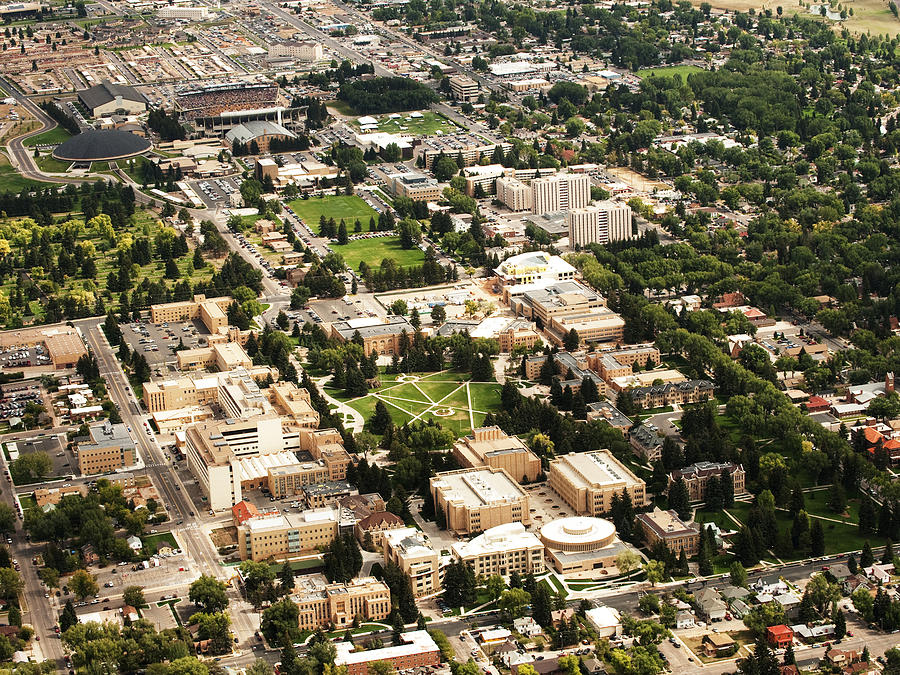
Old Main,  U. of Wyoming      Built in 1886    LOC
       Laramie's growth in the mid-1880's was due mainly to the completion of the Union Pacific Railroad in 1868. Prior to the railroad, Benjamin Holladay's Overland Trail for stage coaches and wagons passed through the Laramie Plains. In the late 1860's and early 1870's, Laramie was a raucous town, vexed by Native American raids, unpunished thievery and rowdy behavior. But by the time of Crumrine's arrival in Laramie in 1886,
      Jane Nelson, the president of the Albany County Historical Society, said, "Laramie was trying very hard to become a viable city. It had an opera house, three or four hotels, The Albany County Bank was its third bank and the first to have full electricity." She added that the University of Wyoming opened in 1886, further enhancing the reputation of the city.  Ms. Nelson also noted that Wyoming was forward-thinking in the area of womens' rights. Women were already allowed to serve on juries, and women's suffrage was enacted in 1869, fifty years before the passage of the 19th amendment on a national level.

        Prior to the arrival of the railroad, a former member of Company B of the 85th Pennsylvania, 28-year old Robert P. Hughes, (at that time a captain in the 18th U.S. Infantry) wrote a letter from Fort Laramie (located a hundred miles northest of the city of Laramie) in 1867 to a friend in his hometown of Canonsburg, PA. Firt Laramie was 188 miles northest of Laramie City and was founded in 1834 as a trading post. It soon became a well-known military post. Hughes enlisted in the Civil War as a private and retired in 1903 as a major general.

Robert P. Hughes
Wyoming State Archives
      "The Indians have not been able to operate much thus far since Spring, for the snow thawing in the Mountains has kept the streams so high that they have been unable to cross them without great difficulty. They have succeeded in catching a few [stage] coaches on the Overland Mail Route and also a few small parties of soldiers."

       "I am almost ashamed to be one of the actors in the scene. But our greatest battles now are with the mosquitoes and Buffalo Gnats. They come down on us at all hours and they do not use either Modern Tactics or maneuver or logistics but seem to me to move in the old Roman Style by Phalanxes and they make us scratch our heads quite seriously to determine how to flank them."

       "We have some peculiarities here. We have beautiful lightning every night, but we suffer for it in heat the next day. We have the most beautiful Sunsets I ever saw. The Sun will hide behind one of the Buttes and leave the whole western horizon a blace of fire." ["Loneliness, Sand and Sunsets: News from Ft. Laramie, August 13, 1867," Wyoming State Archives]

          After the railroad arrived, a letter from a Laramie visitor to a friend in Pennsylvania in 1878 was typical in spreading word on this up-and-coming city.

1882 Traveler's Railroad Guide

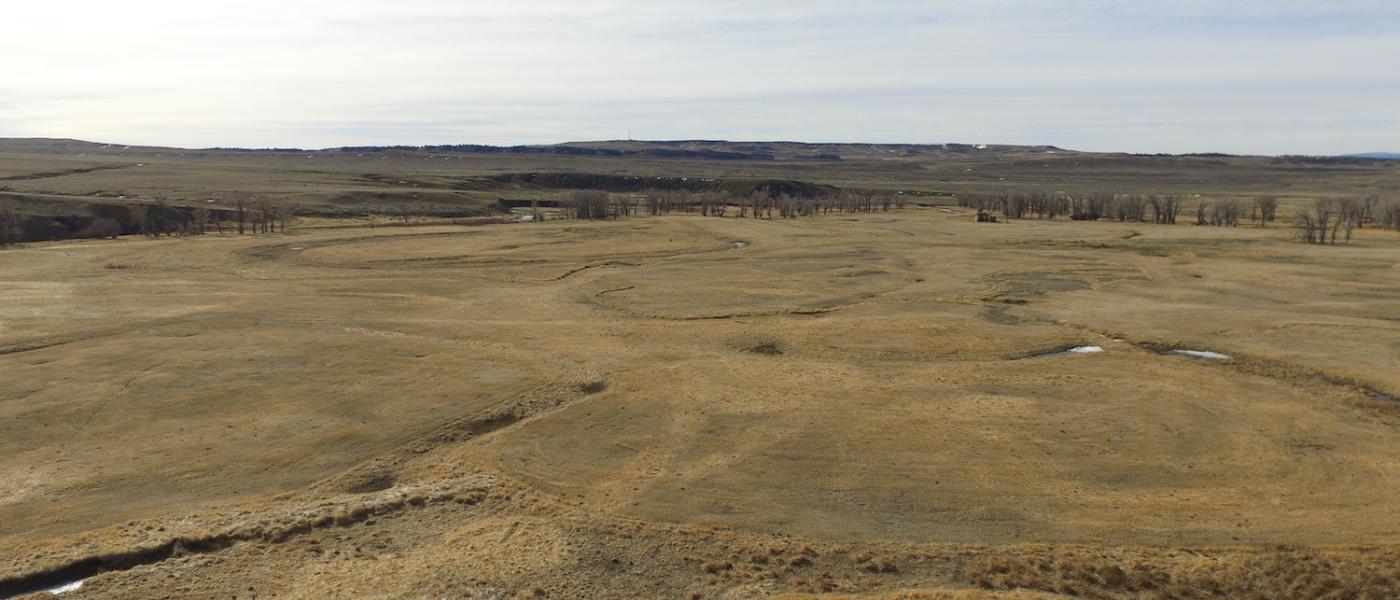
            "To my surprise, I found thousands of acres of land [in Wyoming] that are irrigated and good crops of wheat, oats and barley have been raised along this line of railroad. Left Cheyenne and soon looked down upon that vast grassy amphitheatre, the Laramie Plains...the hundreds of square miles of pasture lands and arable valleys lie in full view. 

         "In the midst of these plains and on the south side of the Laramie river is the city of the same name. It is distant from Omaha 572 miles, altitude 7,123 feet. It contains a population of 2,500 souls. The only rolling mills in operation between the Missouri River and the Pacific Coast are located here...the Union Pacific Company has also extensive machine shops and round houses here...A public school house is nearly completed...There are some very handsome buildings, blocks and private residences built of brick and some large wholesale and retail business houses. Water is conveyed to the town through iron pipes from a spring 3 miles north of town."

       "The Laramie Plains contain nearly 3,000,000 acres of winter and summer grazing lands....Over 40,000 head of stock are grazing this region...Most of the Ranchmen have from 640 to a couple thousand acres fenced...The ranch house that I am now writing from is genteel, nice and clean, three rooms carpeted and contains some nice walnut furniture. I merely state these facts for the reason that nearly all  Eastern persons that have not visited the Stock Ranches of the Laramie Plains naturally suppose that they all sleep with loaded seven-shooters under their heads, a double-barreled shotgun in each corner of the house, and are regular devils and cuthroats." [Valley Spirit, Chambersburg, PA, October 23, 1878, p.2]

        The writer of the above paragraph, Charles C. Clugston, moved to Wyoming within two years and with his business partner established a settlement near Laramie.

         Financially, the move to Wyoming in 1886 was a wise decision for Eli Crumrine. He was the Albany County Bank's cashier for eight years and was then promoted to vice-president. He was able to acquire a ranch on the outskirts of town and had other holdings. His estate was worth well over $50,000 when he passed away 24 years later.

        Crumine also played an active role in the growth of his new community. He helped arrange a donation from Andrew Carnegie 1902 to build a free county library in Albany (becoming a member of its board of trustees), was active the local Grand Army of the Republic of Union veterans and served for several terms in the Wyoming state senate. 

        Considering the 1,500 mile distance and arduous travel involved, it is noteworthy that Crumrine returned home to western Pennsylvania at least three times to attend regimental reunions, in 1890 and 1909, both in  Uniontown, and in 1910 at Rogersville, Greene County. 

1910 Reunion of the 85th PA
Rogersville, PA  Courtesy of Greene Connections

          Unfortunately, Crumrine became ill with pneumonia on his way home from the 1910 reunion and died one day after returning to Laramie. His wife, Mary, traveled to Denver and accompanied him home on the last leg of his journey. Eli was a long-time asthma sufferer, but his health had improved in the summer months, allowing him to return to Pennsylvania for the reunion. He was 67 years of age when he died. He was succeeded at the Albany County Bank by his son-in-law, Charles Spalding.

Crumrine Home
Courtesy of Albany County Historical Society
         Just a few months before his death in 1910, Crumrine received the endorsement of a newspaper back home in Washington County in case he decided to run for governor of his adopted state. "For a long time, we have heard the rumor that Hon. Eli Crumrine of this city might be one of the candidates for the nomination for governor of Wyoming before the next Republican state convention...Of course this newspaper wants the next governor of Wyoming to be a Democrat...but if there is to be a Republican, we are for the Laramie candidate first, last and all the time." [Washington (PA) Reporter, April 23, 1910, p.6]

Eli Crumrine Death Certificate

             The third member of the 85th PA regiment with a connection to Wyoming is Sergeant Marquis Lafayette "Mark" Gordon of Company G who hailed from Waynesburg in Greene County. The current governor of Wyoming is also named Mark Gordon. He is the great grandson of Marquis Lafayette Gordon.


Monday, April 20, 2020

Profile of Principal Musician Henry L. Regar

   
Henry L.Regar
Courtesy of John Regar

         When Henry L. Regar died at the age of 86 in 1912 in his hometown of Connellsville, Fayette County, it marked the end of an era. Regar was the last surviving Pennsylvanian who had served in both the Mexican War and the Civil War. A drummer boy during the Mexican War, he rejoined the 85th Pennsylvania during the Civil War and became the drum major of the regimental band.
          A 1903 profile stated, "It takes quite an effort to imagine that the quiet, peaceful tailor who cuts and rips and sews in Mace & Co.'s department store helped charge the City of Mexico with the gallant Eleventh infantry and fought with McClellan at Coal [sic] Harbor and Malvern Hill." [Weekly Courier, Connellsville, PA, 2-13-1903]
        The article exaggerated on a few points. General George B. McClellan was not at "Cold" Harbor, and neither was Regar and the rest of the 85th Pennsylvania for that matter. Nonetheless, the point was that a resident of Connellsville at that time would not have assumed that the soft-spoken Regar was a veteran of two wars.
        He enlisted into Company H of the 85th Pennsylvania as a musician in 1861. Regar was 35 years of age but felt the desire to serve his country once again. Near the end of 1862, he was promoted to one of two principal musicians in the regimental band along with Samuel Woods of Company C.
        After the Civil War, besides working as a tailor, Regar worked in the theatrical business for twenty years. He is buried in the Hill Grove Cemetery in Connellsville, Fayette County.
        Regar was born in 1826 in Connellsville to parents Solomon and Rebecca Vance Regar [the name has also been variously spelled, Reger, Reager, Regour and Reggar] Henry was about 20 years of age when he left Fayette County to join the 11th United States Infantry regiment during the Mexican War.
        A newspaper account from the 20th century stated that Regar tried to enlist into a Connellsville regiment but was turned down as being too young at age 14. [Again this appears to be an exaggeration. Interestingly, the same article states that Regar was 87 at the time of this profile (1912), making his birth year around 1826. If he had tried to enlist at age 14, he would have been born around 1832]. The article goes on to state that Regar then went to Pittsburgh and successfully joined the 11th U.S. Volunteers. [Daily Courier, 2-26-1912]
       The 11th infantry was under the command of Colonel Albert C. Ramsey in the brigade of Brigadier General George Cadwalader and included future Civil War officers William Taliaferro and John Gregg. Taliaferro, from Virginia, became a Confederate general in the Civil War. Gregg earned the rank of brevet general for the Union in the cavalry by the end of the Civil War. Most of the men in the regiment were from Pennsylvania; some came from Virginia and Delaware.
       The 11th participated in the battles of Cerro Gordo, Chapultapec and Mexico City. Regar remembered,
        “I served throughout the war in Company K, Eleventh United States Infantry.  The Eleventh Regulars lost over two-thirds of its members in the battles in and around the City of Mexico…The bloody climax…came when the regiment entered the city, crowding the aqueduct and battering down the heavy gates of the city. Once inside, the fighting coursed up the plaza…fighting their way from square to square and from street to street…Of the 800 men which started in the campaign with the regiment, only 200 were left. My regiment followed the defeated and retreating Mexican Army, after the battle and capture of the City of Mexico, over the mountains and into the Valley of Lerna.” [Weekly Courier, 2-12-1903]
Thomas Knox, Decisive Battles Since Waterloo, 1887

         A Pennsylvania soldier from the 11th regiment gave this account about a fight at Molina del Rey in September of 1847.

         "The 11th was ordered to charge the battery....The 11th had to charge over the same ground where fell so many of our gallant troops....They advanced steadily, but now the enemy is vomiting his grapeshot and canister upon them, and they leave a train of dead and dying. Do they falter? No -- their gallant commander is waving his sword, and they are now rushing forward at a full run...Did you hear that shout? Comes it from the Mexican ranks? No! That is true Pennsylvania shout,and tells of danger defied, and glory to be won. Here they go, onward, up to the enemy's guns.  Huzza for the old Keystone! The Mexicans are giving way before our gallant little band..." [Public Ledger, Philadelphia, 11-8-1847]

        In the Civil War, Regar stayed with his regiment for three years until his enlistment expired.

        “I entered the service as a private. I was afterward promoted to Corporal, and later, after the battle of Fair Oaks [Seven Pines], was made Drum Major for bravery in action. This position, although on the non-commissioned staff, I did not like. I accepted it at the suggestion of the Colonel [Joshua B. Howell], who promised me a commission, but the commission never came my way.” [Weekly Courier, 2-13-1903]

LOC
       After the war, Regar worked as a tailor and was a member of the Connellsville school board for two terms. He was also a member of the Silver Coronet Band of Connellsville. The group, clad in gray uniforms with red-plumed helmets, won numerous competitions. They participated in the Philadelphia Centennial in 1876 and the inauguration of Pennsylvania Governor Henry M. Hoyt in 1878. [Daily Courier, 3-1-1913]


         In 1906, during the centennial celebration for the town of Connellsville, double-war veteran Regar was an honored guest who was part of an automobile parade through the city streets. [Daily Courier, 11-17-1952]
Decorated Street of Connellsville for 1906 Parade
Centennial History of the Borough of Connellsville, Pennsylvania 1806-1906

             Regar's obituary in 1912 mentioned that he "was an entertaining conversationalist and had a host of friends in and around Connellsville." He was married to his wife, Rebecca Robbins Regar, for 64 years and was the father of seven children. The story also mentioned that he was wounded during both wars. [Daily Courier, 9-21-1912]
            In a 1903 profile of Regar by a local newspaper, Regar stated, "My opinion of the two wars is that the Mexican was more terrific and successful for it was fought from start to finish without a single drawback of defeat, although at all times we were fighting against long odds. i will say in conclusion, however, that I want to live to see the time when wars are over and when arbitration will settle disputes, for war is of the devil and not of God."