Showing posts with label Erasmus Keyes. Show all posts

Tuesday, August 4, 2020

Capture of Lt. James B. Washington

           
Casey's Division is circled. The line is the position of Casey's pickets.
The "X" is the approximate location of J.B. Washington's capture.
From Battles and Leaders of the Civil War, II; 1887, p.227


           In reviewing obituary records for the men of the 85th Pennsylvania infantry regiment from the Civil War, I came across this brief notation for Private George Washington Anderson of Company H. It pertains to an event that precluded the Battle of Seven Pines (Fair Oaks) near Richmond, VA that began on May 31, 1862.
        "During one of the Virginia campaigns, while doing picket duty, he [Anderson] captured Major J.B. Washington of the Confederate army, now and for a number of years past secretary of the Pittsburg and Connellsville branch of the B&O R.R. Major Anderson and Mr. Washington met in Somerset a few years since, when their recognition was mutual and they spent a pleasant hour talking over their war experience." (Somerset (PA) Herald,  October 20, 1897, p.3)
           If true, the capture of Washington by Anderson would be a notable occurrence from the battle by
Picket Duty    LOC
a member of the 85th Pennsylvania.  Many accounts of the Battle of Seven Pines mention Washington's capture, but Anderson's obituary is the only one I have come across that states the identity of the  soldier who captured him. [If any reader has further information about Washington's capture, I would appreciate a response.]
          It is confirmed that members of the 85th Pennsylvania were on picket duty that day. Lieutenant John E. Michener wrote, "There on Saturday of May 31st, without any support, our little Division was attacked by an overwhelming force of the enemy's best men, and after suffering a heavy loss, was repulsed...I was on picket duty in front of the swamp, and had instructions to hold my ground till the last." [Michener letter courtesy of Margaret Thompson]
          Private Milton McJunkin also wrote, "...our Company was on picket at the time so you see I saw the whole performance. About 1 o’clock the rebs fired three shots into our camp to give Casey warning. At the same time we, that is us pickets, were attacked by 5 brigades and nearly surrounded. Our Company was in the centre of the line and was cut in two so you see we had to retreat as it was useless for 200 pickets to try to check 5,000 of the best troops Jeff [Jefferson Davis] had so we scattered and got to camp the best way we could..." [The Bloody 85th: The Letters of Milton McJunkin, a Western Pennsylvania Soldier in the Civil War, by Palm, Sauers and Schroeder, p. 39]
           The capture of Washington, who was apparently performing a reconnaissance just prior to the Confederate attack, was significant. The Confederate attack in the early afternoon of May 31 nearly overwhelmed the division of Silas Casey, which was outnumbered 2-to-1 or 3-to-1. The 85th Pennsylvania was in the thick of the early fighting that day, in the brigade of General Henry Wessells, stationed near a battery during the early part of the battle. Pushed back to a line of trees, Colonel Joshua B. Howell rallied his 85th Pennsylvania regiment and parts of others to boldly advance towards a rifle pit and temporarily regain control of the position. Howell's men had to fall back once again, but not before buying precious time for Union reinforcements from across the Chickahominy River to arrive later in the afternoon and stop the Confederate advance.
          Despite their efforts, Army of the Potomac commander George B. McClellan (based on the questionable account of General Samuel Heintzelman of the Third Corps) chose not to praise Casey's Division for their stand but to disparage them publicly for their retreat after two or three hours of fighting.
         Casualties in the 85th Pennsylvania numbered around 30 dead and another 50 or so wounded.
        One of the charges made against General Casey was that he was unprepared for a Confederate attack. But in truth, Casey knew the precariousness of his position and was furiously trying to reinforce in anticipation of a rebel attack.
        The capture of Washington several hours prior to the battle only served to intensify the Union belief that an attack was imminent.
         Many accounts of the Battle of Seven Pines mention Washington's capture, but Anderson's obituary is the only one I have come across that says who captured him.
       Luther S. Dickey wrote the official history of the regiment in 1915, about 18 years after Anderson's death. He mentioned Washington's capture on that day but did not mention Anderson's role.
          "During the forenoon of May 31, the enemy appeared in force in front of the pickets immediately north of the Williamsburg Road. Shortly after 10 'clock A.M., Lieut. J.B. Washington , an aide-de-camp on the staff of General Joseph E. Johnston, was captured by Casey's pickets on the Nine-mile road and taken to Gen. [Silas] Casey's headquarters, and thence to Gen. [Erasmus] Keyes' headquarters..." [Dickey, p.71]
          Keyes immediately notified McClellan's staff of Washington's capture. "This young gentleman [Washington] was handsomely captured by our pickets on the right...In connection with the appearance with this young officer, on our right near our lines, I will state that the general officer of the day, Col. Hunt of Casey's division, heard the cars running through the night continually. Yesterday there was much stir among the enemy, and everything on his part indicates an attack on our position, which is only tolerably strong, and my forces too weak to defend it properly." [Dickey, p.72]
       
         Anderson died on October 14, 1897 in Ursina, Somerset County, Pennsylvania at the age of 65. He served three full years in Company H, comprised of men from Somerset County and led at the start of the war by young Captain James B. Tredwell. After the war, Anderson held a variety of positions in Ursina, including constable, justice of the peace, town council member and judge. 
       Incidentally, Anderson's obituary mentions that he and Washington met after the war in Somerset to discuss their meeting at Seven Pines. This is entirely plausible, since Washington for a time managed the Somerset branch of the B&O Railroad.
         During the summer of 1863, the 85th Pennsylvania was stationed on Morris Island, South Carolina. After two failed assaults on Battery Wagner at the northern end of the island, the 85th Pennsylvania was tasked with the arduous duty of digging a series of parallels or trenches that approached Battery Wagner. Many were killed and wounded during the digging operation, falling victim to enemy sharpshooters and shelling from five Confederate forts.
           After the end of the operation, which resulted in the Confederate abandonment of Battery Wagner,
Gillmore Medal
History of the Negro Troops in the War of the Rebellion, 1888
several soldiers in each regiment were nominated by their officers for special Fort Sumter Medals, also called "Gillmore Medals" for valorous service. Anderson was one of eight men from his regiment who were awarded this honor.
         James Barroll Washington, meanwhile,  was born in 1839 and was 23 years old at the time of his capture. He was born in Baltimore and was a graduate of West Point where he was a classmate of future General George Armstrong Custer At Seven Pines, after being captured, Washington posed with Custer, then a captain in the 5th Cavalry, for several photos, including the one below.
   
Matthew Brady photo of Washington and Custer
at Seven Pines on the day of Washington's capture    LOC

          Washington was part of a prisoner of exchange four months after his capture in September of 1862 at Aiken's Landing, Virginia. He then served the Confederacy in Alabama. He became a corporate executive of the Baltimore & Ohio Railroad and died in Pittsburgh, Pennsylvania in 1900. He is buried in his hometown of Baltimore.
          Interestingly, Washington's father, Lewis Washington, also has a prominent place in history. Lewis Washington, a great grandnephew of President George Washington, was one of the hostages taken by radical abolitionist John Brown in 1859 during his infamous raid on the arsenal at Harper's Ferry, Virginia. After Brown and his men holed up in the town's fire house with the hostages, it was Washington who pointed out Brown after U.S. Marines broke down the engine house doors and end the standoff.
John Brown' provisional army with hostages on the left in Harper's Ferry engine house
Lewis Washington is depicted as the second man from the left    LOC


Monday, June 1, 2020

Chaplain John N. Pierce on the Battle of Seven Pines


                 On the 49th anniversary of the Battle of Seven Pines [also known as Fair Oaks] in 1911, John Nicholson Pierce, the first chaplain of the 85th Pennsylvania, wrote a remembrance for his local newspaper in Missouri. Pierce got a few of his facts wrong, but the gist of his story is correct. Facts are inserted not to diminish Pierce's narrative but to provide a truer account of events that day.
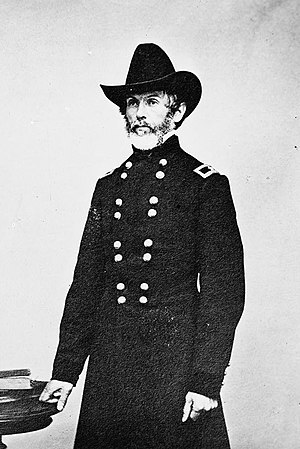
        It is interesting that Pierce's focus was not solely on the performance of his own regiment in the fray. He also highlighted on the role of two commands of artillery in the engagement, one in Silas Casey's Division and the other in the division of Darius Couch. These two divisions were a part of the IV Corps commanded by General Erasmus Keyes.
        One is left to speculate how Pierce occupied his time during the battle -- whether he stayed on the sidelines or delivered ammunition and/or water as army chaplains sometimes did.
        Pierce left the regiment later in 1862. He lived in Oklahoma after the war before settling in Missouri. He died in 1926 at the age of 91.   

John N. Pierce
Courtesy of Bill Parr
         We skirmished all the way up to Savage Station and Fair Oaks, our division [Casey's] being on the advance. Now we were near enough to Richmond to hear the church bells ring.
          Nearly every day our pickets were fired on, and in this way we lost some men. But the real storm of battle did not break until the last day of May. While our men were at dinner [lunch], a shell fell in our camp near the colonel's headquarters, and the battle was on.
          We had sight guns in our battery, commanded by a fine captain [actually Colonel Guilford Bailey] and supported by the division of infantry.
          When the action was over, one-hundred out of one-hundred and twenty-six horses in the artillery, and the captain and most of his men lay dead on the field. We lost six guns. But in front of those guns, I counted sixty-seven dead men of the seventh Georgia [actually the 6th GA] alone and terrible was the harvest of death on both sides. Some of the bravest and best of the 85th went down on that bloody field.
         Casey's division received the shock of this battle. Couch's division lay nearly half a mile in our rear. They did not join in the fight until we were crushed. But when the Johnnies came up to them they were prepared. Their part of the artillery was commanded by a very young West Pointer [27-year old Robert Mayhew West] , who held his fire until the enemy coming five lines deep, was within three hundred yards, firing as they came, and hurting the infantry supporting the guns.
 Union Artillery at Seven Pines      LOC
        But when the enemy was ready to charge, the guns sent one sheet of terrible flame so effective that the charging host stopped and staggered and before they could reform another volley of grape and canister struck them so terribly that there was little left before those guns but slaughtered men.
        That day there were but two divisions, Casey and Couch, between the Chickahominy and Richmond.
        Lee and Johnston rushed down sixty thousand strong on the two divisions, mustering about fourteen thousand. [Confederate General Joseph Johnston had 60,000 men in his command. He intended to utilize around 50,000 in the attack. Because of miscommunication, just under 40,000 were engaged.]
        The roar of the battle roused our men on the other side of the Chickahominy, which was swollen by the great rains, far beyond its banks.
        Hooker, Heintzelman, and Sedgwick, Sumner and others [Heintzelman was already on that side of the river] by Herculean effort, crossed the river in the night [late afternoon] and turned the tide of battle next morning. We soon recovered all the ground lost the day before and might have gone into Richmond.
Edwin Sumner's Division Crossing Chickahominy River to Seven Pines
Century Magazine, 1885
       That the young men may have some correct notions of what it cost to put down the rebellion, allow me to say that the division that I belonged to had thirteen thousand men reported for duty April 1, forty-nine-years ago. In sixty days marching and fighting the enemy's guns and the malaria of the swamps cut our fighting strength from thirteen thousand to twelve hundred. That is war.

                                                                                                                 ONE OF THE BOYS

The Republican
Clinton, Missouri
May,1911    Page 1

Monday, May 4, 2020

The 85th Pennsylvania and the Peninsula Campaign


Map by Hal Jespersen       www.cwmaps.com
 
     [NOTE: The participation of the 85th Pennsylvania is described in more detailed fashion in a Chapter 4 of my book, "Such Hard and Severe Service: The 85th Pennsylvania in the Civil War."
          I am also currently chronicling the 85th Pennsylvania during the Peninsula Campaign on my Facebook blog called "85th Pennsylvania Civil War Page." That blog  follows the regiment on a day to day basis.]

          The Peninsula Campaign was the costliest military campaign in which the 85th Pennsylvania was ever involved. Seventy-eight men died during the approximately four-month operation from April to early July of 1862. Two thirds of the deaths resulted from diseases. Another seventy-two men were medically discharged and sent home.
General George B. McClellan   LOC
          After initially being stationed in Washington, DC in 1861-62, the 85th Pennsylvania sailed away from the nation's capital in the spring of 1862 to participate in the Peninsula Campaign. This was General George B. McClellan's grand effort to capture the Confederate capital city of Richmond, VA by executing an amphibious landing at Fort Monroe and marching up the Virginia peninsula between the James and York rivers towards their objective seventy miles away.
        Due to McClellan's delays, misjudgment of the enemy strength and the emergence of Robert E. Lee as the leader of the Army of Northern Virginia, the Union campaign ended in failure. McClellan withdrew his army from the peninsula in July of 1862. It took two years for the Union to once again threaten the capital city of the Confederacy.
       The Peninsula Campaign had long-term repercussions, mainly the cold realization for the Union that the war would not end quickly. President Lincoln called for a draft in which the states would provide 300,000 additional troops to subdue the rebellion.
       The Peninsula Campaign would comprise a series of battles beginning with the Yorktown siege and Battle of Williamsburg in early May, at Seven Pines and then the Seven Days Battles. The 85th Pennsylvania was heavily involved in the first-day fighting at Seven Pines but sent to the rear for the ensuing Seven Days Battles. Finally, the 85th Pennsylvania was among the Union regiment which were tasked with helping guard McClellan's retreat to Harrison's Landing in July.
       At the outset, the march up the peninsula took its toll on McClellan's army. This was especially true for the regiments (including the 85th) of General Silas Casey's Division of Erasmus Keyes' IV Corps. Casey's Division was the most inexperienced in McCellan's army, not yet fully trained when they left Washington, DC. Casey's men lacked basic supplies for weeks and often had to haul supplies over rain-soaked and muddy roads.
       The 85th regiment marched out of Newport News at the bottom of the peninsula on April 16 and
Soldiers Assisting with Lowe's Balloon    LOC
were soon encamped at Camp Winfield Scott near Warwick Court House. They were stationed here for two weeks on McClellan's left flank while Union forces prepared for a siege of Yorktown, famous of being the site of the British defeat at the hands of George Washington's Continental Army in 1781 that effectively ended the Revolutionary War. Immediately upon arriving at Warwick Court House, Company A of the 85th Pennsylvania was detailed to help Professor Thaddeus Lowe launch his observation balloon on April 17.
         McClellan finally struck at Yorktown on May 4, only to find the much smaller Confederate force had abandoned the fortification the previous night. As the Confederates were marching away from Yorktown,  Union forces caught up to their rearguard. The Battle of Williamsburg ensued on May 5. During this battle, casualties numbered 4000 (2300 on the Union side).With Colonel Joshua B. Howell of the 85th Pennsylvania replacing the severely ill brigade leader General William Keim, the regiment was called into a line of attack in a reserve role. Although they stayed aligned in formation during a cold night of freezing rain and were targeted by Confederate artillery, the regiment was not called upon to enter the battle. Two of their men were wounded by shells; one (Sergeant Daniel Miller of Company K, the regiment's first man to fall in battle) fatally.
         The IV Corps of General Erasmus Keyes, which included the divisions of Casey and Darius Couch, continued towards Richmond and crossed the Chickahominy River in late May. The III Corps of Samuel Heintzelman soon followed. While the III Corps stayed close to the Chickahominy, Keyes' Corps advanced. Couch's Division established a camp at Seven Pines; Casey's Division advance another 3/4 of a mile and set up a camp at Fair Oaks. Why McClellan would place his smallest and least-experienced division at the vanguard of his army just three miles from Richmond in an exposed position remains a mystery.
      Noting the vulnerable position of McClellan's split army, Confederate General Joseph Johnston decided to attack the two Union corps on the last day of May following a torrential rainstorm that swelled the Chickahominy. This would make it difficult or perhaps impossible for McClellan to reinforce Keyes and Heintzelman across the suddenly fast-moving waters of the  Chickahominy.
Map by Hal Jespersen           www.cwmaps.com
     Despite being severely reduced by disease and being outnumbered 2-to-1 or 3-to-1, Casey's Division valiantly held off the Confederates for 2-3 hours before being enveloped on three sides and retreating. For this they were severely rebuked by McClellan, who was far behind the fight hobbled by an attack of malaria. But because of the effort of Casey's men, the Union had time to get additional men into the fight from across the Chickahominy that stabilized the field for the Union and kept the Confederates from swallowing up nearly half of McClellan's army.   
        The two-day battle of Seven Pines ended with no decisive winner. It did result in 11,000 casualties, mostly on the Confederate side. It was the largest battle in the East up until that time and the closest ever fought near Richmond.
        Casey's Division, which took more casualties than any other Union division on the first day of the fight,was sent to the rear for the next month. Silas Casey, erroneously scapegoated for retreating on the first day, was replaced by John J. Peck.
       For three weeks, the 85th Pennsylvania was stationed on McClellan's extreme left near White Oak Swamp. The had no tents or knapsacks, which were left behind at Seven Pines. Scores of men got sick in this environment and many died. Camp hospitals were filled; their doctors were called away to help with the wounded from the Seven Days Battles. The 85th Pennsylvania did no fighting during the Seven Days Battles; instead they were tasked with several reconnaissance missions and with digging entrenchments, They were in a reserve role for the final encounter Malvern Hill.
       When McClellan decided to abandon the peninsula, his army was ordered to march from Malvern Hill to Harrison's Landing for the withdrawal. Peck's division was tasked with guarding the withdrawal. The irony did not escape the 85th Pennsylvania and other regiments from Casey's former command. Once shamed for retreating from Seven Pines,  it was now their task to monitor the retreat of the rest of McClellan's huge army.
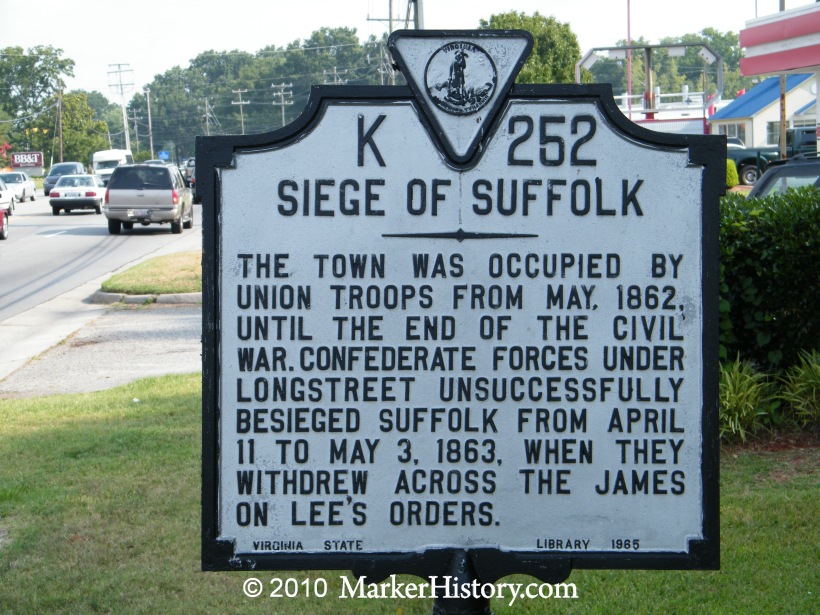
    The 85th Pennsylvania, now part of a brigade led by General Henry Wessells who was named Keim's permanent replacement, marched back down the peninsula to Hampton, VA. While the rest of McClellan's army was shipped to northern Virginia for the Battle of Second Bull Run, Wessells' Brigade was sent to Suffolk, VA where they spent the next four months.
Union Retreat from Harrison's Landing, VA
Frank Leslie's Illustrated