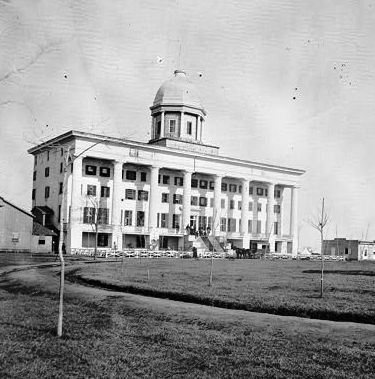
Showing posts with label Andersonville. Show all posts

Thursday, July 1, 2021

Stories from Company B


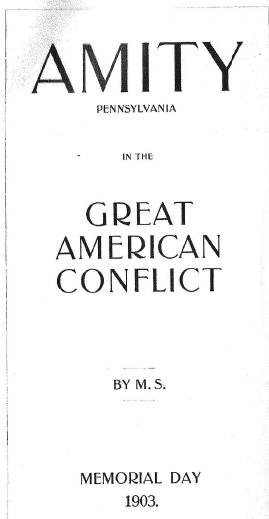
        The title of this article is from a pamphlet written in 1903 to celebrate Memorial Day in Amity, a small community in Washington County, Pennsylvania. While doing research for my book, "Such Severe and Hard Service: The 85th Pennsylvania in the Civil War," I came across an online reference to this booklet. Margaret Farrabee of Amity generously emailed me a copy, and I was able to use several citations for my book.

      The booklet was written early in the 20th century by 66-year old Manaen Sharp, who had served im Company B of the 85th Pennsylvania regiment. Sharp spent a year with the 85th before receiving a medical discharge. After the war, Sharp became a successful business man who owned furniture stores in Amity, Beallsville, and Little Washington, all in Washington County. He also served for a time as county treasurer. He died in 1920 at the age of 82 and is buried in Little Washington. His 1903 booklet chronicled the Civil War service of residents from the Amity area.

       Sharp wrote a paragraph or two about 40 or so soldiers from Amity and the surrounding area, including several from his own Company B of the 85th. [Sharp also included soldiers from other regiments, including the 140th Pennsylvania, the 22nd Pennsylvania Cavalry, and the 1st West Virginia Cavalry]. In doing so, Sharp recounts a series of interesting stories about many of the soldiers. Undoubtedly, Sharp was present for at least some of the events he described. In other cases, he surely heard the stories as they were passed around the campfire. Some others he learned about after the war, perhaps at regimental reunions. Below, I have quoted Sharp [in italics] concerning several members of his company.

     I have included some of my own comments in red.

LOC

CHRISTOPHER ANDERSON: At the battle of Fair Oaks, while aiming his gun, it was hit between his hands and disabled. He reached for the gun of a dead comrade and used it to good purpose.

Anderson returned home from the war. He died in 1877 and is buried in the Lone Pine Cemetery in Amity. 

Burying the Dead at Seven Pines
Harper's Weekly 7-19-1862
WILLIAM BRADEN: When driven back at Fair Oaks [Seven Pines], Comrade Braden was helping to carry his wounded captain [George H. Hooker] to save him from capture. The comrade, J.F. Speer of Canonsburg who was assisting, heard the sickening thud of a minie ball strike Comrade Braden, who said, 'I am hit.' He staggered to the road side and that is all that is known. He is buried among the unknown, but where? 

This story is confirmed by Captain Hooker, who wrote a letter in the pension file for Braden's widow, Nancy. “I hereby certify that Wm. Braden, a private of Company B 85th Pa. Vols, was shot while assisting me from the field at the Battle of Fair Oaks [Seven Pines] Virginia on the 31st day of May, 1862. He fell severely wounded and is supposed to have died from the effects of his wound.” 


Camp on Morris Island
Frank Leslie's Illustrated Newspaper

CYRUS [JOSIAH] BRATTON: His grave is on Morris Island, S.C....The autumn of 1863, he was excused from duty on account of sickness, but stayed in his quarters; his discharge papers were signed and with high hopes he expected to start for home in the morning. His messmate got breakfast and went to awaken him and found him in the sleep that knows no waking.

Bratton died of chronic diarrhea at age 25. 

JOHN CLAYTON: He was mortally wounded at Deep Bottom and taken to the hospital at Fortress Monroe where he died and is buried in the cemetery at the fort. At the Battle of Kingston [Kinston, NC] in loading his piece, he spilled the powder but rammed the bullet. He sat down where he stood in the battle line, unbreeched his gun, took out the ball, put his piece together, reloaded, putting in both balls with the remark, 'I will try and ring two of them this time.'

Clayton died from a gunshot wound to the thigh. He is buried in Hampton National Cemetery.

Attack Route Upon Battery Gregg
Robert Knox Sneden  LOC
LEONARD HAMMERS: In his performance of duty he had many narrow escape[s]. Only once did he lose hope -- that was when with others he was ordered to Morris Island to spike the guns of Battery Gregg. this battery could be swept by every fort in the harbor defences of Charleston. When they tied a strip of white on the left arm of this detail, so as to distinguish them from the Confederates in the darkness, hope left him but courage never. When the rebel guard discovered them and gave the alarm, the marines manning the boats refused to land, so the attack was not made.

Hammers enlisted at age 17. His first child was born while he was away in the army. He and his wife, Charlotte, had five more children after the war. He died in 1904 and is buried in AmityI wrote about the attempts to take Battery Gregg here.


Wounded Soldiers at Savage Station
1862    LOC

ABRAHAM IAMS: This young man took my place in the center of Co. B when I was taken to the hospital. He was mortally wounded at Fair Oaks, shot through the right breast and lay on the battlefield from Saturday afternoon until Monday afternoon when he was taken back to Savage Station. At 2 a.m. the next morning, in a down pour of rain, Robert Bair [James Robison Bair] put him on a train for White House [Landing, VA] where he died and is buried.

Corporal Iams was killed at the age of 25. He was survived by his parents, William and Delila, and his sister, Rachel.


Unidentified Soldier    LOC
DANIEL MILLER: Was badly wounded at Deep Bottom and was sent to the rear for repairs, [then] turned up in the hospital in New York. An order came to the effect that all soldiers who could walk to the railroad train would get furloughed. A comrade, James F. Speer, made him a pair of crutches. On these he started for the train, but had to rest many times before reaching it; but when seated in a comfortable car, contentment was seen all over his jolly face.

  Miller died in 1914 at age 78 and is buried at Amwell, PA. 

Kinston Swamp
45th Massachusetts Reunion 1887

DAVID MILLER: Was slightly wounded on the first and also on the second day at Fair Oaks. At Kinston, while charging through a swamp [left] , he was badly hurt and was helped to solid ground by a comrade who, examining his wound found the ball had passed through a deck of playing cards and buried itself in his side. He died about 1898.

I wrote an article about Miller on this blog which can be found here. Sharp's observation about Miller being wounded on the second day at Seven Pines [Fair Oaks] is interesting because his regiment had been sent to the rear and had not been actively engaged in the fight that day.

Henry T. Reynolds
HENRY TAYLOR REYNOLDS: Was killed June 14, 1864 near Richmond, Va. His body fell into the hands of the Confederates and was not recovered. He had a presentiment that he would not live out his time. A short time before he was killed, he applied for and obtained leave of absence to visit his old parents, as he believed, for the last time.

This story is confirmed by Oscar Lyons of Company B. I have included Reynolds' story in Volume II of my regimental history. Lyons wrote, "The boys tried to cheer him (Taylor) up, but the thought in his mind that he was soon to be killed could not be removed. On the 17th of June, we were in the rifle pits near Petersburg, on the North side of the Appomattox River... Many times through the day, Comrade Reynolds said he felt that his time had come; that he would never again see home or friends, for something told him that he was going to be killed."


Bridge over Chickahominy River
LOC
JAMES SMITH: At the change of base by McClellan's army on the Peninsula it was necessary to destroy a bridge over the Chickahominy river. The engineers had failed to destroy it because of a hot fire from the rebel side. An appeal was made to men in the line. Comrade Smith was one to respond for this important but dangerous work. They destroyed the bridge, checking Stonewall Jackson's flank movement.

Smith attended the last reunion of the regiment in Brownsville, Fayette County in 1928. He died in 1930 at the age of 88. 


Moses Smith


MOSES SMITH: Served his full term but had the misfortune to serve the latter part of it in Andersonville prison. Comparatively few survived this prison life. He was wounded at Kinston Bridge, the ball first striking his gun glancing into his leg. At Bermuda Hundred, an old tobacco barns stood close to the rebel line and was used by the rebel sharpshooters. Comrade Smith and Dave Miller crawled to this barn and set it on fire, completely destroying it. 

Moses Smith was the cousin of James Smith. He was captured at Ware Bottom Church, Virginia on June 16, 1864 with two other members of the regiment while on picket duty. He survived Andersonville and lived until 1924.


Hewitt's Cemetery
Rices' Landing, PA

SAMUEL WALTON: At Wier's [Ware] Bottom Church, while on picket duty, he was approached by a large grizzly unkempt rebel. Sam supposed he was coming in to surrender, as many of them at that time were doing, and was learning against a tree waiting to receive him. Imagine his surprise when the Johnnie fired, the ball striking the bark of the tree near his head, pieces of the bark stinging his face and neck. Comrade Walton did his duty at once. The rebel tried to reload his gun at once. The rebel tried to reload his gun after he was down and fatally wounded. 

 Walton enlisted as a private before being promoted to commissary sergeant.  He spent most of his postwar life in Greene County. He was involved in the lumber business and was the proprietor of S.M. Walton and Sons. He died in 1914 and is buried in Rices Landing, Greene County.     


Wednesday, April 21, 2021

Michener, Bailey and Shallenberger in Captivity


Union Prisoners
    Tucker-Vaughn Papers
 

           Primary source materials regarding Captain John E. Michener of the 85th Pennsylvania have been abundant in the research of his regiment. Michener's Civil War letters and those of his family, provided by descendent Margaret Thompson, have offered a rich source of material. Michener also penned a few letters home that were published in local newspapers that proved to be excellent primary source material.

Harper's Weekly          February, 1862

    Michener was an effective, even admired officer who spent seven months in captivity in 1864. He was captured on Whitemarsh Island near Savannah on February 22, 1864 along with two other members of his regiment -- Sergeant James Bailey of Company K and Private Eli F. "Frank" Shallenberger of Company C.


       Although much is known about Michener's later captivity and release, little has been written about the early days and weeks of his imprisonment with Bailey and Shallenberger. A few Southern newspapers provided some details of their capture on Whitemarsh Island. Included in these stories are descriptions of their immediate capture; but much of these narrations were gloating about them falling into Confederate hands while the Union mission to Whitemarsh Island, Georgia ended in failure and quickly returned to Hilton Head, South Carolina. Union versions, meanwhile were just as one-sided; they ignored the failure of the mission on Whitemarsh to capture African American workers while emphasizing the capture of a dozen Confederate pickets.

      "Prison Life," the 1867 work by T.J. Simpson that is partially about Michener's time in captivity, is rich in details about these early days of imprisonment of Michener and his two comrades. Michener, through Simpson, related the story of  their interrogations, their time in Savannah, and then their transfer to various prisoner-of-war camps. Simpson made Michener a hero for misleading his captors about the strength of the invading Union force on Whitemarsh.

      Michener spent part of his imprisonment in Charleston, South Carolina. Shallenberger and Bailey meanwhile were both shipped to the infamous Andersonville prison in Georgia. They both technically survived. However, Bailey lived long enough only to be a part of a prison transfer. He died from malnutrition aboard a hospital ship on his way back to the North. Shallenberger was also greatly diminished by his time at Andersonville. But Shallenberger was released at the end of the war, recovered, and went home to Brownsville, PA where he became a prominent contractor and builder.. 

         "Soon after the capture of Captain Michener, a rebel brigade under the command of General [Raleigh] Colston arrived at the fort having been hurried forward with all possible haste. Halting his brigade for a moment, he sent his aid to interrogate Captain Michener. as to the strength of the Yankee forces on the island. The union forces under General [sic, Colonel Joshua B.] Howell, composing the entire expedition to the island, only numbered between five and six hundred; but the chivalrous rebel general somehow received the impression from Captain Michener that they exceeded five thousand in number, and thus was detained with his entire brigade until his scouts returned and reported that the small number of Yankees who had infested the island were embarking in their boats and then it was too late to pursue them. Had the rebels known our strength in time and thrown but one regiment over the bridge, and followed our hastily retreating forces, the whole command might have easily been captured; as it was, however, their escape was entirely due to the detention of the rebels by Captain Michener's answers to their interrogatories. But this ruse of Captain Michener's to save his friends from capture came near costing him his life, for the rage and chagrin of the rebels when they found how they had bee duped by that Yankee officer know no bounds. A reported of a Savannah paper who was present insisted they should hang Captain Michener from the nearest tree. While they were debating what disposition to make of him, another Union prisoner, [Eli] Frank Shellenberger, was brought in and their righteous indignation settle down into a holy calm. These three prisoners being guarded together, Captain Michener availed himself of the opportunity to post the other two so that their reports to the rebels might agree.

         "As the evening approached, the prisoners were marched to Savannah and were then on their first visit to the \city, generously furnished by the Southern chivalry with apartments in the jail. All along the road to Savannah they were treated by the soldiers and citizens to a continued series of compliments and encomiums, some of which it is true were of the rougher sort and none of which it is true were often falling from the ruddy but pouted lips of the lily-fingered beauties of the South, were a s palatable as would have been a little roast beef or boiled ham. But an inward consciousness of the glory they had achieved in that one hour's struggle and triumph caused them to receive the compliments, thus gratuitously bestowed  with a smile and to march to that prison with a prouder step than to a slaveholder's banquet or a rebel throne.

Left to Right: Andersonville, Macon and Savannah    LOC

           "At nine o'clock that evening, after their introduction to a somewhat narrow apartment in the city jail, the prisoners were invited to indulge in the luxury of a limited meal on corn mush, a favorite kind of provision with generous rebels to satisfy the appetites of hungry Yankees. Although the captain and his fellow prisoners had for the last 24 hours substituted rapid marches and hard fighting for the more agreeable pastime of eating, yet either because the invitation was rather cool, or the corn mush not sufficiently inviting, they respectfully declined the proffered kindness. During the night they were favored with the presence of a rebel sentinel, whole interest in these newcomers was such as to drive slumber from his eyelids and cause him to pace the room during the long an silent hours, with undeviating footsteps, much to the annoyance of the prisoners, who failing to appreciate his society, declined to admit him into their councils and hence conducted their interviews in a whisper.

       At six o'clock next morning this prisoners, with tired limbs and empty stomachs, issued from the jail in all the 'pomp of glorious war,' and falling into line, marched with measured step, not to the martial notes of fife and drum, but to the coarser music of taunts and sneers and mingled should of the chivalrous inhabitants of Savannah, who seemed anxious to give them a parting salute from the well filled magazine of their pent-up wrath, as the Yankees took their seats in an old ragged car, and bid them a final adieu. As the train moved off, the prisoners felt that, although not 'homeward bound,' they were bound for the seat of Southern chivalry and that they would be favored with a change of base at least in the great city of Charleston. 

Charleston Jail      LOC

          "Two days had now passed without anything to satisfy the cravings of hunger, and Captain Michener began to realized that there was something more than poetry in the fortunes of war. In his first lessons the romantic was mixed with the real, but now the real began to predominate, greatly to his annoyance. The trip to Charleston was performed without any violation of the rules of fasting which had been so rigidly observed and it was not an unwelcome thought that this pious operation would terminate with the journey. They reached the city as evening began to cast its lengthening shadows and although strangers in the place found no difficulty in procuring lodgings as previous arrangements had been made for their reception The equanimity of the city authorities was not seriously disturbed however with any extensive preparations for an ovation to the prisoners, on their arrival but a small procession, composed of a select few of the prominent officials headed by the provost marshal of the city quietly conducted them to their private apartment in the jail. And now, retired from the obtrusive gaze of the vulgar herd, a change of plate, well filled with the choicest provisions adapted to the appetite of an epicure, would not have been objectionable. But the virtue of abstemiousness had been so long and rigidly practised that it was feared the too liberal indulgence of the appetite might superinduce dyspepsia; therefore corn mush prepared in the latest style with a little hot water and no salt, was again sparingly furnished the prisoners. This the dictates of modesty and exhausted nature would not permit them as on a former occasion to decline; hence their first night in the city of Charleston was rendered memorable by a banquet on cold much in jail.

Savannah Jail     LOC


        "...On arriving at Macon, Georgia, Captain Michener and his two fellow prisoners who were captured with him on White Marsh Island, Corporal Bailey and Frank Shellenberger, were called to experience the pangs of separation, the captain being retained at Camp Oglethorpe, while they were sent on to Andersonville, that much-dreaded and fatal prison. As the train moved slowly off and the parting words fell from their lips, they but too plainly saw in each other's countenances the conviction that it was a last adieu as the sequel proved in the case of poor Bailey. Having reached Andersonville, he lingered amid pestilence and famine for six months and when the news of his exchange came, the last feeble energies of his nature rallied and enabled him to reach Charleston harbor on his way to his beloved home and family when in sight of his country's flag, with the flag-of-truce boat ready to receive him, he died, the victim of starvation in a land of strangers, leaving a wife and little ones to mourn his said and untimely end. His companion, Frank Shellenberger, scarcely less enfeebled and emaciated from the effects of starvation, finally succeeded in reaching his home, the mere wreck and skeleton of his former self -- a living witness of the barbarous treatment and unparalleled sufferings at Andersonville."

Andersonville Prison     LOC

NEXT: Michener is held prisoner in Macon, Georgia.

Sunday, November 1, 2020

Captain John E. Michener's Escape Attempt

         In my soon-to-be published Volume II history of the 85th Pennsylvania regiment, one chapter is devoted to the capture of Captain John E. Michener of Company K. Michener began the war as a lieutenant in Company D, the unit that included my great grandfather and his brother. 

        Michener participated in the Battle of Seven Pines (VA) in 1862 and siege operations around Charleston, SC in 1863. In early 1864, he was promoted to captain of Company K. But in February of 1864, Michener was taken prisoner along with two other members of his regiment on Whitemarsh Island near Savannah, GA and held in captivity by the Confederates for ten months before being exchanged.


Captain John E. Michener, 85th PA
Courtesy of Ron Coddington and
Military Images magazin
e

          I  wrote of Michener's period of captivity for Military Images magazine in an article entitled, "Following the Torn and Blood-Stained Colors: John Michener's Civil War Odyssey." The author is grateful to Michener descendant Margaret Thompson for providing family letters that were written that form the basis of above article as well as the chapter of my book.

      Shortly after the war, Michener wrote a brief publication about his time in prison. So far, the author has been unable to find Michener's work, entitled, "Prison Life: Capt. J.E. Michener of Co. D, 85th Pa. Vols." (Michener's former regimental comrade, Sergeant James E. Sayers of Company F, later owned a newspaper in Waynesburg, Greene County and  mentioned Michener's work in an 1867 article.)

       While researching the regiment, the author came across a letter written by Michener that appeared in a Pennsylvania newspaper in late 1879. Michener's letter was in response to an event that made national news; a South Carolinian names Thomas J. Butler travelled to New York City for a series of paid demonstrations in which his trained dogs were used to capture fugitive slaves and later escaped Union prisoners during the Civil War. Michener's newspaper letter was a response to this Butler's comments. More on that later.

Map showing Macon and Charleston
The "X" is the approximate location of the escape


           In his 1879 letter, Michener disclosed a wartime escape attempt from a train by himself and five other Union officers whom he lists by surname. The author was able to identify two of these fellow officers: Colonel John Azor Kellogg of the 6th Wisconsin and Navy Paymaster Luther Guiteau Billings. Billings was later promoted to read admiral and in a 20th century news article, gave a brief summary of the escape attempt. [the other three escapees were described by Michener as Ensign Stoner of New York, Ensign Smith who later settled in Washington, DC, and Lieutenant Brooks, who became an editor with the National Republican newspaper in Washington, DC]

       Colonel Kellogg wrote a detailed summary of the escape attempt that he entitled, "Capture and Escape: A Narrative of Army and Prison Life." . It was published in 1908, twenty-five years after Kellogg's death

             Michener briefly described the escape in his 1879 letter, "During the night of the 27th of July, 1864, me and several hundred of my brother officers were being transported from Macon, Ga., to Charleston, S.C.,, and escaped to the swamp, through which we hardly thought an alligator could have followed us. Late in the afternoon of the second day, however, we heard the deep baying of dogs which we held off with stout clubs until the two fiendish owners had called them off."  [Pittsburgh Commercial, reprinted in the Lancaster (PA), Examiner, November 5, 1879, page 5]

Rear Admiral Luther G. Billings
Baltimore Sun, 2-17-1918
       In his equally short version for an interview more than 50 years later, Luther Billings remembered, "Once during my imprisonment, with some other men, I managed to break out and we headed toward the coast, hoping to reach the Union fleet. we came to a swamp three miles wide and struggled through it, swimming, wading through mud, dodging snakes, and when, after five hours' toll, we got through, we were captured by a posse of Confederates with hounds." [Baltimore Sun, February 17, 1918, page 46]

        Then in October of 1879, John Thomas Butler of Hamburg, SC, travelled to New York City with his pack of dogs for the purpose of demonstrating how the animals were used to track down fugitive slaves. Butler's expressed purpose, in addition to making money from the exhibition, was to show people in the North that the process of capturing fugitives was relatively humane and that the purpose of the dogs was to track runaways, not attack them.

       Said Butler, "I wanted to travel a little and brought these dogs along to pay my expenses and to show you all at the north that we are not quite as bad as we are said to be."

         Another New York newspaper quoted Butler at stating: "Slave-tracking has been ever since I remember a great business in the South. Slaves going over fences and through swamps for more than 300 miles have been successfully pursued by these hounds, but they are all trained to a nicety and never will do harm except by order of their master." [from the New York Herald, October 5, 1879]

        [Butler was evasive when asked if he had used his dogs or otherwise taken part in the so-called Hamburg (SC) Massacre in in 1876. In this event, six blacks and one white were killed. Four of the deceased blacks were hanged. A group of about 200 armed whites attempted to disarm 38 members of a black militia in the predominantly black community near the end of the Reconstruction era.]

      Butler came to New York City with an African-American named Sam Britton who performed the role of a runaway slave. Britton's task was to escape on horseback and on foot, and then wait for Butler's dogs to track him down. 


John A. Kellogg
Service in the 5th Wisconsin Volunteers
Rufus Dawes, 1890

       One newspaper described the exhibition: "Reaching the gate, Sam consented to be 'treed' and mounting the high gate-post, awaited the hounds. When they found him they redoubled their noise and leaped high into the air, trying to reach the negro, who beat them off with his whip, until Mr. Butler came up and sounded his horn, at which the barking ceased as if by magic and the fugitive withdrawn. Mr. Butler says the dogs would have bitten the negro, well as they knew him, had he descended before the horn sounded, unless he had a club with which to beat them off. The moral seemed to be that a runaway slave must be careful to have a tree handy when the dogs overtook him, or, if he is caught in a swamp, he should be able tot cut a hickory stick in season." [New  York Tribune, reprinted in the Pittsburgh Commercial Gazette, 10-18-1879, page 2]

        According to the New York Times, Butler's dogs were not ferocious looking. "the dogs were meek and mild little fox-hounds, of the kind that could hardly frighten anything larger than a rapid. Colonel Butler said they were the only kind every used in the South for tracking negroes and that they were not bloodhounds...They looked very sleek and neat, also looked as if a man with a good nerve and a heavy pair of boots could easily overcome their alleged ferocity." [reprinted in the Buffalo Morning Express, 10-13, 1879, page 2]

         Michener read of Butler's comments and became enraged.  His experience as a prisoner and escapee that that the dogs were not as benign as Butler described. "Before starting on our weary march back to that dreaded imprisonment this Mr. Butler took occasion to say: 'It's a good thing for youuns that our catch dogs gave out half a mile back here, for I reckon they'd a tored youuns up 'fore weuns got thar.'" [Michener presumed his captor was not Thomas J. Butler, who would have been about 21 years old at the time, but a member of the extended Butler family.]

     "I saw a Captain Holmes of St. Louis, Mo., a prisoner of war at Macon, Ga., in July, 1864, who had been fearfully mangled and torn by a catch dog in Alabama while he was trying to escape. I frequently saw two large South American blood-hounds outside of the stockade at Macon. At Andersonville, they had a large pack of blood-hounds.

       "...when this other edition of the Butler family tells the Tribune reporter that they 'had and have no blood-hounds down thar in South Carolina,' I say, 'you lie, you villain, you lie.'"

        Upon surrendering, Colonel Kellogg asked his captor if the dogs would have bitten the escapees had they not been called off. The captor smiled and said, "I reckon they might; right smart, too. I've seen them hounds eat [blacks], and I reckon they wouldn't know the difference atween them and you uns."


Harper's Weekly   November 21, 1863

      Kellogg's statement confirms John E. Michener's claim that using the hounds was not always humane, as Butler claimed in 1879, but that the dogs had the potential to bite, maim, and even kill the humans they were pursuing.

     In his blog entitled, "Management of Negroes Upon Southern Estates," Toussaint Heywood has a post entitled "Track-dogs, catch-dogs and bloodhounds" that describes in detail the use of these animals to pursue and capture runaway slaves. 

        Kellogg, who had been wounded and captured at the Battle of the Wilderness in Virginia on May 5, 1864,  wrote his memoir in the early 1880's. Kellogg states the name of his pursuer in 1864 was named Davis, who may have been Butler's partner during the search. Kellogg alludes to Butler's visit to New York City in the following statement,  relating that there was a special observer among those at the New York City slave-catching demonstration in 1879.

       ",,,,this negro hunter,,,exhibited his pack of bloodhounds in New York City, and among those who attended the exhibition was my friend L.G. Billings. I should have supposed his curiosity would have been gratified in South Carolina."

       Michener was not the only reader to dispute Butler's performance, although for different reasons. A South Carolina newspaper wrote of the event, "the stalwart Republican press has been heralding it abroad with the startling news that there are hounds of this character in every neighborhood through the South and that the poor negroes are chased and torn by them at the mercy and caprice of the lawless whites...it is a miserable falsehood." [The Intelligencer, Anderson, SC, 10-23-1979, page 3]

Uncle Tom's Cabin Theatre Poster   LOC
         If Butler's main purpose was to make money, he apparently was successful. It was reported that Butler was paid well to join an acting troupe that was performing "Uncle Tom's Cabin." Butler's dogs were to be used in one of the scenes for dramatic effect. He also expressed hopes to tour the country and perhaps even Europe.

           Upon being captured by Butler and Davis, Michener and his five fellow escapees were sent to prison at Charleston. Two months later, Kellogg attempted another escape. This time he travelled 350 miles and succeeded in reaching Union lines in Georgia. He rejoined his regiment and participated in the Battle of Five Forks near Petersburg, VA on April 1, 1865. Kellogg returned to Wisconsin and resumed the practice of law. He was elected to the Wisconsin state senate in 1878 and died five years later.

         Later in life, Billings was promoted to rear admiral of the navy and served in three wars. He died in 1920 and is buried in Arlington National Cemetery.


        Captain John E. Michener was released as part of a prisoner exchange on the James River in Virginia on October 16, 1864 for Mississippi cavalry Captain Alonzo J. Lewis. Michener's letter to the newspaper concerning the track dogs was printed on November 5, 1879. He died four days later from a lung disease that perhaps the resulted from his confinement and escape attempt. He was 41 years old.


Fredericktown Cemetery, Washington County, Pennsylvania


Monday, June 15, 2020

"If I Never Get Home, I Hope to Meet You in Heaven."

  •          
  • Clarksville, Greene County
    from J.A. Caldwell Greene County 1876
    (Pryor household may be in pink section of map)


            One of the saddest stories in the history of the 85th Pennsylvania was that of Wilson and Robert Pryor. They were father and son, both members of Company D from Clarksville, Greene County. The remaining members of their family, particularly Wilson's wife, Catherine, were dealt a cruel fate during the course of the war.

          Wilson and Robert enlisted together into Company D of the 85th Pennsylvania in September of 1861. Wilson was 49 years of age; his son was 18. They served in the regiment together from training camp  in Uniontown, PA,  to fort construction in Washington, DC and  through the Peninsula Campaign in Virginia.

      There are hints that young Robert was the male figurehead of the family for his mother and younger siblings even before the pair went off to war. Wilson Pryor seems to have had an alcohol problem for many years before his enlistment. Robert may have wanted his father in Company D with him to perhaps help him cope with life; their service would also provide a steady income in order to send money home to Clarksville to support the rest of the family.

        Wilson Pryor apparently was ailing during the Peninsula Campaign. Robert wrote home to his mother sometime in the summer of 1862 that, "Pap [Wilson] wants you to try and stay where you are till he gets home if you can. That is if he ever gets home. I hope to God we may both get home safe again. If I ever get home safe you shall never want for anything, but if I never get home I hope to meet you in heaven."

        After 14 months in the regiment, Wilson Pryor was sent home on a medical discharge in early 1863. Mr. Pryor was in poor health when he died a few months later on June 4, 1863. The cause of death was an apparent suicide by hanging in his hometown. He was buried in the Burson Cemetery in Clarksville, Greene County.

         A local newspaper recorded Pryor's death in this blunt manner.  Wilson Prior of Clarksville, in this [Greene] County, committed suicide in an old, unoccupied dwelling of that village on Thursday last. It is supposed he was laboring under mental aberration. His body was not found till Monday morning, when an inquest was held. The deceased was a returned volunteer, and left a large family of children.”'

        In the months between is father's discharge and his death, Mrs. Pryor had to go to efforts to conceal the money sent home by her son. Catherine later stated in an affidavit that Wilson Pryor "...was of intemperate habits [drinking] and that in order to prevent him from squandering the money sent by Robert Pryor, her said son, it was necessary for her to conceal the fact of having received said money from her husband."


Harper's Weekly  February 28,  1863

           The affidavit also stated that Robert was supporting his family even before joining the 85th Pennsylvania regiment. "[he contributed]...two hundred dollars...by laboring at home for his parents." During his nearly three years in the service, he sent $115 home to Catherine as well. The strain to provide for his mother and siblings only increased in the months following his father's death. Plus Robert had to deal with the harsh conditions of the war itself.


           In the late summer of 1863, with his regiment stationed on Morris Island, SC, Robert and his regiment were digging trenches to prepare for a third assault on Fort Wagner. Robert wrote home that, "We are now in sight of Charleston and its defenses. we go within 100 yards of their forts every night and are very much exposed to their shell and canister. One day there was a shell come over and blowed one man all to pieces and wounded 5 men."


LOC


         Writing from Folly Island, SC in the spring of 1863, Robert discussed with his mother the death of his father. Robert wrote, "You said it was reported around Greene County that Pap tryed to hang himself [while he was] in the army. There is nothing of it. It is a lie...Let me know if you can get a house and a lot of about 3 or 4 acres. I don't want you to go back to the old place."

         Several months later, Robert wrote, "You told me Pap was in his right mind when he killed himself. I don't believe he was or he would not have done it."

         Robert, however, added a warning for his younger brother, David. "Tell David to never touch whiskey, Mother. I want you to raise them children wright. I know you can do it and keep on good terms with all the neighbors...Let's quit talking about Pap."

         Robert Pryor remained with the regiment through the Siege of Charleston, South Carolina, and then the  Bermuda Hundred Campaign in Virginia in 1864. 

        At the Second Battle of Deep Bottom, Robert was captured. He may have been a part of a contingent of troops who, after capturing a Confederate earthwork, became overzealous and pursued the retreating enemy into Confederate lines where they were taken prisoner.

         Robert died in captivity from exposure and malnutrition at the infamous


Andersonville prison camp in Georgia. 

        Along with fellow Company D comrade James Meeks, it was assumed the pair had been killed at Second Deep Bottom. But another captured member of Company D, Joseph Burson, lived long enough upon his release to disclose the fates of Meeks and Pryor to his father.


LOC


        Just prior to his capture, Pryor wrote home to his mother that, "I expect to be home in two months. my time is out the 15 of September, that is when my inlistment runs out."

         Corporal Burson of Company D was exchanged but died on the way back to western Pennsylvania. Catherine Pryor received a letter from Burson's uncle informing him of Robert's death in Andersonville. It said, "I received a letter from my brother last night [Joseph] is lying in bed in Annapolis [hospital]. He tells me your son Robert Pryor is dead. My brother said he died of starvation."  

The fate of Catherine Pryor and her family is unknown.                                                                   


Monday, February 3, 2020

The Last Man Killed

   
Frank Leslie's Illustrated
       In last week's post, I  wrote about James C. Davis, who was the last member of the regiment to be wounded in battle. Davis was hurt on April 2, 1865 at Fort Gregg near Petersburg, VA.
       Davis survived his wound and went on to a prominent career in education. He died in 1914 at the age of 63 and is buried in Kansas.
      The next question to answer is: Who was the last member of the 85th Pennsylvania to die in battle? The answer is not as cut-and-dried as one would imagine. My interpretation of the question is: Who was the last to die AS A RESULT of being wounded in battle. Based on this view, several men who were wounded at Second Deep Bottom could be that last victim. And what about those who WERE members of the 85th Pennsylvania but had transferred to another regiment to meet their permanent fate?
        Following the  2nd Battle of Deep Bottom in August of 1864. the 85th Pennsylvania was involved in the fighting at Darbytown Road, VA (October 13, 1864), Fort Gregg (April 2, 1865) and Appomattox Court House (April 9, 1865) before the war finally ended.

New York Daily Herald
August 17, 1864
    In these final three engagements, several men from the 85th Pennsylvania were wounded but there were no fatalities.
     That means that the last engagement in which men from the regiment were killed was at 2nd Deep
2DP Reenactment  2014
Bottom. In that engagement 21 men were killed and another 73 were wounded.
      In this one-week operation near Richmond, most men died on the day of the most substantial part of the fight on August 18,1864.         


      The 85th Pennsylvania, as a member of Francis Pond's Brigade, stormed and captured a Confederate earthwork.
       Captain Lewis Watkins of Company E was severely wounded in the arm and  leg while helping to lead the charge at 2nd Deep Bottom. Watkins died six weeks later at Chesapeake Hospital at Fort Monroe (VA).
        Of the men who suffered fatal wounds, Sergeant Myers P. Titus of Company G lingered until November 2, 1864 before dying in a Hampton (VA) hospital. Corporal James Sturgis, also of Company G, hung on from his wound until he expired on November 6, 1864 in a hospital in Beverly, NJ.
        Next is Corporal James C. Bailey of Company C. Bailey was captured on Whitemarsh Island near Savannah, Georgia on February 22, 1864. The exact cause of his demise is unclear. Bailey was eventually released during a large-scale prisoner exchange but died on the voyage home on December 12, 1864. He may have been wounded on Whitemarsh Island. How much this contributed to his death is unknown. On the other hand, his death may have been due to harsh treatment at Andersonville and other Confederate prison camps. If he were wounded on Whitemarsh Island, was this a a contributory factor to his death?
        Next is Private David Baldwin of Company D. Baldwin  who died in Salisbury (NC) POW camp in North Carolina on December 19, 1864. Baldwin was listed as missing-in-action at 2nd Deep Bottom. Like Bailey, it is unknown if Baldwin were wounded, causing him to be captured. If he were wounded, it is also not known if this contributed to his death. He may have died of starvation or caught a disease in camp and expired.

Captain Richard Dawson
James Hadden, History of the Old Flag
 

      Captain Richard Dawson of Company I was wounded at the second (and successful) Union assault on Fort Fisher near Wilmington, North Carolina in January of 1865. Dawson was wounded in the arm, which was amputated, but he passed away a few weeks later from the wound on February 1, 1865.
    But Dawson was not a member of the 85th Pennsylvania at the time. Two months earlier, he had been promoted and was an aide to General Adelbert Ames when he was wounded during the storming of Fort Fisher.


Corporal Joseph W. Burson
Courtesy of Sharon Zbinovec

      Finally there is my choice for the last fatality in the regiment, Corporal Joseph W. Burson of Company D. Burson was wounded and captured at Second Deep Bottom in August. He was released from prison camp near the end of the war, but died on March 17, 1865, three weeks before the war ended. He died at home in Fredericktown, Washington County, just after being accompanied home by his father, Edward, from a hospital in Annapolis, Maryland.
    Therefore, although it is possible Burson's death was caused by his stay in prison camp, his wound does appear to be a contributing factor in his demise.

https://www.findagrave.com/memorial/46342950/joseph-w_-burson

Walton Cemetery
Clarksville, GreeneCounty, PA

Monday, January 27, 2020

The Last Wounded Man

f
The Daily Courier
Connellsville, PA
September 18, 1911, p.1

    Next week I am going to speculate about which soldier from the 85th Pennsylvania was the last to die in battle or due to a battlefield wound. This week I will focus on the last man to be wounded who survived the war. That man appears to be Private James C. Davis of Company E. 
    The article at the right from 1911 mentions four veterans of the 85th Pennsylvania and has a revealing mention about Davis as the war was closing.
   The four soldiers from the 85th Pennsylvania in the article are, Davis, Eli F. Huston, (Company E), Henry J. Molleston (I) and Joshua Torrance (B). Huston, Molleston and Torrance were all living in Dawson, Fayette County at the time.
   The story is about a dinner party for Davis, who lived in Oklahoma. Davis had come back home for a regimental reunion that year that was held at Brownsville, Fayette County in mid-September. About 75 elderly members of the regiment were in attendance. 
   Eli F. Huston was 76 years old at this time. He was born in Fayette County. He enlisted as a wagoner but spent the war in the ranks as a private. Huston was wounded in the thigh on Morris Island, SC in 1863 when his regiment was digging a series of trenches that resulted in the capture of Fort Wagner. He was a coal miner following the war, working his was up to superintendent of one of the mines near Connellsville.
    Six years later in 1917, Huston attended the regimental reunion in Uniontown and died the next day of pneumonia at age 82.
   Henry J. Molleston, age 74, was given a medical discharge after 30 months of service. After the war, he attended California Normal School (now California University of Pennsylvania, the school from which the author graduated). Besides finding work as a farmer and blacksmith, Molleston worked as an engineer for a coal company . He also became a preacher in the Methodist Church.
          Joshua Torrance. age 67, was captured at Ware
Andersonville Prison   LOC
Bottom Church (VA) on June 16, 1864 while on picket duty. He spent two months at Libby Prison in Richmond and then another 11 months at Andersonville Prison in Georgia. He was released on April 1, 1865, just eight days before the end of the war. He later served as school director, tax collector and auditor for Lower Tyrone Township in Fayette County following the war. 
       James C. Davis, 65 years of age, had enlisted as a 15-year old in 1861. After the war, he served as a school principal in Pennsylvania, Ohio and Indiana. He moved to Kansas in 1880 where he served three terms as school superintendent for Chase County. He later purchased land in Oklahoma and became an oil prospector. 
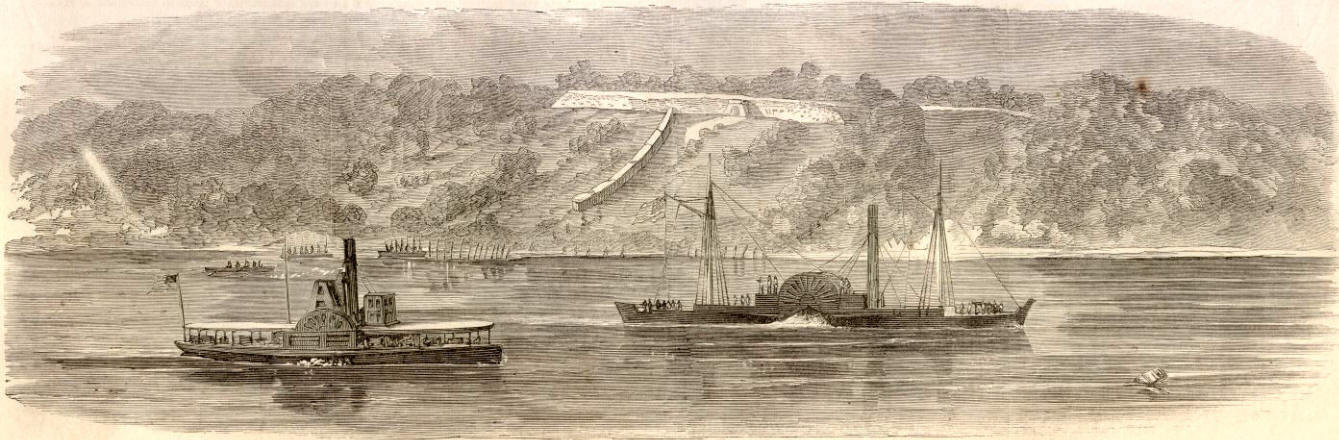
       The article about the dinner party states that Davis was "the last member of the 85th wounded, the date being April 2, 1865."
         This happened during an assault upon Fort Gregg on the last line of inner line of defenses around Petersburg, VA. Earlier in the day, after a ten month siege, Union forces had pierced the Confederates' outer defensive line, forcing Lee out of his trenches. Lee headed west in a futile attempt to link with Joseph E. Johnston's army in North Carolina. Lee surrendered at Appomattox one week later to end the war. 
 
Storming Fort Gregg    LOC
        Fort Gregg was extremely bloody. Every Confederate  in the fort, numbering about 330 men, was killed, wounded or taken prisoner as the rebels fought to the end to give Lee time to evacuate the Richmond-Petersburg front.
   
Colonel Thomas O. Osborn
Yates Phalanx
        The 85th Pennsylvania was in the first of four waves to rush the fort. They were commanded by Colonel Thomas O. Osborn of the 39th Illinois. Osborn's Brigade made it into the moat surrounded the earthen fort, which saved many lives until several more waves of Union troops breached the parapet and  forced the fort to surrender. The Union suffered over 700 casualties in the assault. *
        Davis was one of 163 remaining members of the 85th Pennsylvania  after 1864  (these remaining men had reenlisted or had joined the regiment after 1861 and were yet to complete their three years). The majority of the regiment had gone home four months earlier.
        The last battle in which the full regiment was engaged was at Darbytown Road near Richmond on October 13, 1864. Seven men were wounded in this affair, none fatally.
       The seven men wounded at Darbytown Road were: Sgt. Charles Eckels (Company E), Corp. Nicholas Derbins (F), Pvts. David Baker (B), Milton F. Bradley (I), Jacob Huffman (F), Samuel E. Johnson (I), and George Rodeback (C). 
         The reduced 85th Pennsylvania was involved in two more fights during the last week of the war, at Rice's Station and Appomattox (see map below), but the author could find no documentation that any member of the regiment was killed or wounded in either fight. So Davis does indeed appear to be the last man in the regiment to suffer a wound or death on the battlefield.


Last 3 Days of Lee's Retreat to Appomattox, VA
85th PA was part of  the Army of the James [ORD] 

Map by Hal Jespersen
www.cwmaps.com
            *NOTE: It has always puzzled the author why the 85th Pennsylvania did not suffer more casualties at Fort Gregg. The 199th Pennsylvania from Philadelphia, engaging in their first battle since joining Osborn's Brigade, suffered ten deaths. The 39th Illinois, also in the brigade, suffered 12 men killed and 31 wounded. Davis was the only soldier in the 85th PA to be killed or wounded while being in the thick of the fight.
           Granted, these regiment were larger that the 85th Pennsylvania at the time. Nonetheless, considering that all of these regiments (along with the 62nd Ohio and 67th Ohio) made the first charge upon Fort Gregg simultaneously, wouldn't one expect to find more losses in the 85th Pennsylvania?