Monday, March 16, 2020

Casualties at the Battle of Seven Pines

 
From Dickey's History of the 85th Regiment Pennsylvania Volunteer Infantry
     The first major battle fought by the 85th Pennsylvania was also the largest in which they ever participated. It was at the Battle of Seven Pines near Richmond on May 31, 1862, the first day of the two-day battle during George B. McClellan's Peninsular Campaign.
     The 85th Pennsylvania had more casualties in this battle than in any other in which they fought. It should be noted that at Second Deep Bottom in August of 1864, the regiment, which was down from its original thousand members to around 400, suffered a higher percentage of losses at that time.
    At Seven Pines, the 85th Pennsylvania was in Henry Wessells' Brigade, part of Silas Casey's Division of Erasmus Keyes' Fourth Corps. McClellan had inexplicably sent Casey's Division across the Chickahominy River, far in advance of the rest of his army. Three of McClellan's five corps did not cross the river. Only Keyes' Fourth Corps and Samuel Heintzelman's Third Corps advanced across the river to probe the enemy and to set up an encampment just three miles from Richmond.
     Casey's Division, the least experienced of McClellan's five divisions and the one most depleted by illness, was thus put in the vanguard of McClellan's army with both flanks exposed.
    Confederate General Joseph Johnston saw an inviting target for an attack, especially after a heavy spring rainstorm on May 30 had swelled the Chickahominy River into a rushing, almost impassable torrent. With most of McClellan's army on the opposite side of the river, and perhaps being unable to engage, Johnson devised a plan to throw his whole army of 60,000 against Casey's and Keyes' 33,000 men.
 
Picket Line and Casey's Division at Seven Pines
From Dickey's History of the 85th Regiment Pennsylvania Volunteer Infantry
        In the early afternoon of May 31, Confederates began the battle with a head-on charge towards Casey''s Division. Some of the 85th Pennsylvania were on picket duty, the rest were back in camp by two battlefield landmarks -- the Twin Houses and a large wood pile.
    Casey's heavily outnumbered division held off the charging rebels for 2-3 hours, giving part of McClellan's force time to cross the Chickahominy River via the rickety Grapevine Bridge and stabilize the battlefield. The fight ended in a draw with heavy losses on both sides.
    The 85th Pennsylvania suffered about 25 killed (including those who succumbed to wounds) and about 50 more who survived their wounds. Several others were captures. A few who were wounded who were captured and died in Confederate prisons. Several others were exchanged and rejoined the regiment several weeks later.
    The tally below gives the casualties by Company, along with a brief biographical mention of each soldier's service. The list was culled from period newspapers, pension records, the 1860 fedearl census, the 1890 Veteran Schedule and obituaries.


                          Field and Staff

Wounded        Lt. Col. Henry A. Purviance    [killed in action in 1863]
 Hosp. Stwd. Robinson Elder   [father of 7 children]

                Company A

Killed              Collin W. Barr                        [died at age 25]
 Robert Byers                          [died in Annapolis hospital at age 21]          
 John Low                               [died the next month in Annapolis hospital]
 John A. McMillen                   [died 10 days later in Washington, DC hospital]

Wounded      Corp. R. W. Criswell              [finished 3-year enlistment]
John Patterson                      [refused to allow arm to be amputated]
William Scott                         [recovered in New York City hospital]
Lt. John W. Acheson             [wounded again in 1864]
Joseph Schell                        [finished 3-year enlistment]

                 Company B

Killed             Lt. Julius A. Smith                  [captured; died 1 month later in Libby Prison]
William Howard                      [died at age 32]
John Reily                              [died at age 49]
Jacob Younkin                        [survived by wife and infant son]
William Braden                       [killed carrying Capt. Hooker to safety]
John B. Hayden                      [captured, exchanged, and died 3 months later]
Corp.Abraham Iams               [died at White House Landing, VA]

Wounded       Capt. George H. Hooker         [life saved by Wiliam Braden]
 Owen Turner                           [transferred to Veterans Reserve Corps]
 Joshua Torrence                      [captured in 1864; survived Andersonvile]
 James Speer                           [wounded again in 1864]
 David Miller                             [later wounded in North Carolina, 1863]
 Amos Bane                             [discharged 5 months later]

                  Company C

Wounded       Corp. John Woodward              [killed in action in 1864]
John B. Thompson                    [discharged 8 months later]
James Day                                [wounded again in 1864]
   
Captured        James Beatty                            [exchanged; rejoined regiment]

                   Company D

Killed              Corp. Alexander Morgan        [first listed as MIA; body never identified]
 Sgt. John N. Donagho             [died from wound in Salisbury POW Camp]

Captured        Hezekiah Horn                         [exchanged, finished 3-year enlistment]

                     Company E

Killed             Lt. Thompson Purviance           [cousin of Lt. Col. Henry Purviance]
Lindsay Hartman                       [brother William served in Company E]

Wounded      Sgt. Robert G. Taylor, leg          [discharged 5 months later, paralysis]
Sgt. Moses McKeag, arm          [discharged 1 month later]
Sgt. John Heckard, shoulder     [discharged 11 months later]
Corp. Charles E Eckels             [served 3-year enlistment]
Corp. Martin Pope, hand           [finished 3-year enlistment]
Musc. Samuel Wood, finger      [finished 3-year enlistment]
Rudolph Smith, thigh                 [discharged, date unknown]
Henry J. McAllister, temple        [age 16 at the time of his wounding]

                    Company F

Killed             Richard F. Lewis                        [served in company with brother George]
Cornelius Estrep                        [died 2 months after wounding]
Meeker Rinehart                        [died in Annapolis 5 weeks after wounding]

Wounded       Corp. Morgan Rinehart, neck     [finished 3-year enlistment]
Isaac DeHavely, side                  [wounded again, 1864]
Charles Chapman, cheek           [finished 3-year enlistment]
Jacob West, thigh                       [recovered after 7 months in DC hospital]
Lisbon Scott, hand                      [captured 1864 and survived Andersonville]
Jesse Cheney, hand and thigh   [discharged 1 month later]
Isaac Gray, hand                        [recovered at home; wounded again, 1863]
Samuel Thompson, hand           [lost a finger; served regt. band for 3 years]
Jacob Weaver, hand                  [spent 6 weeks recovering in Annapolis hospital]
Thomas M. Sellers                     [wounded again in 1864]

                     Company G

Killed              Asberry Phillips                         [died 2 days after wounding at Fort Monroe]
                      Corp. Harrison Hoge, knee        [died 10 weeks later]

Wounded        Sergeant James R. Core         [discharged 9 months later]
                       John Cline                                [wounded again in 1863; finished 3-year enlistment]


                    Company H

Killed               Lt. James Hamilton                 [buried on the battlefield]
  John Conn                               [married farmer with 7 children]
  William Hare, chest                 [died by wood pile on battlefield]

Wounded         Corp. George Colburn            [died on disease, 1864]
  James Bird                              [later died of disease with 4th PA Artilllery]
   Andrew J. Burgess                 [finished 3-year enlistment]
   Reason B. Daniels                  [discharged 10 months later]
   William Dennison                   [died of disease 6 months later]
   Francis D. Morrison                [father of MOH winner Francis Morrison]
   William Muhlenberg               [killed in action in 1864]
   Harrison Younkin                    [discharge 13 months later]
   Thomas J. McClintock            [discharged 6 months later]
   Ross Sterner                           [again wounded in 1863 and 1864]
   James Nichlow                        [finished 3-year enlistment]
   Jesse Peck                              [finished 3-year enlistment]
   Frederick Yurgason                 [killed in action in 1864]

                    Company I

Killed                Corp. James S. Hackney            [died at age 21]

Wounded          Sgt. Lucius Bunting                   [discharged 3 months later]
    Corp.Richard Lincoln, hand      [discharged 7 months later]
    William E. Finley, leg                 [finished 3-year enlistment]
    Cornelius Hennessy, hand        [finished 3-year enlistment]
    Warren Kilgore hand                 [killed at Spotsylvania in 1864]

                     Company K

Wounded           Sgt. Samuel Grim                    [killed in service in 1863]
     Matthew Campbell                  [discharged 19 months later in 1864]

Monday, March 9, 2020

1887 Reunion of the 85th Pennsylvania


       The final chapter of my soon-to-be-published Volume II history of the 85th Pennsylvania regiment covers the annual reunions of the regiment from 1872 to 1928. Luckily, numerous online newspapers from western Pennsylvania helped me to track down the locations and dates of every reunion. Sometimes, a newspaper would simply publish a brief article about the activities and guest speakers at the affair. At other times, the newspaper would publish an extensive article prior to the reunion to discuss the preparations made by the hosting town or city in southwestern Pennsylvania. At other times, the newspaper would send a reporter to cover the one or two-day events, which usually included a parade, a dinner with speakers, and an evening campfire.
  
Union Veterans' Parade
LOC
  Washington, PA was a frequent site for the reunions. This is not surprising, since two full companies of the 85th Pennsylvania and parts of three other companies had men who came from Washington County. 

     The following article appeared in the Washington (PA) Weekly Reporter in 1887. The reporter, who is unnamed, attended the nightly campfire in "Little Washington" and summarized some of the speeches that were made at the event.
    Among the speakers was Harvey J, Vankirk, a prominent lawyer and politician from Little Washington who had served in the 85th Pennsylvania. Another talk was delivered by Washingtonian Boyd Crumrine, also a former member of the regiment who went on to a career in law and local history.
    This reunion was held jointly with another regiment with deeps roots in Washington County, the 100th Pennsylvania, also known as the "Roundheads." The 100th Pennsylvania lost 400 men to battle deaths and diseases during the war. Their highest loss was at the Battle of Spotsylvania Court House during Grant's Overland Campaign of 1864. 
    The 100th Pennsylvania was comprised of men from the following western Pennsylvania counties: Washington, Butler, Beaver, Lawrence, Mercer and Westmoreland.


Washington Weekly Reporter
September 2, 1887
THE CAMPFIRE
HELD BY THE VETERANS OF THE 85TH AND 100TH
Pennsylvania Regiments, on Wednesday Evening, in the Opera House

         No camp fire ever held in Washington has attracted attention equal to the one held in the opera
The Fairmont West Virginian
May 30, 1908
house Wednesday evening. The building was crowded, many persons having to stand. The exercises were opened with prayer by the Rev. Loyal Young, Arnold’s orchestra furnished the music, which was of a very high order. A quartette consisting of Robert Wright, Ben Wolf, Harry Stevenson and Blanchard Hughes rendered a number of very fine musical selections, among which were “The Soldier’s Farewell,” “Marching Through Georgia,” and others. Comrade A. [Alexander] W.Pollock of the 85th acted as toast master. The first toast, “The 100th," was responded to by Chaplain Audley Browne. “The 85th” was responded to by Captain H. [Harvey] J. Vankirk. He spoke of the services of the 85th at the front and lamented that some of his old comrades persistently remained unmarried and while he did not wish to be personal, he said that Robert Caldwell and Tommy Griffith were two of them. “The Rank and File” was responded to by Henry Dougan, Esq of the 100th, of this place. He asserted that the real heroes of the war were the rank and file and that if Grant had not been backed by a brave and loyal rank and file, he could not have been successful. He expressed disbelief in the stories of some historians that Gen. Sherman led the advance at Missionary Ridge, and while he believed that “Little Phil” [Sheridan] did his whole duty on this and every other occasion but he did not believe that either Gen. Sherman, Grant, Sheridan or Thomas were in the line which swept over the ‘ridge” on that memorable occasion.
     “Our Flag” was to have been responded to by Comrade Mountain, but as he was not in the hall Boyd Crumrine, Esq., Washington, took his place. He pictured the dismal time the last, old soldier will have in trying to hold a reunion with lively colors. He said that he did not know who the Mr. Mountain was who had inflicted on him this misery, but he supposed it was Billy Mountain.
     “The Union Soldier in History” was responded to by Congressman [Oscar L.] Jackson of New Castle, who made the speech of the evening. He said that an attempt was being made to write history in a different way from what it should be and that rebel flag order and other things like character would not do. His speech was received with rounds of applause.
     The toast, “The G.A.R.,” was responded to by Comrade [William] Pershing of Cincinnati. “Our Country” was responded to by Captain [Anson B.] Campbell. The most touching toast of the evening, “Those who went and came not,” was responded to by Major James P. Sayer in fitting terms. Comrade Hausman, of Pittsburgh, made the response to the toast, “The Ladies of Washington,” W. [William] H. Underwood was called on to respond to an impromptu toast, “The bummer;” he did it in great style, ending by saying that the best bummer he ever knew was Henry Dougan, Est. Commander [Andrew S.] Eagleson of Wm. F. Templeton Post returned thanks for a picture of General [Daniel] Leasure, presented by J.C. Stevenson, through Congressman Jackson. The camp-fire went out shortly before 11 p.m."


Wheeling, West Virginia
Union vets cross the street
rather than walk under Cleveland ban, substitutener


       The reunion was also covered by the Pittsburgh Daily Post from September 1, 1887. The end of the article speaks of a controversial sign promoting president Grover Cleveland, who was generally unpopular with Civil War Union veterans. Cleveland was a Democrat, the first elected since before the Civil War. Cleveland had avoided Civil War service by hiring a substitute. Finally, Cleveland wanted to put limits on the pension program for Civil War veterans. 


Monday, February 24, 2020

Medal of Honor Recipients in the 85th PA

     
LOC
        For their actions during the Civil War, three members of the 85th Pennsylvania regiment were awarded Congressional Medals of Honor. They were John Shallenberger, William E. Leonard and Francis Morrison.
       Another member of the regiment, James Huff of Company E, stayed in the army following the war and was awarded a Medal of Honor in the 1870's during the army's campaign against the Apache Indians in America's southwest.
      Both Shallenberger of Company B and Leonard of Company F won their medals for capturing enemy flags during the Second Battle of Deep Bottom on August 16, 1864 near Richmond. Their medals were issued on April 6, 1865.
    Francis Morrison of Company H won his Medal of Honor for trying to save a fellow member of his company while under fire at Ware Bottom Church in Virginia on June 17, 1864.
       Leonard and Shallenberger's heroic moment occurred during Grant's fourth offensive against the Richmond-to-Petersburg (Virginia) line in mid-August of 1864, a simultaneous two-pronged attack against both cities. The 85th Pennsylvania crossed the James River from the Bermuda Hundred to help pressure the Confederates' Richmond defenses and make the Confederates continue to stretch their defensive line covering both cities. The 85th Pennsylvania, as part of the brigade of Colonel Francis B. Pond, temporarily poked a hole in the Confederate line near Darbytown Road, but eventually Union forces gave way in the face of Confederate reinforcements. The Union had better success at the other end of the line near Petersburg, capturing the Weldon Railroad.
Pontoon Bridge at Deep Bottom,VA
Across the James River    LOC
      At Deep Bottom, the 85th Pennsylvania and the rest of the Pond's Brigade stormed and captured an enemy position. The brigade suffered heavy losses. One account said that an initial volley by the Confederates killed and wounded many of Pond's men in the assault, but that the rest of the brigade took the Confederate position before the rebels could reload their muskets and fire a second time. Colonel Edward C. Campbell of the 85th Pennsylvania noted it was the first time his men had engaged in hand-to-hand warfare in their nearly three years of fighting. During the final phase of capturing the enemy position, Shallenberger and Leonard snatched enemy colors from two regiments.
         Shallenberger (or Shellenberger), age 24 from Fayette County, worked as a farm laborer after the war He died in 1911 at the age of 71 in Granville, Licking County, Ohio where he spent the last 20 years of his life. Nearly eighty years later, in 1990, a new bronze marker was installed at his gravesite at the Welsh Hills Cemetery in Granville, Licking County. His original marble headstone mentioned only his service in the Civil War. The newer bronze marker recognized him for his Medal of Honor.
         In 2013, the Pennsylvania General Assembly designated a portion of the Mon Valley Expressway Interchange (Exit 18) in Fayette County as the John S. Shallenberger Interchange.
     Like Shallenberger, William E. Leonard captured an enemy flag at Second Deep Bottom. Leonard was wounded in the ear during the assault but survived. Leonard died in early 1891. A fellow soldier from Company F, wrote a tribute to Leonard that appeared in the Washington Observer newspaper (February 26, 1891, page 1). Sergeant James E. Sayers wrote a detailed recollection of Leonard's actions that day.
   
Second Deep Bottom Reenactment  2014
 "To him belongs the honor of capturing the only flag taken from the enemy on the field of battle by a Greene countian during the war...It was at the battle of Deep Bottom, Va., on August 16, 1964. In a charge by our brigade upon the enemy's works, the 85th lost the heaviest it ever did in a single dash.  Massed in 'close column by division at half distance,' which simply means a solid square, we made the outset through a thicket, and coming upon the enemy's rifle pits before we were scarcely aware of their proximity, received the fire of a double line of battle so close that the blaze from their muskets almost reached our faces. Men fell so thickly that I thought they all had laid down. But in an instant, those not hit recovered from the blinding,crashing musketry and with a 'hurrah,' leaped the rifle pits. Many of the Confederates fled, but a large proportion were captured. Ed Leonard went over the works a few rods to my left, and with others, pursed the enemy until recalled or rather forced back by the enemy reinforced...It was a day or two after the charge before Ed reported the capture of the flag. He first told some of his comrades and showed them the flag, and by then it was reported to headquarters. Ed's story is that after he crossed the works, he saw the flag and went for it. The man who carried it was shot...the dead man grasped the staff so firmly that in the haste and confusion of the fight, Ed stripped the flag from its staff and stuffed it in his haversack and it remained there until the hurly burly and anxiety of the fight was over." 

Francis Morrison's Chest Wound
Courtesy of Vallorie Brady
      Francis Morrison enlisted into of Company H as  a 16-year old  from Ohiopyle, Fayette County and was the last of the 85th Pennsylvania soldiers to receive a Medal of Honor for a brave act during the Civil War. On June 17, 1864, at the Battle of Ware Bottom Church during the Bermuda Hundred Campaign, Morrison risked his life in an attempt to carry comrade Jesse Dial from the field to safety. Dial died of his wounds, but this did not lessen Morrison's bravery.
      Morrison's citation stated,  "Private Jesse Dial was struck by a bullet and left behind. Private Morrison saw his comrade fall and, with utter disregard of a hail of bullets, advanced towards the enemy and was soon at the side of his friends. As he tenderly raised him from the ground to discover to his dismay that Dial wad dead. He then carried the corpse back to his regiment."
    Morrison's act of bravery was observed by Captain Ross Sanner, who submitted a recommendation for the Medal of Honor.
      Two months later, Morrison was shot through the chest at the Second Battle of Deep Bottom. The gunshot wound through his lung was described as fatal at the time. Morrison recovered, however (he had an open exit wound in his back for the remainder of his life), and went on to live for 49 more years. Morrison had also been earlier wounded at Seven Pines, Virginia in 1862 and on Morris Island, South Carolina in 1863.
Instructor Francis Morrison
Courtesy of Vallorie Brady
       Morrison began receiving a pension for his back wound in 1867. By 1883, he was receiving $18 a month, demonstrating the seriousness of his injury (amputees received $24).
    The postwar life of Morrison, who returned to Ohiopyle, included teaching, farming, serving as as justice of the peace and school board member. He died in 1913 and is buried in the Sugar Grove Cemetery in Ohiopyle. (Laurel Messenger, August, 1968, p.8)
          Morrison received his Medal of Honor 33 years after his valorous act, probably with the intercession of Inspector General Robert P. Hughes, a former officer of the 85th Pennsylvania who helped lead the charge that day at Deep Bottom.
        James Huff of Company E  was from Washington, PA. Huff had the distinction of serving in the infantry, artillery and cavalry during the course of his career. Huff began his military service in the 85th Pennsylvania under sad circumstances. His brother, Andrew, was one of the first members of the regiment to die (from disease) early in the regiment's stay at Washington, DC in 1861.
      James Huff served for a year in the 85th Pennsylvania and then transferred to the 4th U.S. Artillery, Battery L. Unlike almost every other member of his original regiment, Huff decided to make the military his career. He reenlisted in 1867 and was sent to the western frontier.
       A biographical entry  from the turn of the century noted,“James W, Huff, a veteran of the Civil War, re-enlisted in the United
James W. Huff
States Army at Philadelphia in 1867, and was assigned to troop ‘L,’ 1st Cavalry. The troop, with others, was sent to Arizona in June, 1869. It remained at Fort Goodwin until 1870, and then went to Fort Apache, which it helped to establish. Huff was the first white man to construct a log-house in that region. The Apache Indians, those scourges of the southwestern frontier, went upon the war-path in the winter of 1872, and during the balance of the winter and spring of 1873 kept the available United States troops very busy. General George Crook, upon the commencement of hostilities, ordered into the field a part of the 1st Cavalry…The Indians were overtaken in the Dragoon Mountains, and defeated.

      "They were separated into small bands and scattered through the surrounding region. When about eight miles from the command, the Apaches were discovered. Notwithstanding that the scouting party was outnumbered five or six to one, the Apaches were without hesitation or delay vigorously attacked. Huff and his three companions during the fight, which was very fierce while it was in progress, succeeded in killing seventeen of the Apaches, when the remainder fled.” 
      After his army service, Huff lived in Georgia and in 1910 and was the overseer of a rifle range in Turkey Creek, Carroll County  Huff moved to Florida and died in New Port Richey in 1927 at the age of 87.


Friday, February 21, 2020

Thank You Palm Coast Civil War Roundtable


       I would like to express my appreciation to the Palm Coast Civil War Roundtable for inviting me to give a presentation on February 20 in Palm Coast, Florida. The venue was the Daytona State College - Flagler Palm Coast campus.

 
      Roundtable president (General) Grant Atkinson made the arrangements for my presentation, which was well attended by an audience of around fifty members and guests.
      Everyone was courteous and asked great questions. In addition to the regular members, thanks to my brother and his wife, Jim and Linda, for attending, as well as my brother-in-law John.
      My next speaking engagement will be in Waynesburg, Pennsylvania on April 14 to the Cornerstone Genealogical Society.


Monday, February 17, 2020

The Lucky Card Player

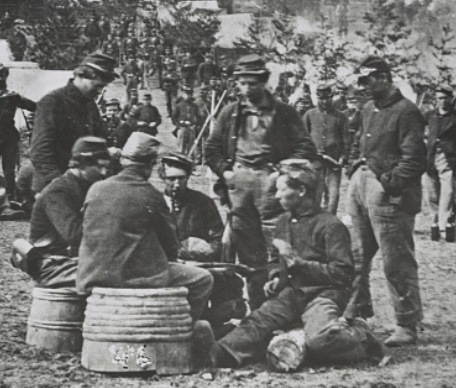
Playing Cards in Camp
LOC


       It was common for Civil War soldiers to toss away certain items just before going into battle. Dice, playing cards and pipes were often flipped away along the road or the brush while marching towards a fray. If a soldier were killed in battle, his personal belongings would be sent home to his family; many soldiers did not want their mothers to know that they had engaged in such habits as gambling or smoking.
       Corporal David Miller of Company B of the 85th Pennsylvania apparently did not hold such assumptions about his deck of cards. Perhaps he did use them to gamble. Maybe he thought he would be spared from injury or death. It could have been that his mother was no longer living. Or perhaps he just did not care. In any event, his decision to keep his cards may have saved his life.
      The 34-year old Miller, at the time a resident of Washington County, had already been wounded once, in the side and in the hand, at the Battle of Seven Pines in Virginia on May 31, 1862 when his deck of cards became a lifesaver. During this battle, about 75 men of his regiment suffered wounds, and about 25 died. Miller recovered and continued his service with his regiment.
     Six months later, in December of 1862, the 85th Pennsylvania was sent to New Bern, North Carolina to become part of the Goldsboro Expedition. This two-week mission, led by General John G. Foster, was tasked with disrupting the Confederate railroad center at Goldsboro sixty miles to the west and to interrupt the supply line for Robert E. Lee's Army of Northern Virginia.
Twenty-Fifth Anniversary of the Battle of Kinston
Reunion of the 45th Massachusetts Regiment
December 14, 1887
Post by Jason Tomberlin
     Foster's 10,000-man force was on their way to Goldsboro when they received word of the disastrous Union loss at Fredericksburg, Virginia.
    It is unclear whether or not Foster's goal was to simply stop supplies from reaching Lee (which did not matter now that the Fredericksburg battle had been fought) or whether he was to capture and occupy Goldsboro. With the federal army already badly defeated at Fredericksburg, the threat loomed of Confederate reinforcements being sent from northern Virginia to assist General Nathan "Shanks" Evans and his undermanned troops in North Carolina against Foster's command,
       Foster altered his plan. Staying in Goldsboro, he determined, was now out of the question. He decided he had time to march on to Goldsboro, destroy a railroad bridge and safely return to New Bern before Confederate reinforcements could arrive.
        On their way to Goldsboro, the 85th Pennsylvania was involved in two engagements in and around Kinston, At Southwest Creek, four miles south of the city, Companies B (including Miller) and D of the 85th Pennsylvania were sent, along with the 9th New Jersey, to force an opening through a thin Confederate artillery position. Both Union regiments made it across the creek at separate locations, gaining a pathway for Foster's force to continue on to Kinston.
     The next day, the 85th Pennsylvania as part of Henry Wessells' Brigade, slogged through a thinly  guarded swamp southeast of city towards the Kinston Bridge that spanned the Neuse River. This is where Miller's deck of cards came into play.
From a Kinston, NC Historical Marker
The yellow circle shows the position of  the 85th PA

       While part of Foster's force marched up the road towards the bridge from the south (the left of the picture below), the 85th Pennsylvania advanced towards the bridge from the southwest through the swamp (top left of the picture).
Kinston Bridge across the Neuse River
Harper's Weekly
      In this part of the assault, the 85th Pennsylvania and their brigade were slowed by the chest-deep waters. Confederate sniper fire also made the passage difficult. The Union troops were slowed by trying to advance through the water. On the other hand, as one member of the 85th Pennsylvania later commented, with the lower two-thirds of their bodies in water, the Confederates had less of a target to shoot at.
      During this advance, Sergeant Miller was struck. Nearly four decades later 85th veteran Manaen Sharp wrote a brief tract about veterans in the area around Amity, PA in Washington County.
      Of Miller, Corporal Sharp wrote,  "At Kingston [sic] while charging through a swamp he [MIller] was badly hurt and helped to solid ground by a comrade, who, examining his wound, found the ball had passed through a deck of playing cards and buried itself in his side." [Sharp, Amity in the Great American Conflict, p. 24]
         How badly was Miller wounded? Records are inconclusive.  Historian Luther Dickey, in his 1915 history of the 85th Pennsylvania, listed the names of the three soldiers from the regiment killed on the expedition but not the names of  five more who were wounded along the way. Miller may or may not have been one of these five. A later biographical sketch noted that Miller was treated for his wound in a field hospital. [Presidents, Soldiers and Statesmen, 1894, p. 1263]
        Miller either marched or rode the sixty miles back to the Union base at New Bern. The regiment stayed there for six weeks through the end of January before being transported to St. Helena Island, South Carolina. Their next military movement was not until April of 1863 when they launched an invasion of Folly Island, South Carolina.  This gave Corporal Miller four months to recover and rejoin his regiment.
        Miller stayed with his regiment for the next 18 months, finishing his three-year enlistment in November of 1864. 
       Later, in the 1890 Veteran Schedule, a special census of Union Civil War veterans which detailed their service and physical conditions, no mention was made of Miller having suffered from a permanent wound at Kinston.
        Miller lived in Jefferson, PA in Greene County at the time of the Veteran Schedule. No record of his burial could be found in either Greene or Washington Counties. Was Miller a gambler and/or did he continue his card-playing habit following the war? Suffice to say, he may have made his best gamble of his by keeping his cards close at hand at Kinston in 1862.


Monday, February 10, 2020

A Poem From Fort Good Hope (Washington, DC)

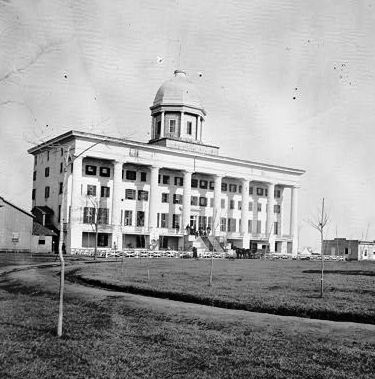
Interior of a Fort in Washington, DC During the Civil War

          The anonymous poem below was contributed by a member of the 85th Pennsylvania for a reunion in 1885 held in Canonsburg, Washington County. This regimental reunion was held jointly with the 10th Pennsylvania Reserves.
         First, some information about the reunion. A local newspaper noted of the event, "The town was in gay attire, the buildings being decked with flags,
From Boyd Crumrine
History of Washington County
1882
banners and evergreens. On the arrival of the 10:30 a.m. train from Pittsburgh, the visiting comrades were met at the station by the resident members of the regiments, and falling in line they all marched to the Jefferson Academy building..." 

       After several addresses, the veterans continued to the town's skating rink where a banquet dinner was served. At a campfire later in the day, Reverend Jacob L. Thompson, a veteran of Company A, shared some remarks. Another address was made by Alexander Pollock of Company A entitled, "Our Country: The Best Government on Earth." Reverend James S. Speer, a veteran of Company B also made a speech entitled, "Our Absent Comrades."
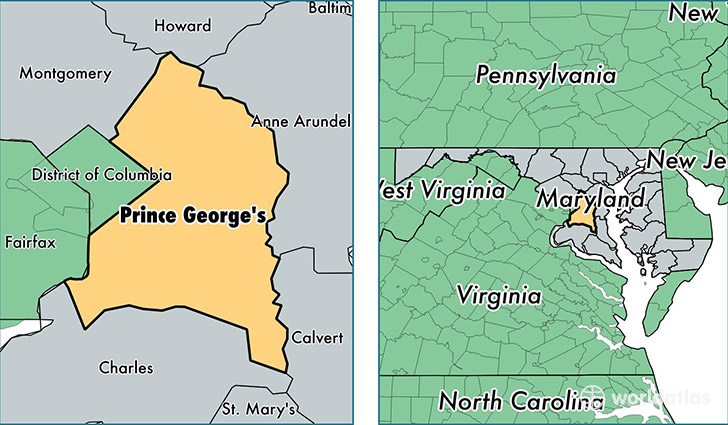
      During their stay at Fort Good Hope in the District of Columbia during the winter of 1861-1862, the regiment constructed its own fortification (one of 33 that ringed the nation's capital during the war)  and performed duties at several other facilities in the vicinity. Fort Good Hope was located across the eastern branch of the Potomac River, in the southwest corner of Washington, DC near the border with Prince Georges County, Maryland. When they had time, the men would tour the nation's capital. Several claimed to have encountered President Abraham Lincoln near the Capitol Building on various occasions.
        The poem,written during the 85th Pennsylvania's third month in Washington, DC and sixth overall in the army, reflects the writer's homesickness, restlessness in not yet having participated in battle, and frustration with the cold winter weather.


Washington Daily Reporter
October 2, 1885


WINTER IN CAMP
   The following lines were written by a member of Company E, 85th regiment PA. Vols. In February, 1862, at Camp Good Hope, Washington, D.C. and are handed us with a request to publish,


Alas the pleasant days have fled,
The rude storm king has come,
And I’m nodding in my canvass bunk,
With thoughts of “Home” sweet home.

I’m nodding by my friends,
The snow falls thick and fast,
And I’m thinking of the joy’d ones left
And happy hours we’ve passed.

I’m thinking of the little ones,
Now distant many miles,
Their childish glee, their numerous pranks,
Their tears and gentle smiles.

I’m thinking of the good things too,
Roasts, jellies, cakes and cream,
But oh! Alas such dainty things,
In camp are seldom seen.

I’m thinking of the merry dance,
I see each fairy form
As gracefully they promenade,
And smiling partners turn.

But Oh! How different here the scene;
My heart grows faint and sick,
“Tis shoulder arms,” “Right shoulder shift,”
“Now forward” “Double quick.”

The glorious orb of day is hid,
Nor sheds its genial heat,
To cheer the shivering sentinel,
While on his lonely beat.

The silver moon, the twinkling stars,
With clouds are overcast,
And each in haste a shelter seeks,
To shield him from the storm.

And still the storm king rages on,
With unrelenting will,
As though it were his chief delight,
Our icy cups to fill,

The rain, the hail, the sleet and snow,
Continue to descend,
Old Boreas blows his bitter blast,
That seem to have no end.

But cease complaint, my country calls,
Away with idle thought,
We came to save the stars and stripes,
Our fathers dearly bought.

No blood yet trickling from our feet,
We’re amply clothed and fed,
‘Twas not so with our noble sires
When forth to battle led.

Their footsteps left a bloody path,
As o’er the clods they passed,
Undaunted still they forward pressed,
To triumph at the last.

Though kinds and crowns may threaten us,
Though wild rebellion rolls,
Undaunted by our flag we’ll stand,
Or sleep beneath its folds.

Then comrades on with heart and hand,
We’ll show the gazing world.
While life and through and being lasts,
Our flag remains unfurled.

When limbs are stiff and ache with toil,
The cure lies in St. Jacobs Oil.
New York Illustrated Times
May 24, 1862


Monday, February 3, 2020

The Last Man Killed

   
Frank Leslie's Illustrated
       In last week's post, I  wrote about James C. Davis, who was the last member of the regiment to be wounded in battle. Davis was hurt on April 2, 1865 at Fort Gregg near Petersburg, VA.
       Davis survived his wound and went on to a prominent career in education. He died in 1914 at the age of 63 and is buried in Kansas.
      The next question to answer is: Who was the last member of the 85th Pennsylvania to die in battle? The answer is not as cut-and-dried as one would imagine. My interpretation of the question is: Who was the last to die AS A RESULT of being wounded in battle. Based on this view, several men who were wounded at Second Deep Bottom could be that last victim. And what about those who WERE members of the 85th Pennsylvania but had transferred to another regiment to meet their permanent fate?
        Following the  2nd Battle of Deep Bottom in August of 1864. the 85th Pennsylvania was involved in the fighting at Darbytown Road, VA (October 13, 1864), Fort Gregg (April 2, 1865) and Appomattox Court House (April 9, 1865) before the war finally ended.

New York Daily Herald
August 17, 1864
    In these final three engagements, several men from the 85th Pennsylvania were wounded but there were no fatalities.
     That means that the last engagement in which men from the regiment were killed was at 2nd Deep
2DP Reenactment  2014
Bottom. In that engagement 21 men were killed and another 73 were wounded.
      In this one-week operation near Richmond, most men died on the day of the most substantial part of the fight on August 18,1864.         


      The 85th Pennsylvania, as a member of Francis Pond's Brigade, stormed and captured a Confederate earthwork.
       Captain Lewis Watkins of Company E was severely wounded in the arm and  leg while helping to lead the charge at 2nd Deep Bottom. Watkins died six weeks later at Chesapeake Hospital at Fort Monroe (VA).
        Of the men who suffered fatal wounds, Sergeant Myers P. Titus of Company G lingered until November 2, 1864 before dying in a Hampton (VA) hospital. Corporal James Sturgis, also of Company G, hung on from his wound until he expired on November 6, 1864 in a hospital in Beverly, NJ.
        Next is Corporal James C. Bailey of Company C. Bailey was captured on Whitemarsh Island near Savannah, Georgia on February 22, 1864. The exact cause of his demise is unclear. Bailey was eventually released during a large-scale prisoner exchange but died on the voyage home on December 12, 1864. He may have been wounded on Whitemarsh Island. How much this contributed to his death is unknown. On the other hand, his death may have been due to harsh treatment at Andersonville and other Confederate prison camps. If he were wounded on Whitemarsh Island, was this a a contributory factor to his death?
        Next is Private David Baldwin of Company D. Baldwin  who died in Salisbury (NC) POW camp in North Carolina on December 19, 1864. Baldwin was listed as missing-in-action at 2nd Deep Bottom. Like Bailey, it is unknown if Baldwin were wounded, causing him to be captured. If he were wounded, it is also not known if this contributed to his death. He may have died of starvation or caught a disease in camp and expired.

Captain Richard Dawson
James Hadden, History of the Old Flag
 

      Captain Richard Dawson of Company I was wounded at the second (and successful) Union assault on Fort Fisher near Wilmington, North Carolina in January of 1865. Dawson was wounded in the arm, which was amputated, but he passed away a few weeks later from the wound on February 1, 1865.
    But Dawson was not a member of the 85th Pennsylvania at the time. Two months earlier, he had been promoted and was an aide to General Adelbert Ames when he was wounded during the storming of Fort Fisher.


Corporal Joseph W. Burson
Courtesy of Sharon Zbinovec

      Finally there is my choice for the last fatality in the regiment, Corporal Joseph W. Burson of Company D. Burson was wounded and captured at Second Deep Bottom in August. He was released from prison camp near the end of the war, but died on March 17, 1865, three weeks before the war ended. He died at home in Fredericktown, Washington County, just after being accompanied home by his father, Edward, from a hospital in Annapolis, Maryland.
    Therefore, although it is possible Burson's death was caused by his stay in prison camp, his wound does appear to be a contributing factor in his demise.

https://www.findagrave.com/memorial/46342950/joseph-w_-burson

Walton Cemetery
Clarksville, GreeneCounty, PA

Wednesday, January 29, 2020

Ware Bottom Church Preservation Effort


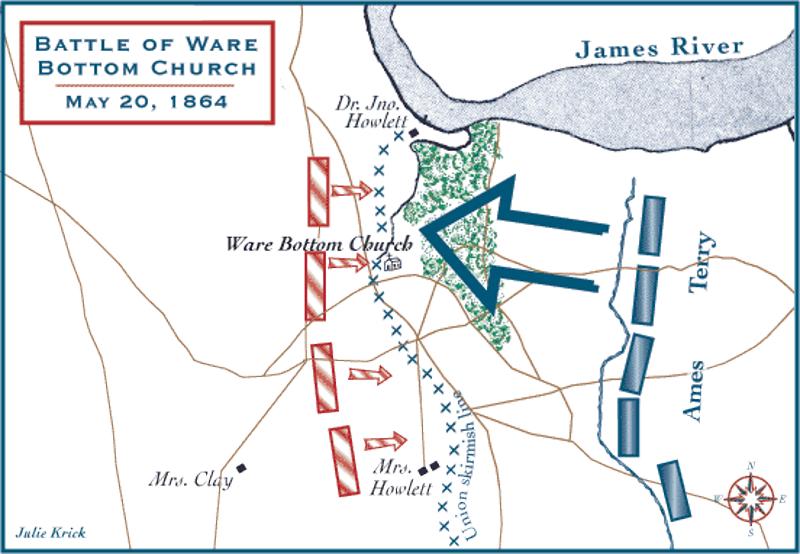
The American Battlefield Trust is working to preserve an additional 53 acres at the Ware Bottom Church battle site in Chesterfield County, VA near Richmond. Please consider a donation towards their efforts. The 85th Pennsylvania was encamped near the site in the spring and summer of 1864. Besides frequent skirmishing with the enemy, the 85th PA fought two battle here. On May 20, the regiment suffered twenty-five casualties including six killed. On June 16, twenty men from the regiment were casualties, including seven killed. My great-grandfather, John Clendaniel, was wounded in this engagement but survived. Four other men on picket duty were captured; two of them died in confinement.


Monday, January 27, 2020

The Last Wounded Man

f
The Daily Courier
Connellsville, PA
September 18, 1911, p.1

    Next week I am going to speculate about which soldier from the 85th Pennsylvania was the last to die in battle or due to a battlefield wound. This week I will focus on the last man to be wounded who survived the war. That man appears to be Private James C. Davis of Company E. 
    The article at the right from 1911 mentions four veterans of the 85th Pennsylvania and has a revealing mention about Davis as the war was closing.
   The four soldiers from the 85th Pennsylvania in the article are, Davis, Eli F. Huston, (Company E), Henry J. Molleston (I) and Joshua Torrance (B). Huston, Molleston and Torrance were all living in Dawson, Fayette County at the time.
   The story is about a dinner party for Davis, who lived in Oklahoma. Davis had come back home for a regimental reunion that year that was held at Brownsville, Fayette County in mid-September. About 75 elderly members of the regiment were in attendance. 
   Eli F. Huston was 76 years old at this time. He was born in Fayette County. He enlisted as a wagoner but spent the war in the ranks as a private. Huston was wounded in the thigh on Morris Island, SC in 1863 when his regiment was digging a series of trenches that resulted in the capture of Fort Wagner. He was a coal miner following the war, working his was up to superintendent of one of the mines near Connellsville.
    Six years later in 1917, Huston attended the regimental reunion in Uniontown and died the next day of pneumonia at age 82.
   Henry J. Molleston, age 74, was given a medical discharge after 30 months of service. After the war, he attended California Normal School (now California University of Pennsylvania, the school from which the author graduated). Besides finding work as a farmer and blacksmith, Molleston worked as an engineer for a coal company . He also became a preacher in the Methodist Church.
          Joshua Torrance. age 67, was captured at Ware
Andersonville Prison   LOC
Bottom Church (VA) on June 16, 1864 while on picket duty. He spent two months at Libby Prison in Richmond and then another 11 months at Andersonville Prison in Georgia. He was released on April 1, 1865, just eight days before the end of the war. He later served as school director, tax collector and auditor for Lower Tyrone Township in Fayette County following the war. 
       James C. Davis, 65 years of age, had enlisted as a 15-year old in 1861. After the war, he served as a school principal in Pennsylvania, Ohio and Indiana. He moved to Kansas in 1880 where he served three terms as school superintendent for Chase County. He later purchased land in Oklahoma and became an oil prospector. 
       The article about the dinner party states that Davis was "the last member of the 85th wounded, the date being April 2, 1865."
         This happened during an assault upon Fort Gregg on the last line of inner line of defenses around Petersburg, VA. Earlier in the day, after a ten month siege, Union forces had pierced the Confederates' outer defensive line, forcing Lee out of his trenches. Lee headed west in a futile attempt to link with Joseph E. Johnston's army in North Carolina. Lee surrendered at Appomattox one week later to end the war. 
 
Storming Fort Gregg    LOC
        Fort Gregg was extremely bloody. Every Confederate  in the fort, numbering about 330 men, was killed, wounded or taken prisoner as the rebels fought to the end to give Lee time to evacuate the Richmond-Petersburg front.
   
Colonel Thomas O. Osborn
Yates Phalanx
        The 85th Pennsylvania was in the first of four waves to rush the fort. They were commanded by Colonel Thomas O. Osborn of the 39th Illinois. Osborn's Brigade made it into the moat surrounded the earthen fort, which saved many lives until several more waves of Union troops breached the parapet and  forced the fort to surrender. The Union suffered over 700 casualties in the assault. *
        Davis was one of 163 remaining members of the 85th Pennsylvania  after 1864  (these remaining men had reenlisted or had joined the regiment after 1861 and were yet to complete their three years). The majority of the regiment had gone home four months earlier.
        The last battle in which the full regiment was engaged was at Darbytown Road near Richmond on October 13, 1864. Seven men were wounded in this affair, none fatally.
       The seven men wounded at Darbytown Road were: Sgt. Charles Eckels (Company E), Corp. Nicholas Derbins (F), Pvts. David Baker (B), Milton F. Bradley (I), Jacob Huffman (F), Samuel E. Johnson (I), and George Rodeback (C). 
         The reduced 85th Pennsylvania was involved in two more fights during the last week of the war, at Rice's Station and Appomattox (see map below), but the author could find no documentation that any member of the regiment was killed or wounded in either fight. So Davis does indeed appear to be the last man in the regiment to suffer a wound or death on the battlefield.


Last 3 Days of Lee's Retreat to Appomattox, VA
85th PA was part of  the Army of the James [ORD] 

Map by Hal Jespersen
www.cwmaps.com
            *NOTE: It has always puzzled the author why the 85th Pennsylvania did not suffer more casualties at Fort Gregg. The 199th Pennsylvania from Philadelphia, engaging in their first battle since joining Osborn's Brigade, suffered ten deaths. The 39th Illinois, also in the brigade, suffered 12 men killed and 31 wounded. Davis was the only soldier in the 85th PA to be killed or wounded while being in the thick of the fight.
           Granted, these regiment were larger that the 85th Pennsylvania at the time. Nonetheless, considering that all of these regiments (along with the 62nd Ohio and 67th Ohio) made the first charge upon Fort Gregg simultaneously, wouldn't one expect to find more losses in the 85th Pennsylvania?