Showing posts with label Fort Good Hope. Show all posts

Monday, February 10, 2020

A Poem From Fort Good Hope (Washington, DC)

Interior of a Fort in Washington, DC During the Civil War

          The anonymous poem below was contributed by a member of the 85th Pennsylvania for a reunion in 1885 held in Canonsburg, Washington County. This regimental reunion was held jointly with the 10th Pennsylvania Reserves.
         First, some information about the reunion. A local newspaper noted of the event, "The town was in gay attire, the buildings being decked with flags,
From Boyd Crumrine
History of Washington County
1882
banners and evergreens. On the arrival of the 10:30 a.m. train from Pittsburgh, the visiting comrades were met at the station by the resident members of the regiments, and falling in line they all marched to the Jefferson Academy building..." 

       After several addresses, the veterans continued to the town's skating rink where a banquet dinner was served. At a campfire later in the day, Reverend Jacob L. Thompson, a veteran of Company A, shared some remarks. Another address was made by Alexander Pollock of Company A entitled, "Our Country: The Best Government on Earth." Reverend James S. Speer, a veteran of Company B also made a speech entitled, "Our Absent Comrades."
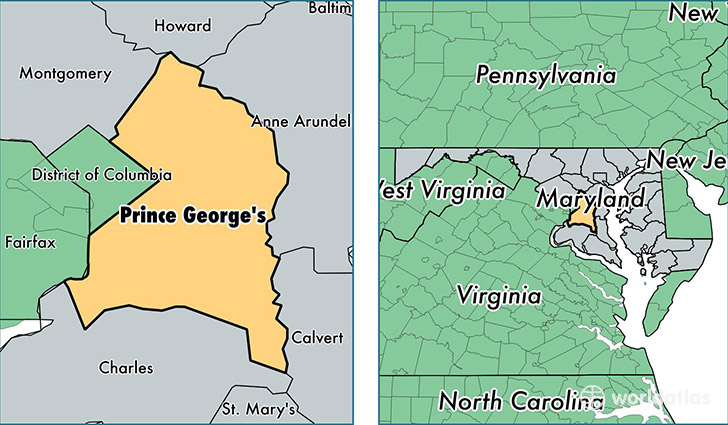
      During their stay at Fort Good Hope in the District of Columbia during the winter of 1861-1862, the regiment constructed its own fortification (one of 33 that ringed the nation's capital during the war)  and performed duties at several other facilities in the vicinity. Fort Good Hope was located across the eastern branch of the Potomac River, in the southwest corner of Washington, DC near the border with Prince Georges County, Maryland. When they had time, the men would tour the nation's capital. Several claimed to have encountered President Abraham Lincoln near the Capitol Building on various occasions.
        The poem,written during the 85th Pennsylvania's third month in Washington, DC and sixth overall in the army, reflects the writer's homesickness, restlessness in not yet having participated in battle, and frustration with the cold winter weather.


Washington Daily Reporter
October 2, 1885


WINTER IN CAMP
   The following lines were written by a member of Company E, 85th regiment PA. Vols. In February, 1862, at Camp Good Hope, Washington, D.C. and are handed us with a request to publish,


Alas the pleasant days have fled,
The rude storm king has come,
And I’m nodding in my canvass bunk,
With thoughts of “Home” sweet home.

I’m nodding by my friends,
The snow falls thick and fast,
And I’m thinking of the joy’d ones left
And happy hours we’ve passed.

I’m thinking of the little ones,
Now distant many miles,
Their childish glee, their numerous pranks,
Their tears and gentle smiles.

I’m thinking of the good things too,
Roasts, jellies, cakes and cream,
But oh! Alas such dainty things,
In camp are seldom seen.

I’m thinking of the merry dance,
I see each fairy form
As gracefully they promenade,
And smiling partners turn.

But Oh! How different here the scene;
My heart grows faint and sick,
“Tis shoulder arms,” “Right shoulder shift,”
“Now forward” “Double quick.”

The glorious orb of day is hid,
Nor sheds its genial heat,
To cheer the shivering sentinel,
While on his lonely beat.

The silver moon, the twinkling stars,
With clouds are overcast,
And each in haste a shelter seeks,
To shield him from the storm.

And still the storm king rages on,
With unrelenting will,
As though it were his chief delight,
Our icy cups to fill,

The rain, the hail, the sleet and snow,
Continue to descend,
Old Boreas blows his bitter blast,
That seem to have no end.

But cease complaint, my country calls,
Away with idle thought,
We came to save the stars and stripes,
Our fathers dearly bought.

No blood yet trickling from our feet,
We’re amply clothed and fed,
‘Twas not so with our noble sires
When forth to battle led.

Their footsteps left a bloody path,
As o’er the clods they passed,
Undaunted still they forward pressed,
To triumph at the last.

Though kinds and crowns may threaten us,
Though wild rebellion rolls,
Undaunted by our flag we’ll stand,
Or sleep beneath its folds.

Then comrades on with heart and hand,
We’ll show the gazing world.
While life and through and being lasts,
Our flag remains unfurled.

When limbs are stiff and ache with toil,
The cure lies in St. Jacobs Oil.
New York Illustrated Times
May 24, 1862


Monday, September 16, 2019

Letter from Lt. William T. Campbell, Co. F


Map of Southwestern part of Washington, DC
Fort Good Hope was renamed Fort "Wagner" in 1862

         The following article from 1945 appeared in a Fayette County, PA newspaper. It was written by 19-year old Lt. William Thomas Campbell of Company K, 85th PA, from Fort Good Hope to his sister in 1861. Campbell served in Company K with his two brothers, John and James. 

       Fort Good Hope was located on the southern side of the eastern branch of the Potomac River and was the home of the 85th PA from December, 1861 to March, 1862. The men of the regiment helped build this structure, one of 68 forts constructed to protect the nation’s capital after the disastrous loss at Bull Run in the summer of 1861. The site Fort Good Hope is today the home of Stanton Elementary School.
     In his letter, Campbell mentions seeing an aerial balloon on a reconnaissance mission over Washington. This may be a balloon of Professor Thaddeus Lowe that flew from Budds Ferry in Maryland, across the Potomac River from the present-day Quantico Marine Base. However, the balloon might also have been one flown by aerialist John LaMountain, whose balloon was spotted in December in the vicinity of Alexandria, VA, about four miles from Fort Good Hope.


[Connellsville (PA) Daily Courier, November 16, 1945, p.12]

“Sword and Letter Recall Incidents of Civil War”

            A prized possession of memories of the family of the late George W. Campbell of Normalville and Connellsville is the sword of Mr. Campbell’s brother, Lieutenant William T. Campbell, who was killed in the battle of [Second] Deep Bottom, Virginia, August 13, 1864. It reposes at the Campbell homestead in East Green Street. Members of the family are Dr. Clyde S. Campbell, Miss Rebekah Campbell, Miss Kathryn Campbell and Ben H. Campbell.
      A Conf. bullet struck Lieutenant Campbell over the heart, piercing it after severing the leather strap by which swords were then carried. In the soldier’s honor, the post of the Grand Army of the Republic at Springfield, now Normalville, was named William T. Campbell.
    Another relic of the Rebellion is the letter written by Lieutenant Campbell from Fort Good Hope, across the Potomac River from the National Capital, and directed to his sister Mary of Springfield. It is among the effects of Harry Hayden of Uniontown, an employee of the W. Penn System in Connellsville...
      The letter from the lieutenant to his sister, dated December 12, 1861, was written in the quaint style of long ago. It reads:

Balloon View of Washington, 1861, facing southwest.
Fort Good Hope would soon be built at the top left across the Eastern Branch
of the Potomac River. -- Library of Congress


Lieutenant William T. Campbell 
Company K
December 16, 1861
Fort Good Hope, DC

Dear Sister.

            I sit down to let you know that I am well and hope you are the same. I received a letter from father a few minutes ago and was glad to hear that you are all well. He said he was going to butcher the next day. I was glad to hear it and would like if you would send me about have of one of the backbones in your letter when you answer this.
            We are getting along fine. They boys are all well and enjoying themselves accordingly. Just finished our house today. It consists of three rounds of longs built up like a log house, chunked and daubed, and our tent sought [set] on top for a cover. The boys are all fixing up the same way for the winter. We have had no cold weather here like you had in the mountains. For the last week it has been so warm that I could no without my coat.
            We are still encamped about three miles from Washington, across the eastern branch of the Potomac, with two other regiments and are engaged in building a fort. From the fort you can see Washington city about as well from any place about the city. The regiment works by turns and more of us were out today but the whole regiment is going our tomorrow. When I was working on the fort day before yesterday I seen a balloon travelling through the air. It was on a reconnoitering expedition to see what the rebels are doing.
            I expect that we will stay here all winter and I would be glad if we would for it is a very pleasant place to stay and we got plenty to eat and plenty to cover to keep warm. Mary, tell the girls to keep in good heart for we will be back some time and hope that we may see them all married to some of the soldiers that stayed home. We see a girl so seldom down here that it looks like the mountains about Springfield when we see one. We have not seen any ladies of any account since we left Pennsylvania except a few black ones that we seen at Baltimore, which consisted of about 500 that turned out to see us as we passed through the city.
            Mary, we are within three miles of Washington and can get no late news. Now I want you to send me the [Uniontown Evening] Standard every week after you read it. It will not cost you much, not more than a cent at a time, and when we get paid here which will not be longer than January I will send you enough money to satisfied you well for your trouble and a nice present.
             I don’t know that I have anything more to write at present but when you write let me know how all the people are getting along in the mountains. I wrote to Sam as soon as I arrived but have not received any answer yet. Give my love to Father and Mother and all the rest of the family and tell Father that I will answer his letter the first of next week.
                                                                Nothing more. Answer soon.

                                                               Your brother, W. T. Campbell