Showing posts with label Edward C. Campbell. Show all posts

Monday, February 24, 2020

Medal of Honor Recipients in the 85th PA

     
LOC
        For their actions during the Civil War, three members of the 85th Pennsylvania regiment were awarded Congressional Medals of Honor. They were John Shallenberger, William E. Leonard and Francis Morrison.
       Another member of the regiment, James Huff of Company E, stayed in the army following the war and was awarded a Medal of Honor in the 1870's during the army's campaign against the Apache Indians in America's southwest.
      Both Shallenberger of Company B and Leonard of Company F won their medals for capturing enemy flags during the Second Battle of Deep Bottom on August 16, 1864 near Richmond. Their medals were issued on April 6, 1865.
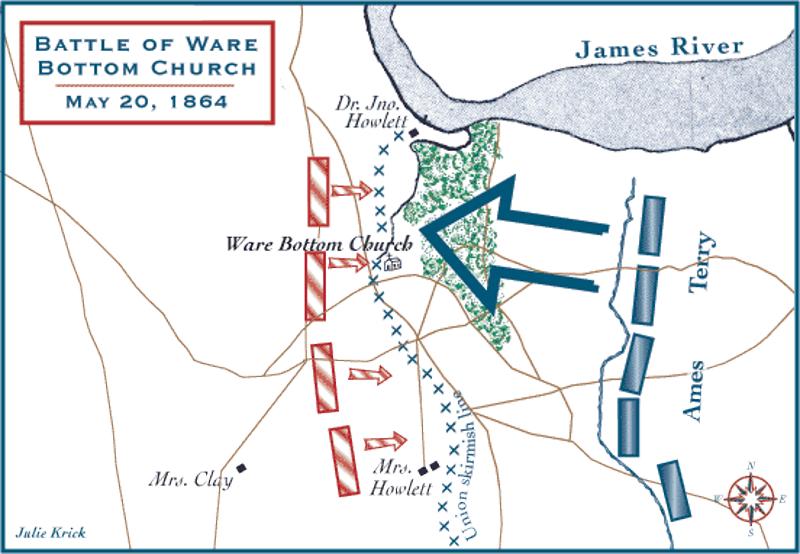
    Francis Morrison of Company H won his Medal of Honor for trying to save a fellow member of his company while under fire at Ware Bottom Church in Virginia on June 17, 1864.
       Leonard and Shallenberger's heroic moment occurred during Grant's fourth offensive against the Richmond-to-Petersburg (Virginia) line in mid-August of 1864, a simultaneous two-pronged attack against both cities. The 85th Pennsylvania crossed the James River from the Bermuda Hundred to help pressure the Confederates' Richmond defenses and make the Confederates continue to stretch their defensive line covering both cities. The 85th Pennsylvania, as part of the brigade of Colonel Francis B. Pond, temporarily poked a hole in the Confederate line near Darbytown Road, but eventually Union forces gave way in the face of Confederate reinforcements. The Union had better success at the other end of the line near Petersburg, capturing the Weldon Railroad.
Pontoon Bridge at Deep Bottom,VA
Across the James River    LOC
      At Deep Bottom, the 85th Pennsylvania and the rest of the Pond's Brigade stormed and captured an enemy position. The brigade suffered heavy losses. One account said that an initial volley by the Confederates killed and wounded many of Pond's men in the assault, but that the rest of the brigade took the Confederate position before the rebels could reload their muskets and fire a second time. Colonel Edward C. Campbell of the 85th Pennsylvania noted it was the first time his men had engaged in hand-to-hand warfare in their nearly three years of fighting. During the final phase of capturing the enemy position, Shallenberger and Leonard snatched enemy colors from two regiments.
         Shallenberger (or Shellenberger), age 24 from Fayette County, worked as a farm laborer after the war He died in 1911 at the age of 71 in Granville, Licking County, Ohio where he spent the last 20 years of his life. Nearly eighty years later, in 1990, a new bronze marker was installed at his gravesite at the Welsh Hills Cemetery in Granville, Licking County. His original marble headstone mentioned only his service in the Civil War. The newer bronze marker recognized him for his Medal of Honor.
         In 2013, the Pennsylvania General Assembly designated a portion of the Mon Valley Expressway Interchange (Exit 18) in Fayette County as the John S. Shallenberger Interchange.
     Like Shallenberger, William E. Leonard captured an enemy flag at Second Deep Bottom. Leonard was wounded in the ear during the assault but survived. Leonard died in early 1891. A fellow soldier from Company F, wrote a tribute to Leonard that appeared in the Washington Observer newspaper (February 26, 1891, page 1). Sergeant James E. Sayers wrote a detailed recollection of Leonard's actions that day.
   
Second Deep Bottom Reenactment  2014
 "To him belongs the honor of capturing the only flag taken from the enemy on the field of battle by a Greene countian during the war...It was at the battle of Deep Bottom, Va., on August 16, 1964. In a charge by our brigade upon the enemy's works, the 85th lost the heaviest it ever did in a single dash.  Massed in 'close column by division at half distance,' which simply means a solid square, we made the outset through a thicket, and coming upon the enemy's rifle pits before we were scarcely aware of their proximity, received the fire of a double line of battle so close that the blaze from their muskets almost reached our faces. Men fell so thickly that I thought they all had laid down. But in an instant, those not hit recovered from the blinding,crashing musketry and with a 'hurrah,' leaped the rifle pits. Many of the Confederates fled, but a large proportion were captured. Ed Leonard went over the works a few rods to my left, and with others, pursed the enemy until recalled or rather forced back by the enemy reinforced...It was a day or two after the charge before Ed reported the capture of the flag. He first told some of his comrades and showed them the flag, and by then it was reported to headquarters. Ed's story is that after he crossed the works, he saw the flag and went for it. The man who carried it was shot...the dead man grasped the staff so firmly that in the haste and confusion of the fight, Ed stripped the flag from its staff and stuffed it in his haversack and it remained there until the hurly burly and anxiety of the fight was over." 

Francis Morrison's Chest Wound
Courtesy of Vallorie Brady
      Francis Morrison enlisted into of Company H as  a 16-year old  from Ohiopyle, Fayette County and was the last of the 85th Pennsylvania soldiers to receive a Medal of Honor for a brave act during the Civil War. On June 17, 1864, at the Battle of Ware Bottom Church during the Bermuda Hundred Campaign, Morrison risked his life in an attempt to carry comrade Jesse Dial from the field to safety. Dial died of his wounds, but this did not lessen Morrison's bravery.
      Morrison's citation stated,  "Private Jesse Dial was struck by a bullet and left behind. Private Morrison saw his comrade fall and, with utter disregard of a hail of bullets, advanced towards the enemy and was soon at the side of his friends. As he tenderly raised him from the ground to discover to his dismay that Dial wad dead. He then carried the corpse back to his regiment."
    Morrison's act of bravery was observed by Captain Ross Sanner, who submitted a recommendation for the Medal of Honor.
      Two months later, Morrison was shot through the chest at the Second Battle of Deep Bottom. The gunshot wound through his lung was described as fatal at the time. Morrison recovered, however (he had an open exit wound in his back for the remainder of his life), and went on to live for 49 more years. Morrison had also been earlier wounded at Seven Pines, Virginia in 1862 and on Morris Island, South Carolina in 1863.
Instructor Francis Morrison
Courtesy of Vallorie Brady
       Morrison began receiving a pension for his back wound in 1867. By 1883, he was receiving $18 a month, demonstrating the seriousness of his injury (amputees received $24).
    The postwar life of Morrison, who returned to Ohiopyle, included teaching, farming, serving as as justice of the peace and school board member. He died in 1913 and is buried in the Sugar Grove Cemetery in Ohiopyle. (Laurel Messenger, August, 1968, p.8)
          Morrison received his Medal of Honor 33 years after his valorous act, probably with the intercession of Inspector General Robert P. Hughes, a former officer of the 85th Pennsylvania who helped lead the charge that day at Deep Bottom.
        James Huff of Company E  was from Washington, PA. Huff had the distinction of serving in the infantry, artillery and cavalry during the course of his career. Huff began his military service in the 85th Pennsylvania under sad circumstances. His brother, Andrew, was one of the first members of the regiment to die (from disease) early in the regiment's stay at Washington, DC in 1861.
      James Huff served for a year in the 85th Pennsylvania and then transferred to the 4th U.S. Artillery, Battery L. Unlike almost every other member of his original regiment, Huff decided to make the military his career. He reenlisted in 1867 and was sent to the western frontier.
       A biographical entry  from the turn of the century noted,“James W, Huff, a veteran of the Civil War, re-enlisted in the United
James W. Huff
States Army at Philadelphia in 1867, and was assigned to troop ‘L,’ 1st Cavalry. The troop, with others, was sent to Arizona in June, 1869. It remained at Fort Goodwin until 1870, and then went to Fort Apache, which it helped to establish. Huff was the first white man to construct a log-house in that region. The Apache Indians, those scourges of the southwestern frontier, went upon the war-path in the winter of 1872, and during the balance of the winter and spring of 1873 kept the available United States troops very busy. General George Crook, upon the commencement of hostilities, ordered into the field a part of the 1st Cavalry…The Indians were overtaken in the Dragoon Mountains, and defeated.

      "They were separated into small bands and scattered through the surrounding region. When about eight miles from the command, the Apaches were discovered. Notwithstanding that the scouting party was outnumbered five or six to one, the Apaches were without hesitation or delay vigorously attacked. Huff and his three companions during the fight, which was very fierce while it was in progress, succeeded in killing seventeen of the Apaches, when the remainder fled.” 
      After his army service, Huff lived in Georgia and in 1910 and was the overseer of a rifle range in Turkey Creek, Carroll County  Huff moved to Florida and died in New Port Richey in 1927 at the age of 87.


Sunday, October 6, 2019

"It was Braddock's defeat after the lapse of a century"

From F.W. Little's The Seventh Regiment New Hampshire Volunteers (1896)


      Included in an 1882 book entitled, History of Fayette County, Pennsylvania is a group of brief biographies of prominent county citizens. One of those profiles was for the late Joshua Blackwood Howell, the colonel of the 85th Pennsylvania regiment. Howell was a leading attorney in Uniontown, PA prior to the Civil War. He suffered from a concussion on Morris Island, South Carolina in 1863 while commanding trench operations. The next year, 1864, Howell died as the result of a fall from his horse while stationed in Virginia.
        In Howell's biographical entry from the book about Fayette County is this tantalizing passage concerning Union General Truman Seymour's ill-fated Florida expedition in February of 1864, resulting in the disastrous loss at the Battle of Olustee:

     "He [Howell] was ordered with his brigade to Hilton Head [SC] to relieve Gen. [Truman] Seymour, in command of that district....Seymour had been ordered to Florida in command of that unfortunate expedition which resulted in the disaster of Olustee, upon the occasion of which he publicly remarked, 'This would not have occurred if I had Howell and his gallant boys with me.'"

       The purported Seymour quote heaped praise on Howell's "gallant boys," which probably meant the 85th Pennsylvania and the rest of Howell's brigade that included the 39th Illinois, 62nd Ohio and 67th Ohio. But is it true?
        If correct,  it is also a rather startling admission from Seymour, whose nearly 2,000 casualties and a 34% casualty rate at Olustee was staggering. Could Howell's command really have made a difference in the face of such huge losses?
       Also, one must ask, who or what is source for this comment? The History of Fayette County, Pennsylvania was published eighteen years after the battle. The work was edited by Franklin Ellis, but the author(s) of the individual biographies of the prominent residents is not disclosed.
     Under what circumstance could Seymour have made such a statement? Was it part of an interview?  Was it immediate frustration expressed upon his return to South Carolina?  Perhaps he said it to praise Howell on the occasion of Howell's untimely death later that year (1864).
        If Seymour thought so highly of Howell's men, why was Howell's brigade left on Hilton Head Island for the Florida campaign? The reason is that many men in his brigade had been rewarded with  30-day furloughs to travel back home because they had extended their enlistment past the original three-year commitment.
        Ironically, Howell's own regiment, the 85th Pennsylvania, did not re-enroll enough soldiers to be called a veteran volunteer regiment; the other three regiments in Howell's brigade did earn the distinction. In a subject covered in my book about the 85th Pennsylvania, Such Severe and Hard Service, most men in the 85th PA deplored the leadership style of Lieutenant Colonel Edward Campbell and refused to extend their service.
       The next question is: Did Seymour actually make the "public" statement that he would have been victorious at Olustee if Howell's brigade had been there with him? After an extensive internet search, I could not find this quotation by Seymour. This does not mean that the statement was not made, only that I could not find it. I would like to invite a reader to contact me if he/she finds evidence that Seymour actually made the statement.
     However, the next question is: Could Seymour have made this statement? I believe the answer is yes.
      By the start of 1864, Howell's brigade had established a sturdy reputation. They had been unfairly disparaged by George B. McClellan at Seven Pines (VA) in 1862, but played a key role during the Goldsboro Expedition later that year, and had survived onerous trench digging duties on Morris Island (SC) in 1863, suffering more casualties than any other Union regiment stationed on the island. The other three regiments had all fought well in the west before coming under Howell's command in early 1863.
       The goals of Seymour's Florida expedition were to disrupt Confederate supply lines, search for prospective black troops, and perhaps coax the state away from supporting the Confederacy. After several movements against little opposition, Seymour decided to move inland towards the state capital at Tallahassee. He set out towards the interior of the state with 5,500 men. At Olustee, he met an entrenched Confederate force of 5000 under the command of Irish-born Brigadier General Joseph Finegan.
     One key regiment in  the Union assault was the 7th New Hampshire, a quality regiment that had just added 300 new draftees and enlistees. Their inexperience helped cause them to break and retreat at a key moment in the Olustee fight.
     In his official report five days after the battle to his superior, Quincy Gillmore, Seymour wrote:

General Truman Seymour    LOC
 "The colored troops behaved creditably—the Fifty-fourth Massachusetts and First North Carolina like veterans. It was not in their conduct that can be found the chief cause of failure, but in the unanticipated yielding of a white regiment from which there was every reason to expect noble service, and at a moment when everything depended upon its firmness. The misfortune arose, doubtless, from this regiment having lately been filled with conscripts and substitutes, of a very inferior class. The issue, so finely drawn that the battle was nearly equal to its very close, the enemy's losses as heavy as my own, ground firmly held to the last, the admirable temper of the command all indicate that but for the disparity arising from the causes indicated, this might fairly have been a victory."

         Seymour undoubtedly was referring to the 7th New Hampshire as the "white regiment" that unexpectedly yielded.
          Two weeks after the battle, a letter from an anonymous soldier in the 7th New Hampshire appeared in the Boston Herald (March 4, 1864). The soldier noted that his regiment had earlier been furnished with new Spencer carbine rifles. But prior to the Florida expedition, these weapons were taken away, replaced with damaged muskets that often did not function. Many lacked ramrods; all lacked bayonets. Referring to 300 new additions to his regiment, the soldier noted that many were German and French Canadian substitutes who spoke no English. 
        Seymour made his share of mistakes at Olustee. He advanced inland against Gillmore's orders. He misjudged the size and make-up of his opposition. He fed his regiments into the battle in piecemeal fashion. Nonetheless, he may have thought the more experienced men of Howell's Brigade would have stood and fought, giving him a better chance of emerging victorious. His official report seemed to pin the blame on one regiment, the 7th New Hampshire. So he is on the record suggesting that one regiment or one brigade would have made the difference. Correct or not, I believe he could have made the statement about Howell's "gallant boys." 
  
 NOTE: The quote in the title  of this entry is from Joseph T. Wilson's The Black Phalanx; African American Soldiers In the War of Independence, The War of 1812, And The Civil War. It refers to the disastrous defeat of English General Edward Braddock in 1755 in western Pennsylvania during the French and Indian War. 


a