Showing posts with label Fayette County. Show all posts

Friday, August 14, 2020

Tributes to Colonel Joshua B. Howell

From L.S.Dickey's 1915 History of the 85th Pennsylvania


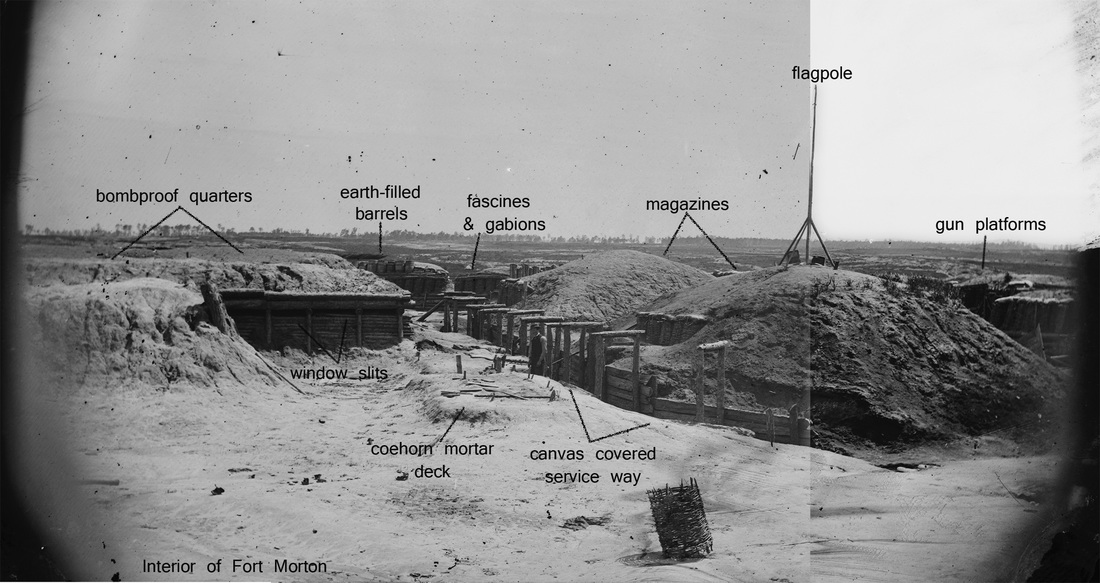
             Colonel Joshua B. Howell, founder and leader of the 85th Pennsylvania regiment, died on September 14, 1864. While his regiment was encamped at Fort Morton near the famous Petersburg (VA)  Crater, Howell's death occurred nearby at the X Corps headquarters. His death came as the result of a fall from his horse. He was 58 years of age. His long-sought after promotion to general came posthumously.
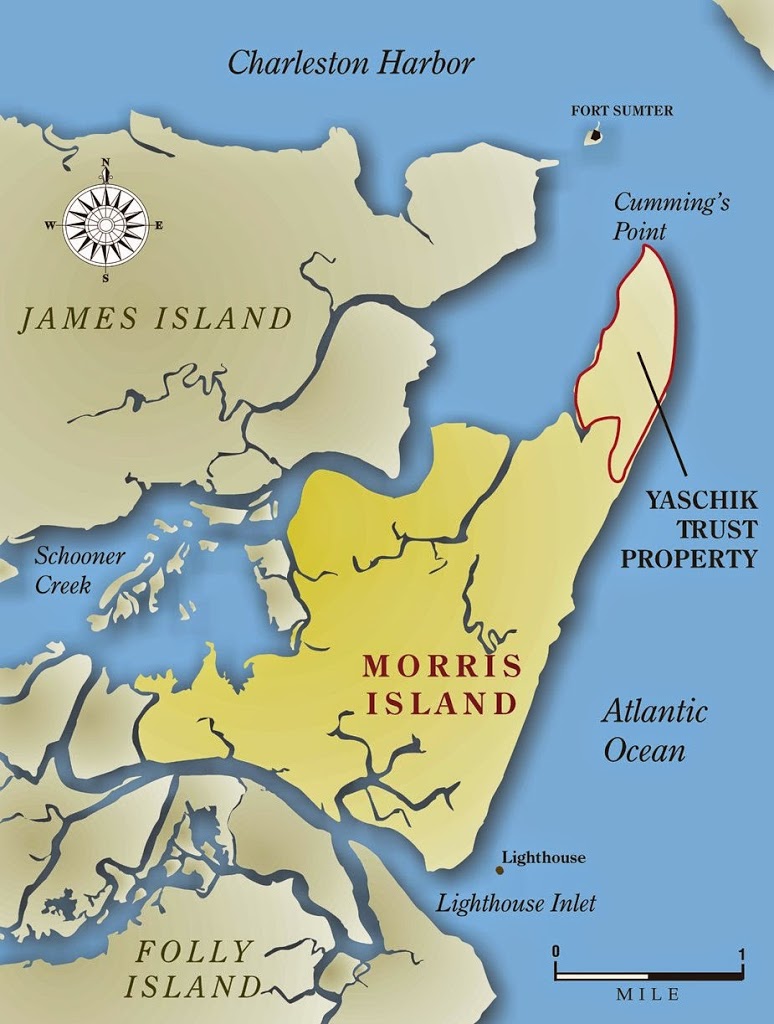
          Howell had had several close calls with death in the previous year, mostly notably in August of 1863 on Morris Island near Fort Sumter, South Carolina. A bombproof under Howell's command was hit by an enemy shell. Buried under a pile of rubble, Howell nearly died, and was left with a severe concussion from which he never fully recovered. He took several medical leaves from his beloved regiment in the following 12 months, the second time under the supervision of his brother, Dr. Benjamin Howell. 
      
            
Dr. Charles Clark
Howell's death was remembered twenty-five years later by his friend, Dr. Charles Clark, the surgeon and later historian for the 39th Illinois who had treated him after his riding accident. In 1889, Clark wrote. "On the morning of the 13th, we were painfully shocked to hear that Colonel Howell, then temporarily commanding the Third Division, had been seriously injured the previous evening by the falling of his horse. His clothing and even his sash and sword were still on him...the Colonel was placed aboard and taken to the Brigade Hospital...he was suffering from a severe concussion of the brain and possible hemorrhage. it was evident, however, that he could not live. He remained unconscious up to a few moments before dissolution, when he opened his eyes an effort to speak, but was unintelligible." [Yates Phalanx, Charles Clark, 171]
          Colonel Howell's untimely death was a dark day in the history of the 85th Pennsylvania regiment. Had he lived another month, he would have had the opportunity to return home to western Pennsylvania with the majority of his regiment, whose three-year enlistments were about the expire 
          Weeks prior to his death, Howell had been promoted to acting commander of the Third Division in the X Corps of the Army of the James. Howell's personal horse had been injured so he was riding a substitute at the time that was said to have a sensitive mouth and did not respond well to its reins being pulled. Howell's body was sent back to New Jersey near his boyhood home for burial. 
          Nine days prior to his death, Howell wrote proudly to his daughter that, "To my great surprise I received an order last week assigning me to the command of this [Third] Division due to the illness of [the] General commanding, who had gone on to Fort Monroe. It is a high compliment from Corps Head Qrs. and a responsible command." [Book of John Howell and his Descendants, p.453]
        This account of Howell's death appeared in the Philadelphia Inquirer five days after the event.
       "A very great calamity befell the Tenth Army Corps in the sudden and lamentable death of Brigadier-General [actually his rank in the state militia] Joshua B. Howell , commanding a brigade in Major General A.H. Terry's division.The circumstances were as follows: Shortly after dinner, Gen. Howell proposed to mount his horse and ride to a point somewhat distant from his quarters. He had only succeeded in gaining his position on his horse, which was exceedingly uneasy at the bit, when the general unfortunately grasping the wrong rein, the horse suddenly careened and fell backward, falling wholly on the person of the deceased, where he remained. His orderly at once rushed to the general's rescue, and with much exertion got his prostrate form from beneath the vicious animal. Being borne to his quarters he was found to be insensible, and did not rally to the last. He died in the evening, and his embalmed body is now on its way to his Pennsylvania [actually New Jersey] home."
        Howell's posthumous promotion to Brigadier General was confirmed by the U.S. Senate in February of 1865, to be postdated from the day of his death. 
         Howell's last corps commander. General Alfred Terry, wrote this touching tribute to Howell in 1882. "At this distance of time, I cannot speak of General Howell's military career, but my recollection of him as a man and an officer are as clear and distinct as they were eighteen years ago. I have never known a more courteous gentleman; I never saw a more gallant and devoted officer. The record of his service was without spot or blemish...His untimely death was lamented by all his comrades as a loss wellnigh irreparable..." [The Book of John Howell and His Descendants, pp. 429-30]
             Soon after his death, General John G. Foster named a fort in Howell's honor at Mitchelville on
Hilton Head Island, South Carolina, near where Howell and his regiment were stationed in early 1863. The structure, built by the 32nd U.S. Colored Regiment,  has been historically preserved. 
           Furthermore, a Grand Army of the Republic post, Post #31 in Woodbury,  New Jersey, was named in Howell's honor. Howell was born in New Jersey in 1800 and lived there until moving to Uniontown in the late 1820's.


The Morning Post   Camden, NJ   8-19-1887


The article at left from 1887 describes the donation of Howell's sword to the G.A.R. Post named in his honor by his second wife, Katherine. Joshua B. Howell's first wife, Mary, died in 1852. Howell married Katherine two years later. Katherine Howell died in 1898 and is buried in Delaware.


            In the years following his death, his regiment worked to keep Howell's memory alive. In 1890, a Washington County newspaper reported that, "The local committee of the 85th regiment yesterday made a contract with C.S. Kilpatrick, the Connellsville artist, to paint a life-size picture of Col. Joshua B. Howell. The canvas will be about 4 x 7 feet and the painting will represent the colonel in a standing posture, dressed in full uniform, with sword in hand, a camp scene in the rear. It is to be completed in September [in one month] and will be on exhibition at the regimental reunion [at Uniontown] here September 1." [The Canonsburg [PA] Notes, 8-16-1890, p.2]
       Around 1904, it seems that the portrait of Howell was donated to the Fayette County Courthouse in Uniontown. As of 1964, according to a local newspaper, it was still hanging in Courtroom No. 1. But at some point it the next nine years, the portrait became lost. 
        In 1973, the Evening Standard newspaper of Uniontown carried a headline that read, "Judge Feigus Seeks Portrait of Howell." The accompanying story outlined the mission of Judge Samuel Feigus. 
        "An oil portrait that hung in Courtroom No. 1 here at the courthouse for many years is being sought by Judge Samuel J. Feigus. Judge Feigus has been working on a history of the county bar Association, the courts, its judges, and other famous figures associated with the court in past years. The picture in question is a full-length portrait of Brig. Gen. Joshua B. Howell, at one time a member of the county bar association. 
      "It was procured on April 11, 1904 and for dozens of years adorned Courtroom No. 1...Anyone with information on the missing portrait who would like to aid Judge Feigus in his historical research is asked to contact him..." [Evening Standard, 5-2-1973,  p.6]
      It is unknown if Judge Feigus successfully tracked down the location of the Howell portrait or its current whereabouts. Feigus died a year later in 1974.
        More recently, Howell's likeness was recently added to the Gloucester County Wall of Heroes in the county justice complex in New Jersey. 
Glouceser County, NJ Wall of Heroes
https://www.nj.com/gloucester-county/2011/02/wall_of_heroes_brig_gen_joshua.html


Sunday, November 17, 2019

SW Pennsylvania invasion Threats Part 3 Fayette County


Southwestern Corner of Pennsylvania with Counties of Greene and Fayette
Pennsylvania cities of Waynesburg and Union(town)
Northeastern Virginia with city of Morgantown   LOC


George Baylor, 12th VA Cavalry
Member of Grumble Jones' Raiders
From Bull Run to Bull Run   1900

     The previous post reviewed the Jones-Imboden Confederate Raid in (West) Virginia from the Shenandoah Valley to Morgantown near the Pennsylvania state border in 1863.
      Once Confederate raiders had fought several battles and confiscated hundreds of valuable livestock to reach the brink of the Pennsylvania border, residents of the southwestern part of the Keystone State understandably became more and more alarmed. 
One of Confederate General William "Grumble" Jones’ raiders into western Virginia, George Baylor of the 12th Virginia Cavalry, revealed in his postwar  memoir that, “Passing over a bridge at Morgantown, we started in the direction of Uniontown, Pennsylvania, but prudence counseled us that a further advance into the enemy’s country was dangerous, in the extreme; we countermarched and moved south.” (Bull Run to Bull Run, George Baylor,1900)
Interestingly, Baylor states only that Jones' men "started in the direction"  and "advance[d] into tthe enemy's country," indicating that some of Jones' men did indeed cross the state border into Pennsylvania. 
Morgantown resident Anne Mathiot Dorsey (who was born in Fayette County) wrote to her brother shortly after the Confederates had left Morgantown. She wrote that her son, Henry, left Morgantown with four horses that he wished to hide from Jones' marauders. She said Jones' men chased Henry all the way to Smithfield, Pennsylvania, a few miles from Uniontown. When he got to Smithfield, he met many frightened townspeople who were moving their horses to presumed safety. Henry pushed on to Brownsville where he met more frenzied and frightened citizens. (Source: Anne Mathiot Dorsey, letter to Jacob D. Mathiot, May 8, 1863, Myron B. Sharp, ed.  “The Confederate Raid at Morgantown,” Historical Society of Western Pennsylvania)
Some (West) Virginia refugees from the Monongahela River Valley fled all the way to Pittsburgh, prompting that city to hold a citizens’ meeting in early May during which it was determined each city borough and township should raise a company of volunteer militiamen.
Philadelphia Inquirer    April 30, 1863
     One goal of Jones’ raid was to encourage the residents of western Virginia not to pursue statehood, but the methods of his men had the opposite effect. The Wheeling Intelligencer reported that “It was noticeable all along the route that in taking horses they robbed everybody – friend and foe -- alike. It was in vain that [Confederate] sympathizers plead their sympathy and asserted their friendship and good will. They only reply was that ‘if you are friends you can well afford to contribute your horses and plunder.’ This sort of dealing greatly disgusted them, and not a few of them were forced to curse their late friends in the roundest terms. They lost a great deal of sympathy in a very few hours. In fact the tour of the rebels was a complete Unionizing tour.” [Wheeliing Intelligencer, May 4, 1863]
Speculation as to Jones’ and/or Imboden’s next move after Morgantown had southwestern Pennsylvania in an uproar for several days. Wrote a Pittsburgh newspaper,

“It is only certain that the enemy are still hovering about Morgantown and vicinity, but in what numbers it is impossible to determine. Neither is it possible to ascertain with any degree of certainty where they may next appear. Waynesburg, Uniontown, Brownsville, Washington (all Pennsylvania towns) and Wheeling are spoken of as within striking distance, and some even go so far as to express fears that an attempt may yet be made on Pittsburgh…We trust the people of the western counties of Pennsylvania and [West] Virginia will be found wide awake, and ready to embrace the opportunity offered them, to meet the rebel marauders and give them such a lesson as won’t need repetition.” (Pittsburgh Gazette, 2 May 1863)

 Uniontown in Fayette County (where the 85th Pennsylvania had trained) was just 18 miles from Morgantown and was  thought to be a possible destination by the raiders on their way to the industrial center of Pittsburgh if the rebels they set foot on Pennsylvania soil.

Entrance to Allegheny Arsenal
          Pittsburgh    LOC
   After defeating Jones at Rowlesburg, Union Major John H. Showalter was reinforced with a militia company from Wheeling and four howitzers. Showalter, however, felt he was low on provisions and vastly outnumbered, and so he departed from the area with his force of 450 men. He soon received orders to defend Wheeling, a city on the Baltimore and Ohio Railroad.


Showalter by the time of his new orders had entered Morgantown after Jones’ men had departed the city. A direct march to Wheeling would have covered 75 miles. Showalter decided on an roundabout route through Pennsylvania. His 450 men would march to Uniontown, ride by rail to Pittsburgh, and then travel on the Ohio River to Wheeling. This trip would be about 150 miles, but Showalter felt he could arrive more quickly for the defense of Wheeling.
John H. Showalter
                 USGenWeb Project
Showalter’s men camped in Smithfield, Fayette County before arriving in Uniontown. The appearance of his troops in the area provided momentary relief for panic-stricken citizens, but their presence also caused much alarm. Citizens felt that Showalter's presence meant the Confederates were surely on their way to the Fayette County seat. Several false news accounts claimed that the Confederates had actually moved into Uniontown. At about this time, the Wheeling Intelligencer, in a story picked up around the country, wrote erringly that, “The rebels proceeded from Morgantown into Uniontown, where they committed some depredations, and returned by way of Blacksville towards Fairmont, passing within thirteen miles of Waynesburg.” (Wheeling (VA) Intelligencer, (April  30,1863)
A Philadelphia correspondent emphasized that Showalter’s arrival had an unsettling effect on the residents of Fayette County. “Major Showalter and his command went from Pittsburg to Wheeling and back to his old place (Rowlesburg) again, and after making an extensive circumbendibus and almost frightening the honest old farmers of the southern counties of Pennsylvania out of their propriety by the rumors of the ubiquitous ‘Stonewall’ [Jackson] was about to visit them to relieve them of their horses and produce.” (Philadelphia Enquirer, May 8, 1863, Reprinted in The Times-Picayune, New Orleans, LA, May 30, 1863, p.2)
Showalter was roundly criticized for abandoning Morgantown, but most of the residents of Uniontown seemed relieved by the brief appearance of him and his men. While in Uniontown, one of Showalter’s soldiers, George W. Weekly wrote,

“After breakfast [in Smithfield], we started for Uniontown, and before we had marched three miles the citizens came meeting us with their teams, and by the time we got to Uniontown there was not a corporal’s guard on foot. At Uniontown, we had a big dinner served in the machine shop, after which we had the usual dress parade, …We were then crowded into some hog cars and shipped to Pittsburgh…” (Clyde Cale, Preston County (WV) Journal, 24 July, 2013, p.5)
       
Meanwhile, knowing that Showalter’s stay in their city would be brief, Uniontown continued to organize their own defenses. Local citizens felled trees along Chestnut Ridge southeast of the city to create an obstruction for potential Confederate visitors. Defenses were also established on the Morgantown Road (present-day Route 119) three miles southwest the city and bank funds were sent to Pittsburgh. (Morning Herald, Uniontown, PA, December 31, 1945, p.4)
Uniontown residents formed a citizen militia, according to a Harrisburg newspaper account. “The Citizens of Uniontown had a most gratifying exhibition of the loyalty of one section of Fayette County. B.F. Hibbs, of the First Pennsylvania Cavalry, appeared in town on Wednesday afternoon at the head of forty farmers, all well mounted and each with his squirrel rifle upon his shoulder.” (Evening Telegraph, Harrisburg, PA, May 4, 1863, p.1)
A correspondent for a Philadelphia newspaper reported from Uniontown that, “Preparations have been made to defend Uniontown…At first the people were rather slow to seize the musket preferring to yield to what they considered an overwhelming force, but their enthusiasm being aroused, quite respectable forces was mustered.”  (reprinted in the Brooklyn (NY) Daily Eagle, May 1, 1863, p.3)
Alarm in Uniontown was also raised by the presence of an allegedly Confederate spy.

“Major Showalter…captured and brought with him to Uniontown David Lilly, the spy and traitor who piloted the rebel forces into Morgantown and pointed out to them the residences and property of the prominent Union men...Lilly had been in Uniontown only a few days before, doubtless for the purpose of taking observations with reference to the possibility of a raid through Fayette County.” [The Reporter and Tribune, Washington, PA, May 13, 1863]

Colonel Joshua B. Howell
Dickey's History of the 85th Pennsylvania Infantry
While stationed on Folly Island near Charleston,  South Carolina, the men of the 85th Pennsylvania received word of the Jones-Imboden Raid with varying reactions. Colonel Joshua Howell of Uniontown expressed alarm in this letter to his daughter: “We hear that the Rebels have been making a raid on Morgantown, Pa. which makes me feel extremely anxious for the safety of Uniontown and the welfare of those dear to us there.” (Francis Howell, ed., Book of John Howell and His Descendants, Volume II, 439)


         NEXT: Greene County Reacts


Sunday, November 10, 2019

SW Pennsylvania Invasion Threats Part 2 Western Virginia


My last post presented an overview of Confederate invasion threats into southwestern Pennsylvania in the spring of 1863. For visual references, please refer to the map of the previous post. This post also included an overview of the Jones-Imboden Raid through western Virginia to the threshold of the Pennsylvania border. Today’s post will focus on the Jones-Imboden Raid in western Virginia and the Confederate occupation of Morgantown a few miles from the border with Greene County, Pennsylania. Future posts will focus on reactions in the Pennsylvania ounties of Washington, Greene and Fayette.
General John Imboden
The Photographic History of the Civil War
Volume 10
On April 20, Brigadier General John D. Imboden departed from the Shenandoah Valley towards western Virginia. His force numbered about 3,500, of whom four-fifths were infantrymen; the rest were cavalry and a six-gun battery. After a two-hour fight at Beverly in Randolph County against a small Union force, Imboden seized that town as well as nearby Buckhannon several miles to the west.  Imboden was now about 75 miles from the Pennsylvania border.
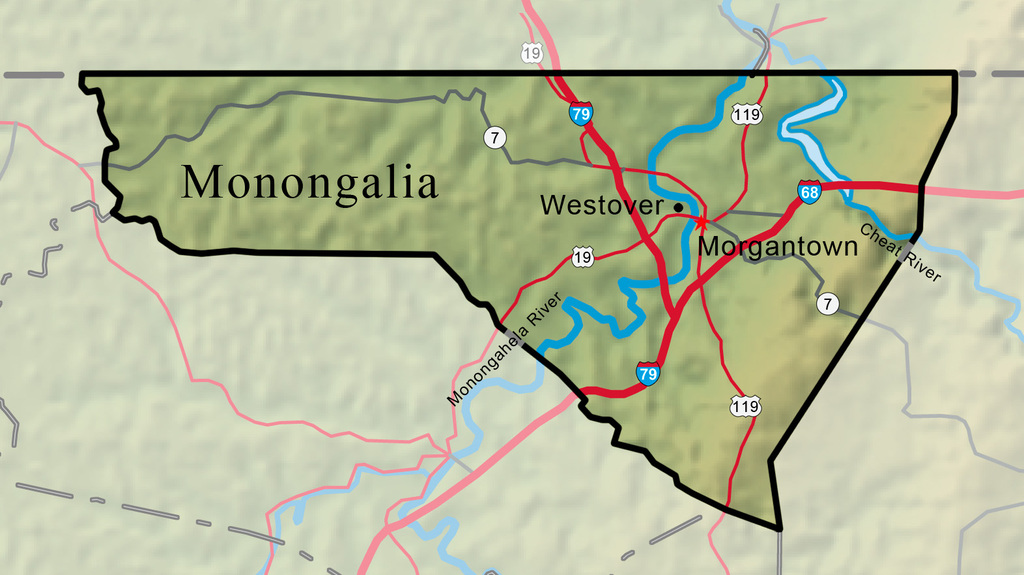
Imboden’s move was meant to preoccupy Union attention while General William “Grumble” Jones and his 3,000 men began a push to the north towards Mongolia County, which shares a border with both Greene and Fayette Counties in Pennsylvania. Jones’ main mission was to destroy Baltimore and Ohio Railroad bridge on the CheatRiver at Rowlesburg, (West) Virginia, as well as to wreck 45 miles of railroad track from Grafton to Oakland, Maryland.
Jones had set out from the Shenandoah Valley one day after Imboden began his march. Jones’ troops were soon contested by a hundred Union soldiers at Greenland Gap for over four hours before Jones seized the area. Jones proceeded to divide his force into thirds when he was 30 miles from Pennsylvania. While Jones himself headed to Rowlesburg, his two other detachments destroyed railroad bridges at the Maryland towns of Oakland and Altamont.
Historical Marker of Rowlesburg Battle
 Jones reached the key Baltimore and Ohio Railroad bridge at Rowlesburg on the Cheat River on April 26. The destruction of this span was the paramount goal of the raid. But the bridge was defended by 300 men of the 6th (West) Virginia under the command of Major John H. Showalter, along with townspeople and railroad workers. Showalter’s force blocked both ends of the bridge with stacks of railroad ties. He also had several well-placed artillery pieces to cover the area.
Significantly, Jones could not counter with his own artillery because he had sent it back to the Shenandoah Valley a few days earlier when its passage could not be secured across the rain-swollen Potomac River at Moorefield.
General William E. "Grumble" Jones
The Photographic History of the Civil War
Volume 10
After assaulting the bridge at Rowlesburg, Jones’ men withdrew. This was his only setback during the campaign. Jones proceeded to Morgantown, which he occupied the next day. He was now only five miles from the Pennsylvania border. In Morgantown, the invaders captured supplies and horses. On April 29, Jones and his men rode on to Fairmont about 35 miles away to the southwest, signaling the end of the threat to invade Pennsylvania. The largest battle of the raid ensued at Fairmont as Jones prevailed and his men blew up a bridge and train equipment.
Jones’ men also tore up miles of track and captured more horses and cattle before laying waste to thousands of barrels of oil at Burning Springs near the Ohio border.
The two commands of Jones and Imboden united in mid-May and returned to the Shenandoah Valley.  The cattle that both commands had seized helped to feed their own men as well as Lee’s army. Jones and Imboden also spirited away 1,500 horses, but many of these steeds had to replace their own mounts which had given out during the raid; many other of the other captured horses were unfit by the time they returned to the Shenandoah Valley. Most of the railroad track and bridges destroyed on the raid were quickly repaired. 
Jones and Imboden did acquire some recruits to the Confederate cause, but Imboden also lost 200 men to desertion when he tried to curb their thirst for looting and stealing. The raid also had the reverse effect of pushing more western Virginia residents towards the Union and impending statehood by the looting of their livestock. Homer Plimpton of the 39th Illinois, part of the brigade that included the 85th Pennsylvania, wrote from South Carolina, “According to the latest accounts that we have received the rebels are making some very active demonstrations in Maryland and on the border of Pa. Such raids will do us more good than harm. Let the enemy once get on to northern soil and our doubtful brethren will begin to realize what war is, and have something of an idea of the magnitude of the present war.” [The Civil War Journals of Col. Homer A. Plimpton by John L. Dodson]

"Confederate raiders attempt the capture of Union generals, Memphis, Tennessee, August 21, 1864, artist's impression,"
 House Divided: The Civil War Research Engine at Dickinson College
http://hd.housedivided.dickinson.edu/node/43065.
                    
                     ALARM ACROSS THE PENNSYLVANIA BORDER

The most alarming event for the residents of southwestern Pennsylvania was the brief occupation of Morgantown, just a few miles from the state border. This caused panic to reach a fever pitch on the northern side of the Mason-Dixon Line.  Some Morgantown residents drove their livestock into Greene County for protection. There was also a false report that Stonewall Jackson was leading 20,000 cavalrymen into Pennsylvania. This “Jackson” was actually Colonel William T. Jackson who was under Imboden’s command.
Gray Days in Morgantown
             by Clyde Cale, Jr. 
When Grumble Jones’ force left Morgantown, it was strongly feared that southwestern Pennsylvania would be his next target for cattle, horses and supplies. Even though entering Pennsylvania was never a goal of the Jones-Imboden Raid, the Confederates seemed to be on a path towards the home counties of the 85th Pennsylvania. Jones briefly headed in their direction when he crossed the Monongahela River from Morgantown, but then veered to the southwest towards Fairmont.
Small parties of Confederate cavalry did probe across the state line into Pennsylvania both during and after the brief occupation of Morgantown. Wild rumors and news accounts said the raiders had moved into Uniontown, which did not occur.  However, it was not out of the question that Jones’ men may have ridden into the southern part of Greene County or Fayette County in search of horses or to determine if any Union troops were in the area. When no Union troops were found, these Confederate bands returned to Morgantown and Jones headed to Fairmont.
                                   Next: Fayette County Reacts

Friday, October 25, 2019

He Wanted to Enlist But Was Turned Down

          James Guthrie Johnston  (1835-1929) was 26 years old and already a prominent citizen of Uniontown when the Civil War began. Like Colonel Joshua B. Howell, the founder of the 85th Pennsylvania regiment, Johnston was an attorney. He was also active in local politics, soon to be elected Burgess of Uniontown.
   But Johnston was willing to put his career on hold in order to volunteer for the 85th Pennsylvania. One can envision Johnston having a prominent role on Howell's staff as an adjutant or aide-de-camp.
    However, Johnston's goal of marching off to war would not be fulfilled. Biographer William Cooke wrote this in a brief 20th century account of Johnston's life.
James Guthrie Johnston 
Recollections of James Guthrie Johnston
"It was with deep regret that James G. Johnston saw them march away without him. The examining surgeon rejected him because of pulmonary symptoms. Many members of the regiment were his close personal friends including Colonel Howell and Lt. Colonel Edward C. Campbell."
       These words came from a compilation of Johnston's writing  by Cooke entitled, Recollections of James Guthrie Johnston.
     Although disappointed, Johnston did take part in a civic occasion that involved the 85th Pennsylvania.
       Shortly before the regiment left Camp Lafayette for their first assignment in Washington, DC, a public ceremony was held. A silk regimental flag was presented to Howell by the women of Uniontown, Money for flag was raised by Sarah Beazell, Rachel Smith, Mrs. Arnold Plumer, Harriet Skiles Mary Veech and Mary Ewing.
    Johnston would later become a noted public speaker, but his speech on November 18, 1861 for the flag presentation was the first public oration of his career.

Flag Bearer Image by Thomas Nast
Harpers Weekly  September 20, 1862
   The flag was sewn by 40-year old Elizabeth Beeson Hadden, whose 16-year old son, James, would later write both a brief history of the regiment as well as a history of Uniontown. The stars and the figure "85" were gilded onto the flag by William A. Donaldson, a coach and carriage painter who later owned a paint shop in Uniontown.
    Howell handed the flag to Joseph Reager of Company B, the first flag bearer for the regiment. Reager's brother, Henry L. Regar, was a Mexican War veteran and the head
 musician for the 85th Pennsylvania.
      Following the war, Johnston was the owner of the American Standard newspaper for several years. Johnston was born in Luzerne Township, Fayette County and graduated from Jefferson College in 1857. He was admitted to the bar in 1860. Although a Democrat in his early life, he switched to the Republican Party in 1860.
        He moved to Washington, DC as an attorney for the General Land Office of the Interior Department. While in the capitol, he became friends with James B. Blaine, President James Garfield and President William McKinley. While in Washington, he was perpertually promoting Fayette County to reporters and audiences. For the rest of his life, he always went home to Uniontown to cast his vote.
Uniontown Morning Herald
February 12, 1846
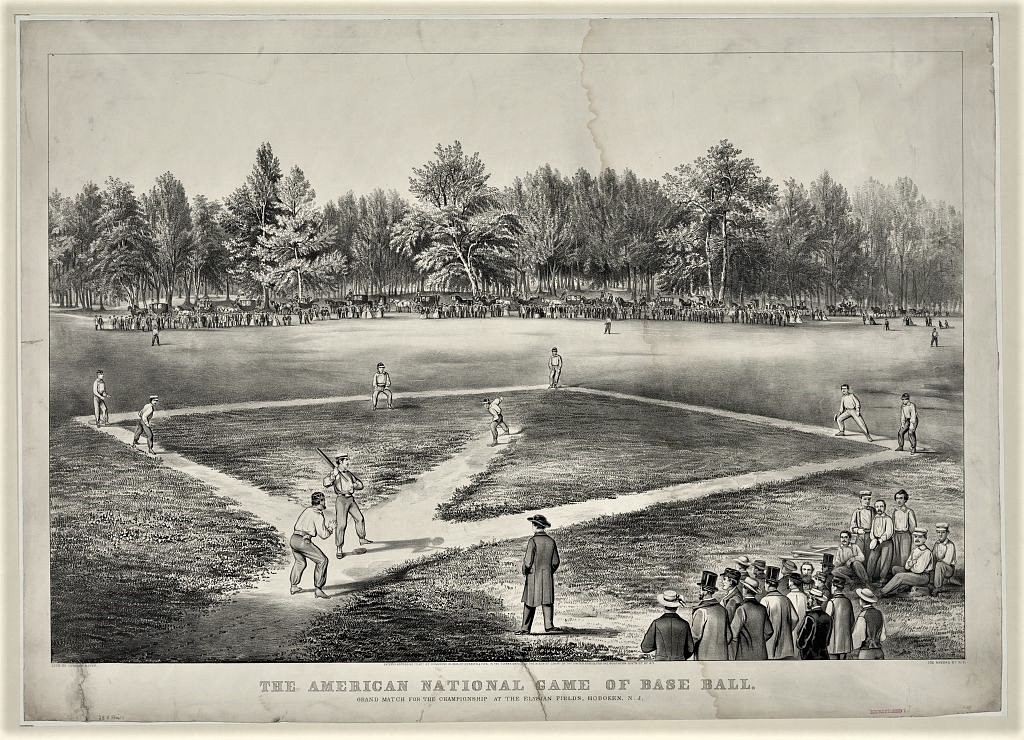
      But before leaving for Washington in the late 1860's, Johnston played one other prominent role in the history of Uniontown. In 1866, along with Andrew Stewart, Jr. (formerly of the 85th Pennsylvania). Johnston helped organize the first baseball club in the city, called 'Vantage." Their first game was played 1866 against a team from Waynesburg, Greene County. The final score was 43-35. Johnston also played in the game as the starting pitcher. He later reminisced that the fielders wore no gloves and the umpire and catcher wore no padded protection.
Library of Congress
    Johnston died in 1929 at the age of 93 and is buried in the Oak Grove Cemetery in Uniontown.

                                                    From the Waynesburg Republican
                                                              October 24, 1866


Sunday, October 6, 2019

"It was Braddock's defeat after the lapse of a century"

From F.W. Little's The Seventh Regiment New Hampshire Volunteers (1896)


      Included in an 1882 book entitled, History of Fayette County, Pennsylvania is a group of brief biographies of prominent county citizens. One of those profiles was for the late Joshua Blackwood Howell, the colonel of the 85th Pennsylvania regiment. Howell was a leading attorney in Uniontown, PA prior to the Civil War. He suffered from a concussion on Morris Island, South Carolina in 1863 while commanding trench operations. The next year, 1864, Howell died as the result of a fall from his horse while stationed in Virginia.
        In Howell's biographical entry from the book about Fayette County is this tantalizing passage concerning Union General Truman Seymour's ill-fated Florida expedition in February of 1864, resulting in the disastrous loss at the Battle of Olustee:

     "He [Howell] was ordered with his brigade to Hilton Head [SC] to relieve Gen. [Truman] Seymour, in command of that district....Seymour had been ordered to Florida in command of that unfortunate expedition which resulted in the disaster of Olustee, upon the occasion of which he publicly remarked, 'This would not have occurred if I had Howell and his gallant boys with me.'"

       The purported Seymour quote heaped praise on Howell's "gallant boys," which probably meant the 85th Pennsylvania and the rest of Howell's brigade that included the 39th Illinois, 62nd Ohio and 67th Ohio. But is it true?
        If correct,  it is also a rather startling admission from Seymour, whose nearly 2,000 casualties and a 34% casualty rate at Olustee was staggering. Could Howell's command really have made a difference in the face of such huge losses?
       Also, one must ask, who or what is source for this comment? The History of Fayette County, Pennsylvania was published eighteen years after the battle. The work was edited by Franklin Ellis, but the author(s) of the individual biographies of the prominent residents is not disclosed.
     Under what circumstance could Seymour have made such a statement? Was it part of an interview?  Was it immediate frustration expressed upon his return to South Carolina?  Perhaps he said it to praise Howell on the occasion of Howell's untimely death later that year (1864).
        If Seymour thought so highly of Howell's men, why was Howell's brigade left on Hilton Head Island for the Florida campaign? The reason is that many men in his brigade had been rewarded with  30-day furloughs to travel back home because they had extended their enlistment past the original three-year commitment.
        Ironically, Howell's own regiment, the 85th Pennsylvania, did not re-enroll enough soldiers to be called a veteran volunteer regiment; the other three regiments in Howell's brigade did earn the distinction. In a subject covered in my book about the 85th Pennsylvania, Such Severe and Hard Service, most men in the 85th PA deplored the leadership style of Lieutenant Colonel Edward Campbell and refused to extend their service.
       The next question is: Did Seymour actually make the "public" statement that he would have been victorious at Olustee if Howell's brigade had been there with him? After an extensive internet search, I could not find this quotation by Seymour. This does not mean that the statement was not made, only that I could not find it. I would like to invite a reader to contact me if he/she finds evidence that Seymour actually made the statement.
     However, the next question is: Could Seymour have made this statement? I believe the answer is yes.
      By the start of 1864, Howell's brigade had established a sturdy reputation. They had been unfairly disparaged by George B. McClellan at Seven Pines (VA) in 1862, but played a key role during the Goldsboro Expedition later that year, and had survived onerous trench digging duties on Morris Island (SC) in 1863, suffering more casualties than any other Union regiment stationed on the island. The other three regiments had all fought well in the west before coming under Howell's command in early 1863.
       The goals of Seymour's Florida expedition were to disrupt Confederate supply lines, search for prospective black troops, and perhaps coax the state away from supporting the Confederacy. After several movements against little opposition, Seymour decided to move inland towards the state capital at Tallahassee. He set out towards the interior of the state with 5,500 men. At Olustee, he met an entrenched Confederate force of 5000 under the command of Irish-born Brigadier General Joseph Finegan.
     One key regiment in  the Union assault was the 7th New Hampshire, a quality regiment that had just added 300 new draftees and enlistees. Their inexperience helped cause them to break and retreat at a key moment in the Olustee fight.
     In his official report five days after the battle to his superior, Quincy Gillmore, Seymour wrote:

General Truman Seymour    LOC
 "The colored troops behaved creditably—the Fifty-fourth Massachusetts and First North Carolina like veterans. It was not in their conduct that can be found the chief cause of failure, but in the unanticipated yielding of a white regiment from which there was every reason to expect noble service, and at a moment when everything depended upon its firmness. The misfortune arose, doubtless, from this regiment having lately been filled with conscripts and substitutes, of a very inferior class. The issue, so finely drawn that the battle was nearly equal to its very close, the enemy's losses as heavy as my own, ground firmly held to the last, the admirable temper of the command all indicate that but for the disparity arising from the causes indicated, this might fairly have been a victory."

         Seymour undoubtedly was referring to the 7th New Hampshire as the "white regiment" that unexpectedly yielded.
          Two weeks after the battle, a letter from an anonymous soldier in the 7th New Hampshire appeared in the Boston Herald (March 4, 1864). The soldier noted that his regiment had earlier been furnished with new Spencer carbine rifles. But prior to the Florida expedition, these weapons were taken away, replaced with damaged muskets that often did not function. Many lacked ramrods; all lacked bayonets. Referring to 300 new additions to his regiment, the soldier noted that many were German and French Canadian substitutes who spoke no English. 
        Seymour made his share of mistakes at Olustee. He advanced inland against Gillmore's orders. He misjudged the size and make-up of his opposition. He fed his regiments into the battle in piecemeal fashion. Nonetheless, he may have thought the more experienced men of Howell's Brigade would have stood and fought, giving him a better chance of emerging victorious. His official report seemed to pin the blame on one regiment, the 7th New Hampshire. So he is on the record suggesting that one regiment or one brigade would have made the difference. Correct or not, I believe he could have made the statement about Howell's "gallant boys." 
  
 NOTE: The quote in the title  of this entry is from Joseph T. Wilson's The Black Phalanx; African American Soldiers In the War of Independence, The War of 1812, And The Civil War. It refers to the disastrous defeat of English General Edward Braddock in 1755 in western Pennsylvania during the French and Indian War. 


a