Showing posts with label Dr. Charles Clark. Show all posts

Friday, August 14, 2020

Tributes to Colonel Joshua B. Howell

From L.S.Dickey's 1915 History of the 85th Pennsylvania


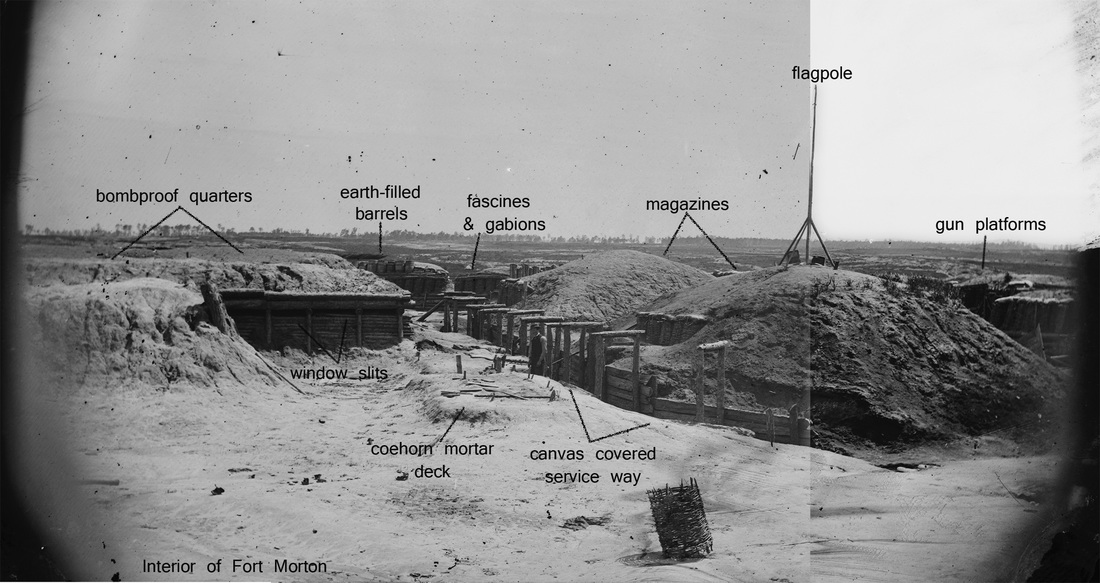
             Colonel Joshua B. Howell, founder and leader of the 85th Pennsylvania regiment, died on September 14, 1864. While his regiment was encamped at Fort Morton near the famous Petersburg (VA)  Crater, Howell's death occurred nearby at the X Corps headquarters. His death came as the result of a fall from his horse. He was 58 years of age. His long-sought after promotion to general came posthumously.
          Howell had had several close calls with death in the previous year, mostly notably in August of 1863 on Morris Island near Fort Sumter, South Carolina. A bombproof under Howell's command was hit by an enemy shell. Buried under a pile of rubble, Howell nearly died, and was left with a severe concussion from which he never fully recovered. He took several medical leaves from his beloved regiment in the following 12 months, the second time under the supervision of his brother, Dr. Benjamin Howell
      
            
Dr. Charles Clark
Howell's death was remembered twenty-five years later by his friend, Dr. Charles Clark, the surgeon and later historian for the 39th Illinois who had treated him after his riding accident. In 1889, Clark wrote. "On the morning of the 13th, we were painfully shocked to hear that Colonel Howell, then temporarily commanding the Third Division, had been seriously injured the previous evening by the falling of his horse. His clothing and even his sash and sword were still on him...the Colonel was placed aboard and taken to the Brigade Hospital...he was suffering from a severe concussion of the brain and possible hemorrhage. it was evident, however, that he could not live. He remained unconscious up to a few moments before dissolution, when he opened his eyes an effort to speak, but was unintelligible." [Yates Phalanx, Charles Clark, 171]
          Colonel Howell's untimely death was a dark day in the history of the 85th Pennsylvania regiment. Had he lived another month, he would have had the opportunity to return home to western Pennsylvania with the majority of his regiment, whose three-year enlistments were about the expire 
          Weeks prior to his death, Howell had been promoted to acting commander of the Third Division in the X Corps of the Army of the James. Howell's personal horse had been injured so he was riding a substitute at the time that was said to have a sensitive mouth and did not respond well to its reins being pulled. Howell's body was sent back to New Jersey near his boyhood home for burial
          Nine days prior to his death, Howell wrote proudly to his daughter that, "To my great surprise I received an order last week assigning me to the command of this [Third] Division due to the illness of [the] General commanding, who had gone on to Fort Monroe. It is a high compliment from Corps Head Qrs. and a responsible command." [Book of John Howell and his Descendants, p.453]
        This account of Howell's death appeared in the Philadelphia Inquirer five days after the event.
       "A very great calamity befell the Tenth Army Corps in the sudden and lamentable death of Brigadier-General [actually his rank in the state militia] Joshua B. Howell , commanding a brigade in Major General A.H. Terry's division.The circumstances were as follows: Shortly after dinner, Gen. Howell proposed to mount his horse and ride to a point somewhat distant from his quarters. He had only succeeded in gaining his position on his horse, which was exceedingly uneasy at the bit, when the general unfortunately grasping the wrong rein, the horse suddenly careened and fell backward, falling wholly on the person of the deceased, where he remained. His orderly at once rushed to the general's rescue, and with much exertion got his prostrate form from beneath the vicious animal. Being borne to his quarters he was found to be insensible, and did not rally to the last. He died in the evening, and his embalmed body is now on its way to his Pennsylvania [actually New Jersey] home."
        Howell's posthumous promotion to Brigadier General was confirmed by the U.S. Senate in February of 1865, to be postdated from the day of his death. 
         Howell's last corps commander. General Alfred Terry, wrote this touching tribute to Howell in 1882. "At this distance of time, I cannot speak of General Howell's military career, but my recollection of him as a man and an officer are as clear and distinct as they were eighteen years ago. I have never known a more courteous gentleman; I never saw a more gallant and devoted officer. The record of his service was without spot or blemish...His untimely death was lamented by all his comrades as a loss wellnigh irreparable..." [The Book of John Howell and His Descendants, pp. 429-30]
             Soon after his death, General John G. Foster named a fort in Howell's honor at Mitchelville on
Hilton Head Island, South Carolina, near where Howell and his regiment were stationed in early 1863. The structure, built by the 32nd U.S. Colored Regiment,  has been historically preserved. 
           Furthermore, a Grand Army of the Republic post, Post #31 in Woodbury,  New Jersey, was named in Howell's honor. Howell was born in New Jersey in 1800 and lived there until moving to Uniontown in the late 1820's.


The Morning Post   Camden, NJ   8-19-1887


The article at left from 1887 describes the donation of Howell's sword to the G.A.R. Post named in his honor by his second wife, Katherine. Joshua B. Howell's first wife, Mary, died in 1852. Howell married Katherine two years later. Katherine Howell died in 1898 and is buried in Delaware.


            In the years following his death, his regiment worked to keep Howell's memory alive. In 1890, a Washington County newspaper reported that, "The local committee of the 85th regiment yesterday made a contract with C.S. Kilpatrick, the Connellsville artist, to paint a life-size picture of Col. Joshua B. Howell. The canvas will be about 4 x 7 feet and the painting will represent the colonel in a standing posture, dressed in full uniform, with sword in hand, a camp scene in the rear. It is to be completed in September [in one month] and will be on exhibition at the regimental reunion [at Uniontown] here September 1." [The Canonsburg [PA] Notes, 8-16-1890, p.2]
       Around 1904, it seems that the portrait of Howell was donated to the Fayette County Courthouse in Uniontown. As of 1964, according to a local newspaper, it was still hanging in Courtroom No. 1. But at some point it the next nine years, the portrait became lost. 
        In 1973, the Evening Standard newspaper of Uniontown carried a headline that read, "Judge Feigus Seeks Portrait of Howell." The accompanying story outlined the mission of Judge Samuel Feigus. 
        "An oil portrait that hung in Courtroom No. 1 here at the courthouse for many years is being sought by Judge Samuel J. Feigus. Judge Feigus has been working on a history of the county bar Association, the courts, its judges, and other famous figures associated with the court in past years. The picture in question is a full-length portrait of Brig. Gen. Joshua B. Howell, at one time a member of the county bar association. 
      "It was procured on April 11, 1904 and for dozens of years adorned Courtroom No. 1...Anyone with information on the missing portrait who would like to aid Judge Feigus in his historical research is asked to contact him..." [Evening Standard, 5-2-1973,  p.6]
      It is unknown if Judge Feigus successfully tracked down the location of the Howell portrait or its current whereabouts. Feigus died a year later in 1974.
        More recently, Howell's likeness was recently added to the Gloucester County Wall of Heroes in the county justice complex in New Jersey. 
Glouceser County, NJ Wall of Heroes
https://www.nj.com/gloucester-county/2011/02/wall_of_heroes_brig_gen_joshua.html


Monday, April 13, 2020

Profile of Surgeon Samuel Longacre Kurtz

       
Dr. Kurtz and wife Sarah   1861
Courtesy of Eleanor Hancock
             The above photo shows Army Surgeon Samuel L. Kurtz and his wife, Sarah Morgan Kurtz. The photo was taken in late 1861 when Sarah visited her husband at training camp in Philadelphia. At the time, the 28-year old Kurtz was an assistant surgeon with the 11th Pennsylvania Reserves, also known as the 40th Volunteer Regiment. On June 3, 1862, just days after the Battle of Seven Pines, Kurtz was transferred to the 85th Pennsylvania and was promoted to head surgeon. He held this position for the next 32 months until he completed his service and returned home to Reading, Pennsylvania.
         Kurtz replaced Surgeon John B. Laidley of Carmichaels, Greene County, who was medically discharged from the 85th Pennsylvania in May of 1862.
        In the photo, Kurtz is proudly dressed in his uniform including his officer's sword. Years later,
LOC
Kurtz' granddaughter, Georgeine, asked him about the sword that he wore in the photograph. Kurtz replied, "The Rebels sank it in the James River." He state that the sword was on a baggage raft that was sunk by the enemy, probably in August of 1864 when the regiment was returning to their base in the Bermuda Hundred area of Virginia after a bloody fight at Second Deep Bottom.
        Kurtz lost a prized sword, but later, acquired an even more precious possession. When the men in the 85th Pennsylvania were winding down their three-year enlistment in the fall of 1864, they pooled their money and bought a complete surgeon kit in an engraved chest for Dr. Kurtz. It was one of his proudest possessions for the remainder of his life. It was a striking gesture for the man who cared for them when they were wounded, sick and for many, on their deathbeds. It was somewhat ironic because Kurtz was from eastern Pennsylvania, unlike most of the regiment than hailed from the southwestern corner of the state.

Reading Times   1-2-1865


       The presentation of the gift was chronicled in a Reading, PA newspaper shortly after Kurtz returned home from the war in early 1865. 


       Kurtz was born on September 27, 1832 in Chester County, PA. He graduated from Jefferson Medical College in Philadelphia in 1854. Prior to the war he practiced medicine in Phoenixville (Chester County) and Oakland Mills (Juniata County). He settled in Reading  (Berks County) and practiced medicine there for 40 years. In 1891, he was elected as the president of the Pennsylvania State Medical Society. 

Gift Medical Chest of Dr. Samuel L. Kurtz
On the right is Kurtz' granddaughter Georgeine Gruver
Reading Eagle   2-19-1967   p.44


        During the Civil War, Kurtz was involved in a bizarre battlefield incident that resulted the the death of musician Lemuel Thomas. It occurred on the first day of the regiment's six-day mission near Richmond in which they fought at Second Deep Bottom. 
        Musicians often served as doctor's assistants during a fight. As described by 85th Pennsylvania historian Luther S, Dickey, “Musician Lemuel Thomas of Company C, was on duty with Surgeon Kurtz of the Regiment assisting in caring for the wounded. Surgeon Kurtz was standing with an arm resting against a tree when a cannon ball from a battery of the enemy ricocheted, striking the heel of his shoe and then bounded to the head of Musician Thomas, fracturing his skull from which he died the following day. Although painfully wounded by the enemy's missile Surgeon Kurtz remained on duty.” [Dickey, History of the 85th Regiment Pennsylvania Volunteer Infantry,  p. 377]
      The 24-year old Thomas was from Fayette City, Fayette County. He is buried in the Hampton (VA) National Cemetery. 
       Kurtz was later involved in helping the wounded at the Battle of Darbytown Road near Richmond on October 13, 1864. By this point in the war, according to the following account by Dr. Charles Clark of the 39th Illinois, Kurtz and other surgeons of their brigade were moved close to the battlefield to provide more immediate care to the wounded. Both the 85th Pennsylvania and the 39th Illinois were part of the First Brigade of Colonel Francis B. Pond during the battle. The 85th Pennsylvania suffered only a few wounded at Darbytown Road but losses by the rest of their brigade were in the hundreds.
       Dr. Clark wrote, "The writer’s experiences at this battle [Darbytown Road] were unusually disagreeable…On the morning of the 13th [of October], he with other surgeons of the First Division of the Tenth Corps were ordered by the Medical Director to take the field and follow the command with strict orders to keep within 300 yards of the line of battle. When the First Brigade were preparing and forming to assault the rebel redoubt, he took the position behind a corn-crib in the yard of the Gerault house. As the Brigade advanced, there was a painful hush, like that of an audience awaiting some terrible denouement. Then came the roar and rattle of guns and a rain of shell and grapeshot in a most careless manner, shattering the old crib and scattering splinters and debris in all directions. One ambulance horse was killed and the driver wounded, and much other damage done. The wounded soon came back in numbers…Finding our position untenable, we felt justified in transgressing orders and removed to the left and rear inside an old earthwork where at last we could give our undivided attention to our work without fear of being either killed or wounded. The wounded…were sent back to the corps hospital some three miles distant." [Clark, Yates Phalanx, p. 179]
     
     After the war, upon reestablishing his practice in Reading, Kurtz won the trust of local residents when he treated a group of children involved in an accidental explosion. A group of boys were playing with gunpowder at a canal near his office when the explosion occurred. Kurtz treated their injuries effectively and the new doctor won the trust of his neighbors. 
        Kurtz married Sarah Morgan in 1854. Together they had two sons and a daughter. His two sons, Julius and Clarence, also became doctors. (Morton Montgomery, Biographies from Historical and Biographical Annals, p.399)
        Kurtz died on April 21, 1921 at the age of 88. He had practiced medicine for 60 years. At the time of his death, he was the oldest practicing physician in Reading. He is buried in the Charles Evans Cemetery in Reading.