Showing posts with label Grumble Jones. Show all posts

Monday, December 2, 2019

SW Pennsylvania Invasion Threats Part 5 Washington County

False Rumor Report in Phila. Inquirer  4-30-1863

Postwar Story About Grumble Jones
          Bristol (VA) Herald Courier  11-7-1948
     In April of 1863, a Washington, Pennsylvania ("Little Washington") newspaper received news of the Confederate occupation of Morgantown from J. Edgar Boyers, West Virginia statehood (and Union) supporter who had fled Morgantown before he could be the apprehended by Confederate raiders. The article noted,

“The information [from Morgantown] was brought by a gentleman who resides two miles below Morgantown on the Monongahela River and who reached this place about Tuesday morning. Their [the Confederates] aim appeared to be the obtaining of supplies in the shape of horses, cattle, stores, etc. and the capture of such leading citizens as had rendered themselves conspicuous for their efforts in the Union cause. Our informant being one of this class…was compelled to flee when they were within a few yards of his house...On reaching the main road, he leaped upon one of the horses that was being brought away to avoid capture and came through Waynesburg, arriving here early on Tuesday morning as stated.” [Washington (PA) Reporter and Tribune, April 29, 1863]

While Confederate General William “Grumble” Jones was occupying Morgantown and rounding up Union supporters, another resident of the city escaped the dragnet and rode about 45 miles north to Washington, Pennsylvania to alert these citizens of transpiring events. A Pittsburgh newspaper published an alarming report of the events to their south: “The excitement in Washington, Waynesburg and Uniontown at last accounts was unabated...Messengers arrived here from Washington [PA] last evening and took out six thousand rounds of ammunition, which would be distributed to the militia there. They had five hundred men under arms, and ready to give the rebels and warm reception, but they had no ammunition.” [Pittsburgh Gazette, April 29, 1863]
 Little Washington wasted little time in responding. Late in the evening of April 28, as soon as news was received of Jones’ movement at Morgantown, the courthouse bell was sounded and a late-night meeting was held within minutes. Two couriers reported that Grumble Jones had captured Morgantown (which was true), and that Waynesburg and Washington were the next targets on the Confederates’ path to Pittsburgh (which was not true). Overnight preparations were made to form a militia company to march to Waynesburg, which had requested military assistance. The Little Washingtonians agreed with the request, choosing to confront the enemy in Waynesburg rather than wait for the raiders to appear in their own city. [AlexanderWishart, Letter to Isaac M. Wells, August 3, 1901, Courtesy of U. Grant Miller Library, Washington and Jefferson University]


Washington County Court House

The company of militiamen from Washington was hastily organized under the command of Captain Alexander Wishart and Lieutenant Harvey Vankirk. Wishart earlier had served in the 8th PA Reserves and was the current school superintendent of the city. He was wounded during the Seven Days’ Battles at Gaines Mill, Virginia in 1862 and was medically discharged several months later. Vankirk, an attorney, was also given a medical discharge from the 85th Pennsylvania in 1862.


Captain Wishart later remembered that,

“…farmers and others who had teams were asked to convey the troops to Waynesburgh. When I [asked] where the arms and ammunition was to come from, Major [John] Ewing cried out, ‘Dang it all, we’ll fight them with pitchforks!’ But a wagon was sent to the Allegheny Arsenal [in Pittsburgh] at once and arms and ammunition procured, and after their arrival the company proceeded to Waynesburgh in the wagons which had been tendered.” [Wishart letter]

Obituary for Alexander Wishart
Pittsburgh Daily Post  8-3-1906
Wishart and Vankirk led their company from the Washington Courthouse to Waynesburg, a distance of 23 miles.  A Washington newspaper said these “patriots about Washington, armed with 'Dutch’ rifles, went to Waynesburg filled with zeal and enthusiasm and determined to repel Imboden and his hordes, or die.” They arrived and found that the reports of Jones [or Imboden] making a move into Pennsylvania were unfounded and exaggerated. Wishart returned to Little Washington with him company on May 2nd. [Washington (PA) Observer, date unknown]
Invasion warnings cooled after the first few days of May as it became known that Jones had veered to the south towards Fairmont, (West) Virginia. As accounts began to report the fight at Fairmont, similar stories of the invasion of Uniontown or Waynesburg were discounted. The New York Times wrote that, “The reports for the south-western part of the State [Pennsylvania] are very contradictory owing to the excitement among the inhabitants.”  [New York Times, April 29, 1863]
On May 6, Greene County citizens were being alerted that the raid had not continued into Greene County as feared, but that the marauders were still a potential threat to the region:

“The excitement consequent on the threatened Rebel Raid on Greene and adjoining counties has almost entirely subsided. The Rebles have disappeared from Morgantown but are said to be still in the vicinity of Fairmont or Warren…On Saturday morning, all imminent danger of a Rebel incursion having passed away, the Washington lads returned to their homes and our own people resumed their usual business activities. At present all is quiet, and all alarm allayed…” [Waynesburg Messenger, May 4, 1863]
        
Finally, on May 18, the Waynesburg Messenger could report that, “On Tuesday evening the rebels all left in the direction of Fairmont on the West side of the river… At this date, all is quiet in the vicinity of Morgantown. No signs of ‘graybacks’ have been seen since Tuesday of last week.” [Waynesburg Messenger, May 10, 1863]


"Little" Washington (dot in Washington County)
PA Counties of Washington, Greene , Fayette, Somerset, Westmoreland, Allegheny
Emerging new state of West Virginia
From Maps Showing the Development of Pennsylvania (1920)


NEXT: John Hunt Morgan

Sunday, November 17, 2019

SW Pennsylvania invasion Threats Part 3 Fayette County


Southwestern Corner of Pennsylvania with Counties of Greene and Fayette
Pennsylvania cities of Waynesburg and Union(town)
Northeastern Virginia with city of Morgantown   LOC


George Baylor, 12th VA Cavalry
Member of Grumble Jones' Raiders
From Bull Run to Bull Run   1900

     The previous post reviewed the Jones-Imboden Confederate Raid in (West) Virginia from the Shenandoah Valley to Morgantown near the Pennsylvania state border in 1863.
      Once Confederate raiders had fought several battles and confiscated hundreds of valuable livestock to reach the brink of the Pennsylvania border, residents of the southwestern part of the Keystone State understandably became more and more alarmed. 
One of Confederate General William "Grumble" Jones’ raiders into western Virginia, George Baylor of the 12th Virginia Cavalry, revealed in his postwar  memoir that, “Passing over a bridge at Morgantown, we started in the direction of Uniontown, Pennsylvania, but prudence counseled us that a further advance into the enemy’s country was dangerous, in the extreme; we countermarched and moved south.” (Bull Run to Bull Run, George Baylor,1900)
Interestingly, Baylor states only that Jones' men "started in the direction"  and "advance[d] into tthe enemy's country," indicating that some of Jones' men did indeed cross the state border into Pennsylvania. 
Morgantown resident Anne Mathiot Dorsey (who was born in Fayette County) wrote to her brother shortly after the Confederates had left Morgantown. She wrote that her son, Henry, left Morgantown with four horses that he wished to hide from Jones' marauders. She said Jones' men chased Henry all the way to Smithfield, Pennsylvania, a few miles from Uniontown. When he got to Smithfield, he met many frightened townspeople who were moving their horses to presumed safety. Henry pushed on to Brownsville where he met more frenzied and frightened citizens. (Source: Anne Mathiot Dorsey, letter to Jacob D. Mathiot, May 8, 1863, Myron B. Sharp, ed.  “The Confederate Raid at Morgantown,” Historical Society of Western Pennsylvania)
Some (West) Virginia refugees from the Monongahela River Valley fled all the way to Pittsburgh, prompting that city to hold a citizens’ meeting in early May during which it was determined each city borough and township should raise a company of volunteer militiamen.
Philadelphia Inquirer    April 30, 1863
     One goal of Jones’ raid was to encourage the residents of western Virginia not to pursue statehood, but the methods of his men had the opposite effect. The Wheeling Intelligencer reported that “It was noticeable all along the route that in taking horses they robbed everybody – friend and foe -- alike. It was in vain that [Confederate] sympathizers plead their sympathy and asserted their friendship and good will. They only reply was that ‘if you are friends you can well afford to contribute your horses and plunder.’ This sort of dealing greatly disgusted them, and not a few of them were forced to curse their late friends in the roundest terms. They lost a great deal of sympathy in a very few hours. In fact the tour of the rebels was a complete Unionizing tour.” [Wheeliing Intelligencer, May 4, 1863]
Speculation as to Jones’ and/or Imboden’s next move after Morgantown had southwestern Pennsylvania in an uproar for several days. Wrote a Pittsburgh newspaper,

“It is only certain that the enemy are still hovering about Morgantown and vicinity, but in what numbers it is impossible to determine. Neither is it possible to ascertain with any degree of certainty where they may next appear. Waynesburg, Uniontown, Brownsville, Washington (all Pennsylvania towns) and Wheeling are spoken of as within striking distance, and some even go so far as to express fears that an attempt may yet be made on Pittsburgh…We trust the people of the western counties of Pennsylvania and [West] Virginia will be found wide awake, and ready to embrace the opportunity offered them, to meet the rebel marauders and give them such a lesson as won’t need repetition.” (Pittsburgh Gazette, 2 May 1863)

 Uniontown in Fayette County (where the 85th Pennsylvania had trained) was just 18 miles from Morgantown and was  thought to be a possible destination by the raiders on their way to the industrial center of Pittsburgh if the rebels they set foot on Pennsylvania soil.

Entrance to Allegheny Arsenal
          Pittsburgh    LOC
   After defeating Jones at Rowlesburg, Union Major John H. Showalter was reinforced with a militia company from Wheeling and four howitzers. Showalter, however, felt he was low on provisions and vastly outnumbered, and so he departed from the area with his force of 450 men. He soon received orders to defend Wheeling, a city on the Baltimore and Ohio Railroad.


Showalter by the time of his new orders had entered Morgantown after Jones’ men had departed the city. A direct march to Wheeling would have covered 75 miles. Showalter decided on an roundabout route through Pennsylvania. His 450 men would march to Uniontown, ride by rail to Pittsburgh, and then travel on the Ohio River to Wheeling. This trip would be about 150 miles, but Showalter felt he could arrive more quickly for the defense of Wheeling.
John H. Showalter
                 USGenWeb Project
Showalter’s men camped in Smithfield, Fayette County before arriving in Uniontown. The appearance of his troops in the area provided momentary relief for panic-stricken citizens, but their presence also caused much alarm. Citizens felt that Showalter's presence meant the Confederates were surely on their way to the Fayette County seat. Several false news accounts claimed that the Confederates had actually moved into Uniontown. At about this time, the Wheeling Intelligencer, in a story picked up around the country, wrote erringly that, “The rebels proceeded from Morgantown into Uniontown, where they committed some depredations, and returned by way of Blacksville towards Fairmont, passing within thirteen miles of Waynesburg.” (Wheeling (VA) Intelligencer, (April  30,1863)
A Philadelphia correspondent emphasized that Showalter’s arrival had an unsettling effect on the residents of Fayette County. “Major Showalter and his command went from Pittsburg to Wheeling and back to his old place (Rowlesburg) again, and after making an extensive circumbendibus and almost frightening the honest old farmers of the southern counties of Pennsylvania out of their propriety by the rumors of the ubiquitous ‘Stonewall’ [Jackson] was about to visit them to relieve them of their horses and produce.” (Philadelphia Enquirer, May 8, 1863, Reprinted in The Times-Picayune, New Orleans, LA, May 30, 1863, p.2)
Showalter was roundly criticized for abandoning Morgantown, but most of the residents of Uniontown seemed relieved by the brief appearance of him and his men. While in Uniontown, one of Showalter’s soldiers, George W. Weekly wrote,

“After breakfast [in Smithfield], we started for Uniontown, and before we had marched three miles the citizens came meeting us with their teams, and by the time we got to Uniontown there was not a corporal’s guard on foot. At Uniontown, we had a big dinner served in the machine shop, after which we had the usual dress parade, …We were then crowded into some hog cars and shipped to Pittsburgh…” (Clyde Cale, Preston County (WV) Journal, 24 July, 2013, p.5)
       
Meanwhile, knowing that Showalter’s stay in their city would be brief, Uniontown continued to organize their own defenses. Local citizens felled trees along Chestnut Ridge southeast of the city to create an obstruction for potential Confederate visitors. Defenses were also established on the Morgantown Road (present-day Route 119) three miles southwest the city and bank funds were sent to Pittsburgh. (Morning Herald, Uniontown, PA, December 31, 1945, p.4)
Uniontown residents formed a citizen militia, according to a Harrisburg newspaper account. “The Citizens of Uniontown had a most gratifying exhibition of the loyalty of one section of Fayette County. B.F. Hibbs, of the First Pennsylvania Cavalry, appeared in town on Wednesday afternoon at the head of forty farmers, all well mounted and each with his squirrel rifle upon his shoulder.” (Evening Telegraph, Harrisburg, PA, May 4, 1863, p.1)
A correspondent for a Philadelphia newspaper reported from Uniontown that, “Preparations have been made to defend Uniontown…At first the people were rather slow to seize the musket preferring to yield to what they considered an overwhelming force, but their enthusiasm being aroused, quite respectable forces was mustered.”  (reprinted in the Brooklyn (NY) Daily Eagle, May 1, 1863, p.3)
Alarm in Uniontown was also raised by the presence of an allegedly Confederate spy.

“Major Showalter…captured and brought with him to Uniontown David Lilly, the spy and traitor who piloted the rebel forces into Morgantown and pointed out to them the residences and property of the prominent Union men...Lilly had been in Uniontown only a few days before, doubtless for the purpose of taking observations with reference to the possibility of a raid through Fayette County.” [The Reporter and Tribune, Washington, PA, May 13, 1863]

Colonel Joshua B. Howell
Dickey's History of the 85th Pennsylvania Infantry
While stationed on Folly Island near Charleston,  South Carolina, the men of the 85th Pennsylvania received word of the Jones-Imboden Raid with varying reactions. Colonel Joshua Howell of Uniontown expressed alarm in this letter to his daughter: “We hear that the Rebels have been making a raid on Morgantown, Pa. which makes me feel extremely anxious for the safety of Uniontown and the welfare of those dear to us there.” (Francis Howell, ed., Book of John Howell and His Descendants, Volume II, 439)


         NEXT: Greene County Reacts


Sunday, November 10, 2019

SW Pennsylvania Invasion Threats Part 2 Western Virginia


My last post presented an overview of Confederate invasion threats into southwestern Pennsylvania in the spring of 1863. For visual references, please refer to the map of the previous post. This post also included an overview of the Jones-Imboden Raid through western Virginia to the threshold of the Pennsylvania border. Today’s post will focus on the Jones-Imboden Raid in western Virginia and the Confederate occupation of Morgantown a few miles from the border with Greene County, Pennsylania. Future posts will focus on reactions in the Pennsylvania ounties of Washington, Greene and Fayette.
General John Imboden
The Photographic History of the Civil War
Volume 10
On April 20, Brigadier General John D. Imboden departed from the Shenandoah Valley towards western Virginia. His force numbered about 3,500, of whom four-fifths were infantrymen; the rest were cavalry and a six-gun battery. After a two-hour fight at Beverly in Randolph County against a small Union force, Imboden seized that town as well as nearby Buckhannon several miles to the west.  Imboden was now about 75 miles from the Pennsylvania border.
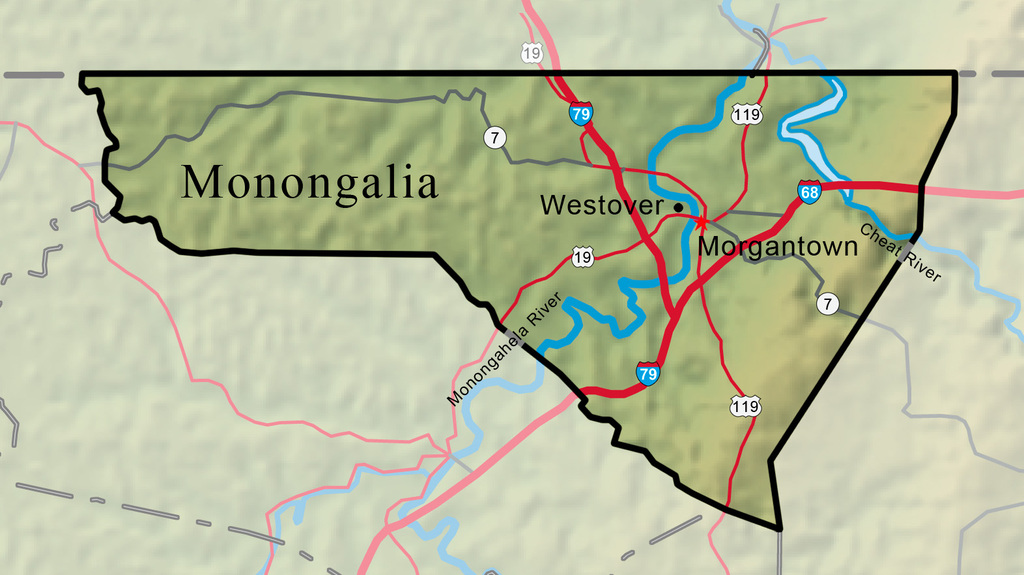
Imboden’s move was meant to preoccupy Union attention while General William “Grumble” Jones and his 3,000 men began a push to the north towards Mongolia County, which shares a border with both Greene and Fayette Counties in Pennsylvania. Jones’ main mission was to destroy Baltimore and Ohio Railroad bridge on the CheatRiver at Rowlesburg, (West) Virginia, as well as to wreck 45 miles of railroad track from Grafton to Oakland, Maryland.
Jones had set out from the Shenandoah Valley one day after Imboden began his march. Jones’ troops were soon contested by a hundred Union soldiers at Greenland Gap for over four hours before Jones seized the area. Jones proceeded to divide his force into thirds when he was 30 miles from Pennsylvania. While Jones himself headed to Rowlesburg, his two other detachments destroyed railroad bridges at the Maryland towns of Oakland and Altamont.
Historical Marker of Rowlesburg Battle
 Jones reached the key Baltimore and Ohio Railroad bridge at Rowlesburg on the Cheat River on April 26. The destruction of this span was the paramount goal of the raid. But the bridge was defended by 300 men of the 6th (West) Virginia under the command of Major John H. Showalter, along with townspeople and railroad workers. Showalter’s force blocked both ends of the bridge with stacks of railroad ties. He also had several well-placed artillery pieces to cover the area.
Significantly, Jones could not counter with his own artillery because he had sent it back to the Shenandoah Valley a few days earlier when its passage could not be secured across the rain-swollen Potomac River at Moorefield.
General William E. "Grumble" Jones
The Photographic History of the Civil War
Volume 10
After assaulting the bridge at Rowlesburg, Jones’ men withdrew. This was his only setback during the campaign. Jones proceeded to Morgantown, which he occupied the next day. He was now only five miles from the Pennsylvania border. In Morgantown, the invaders captured supplies and horses. On April 29, Jones and his men rode on to Fairmont about 35 miles away to the southwest, signaling the end of the threat to invade Pennsylvania. The largest battle of the raid ensued at Fairmont as Jones prevailed and his men blew up a bridge and train equipment.
Jones’ men also tore up miles of track and captured more horses and cattle before laying waste to thousands of barrels of oil at Burning Springs near the Ohio border.
The two commands of Jones and Imboden united in mid-May and returned to the Shenandoah Valley.  The cattle that both commands had seized helped to feed their own men as well as Lee’s army. Jones and Imboden also spirited away 1,500 horses, but many of these steeds had to replace their own mounts which had given out during the raid; many other of the other captured horses were unfit by the time they returned to the Shenandoah Valley. Most of the railroad track and bridges destroyed on the raid were quickly repaired. 
Jones and Imboden did acquire some recruits to the Confederate cause, but Imboden also lost 200 men to desertion when he tried to curb their thirst for looting and stealing. The raid also had the reverse effect of pushing more western Virginia residents towards the Union and impending statehood by the looting of their livestock. Homer Plimpton of the 39th Illinois, part of the brigade that included the 85th Pennsylvania, wrote from South Carolina, “According to the latest accounts that we have received the rebels are making some very active demonstrations in Maryland and on the border of Pa. Such raids will do us more good than harm. Let the enemy once get on to northern soil and our doubtful brethren will begin to realize what war is, and have something of an idea of the magnitude of the present war.” [The Civil War Journals of Col. Homer A. Plimpton by John L. Dodson]

"Confederate raiders attempt the capture of Union generals, Memphis, Tennessee, August 21, 1864, artist's impression,"
 House Divided: The Civil War Research Engine at Dickinson College
http://hd.housedivided.dickinson.edu/node/43065.
                    
                     ALARM ACROSS THE PENNSYLVANIA BORDER

The most alarming event for the residents of southwestern Pennsylvania was the brief occupation of Morgantown, just a few miles from the state border. This caused panic to reach a fever pitch on the northern side of the Mason-Dixon Line.  Some Morgantown residents drove their livestock into Greene County for protection. There was also a false report that Stonewall Jackson was leading 20,000 cavalrymen into Pennsylvania. This “Jackson” was actually Colonel William T. Jackson who was under Imboden’s command.
Gray Days in Morgantown
             by Clyde Cale, Jr. 
When Grumble Jones’ force left Morgantown, it was strongly feared that southwestern Pennsylvania would be his next target for cattle, horses and supplies. Even though entering Pennsylvania was never a goal of the Jones-Imboden Raid, the Confederates seemed to be on a path towards the home counties of the 85th Pennsylvania. Jones briefly headed in their direction when he crossed the Monongahela River from Morgantown, but then veered to the southwest towards Fairmont.
Small parties of Confederate cavalry did probe across the state line into Pennsylvania both during and after the brief occupation of Morgantown. Wild rumors and news accounts said the raiders had moved into Uniontown, which did not occur.  However, it was not out of the question that Jones’ men may have ridden into the southern part of Greene County or Fayette County in search of horses or to determine if any Union troops were in the area. When no Union troops were found, these Confederate bands returned to Morgantown and Jones headed to Fairmont.
                                   Next: Fayette County Reacts