Sunday, November 10, 2019

SW Pennsylvania Invasion Threats Part 2 Western Virginia


My last post presented an overview of Confederate invasion threats into southwestern Pennsylvania in the spring of 1863. For visual references, please refer to the map of the previous post. This post also included an overview of the Jones-Imboden Raid through western Virginia to the threshold of the Pennsylvania border. Today’s post will focus on the Jones-Imboden Raid in western Virginia and the Confederate occupation of Morgantown a few miles from the border with Greene County, Pennsylania. Future posts will focus on reactions in the Pennsylvania ounties of Washington, Greene and Fayette.
General John Imboden
The Photographic History of the Civil War
Volume 10
On April 20, Brigadier General John D. Imboden departed from the Shenandoah Valley towards western Virginia. His force numbered about 3,500, of whom four-fifths were infantrymen; the rest were cavalry and a six-gun battery. After a two-hour fight at Beverly in Randolph County against a small Union force, Imboden seized that town as well as nearby Buckhannon several miles to the west.  Imboden was now about 75 miles from the Pennsylvania border.
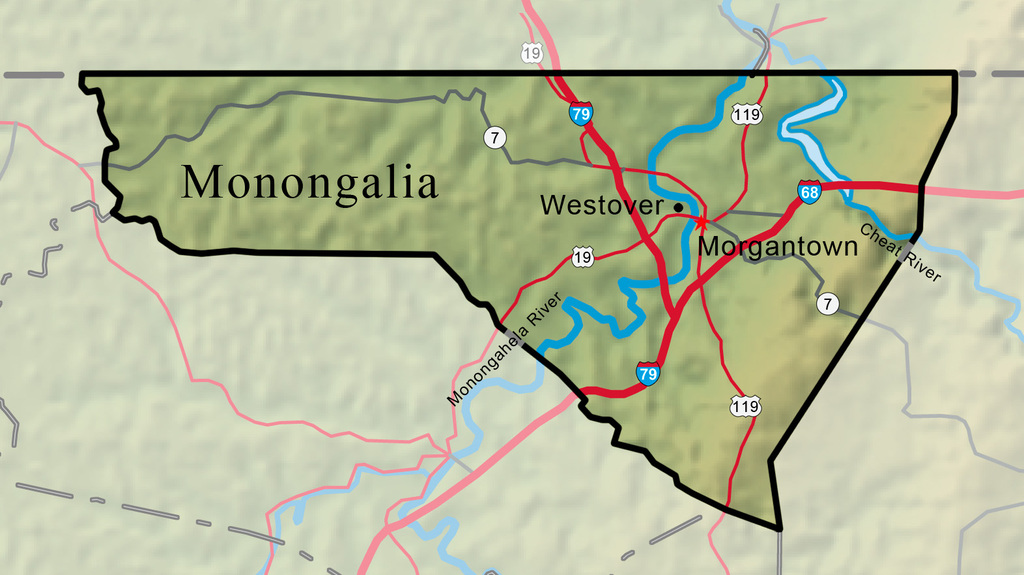
Imboden’s move was meant to preoccupy Union attention while General William “Grumble” Jones and his 3,000 men began a push to the north towards Mongolia County, which shares a border with both Greene and Fayette Counties in Pennsylvania. Jones’ main mission was to destroy Baltimore and Ohio Railroad bridge on the CheatRiver at Rowlesburg, (West) Virginia, as well as to wreck 45 miles of railroad track from Grafton to Oakland, Maryland.
Jones had set out from the Shenandoah Valley one day after Imboden began his march. Jones’ troops were soon contested by a hundred Union soldiers at Greenland Gap for over four hours before Jones seized the area. Jones proceeded to divide his force into thirds when he was 30 miles from Pennsylvania. While Jones himself headed to Rowlesburg, his two other detachments destroyed railroad bridges at the Maryland towns of Oakland and Altamont.
Historical Marker of Rowlesburg Battle
 Jones reached the key Baltimore and Ohio Railroad bridge at Rowlesburg on the Cheat River on April 26. The destruction of this span was the paramount goal of the raid. But the bridge was defended by 300 men of the 6th (West) Virginia under the command of Major John H. Showalter, along with townspeople and railroad workers. Showalter’s force blocked both ends of the bridge with stacks of railroad ties. He also had several well-placed artillery pieces to cover the area.
Significantly, Jones could not counter with his own artillery because he had sent it back to the Shenandoah Valley a few days earlier when its passage could not be secured across the rain-swollen Potomac River at Moorefield.
General William E. "Grumble" Jones
The Photographic History of the Civil War
Volume 10
After assaulting the bridge at Rowlesburg, Jones’ men withdrew. This was his only setback during the campaign. Jones proceeded to Morgantown, which he occupied the next day. He was now only five miles from the Pennsylvania border. In Morgantown, the invaders captured supplies and horses. On April 29, Jones and his men rode on to Fairmont about 35 miles away to the southwest, signaling the end of the threat to invade Pennsylvania. The largest battle of the raid ensued at Fairmont as Jones prevailed and his men blew up a bridge and train equipment.
Jones’ men also tore up miles of track and captured more horses and cattle before laying waste to thousands of barrels of oil at Burning Springs near the Ohio border.
The two commands of Jones and Imboden united in mid-May and returned to the Shenandoah Valley.  The cattle that both commands had seized helped to feed their own men as well as Lee’s army. Jones and Imboden also spirited away 1,500 horses, but many of these steeds had to replace their own mounts which had given out during the raid; many other of the other captured horses were unfit by the time they returned to the Shenandoah Valley. Most of the railroad track and bridges destroyed on the raid were quickly repaired. 
Jones and Imboden did acquire some recruits to the Confederate cause, but Imboden also lost 200 men to desertion when he tried to curb their thirst for looting and stealing. The raid also had the reverse effect of pushing more western Virginia residents towards the Union and impending statehood by the looting of their livestock. Homer Plimpton of the 39th Illinois, part of the brigade that included the 85th Pennsylvania, wrote from South Carolina, “According to the latest accounts that we have received the rebels are making some very active demonstrations in Maryland and on the border of Pa. Such raids will do us more good than harm. Let the enemy once get on to northern soil and our doubtful brethren will begin to realize what war is, and have something of an idea of the magnitude of the present war.” [The Civil War Journals of Col. Homer A. Plimpton by John L. Dodson]

"Confederate raiders attempt the capture of Union generals, Memphis, Tennessee, August 21, 1864, artist's impression,"
 House Divided: The Civil War Research Engine at Dickinson College
http://hd.housedivided.dickinson.edu/node/43065.
                    
                     ALARM ACROSS THE PENNSYLVANIA BORDER

The most alarming event for the residents of southwestern Pennsylvania was the brief occupation of Morgantown, just a few miles from the state border. This caused panic to reach a fever pitch on the northern side of the Mason-Dixon Line.  Some Morgantown residents drove their livestock into Greene County for protection. There was also a false report that Stonewall Jackson was leading 20,000 cavalrymen into Pennsylvania. This “Jackson” was actually Colonel William T. Jackson who was under Imboden’s command.
Gray Days in Morgantown
             by Clyde Cale, Jr. 
When Grumble Jones’ force left Morgantown, it was strongly feared that southwestern Pennsylvania would be his next target for cattle, horses and supplies. Even though entering Pennsylvania was never a goal of the Jones-Imboden Raid, the Confederates seemed to be on a path towards the home counties of the 85th Pennsylvania. Jones briefly headed in their direction when he crossed the Monongahela River from Morgantown, but then veered to the southwest towards Fairmont.
Small parties of Confederate cavalry did probe across the state line into Pennsylvania both during and after the brief occupation of Morgantown. Wild rumors and news accounts said the raiders had moved into Uniontown, which did not occur.  However, it was not out of the question that Jones’ men may have ridden into the southern part of Greene County or Fayette County in search of horses or to determine if any Union troops were in the area. When no Union troops were found, these Confederate bands returned to Morgantown and Jones headed to Fairmont.
                                   Next: Fayette County Reacts

Sunday, November 3, 2019

SW Pennsylvania Invasion Threats Part 1 Overview


SW Pennsylvania showing cities of Washington, Waynesburg, Uniontown and Somerset
West Virginia cities of Morgantown, Fairmont, Grafton and Philippi
Maryland-Pennsylvania border
LOC
      The next few posts are going to examine the homefront of the 85th Pennsylvania and potential Confederate invasion threats in the spring of 1863. The men of the 85th Pennsylvania all hailed from counties (Washington, Greene, Fayette and Somerset) that shared a border with Virginia and Maryland, both slaves states. Virginia joined the southern secession after Fort Sumter was fired upon two years earlier, while Maryland did not secede and remained within the Union for the duration of the war.
        Washington County and Greene County both shared a border with Virginia (note:the northwestern counties of that state were in transition at time of the invasion threats. Western Virginia had voted to separate from Virginia and join the Union). Fayette County bordered both Virginia and Maryland, while Somerset County shared a border with Maryland.   
           During the spring of 1863, while the 85th Pennsylvania was just starting their one-year assignment around Charleston, South Carolina, news was percolating back home in about the potential for invasion by Confederate raiders. A Confederate incursion of that part of the Pennsylvania was thought to be realistic as a pathway  to the northern industrial city of Pittsburgh.
    Several members of the 85th Pennsylvania expressed concern about the potential of a southern invasion. Others, like Mark Gordon of Company G, laughed it off. I will have more on these accounts in upcoming posts.
     It was not the first Confederate invasion scare in Pennsylvania. The south-central part of
Burning buildings in Chambersburg, PA   1862      LOC
the state had already been subjected to alarm in the late summer and fall of 1862. At that time, the Army of Northern Virginia under Robert E. Lee had crossed the Potomac River into Maryland following a resounding Confederate victory at Second Bull Run in Virginia.  Pennsylvania Governor Andrew Gregg Curtin responded by issuing a proclamation on September 4, 1862 calling on the citizens of his state to militarize.  The emergency seemed to subside later that month after the battle of Antietam, Maryland when Lee retreated back into Virginia. However, a month later, Confederate J.E.B. Stuart led a three-day cavalry raid into south central Pennsylvania during which he confiscated 1,200 horses.
During the Jones-Imboden Raid a few months later in 1863, the people of northwestern Virginia (present-day West Virginia) experienced battles and confiscation of property. Just across the (West) Virginia state border, the people of southwestern Pennsylvania did not suffer from physical oe financial loss but from the terror of what could  occur in their towns and counties if the raiders continued on their northerly course.
When this threat died down and the rebel troops of William "Grumble" Jones and John Imboden withdrew back into Virginia, the area was again made anxious in June by the path of prominent Confederate raider John Hunt Morgan. His marauding did not end until his band was stopped in Ohio near the Pennsylvania border in the summer of 1863.
On April 20, 1863, President Abraham Lincoln issued a proclamation to accept West Virginia as the 35th state. This event was to officially take effect two months later on June 20.  A convention in the city of Wheeling in the (West) Virginia panhandle between Pennsylvania and Ohio had voted for statehood a year earlier. On the last day of 1862, President Lincoln signed a bill accepting statehood on the provision of gradual elimination of slavery. West Virginia accepted this stipulation in an amended state constitution on March 26, 1863.

JONES-IMBODEN RAID OVERVIEW


The Jones-Imboden Raid in 1863 lasted for one month. One of its goals was to deny statehood to the region and to restore western Virginia into the Confederacy. Soon after the raid began, a newspaper in Imboden’s home town of Staunton, Virginia gloated that, “Lincoln issued his proclamation admitting Western Virginia as a State into the United States. Gen’s Jones and Imboden are now issuing a counter proclamation. It will be seen whether, in this case, the ‘pen is mightier than the sword.’”
 Another goal of the Jones-Imboden Raid was to disrupt and destroy key parts of the Baltimore and Ohio Railroad that ran from Baltimore to Wheeling. This route was a vital link that provided the Union with men and supplies from the West. Jones and Imboden also planned to cut telegraph lines at Grafton, (West) Virginia and generally diminish Union authority in the area.
A third goal was to capture horses and cattle for Robert E. Lee’s Army of Northern Virginia. Lee had sanctioned the raid during the late winter of 1862-63 to replenish the needs of his troops. With his impending summer invasion of Pennsylvania (that would include the battle of Gettysburg), Lee hoped that raids would re-stock food supplies and horses for his army and also do harm to morale above the Mason-Dixon Line.
                 Part Two of this series will explore the beginning of the raid and the occupation of Morgantown, (West) Virginia near the Pennsylvania border.
Philadelphia Inquirer
        April 29, 1863


Friday, October 25, 2019

He Wanted to Enlist But Was Turned Down

          James Guthrie Johnston  (1835-1929) was 26 years old and already a prominent citizen of Uniontown when the Civil War began. Like Colonel Joshua B. Howell, the founder of the 85th Pennsylvania regiment, Johnston was an attorney. He was also active in local politics, soon to be elected Burgess of Uniontown.
   But Johnston was willing to put his career on hold in order to volunteer for the 85th Pennsylvania. One can envision Johnston having a prominent role on Howell's staff as an adjutant or aide-de-camp.
    However, Johnston's goal of marching off to war would not be fulfilled. Biographer William Cooke wrote this in a brief 20th century account of Johnston's life.
James Guthrie Johnston 
Recollections of James Guthrie Johnston
"It was with deep regret that James G. Johnston saw them march away without him. The examining surgeon rejected him because of pulmonary symptoms. Many members of the regiment were his close personal friends including Colonel Howell and Lt. Colonel Edward C. Campbell."
       These words came from a compilation of Johnston's writing  by Cooke entitled, Recollections of James Guthrie Johnston.
     Although disappointed, Johnston did take part in a civic occasion that involved the 85th Pennsylvania.
       Shortly before the regiment left Camp Lafayette for their first assignment in Washington, DC, a public ceremony was held. A silk regimental flag was presented to Howell by the women of Uniontown, Money for flag was raised by Sarah Beazell, Rachel Smith, Mrs. Arnold Plumer, Harriet Skiles Mary Veech and Mary Ewing.
    Johnston would later become a noted public speaker, but his speech on November 18, 1861 for the flag presentation was the first public oration of his career.

Flag Bearer Image by Thomas Nast
Harpers Weekly  September 20, 1862
   The flag was sewn by 40-year old Elizabeth Beeson Hadden, whose 16-year old son, James, would later write both a brief history of the regiment as well as a history of Uniontown. The stars and the figure "85" were gilded onto the flag by William A. Donaldson, a coach and carriage painter who later owned a paint shop in Uniontown.
    Howell handed the flag to Joseph Reager of Company B, the first flag bearer for the regiment. Reager's brother, Henry L. Regar, was a Mexican War veteran and the head
 musician for the 85th Pennsylvania.
      Following the war, Johnston was the owner of the American Standard newspaper for several years. Johnston was born in Luzerne Township, Fayette County and graduated from Jefferson College in 1857. He was admitted to the bar in 1860. Although a Democrat in his early life, he switched to the Republican Party in 1860.
        He moved to Washington, DC as an attorney for the General Land Office of the Interior Department. While in the capitol, he became friends with James B. Blaine, President James Garfield and President William McKinley. While in Washington, he was perpertually promoting Fayette County to reporters and audiences. For the rest of his life, he always went home to Uniontown to cast his vote.
Uniontown Morning Herald
February 12, 1846
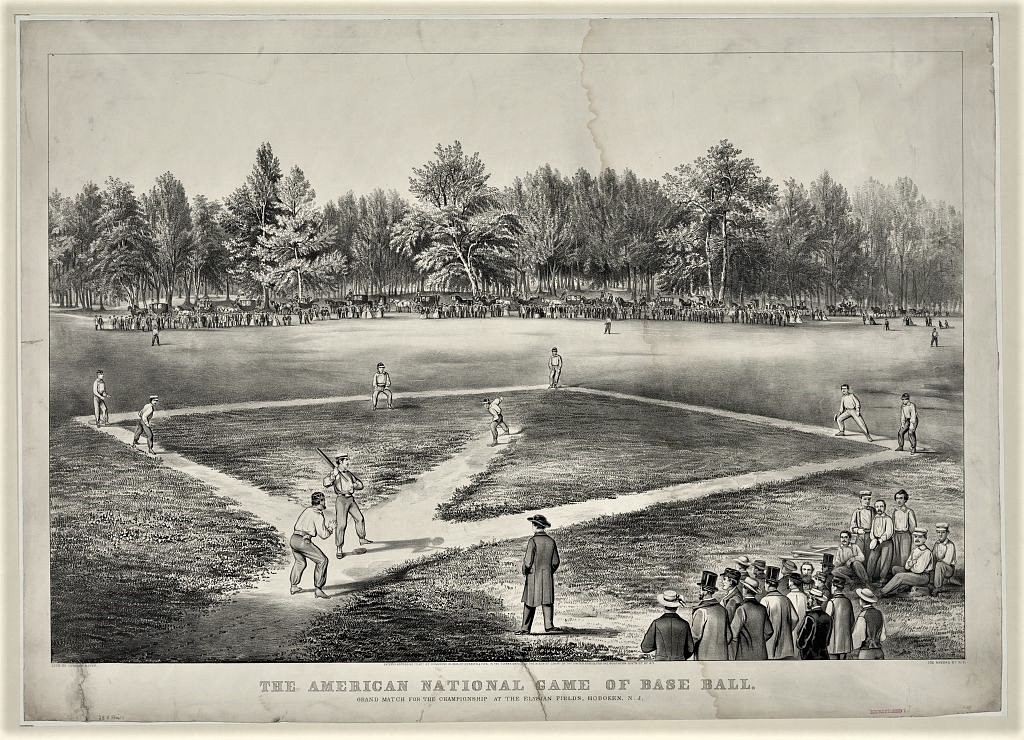
      But before leaving for Washington in the late 1860's, Johnston played one other prominent role in the history of Uniontown. In 1866, along with Andrew Stewart, Jr. (formerly of the 85th Pennsylvania). Johnston helped organize the first baseball club in the city, called 'Vantage." Their first game was played 1866 against a team from Waynesburg, Greene County. The final score was 43-35. Johnston also played in the game as the starting pitcher. He later reminisced that the fielders wore no gloves and the umpire and catcher wore no padded protection.
Library of Congress
    Johnston died in 1929 at the age of 93 and is buried in the Oak Grove Cemetery in Uniontown.

                                                    From the Waynesburg Republican
                                                              October 24, 1866


Sunday, October 20, 2019

Profile of Robert Patterson Hughes

        One of the most prominent postwar members of the 85th Pennsylvania regiment was Robert Patterson "Pat" Hughes of Washington, PA. [I have no photo of Hughes to share, but this link to the Wyoming State Archives had a picture of Private Hughes] Hughes enlisted as a private in the 12th Pennsylvania infantry for three months before joining Company B of the 85th Pennsylvania as a lieutenant. By the end of the war, Hughes was the lieutenant colonel of the 199th Pennsylvania regiment. And by the time he retired from the army in the early 1900's, he was a major general. He is the only member of the regiment who served in both the Civil War and the Spanish American War.
Removing Confederate Torpedoes on James River, 1864  
  LOC

         Hughes was born in 1839 in Washington County. During the war, he became one of the most reliable field commanders in the regiment. He led a small unit to destroy a torpedo station on the James River in Virginia. He later led charges during the Second Battle of Deep Bottom in 1864 in Virginia, and then at Fort Gregg near Petersburg, Virginia (as a member of the 199th PA) in the closing week of the war.
Hughes' map of Little Big Horn 
   LOC
        He married Clara Terry, who was the sister of General Alfred Terry, and was a member of Terry's staff during the campaign against the Sioux Indians in 1876. Terry and Hughes came upon the Little Bighorn Battlefield shortly after George Custer's command was wiped out. Hughes drew a map of the field which is now housed in the Library of Congress. Hughes also wrote a brief but spirited tract on the battle in which he placed blame on Custer and absolved Terry, his brother-in-law.
    He continued to advance his army career, becoming Inspector General. In this position, he helped Francis Morrison of the 85th Pennsylvania earn a Medal of Honor for trying to save a comrade's life at Ware Bottom Church (VA) in 1864 during the Civil War. 
    Hughes was sent to the Philippines during the Spanish American War as an aide to General Elwell Stephen Otis. Hughes spent four years in the Philippines, serving at one point as Provost Marshal of the Manila.
    In 1901, after the killing of nearly 50 American soldiers of the U.S. 9th Infantry on the island of Balangiga, Hughes instituted a severe search-and-destroy policy against insurrectionists that resulted in the deaths of thousands of Filipinos. He told a congressional committee that burning villages was not civilized warfare, but that the Filipinos were not a civilized people.
From the Inter Ocean
 Chicago
 February 26, 1902
      Hughes retired from the army in 1904 at age 64 and a 43-year military career. He died in 1909.

Monday, October 14, 2019

My Talk to the Bull Run CW Rountable

           On October 10, I had the opportunity to give a talk to the Bull Run Civil War Roundtable at the Centreville Public Library in Centreville, Virginia. The audience was one of the best to which I have ever spoken. They were very knowledgeable about the war, participated in the talk and asked pertinent questions at the end.
   The meeting prior to my talk was most impressive. This group of Civil War enthusiasts has plans for many Civil War field trips, partners with local Civil War sites and preservationist groups, and is highly active in promoting Civil War education. It was a privilege to speak to them
    This Bull Run Roundtable chose my talk entitled, "The U.S.Marines at John Brown's Raid and During the Civil War." The audience of about 75 guests included many veterans and several marines. The talk included the very prominent role of the marines in John Brown's capture. Events in which the marines played a prominent role during the Civil War included First Bull Run, the Battle of Cape Hatteras Inlet, the capture of New Orleans, the assault on Fort Sumter (1863) and the capture of Fort Fisher.
    I would encourage anyone in the northern Virginia area who is interested in the Civil War to check out the Bull Run Civil War Roundtable website and to consider attending a future talk. Outgoing President Mark Trbovich and group were gracious hosts to both myself and my wife.
    Oh, and the roundtable let me set up a table afterwards to peddle my book, "Such Hard and Severe Service: The 85th Pennsylvania in the Civil War" published by Monongahela Books.

Friday, October 11, 2019

Echoes of Dred Scott Case in Uniontown, Pennsylvania

Partial boundary between Pennsylvania and (West) Virginia
Map showing Uniontown, PA and nearby Morgantown, VA in the 1850's  LOC
        For several decades prior to organizing the 85th Pennsylvania regiment, Colonel Joshua B. Howell had been a prominent attorney in Uniontown, PA. In 1853, he took part in a court case that closely resembled one of the most controversial cases in U.S. history, the notorious Dred Scott decision by the Supreme Court in 1857. 
        To quickly review, Scott, a slave, had been taken from Missouri, a slave state, to several free northern states for extended periods of time by his then-owner, John Emerson. Scott, through his attorneys, had tried in vain for several years to gain his freedom for having lived in free states where slavery was outlawed. 
          In 1853, Scott, now owned by Emerson’s brother-in-law, John Sanford, sued in federal court to be declared a free man. In 1857, the U.S. Supreme Court ruled 7-2 that Scott should remain a slave. The court further declared that, as a slave, Scott was property and had no rights as an American citizen 
Colonel Joshus B. Howell
From Dickey's History of the 85th PA Regiment
          In the same year that Scott sued Sanford, a case involving fugitive slaves was heard in a Uniontown court. Alexander Green, an African-American slave, and had gotten married in Morgantown, then part of the slave state of Virginia [see map] Together he and his wife had seven children, all born into slavery. Green had at some point bought his own freedom as well as the freedom of his wife, Evalina. Eventually four of their children also gained their freedom. Three others, Willis, Charlotte and Liz remained slaves in Morgantown to three different owners. These three children were occasionally granted vacations to spend with their parents in Uniontown, 27 miles away. On one of these visits, they declined to return to Morgantown. Their owners sued for their return. Joshua Howell was one of the two attorneys who represented the slaveowners. 
           The U.S. Commissioner, Robert P. Flenniken, ruled that the three Green children had to return to Morgantown as slaves. This decision did not sit well with the African-American community of Uniontown, who attended the court proceedings in large numbers. Following the return of the Green children to Morgantown, a group of African-Americans from Uniontown organized a rescue mission with the intent of seizing the three Green children and transporting them to safety in Canada. They acquired a horse-drawn cart and set off for Morgantown. But upon reaching the Cheat River, a ferryman was not available to help them get across. The group also worried that their appearance at the state border might tip off authorities, so they called off the mission and returned to Uniontown.    
         The three Green children eventually gained their freedom after the Civil War. Two of their free brothers, Jerry and George, died serving the Union cause in the Civil War. 
         Finally, several ironies are associated with the Green case. Flenniken, the commissioner who ruled against setting the Green children free, moved to the territory of Kansas the next year and promoted an anti-slavery statehood platform. Meanwhile, as West Virginia moved towards statehood a decade later, James Evans, who owned Willis Green, started the 7th West Virginia infantry that fought for the Union.

Sunday, October 6, 2019

"It was Braddock's defeat after the lapse of a century"

From F.W. Little's The Seventh Regiment New Hampshire Volunteers (1896)


      Included in an 1882 book entitled, History of Fayette County, Pennsylvania is a group of brief biographies of prominent county citizens. One of those profiles was for the late Joshua Blackwood Howell, the colonel of the 85th Pennsylvania regiment. Howell was a leading attorney in Uniontown, PA prior to the Civil War. He suffered from a concussion on Morris Island, South Carolina in 1863 while commanding trench operations. The next year, 1864, Howell died as the result of a fall from his horse while stationed in Virginia.
        In Howell's biographical entry from the book about Fayette County is this tantalizing passage concerning Union General Truman Seymour's ill-fated Florida expedition in February of 1864, resulting in the disastrous loss at the Battle of Olustee:

     "He [Howell] was ordered with his brigade to Hilton Head [SC] to relieve Gen. [Truman] Seymour, in command of that district....Seymour had been ordered to Florida in command of that unfortunate expedition which resulted in the disaster of Olustee, upon the occasion of which he publicly remarked, 'This would not have occurred if I had Howell and his gallant boys with me.'"

       The purported Seymour quote heaped praise on Howell's "gallant boys," which probably meant the 85th Pennsylvania and the rest of Howell's brigade that included the 39th Illinois, 62nd Ohio and 67th Ohio. But is it true?
        If correct,  it is also a rather startling admission from Seymour, whose nearly 2,000 casualties and a 34% casualty rate at Olustee was staggering. Could Howell's command really have made a difference in the face of such huge losses?
       Also, one must ask, who or what is source for this comment? The History of Fayette County, Pennsylvania was published eighteen years after the battle. The work was edited by Franklin Ellis, but the author(s) of the individual biographies of the prominent residents is not disclosed.
     Under what circumstance could Seymour have made such a statement? Was it part of an interview?  Was it immediate frustration expressed upon his return to South Carolina?  Perhaps he said it to praise Howell on the occasion of Howell's untimely death later that year (1864).
        If Seymour thought so highly of Howell's men, why was Howell's brigade left on Hilton Head Island for the Florida campaign? The reason is that many men in his brigade had been rewarded with  30-day furloughs to travel back home because they had extended their enlistment past the original three-year commitment.
        Ironically, Howell's own regiment, the 85th Pennsylvania, did not re-enroll enough soldiers to be called a veteran volunteer regiment; the other three regiments in Howell's brigade did earn the distinction. In a subject covered in my book about the 85th Pennsylvania, Such Severe and Hard Service, most men in the 85th PA deplored the leadership style of Lieutenant Colonel Edward Campbell and refused to extend their service.
       The next question is: Did Seymour actually make the "public" statement that he would have been victorious at Olustee if Howell's brigade had been there with him? After an extensive internet search, I could not find this quotation by Seymour. This does not mean that the statement was not made, only that I could not find it. I would like to invite a reader to contact me if he/she finds evidence that Seymour actually made the statement.
     However, the next question is: Could Seymour have made this statement? I believe the answer is yes.
      By the start of 1864, Howell's brigade had established a sturdy reputation. They had been unfairly disparaged by George B. McClellan at Seven Pines (VA) in 1862, but played a key role during the Goldsboro Expedition later that year, and had survived onerous trench digging duties on Morris Island (SC) in 1863, suffering more casualties than any other Union regiment stationed on the island. The other three regiments had all fought well in the west before coming under Howell's command in early 1863.
       The goals of Seymour's Florida expedition were to disrupt Confederate supply lines, search for prospective black troops, and perhaps coax the state away from supporting the Confederacy. After several movements against little opposition, Seymour decided to move inland towards the state capital at Tallahassee. He set out towards the interior of the state with 5,500 men. At Olustee, he met an entrenched Confederate force of 5000 under the command of Irish-born Brigadier General Joseph Finegan.
     One key regiment in  the Union assault was the 7th New Hampshire, a quality regiment that had just added 300 new draftees and enlistees. Their inexperience helped cause them to break and retreat at a key moment in the Olustee fight.
     In his official report five days after the battle to his superior, Quincy Gillmore, Seymour wrote:

General Truman Seymour    LOC
 "The colored troops behaved creditably—the Fifty-fourth Massachusetts and First North Carolina like veterans. It was not in their conduct that can be found the chief cause of failure, but in the unanticipated yielding of a white regiment from which there was every reason to expect noble service, and at a moment when everything depended upon its firmness. The misfortune arose, doubtless, from this regiment having lately been filled with conscripts and substitutes, of a very inferior class. The issue, so finely drawn that the battle was nearly equal to its very close, the enemy's losses as heavy as my own, ground firmly held to the last, the admirable temper of the command all indicate that but for the disparity arising from the causes indicated, this might fairly have been a victory."

         Seymour undoubtedly was referring to the 7th New Hampshire as the "white regiment" that unexpectedly yielded.
          Two weeks after the battle, a letter from an anonymous soldier in the 7th New Hampshire appeared in the Boston Herald (March 4, 1864). The soldier noted that his regiment had earlier been furnished with new Spencer carbine rifles. But prior to the Florida expedition, these weapons were taken away, replaced with damaged muskets that often did not function. Many lacked ramrods; all lacked bayonets. Referring to 300 new additions to his regiment, the soldier noted that many were German and French Canadian substitutes who spoke no English. 
        Seymour made his share of mistakes at Olustee. He advanced inland against Gillmore's orders. He misjudged the size and make-up of his opposition. He fed his regiments into the battle in piecemeal fashion. Nonetheless, he may have thought the more experienced men of Howell's Brigade would have stood and fought, giving him a better chance of emerging victorious. His official report seemed to pin the blame on one regiment, the 7th New Hampshire. So he is on the record suggesting that one regiment or one brigade would have made the difference. Correct or not, I believe he could have made the statement about Howell's "gallant boys." 
  
 NOTE: The quote in the title  of this entry is from Joseph T. Wilson's The Black Phalanx; African American Soldiers In the War of Independence, The War of 1812, And The Civil War. It refers to the disastrous defeat of English General Edward Braddock in 1755 in western Pennsylvania during the French and Indian War. 


a

Sunday, September 29, 2019

Map of Southwest Creek near Kinston, NC


         The Historical Preservation Group of Kinston, North Carolina, has kindly allowed me to post this battle map of Southwest Creek. A fight occurred here on December 13, 1862 in which the 85th Pennsylvania played a key role.
          Two days earlier, the 85th Pennsylvania had marched out of New Bern as part of General John G. Foster's combined strike force of 12,000 troops. Their goal was to march from the North Carolina coast to Goldsboro, a key Confederate railroad hub, destroy a railroad bridge and possibly occupy the city. Their intention was to disrupt the supply line from Wilmington, NC to Robert E. Lee's Army of Northern Virginia on the eve of the battle of Fredericksburg, VA. A chapter in my history of the 85th Pennsylvania, "Such Hard and Severe Service" (published by Monongahela Books) is dedicated to this two-week, 180-mile expedition.
          The 85th Pennsylvania was still smarting from the Battle of Seven Pines (VA) six months
General John G. Foster   LOC
earlier. They had fought hard, and delayed a large attacking Confederate force before retreating, only to learn that General George B. McClellan had publicly disparaged them for their eventual retreat in the face of an overwhelming enemy.
         Anxious to restore their battered reputation, companies B and D of the 85th Pennsylvania along with the 9th New Jersey were responsible for defeating a Confederate battery guarding Southwest Creek a few miles south of Kinston, which was on the way to Goldsboro.
        As can be seen in the map, the 85th Pennsylvania advanced through a swampy area across the creek from the right flank south of the creek while the 9th New Jersey scurried across the creek over an unguarded milldam to the left. This victory set the stage the next day for the First Battle of Kinston. In this engagement, the 85th Pennsylvania swept through an unguarded swamp, distracting the thin Confederate defensive line and allowing other Union regiments to capture the bridge.
        Foster's force continued to Goldsboro and destroyed the railroad bridge, but beat a hasty retreat back to New Bern when word came of the Union's disastrous defeat at Fredericksburg.
       Nonetheless, the 85th Pennsylvania, due to their roles at Southwest Creek and Kinston, felt their honor had been restored by their performance. Their losses were three men killed --Pvt. Thomas Cox (Company C) was killed instantly, while  Corp. Charles Pullin (H), and Pvt. Samuel Daniels (H) died the next month while hospitalized.

Monday, September 23, 2019

Boyd Crumrine Profile

Boyd Crumrine
Commemorative and Biographical Record 

of Washington County, PA (1889)


   "Why is a love for local history to be justified and encouraged? First, for the reason that it is so absorbing, in the leisure hours when other subjects may have lost their interest; and second, and the better reason perhaps, because when one of the present had brought before him the honest, strenuous life and bravery of his pioneer ancestors, he is most likely himself impelled to courage and endurance"

                     Boyd Crumrine
                     The Daily Notes
                     Canonsburg, PA
                     December 24, 1903


     I found this quotation by Boyd Crumrine of the 85th Pennsylvania to coincide with my own motivations for writing "Such Severe and Hard Service" published by Monongahela Books. After the war, Crumrine had a distinguished career as an attorney and local historian in Washington County.
    Crumrine (1838-1916) had just been admitted to the bar of Washington County, PA in 1861 when he decided to enlist into Company B of the 85th Pennsylvania as quartermaster-sergeant. He spent the winter of 1861-2 with his regiment in Washington, DC. Crumrine then transferred to another unit that was soon disbanded; he consequently was discharged and went home in 1862 to began his career as an attorney. In this capacity, he represented many veterans' widows and mothers who were seeking survivor benefits. Their husbands or sons were men from his former regiment who had lost their lives in battle or from disease.
     Crumrine wrote a comprehensive history of Washington County in 1882 as well as several other books and articles on western Pennsylvania history. At one time he was the president of the Washington County Historical Society. He also wrote and edited several law books during his career as a writer.
Boyd Crumrine 1910
The Centennial Celebration....of Washington, PA


Monday, September 16, 2019

Letter from Lt. William T. Campbell, Co. F


Map of Southwestern part of Washington, DC
Fort Good Hope was renamed Fort "Wagner" in 1862

         The following article from 1945 appeared in a Fayette County, PA newspaper. It was written by 19-year old Lt. William Thomas Campbell of Company K, 85th PA, from Fort Good Hope to his sister in 1861. Campbell served in Company K with his two brothers, John and James. 

       Fort Good Hope was located on the southern side of the eastern branch of the Potomac River and was the home of the 85th PA from December, 1861 to March, 1862. The men of the regiment helped build this structure, one of 68 forts constructed to protect the nation’s capital after the disastrous loss at Bull Run in the summer of 1861. The site Fort Good Hope is today the home of Stanton Elementary School.
     In his letter, Campbell mentions seeing an aerial balloon on a reconnaissance mission over Washington. This may be a balloon of Professor Thaddeus Lowe that flew from Budds Ferry in Maryland, across the Potomac River from the present-day Quantico Marine Base. However, the balloon might also have been one flown by aerialist John LaMountain, whose balloon was spotted in December in the vicinity of Alexandria, VA, about four miles from Fort Good Hope.


[Connellsville (PA) Daily Courier, November 16, 1945, p.12]

“Sword and Letter Recall Incidents of Civil War”

            A prized possession of memories of the family of the late George W. Campbell of Normalville and Connellsville is the sword of Mr. Campbell’s brother, Lieutenant William T. Campbell, who was killed in the battle of [Second] Deep Bottom, Virginia, August 13, 1864. It reposes at the Campbell homestead in East Green Street. Members of the family are Dr. Clyde S. Campbell, Miss Rebekah Campbell, Miss Kathryn Campbell and Ben H. Campbell.
      A Conf. bullet struck Lieutenant Campbell over the heart, piercing it after severing the leather strap by which swords were then carried. In the soldier’s honor, the post of the Grand Army of the Republic at Springfield, now Normalville, was named William T. Campbell.
    Another relic of the Rebellion is the letter written by Lieutenant Campbell from Fort Good Hope, across the Potomac River from the National Capital, and directed to his sister Mary of Springfield. It is among the effects of Harry Hayden of Uniontown, an employee of the W. Penn System in Connellsville...
      The letter from the lieutenant to his sister, dated December 12, 1861, was written in the quaint style of long ago. It reads:

Balloon View of Washington, 1861, facing southwest.
Fort Good Hope would soon be built at the top left across the Eastern Branch
of the Potomac River. -- Library of Congress


Lieutenant William T. Campbell 
Company K
December 16, 1861
Fort Good Hope, DC

Dear Sister.

            I sit down to let you know that I am well and hope you are the same. I received a letter from father a few minutes ago and was glad to hear that you are all well. He said he was going to butcher the next day. I was glad to hear it and would like if you would send me about have of one of the backbones in your letter when you answer this.
            We are getting along fine. They boys are all well and enjoying themselves accordingly. Just finished our house today. It consists of three rounds of longs built up like a log house, chunked and daubed, and our tent sought [set] on top for a cover. The boys are all fixing up the same way for the winter. We have had no cold weather here like you had in the mountains. For the last week it has been so warm that I could no without my coat.
            We are still encamped about three miles from Washington, across the eastern branch of the Potomac, with two other regiments and are engaged in building a fort. From the fort you can see Washington city about as well from any place about the city. The regiment works by turns and more of us were out today but the whole regiment is going our tomorrow. When I was working on the fort day before yesterday I seen a balloon travelling through the air. It was on a reconnoitering expedition to see what the rebels are doing.
            I expect that we will stay here all winter and I would be glad if we would for it is a very pleasant place to stay and we got plenty to eat and plenty to cover to keep warm. Mary, tell the girls to keep in good heart for we will be back some time and hope that we may see them all married to some of the soldiers that stayed home. We see a girl so seldom down here that it looks like the mountains about Springfield when we see one. We have not seen any ladies of any account since we left Pennsylvania except a few black ones that we seen at Baltimore, which consisted of about 500 that turned out to see us as we passed through the city.
            Mary, we are within three miles of Washington and can get no late news. Now I want you to send me the [Uniontown Evening] Standard every week after you read it. It will not cost you much, not more than a cent at a time, and when we get paid here which will not be longer than January I will send you enough money to satisfied you well for your trouble and a nice present.
             I don’t know that I have anything more to write at present but when you write let me know how all the people are getting along in the mountains. I wrote to Sam as soon as I arrived but have not received any answer yet. Give my love to Father and Mother and all the rest of the family and tell Father that I will answer his letter the first of next week.
                                                                Nothing more. Answer soon.

                                                               Your brother, W. T. Campbell


Thursday, September 12, 2019

Addendum to Virtual Cemetery

   In an earlier post, I wrote of the creation a virtual cemetery of veterans of the 85th Pennsylvania regiment found on findagrave.com.
   Research has turned up an additional seven online headstone photographs at billiongraves.com.

    The seven veterans found on that site are:

      VETERAN                  COMPANY              CEMETERY                         LOCATION

     Thomas Cline                       C                       Redstone                           Brownsville, PA

     Hagan Z. Ludington              K                      Oak Grove                          Uniontown, PA

     Joseph Pratt                          G                      Oak Grove                          Uniontown, PA

     William Randolph                  B                      Brick Road                          Ellensburg, WA
 
      Minor Reamer                      G                      Monongahela Hill               Greensboro, PA

      William Virgin                       D                     Clarksville Presbyterian       Clarksville, PA


        Below is a list of five 85th PA veterans and their burial sites whose headstone photographs, cemeteries or cemetery registries were not found in an online search.

   VETERAN                             CEMETERY                            LOCATION              YEAR DIED

John Westley Brown (I)            Oak Vale                                  Ohiopyle, PA                   1873
Josephus Jacobs (G)                Lippincott Burial Ground           Greene County               1892
Lewis Watkins (E)                     Watkins Family Farm                 W.Brownsville, PA          1864
Samuel P. Wilson (H)                Jenkins                                        Fayette County?            1929
William J. Wilson (A)                 Washington                                 Washington, PA                 ?


Sunday, September 8, 2019

"When You Want Something Go For It"

White House during the Civil War
National Archives

      The Republicanof Clinton, Missouri on May 4, 1911. It describes how Captain Hagan Z. Ludington  of Company K, 85th Pennsylvania, obtained much needed blankets for the men of his regiment during their four-month stay in Washington, DC beginning in November of 1861.
The newspaper article below is from

      Such Hard and Severe Service." That earlier article, involving a meeting between Captain Ludington and President Lincoln, was first recorded by Private Robert Roddy of Company H. Roddy’s brother, Edward Roddy, owned the Genius of Liberty newspaper in Uniontown, PA. Robert Roddy’s story appeared in his brother’s newspaper within a few weeks of the event.
This version of the story is corroborated by a similar account that appears in my book, "

       The article below, on the other hand, was written 50 years later. Despite the gap of half a century, they are remarkably similar. Although the 1911 article is signed only with "One of the Boys," it was undoubtedly written by John Nicholson Pierce, the first chaplain of the regiment. Pierce lived in Clinton, MO at the time this article was penned.

        Pierce’s story adds credibility to Roddy's account of Ludington's actions that day. Furthermore, the Civil War was a time when one could simply walk into the White House and ask for an appointment to see the president. This was done mostly by people seeking jobs in the federal government.

        Pierce served as chaplain of the 85th PA for about one year. A graduate of Meadville (PA) College, Pierce was a Methodist minister in Waynesburg, PA when the war broke out. Following his war experience, he was assigned to churches in Missouri in 1865. He died at age 91 in 1926 and is buried in Clinton.

        Captain Ludington, the subject of the story, was part of a prominent family that included Revolutionary War heroes Henry Ludington and Sybil Ludington. Prior to organizing Company K, the “Mountain Rifles,” Ludington lived in Nebraska. He owned a company that sponsored wagon trains to California during the Gold Rush. This is surely where he developed his skills in the supply business.

           Ludington was soon admitted to a Washington, DC hospital in May of 1862, just before his regiment departed from the nation's capital for the Peninsula Campaign. He resigned from the regiment the next year and died at home at age 36 in May of 1865.  Ludington is buried in the Oak Grove Cemetery in Uniontown.