Monday, February 10, 2020

A Poem From Fort Good Hope (Washington, DC)

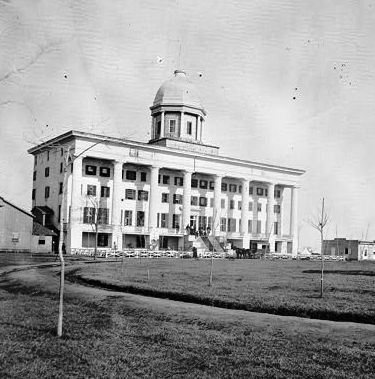
Interior of a Fort in Washington, DC During the Civil War

          The anonymous poem below was contributed by a member of the 85th Pennsylvania for a reunion in 1885 held in Canonsburg, Washington County. This regimental reunion was held jointly with the 10th Pennsylvania Reserves.
         First, some information about the reunion. A local newspaper noted of the event, "The town was in gay attire, the buildings being decked with flags,
From Boyd Crumrine
History of Washington County
1882
banners and evergreens. On the arrival of the 10:30 a.m. train from Pittsburgh, the visiting comrades were met at the station by the resident members of the regiments, and falling in line they all marched to the Jefferson Academy building..." 

       After several addresses, the veterans continued to the town's skating rink where a banquet dinner was served. At a campfire later in the day, Reverend Jacob L. Thompson, a veteran of Company A, shared some remarks. Another address was made by Alexander Pollock of Company A entitled, "Our Country: The Best Government on Earth." Reverend James S. Speer, a veteran of Company B also made a speech entitled, "Our Absent Comrades."
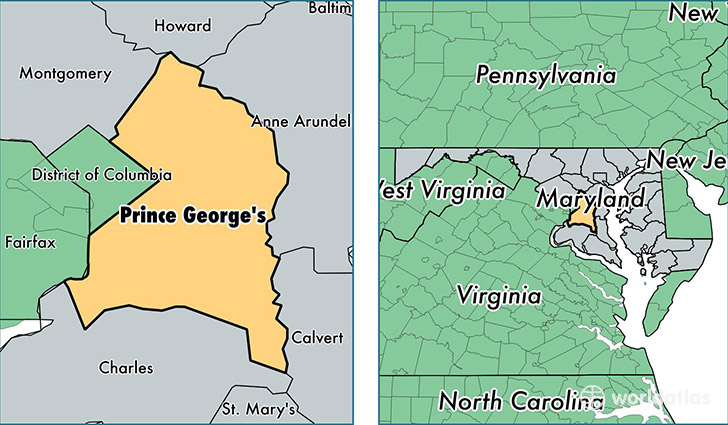
      During their stay at Fort Good Hope in the District of Columbia during the winter of 1861-1862, the regiment constructed its own fortification (one of 33 that ringed the nation's capital during the war)  and performed duties at several other facilities in the vicinity. Fort Good Hope was located across the eastern branch of the Potomac River, in the southwest corner of Washington, DC near the border with Prince Georges County, Maryland. When they had time, the men would tour the nation's capital. Several claimed to have encountered President Abraham Lincoln near the Capitol Building on various occasions.
        The poem,written during the 85th Pennsylvania's third month in Washington, DC and sixth overall in the army, reflects the writer's homesickness, restlessness in not yet having participated in battle, and frustration with the cold winter weather.


Washington Daily Reporter
October 2, 1885


WINTER IN CAMP
   The following lines were written by a member of Company E, 85th regiment PA. Vols. In February, 1862, at Camp Good Hope, Washington, D.C. and are handed us with a request to publish,


Alas the pleasant days have fled,
The rude storm king has come,
And I’m nodding in my canvass bunk,
With thoughts of “Home” sweet home.

I’m nodding by my friends,
The snow falls thick and fast,
And I’m thinking of the joy’d ones left
And happy hours we’ve passed.

I’m thinking of the little ones,
Now distant many miles,
Their childish glee, their numerous pranks,
Their tears and gentle smiles.

I’m thinking of the good things too,
Roasts, jellies, cakes and cream,
But oh! Alas such dainty things,
In camp are seldom seen.

I’m thinking of the merry dance,
I see each fairy form
As gracefully they promenade,
And smiling partners turn.

But Oh! How different here the scene;
My heart grows faint and sick,
“Tis shoulder arms,” “Right shoulder shift,”
“Now forward” “Double quick.”

The glorious orb of day is hid,
Nor sheds its genial heat,
To cheer the shivering sentinel,
While on his lonely beat.

The silver moon, the twinkling stars,
With clouds are overcast,
And each in haste a shelter seeks,
To shield him from the storm.

And still the storm king rages on,
With unrelenting will,
As though it were his chief delight,
Our icy cups to fill,

The rain, the hail, the sleet and snow,
Continue to descend,
Old Boreas blows his bitter blast,
That seem to have no end.

But cease complaint, my country calls,
Away with idle thought,
We came to save the stars and stripes,
Our fathers dearly bought.

No blood yet trickling from our feet,
We’re amply clothed and fed,
‘Twas not so with our noble sires
When forth to battle led.

Their footsteps left a bloody path,
As o’er the clods they passed,
Undaunted still they forward pressed,
To triumph at the last.

Though kinds and crowns may threaten us,
Though wild rebellion rolls,
Undaunted by our flag we’ll stand,
Or sleep beneath its folds.

Then comrades on with heart and hand,
We’ll show the gazing world.
While life and through and being lasts,
Our flag remains unfurled.

When limbs are stiff and ache with toil,
The cure lies in St. Jacobs Oil.
New York Illustrated Times
May 24, 1862


Monday, February 3, 2020

The Last Man Killed

   
Frank Leslie's Illustrated
       In last week's post, I  wrote about James C. Davis, who was the last member of the regiment to be wounded in battle. Davis was hurt on April 2, 1865 at Fort Gregg near Petersburg, VA.
       Davis survived his wound and went on to a prominent career in education. He died in 1914 at the age of 63 and is buried in Kansas.
      The next question to answer is: Who was the last member of the 85th Pennsylvania to die in battle? The answer is not as cut-and-dried as one would imagine. My interpretation of the question is: Who was the last to die AS A RESULT of being wounded in battle. Based on this view, several men who were wounded at Second Deep Bottom could be that last victim. And what about those who WERE members of the 85th Pennsylvania but had transferred to another regiment to meet their permanent fate?
  Following the  2nd Battle of Deep Bottom in August of 1864. the 85th Pennsylvania was involved in the fighting at Darbytown Road, VA (October 13, 1864), Fort Gregg (April 2, 1865) and Appomattox Court House (April 9, 1865) before the war finally ended.
New York Daily Herald
August 17, 1864
    In these final three engagements, the regiment suffered several men from the 85th Pennsylvania were wounded but there were no fatalities.
     That means that the last engagement in which men from the regiment were killed was at 2nd Deep
2DP Reenactment  2014
Bottom. In that engagement 21 men were killed and another 73 were wounded.
      In this one-week operation near Richmond, most men died on the day of the most substantial part of the fight on August 18,1864.             The 85th Pennsylvania, as a member of Francis Pond's Brigade, stormed and captured a Confederate earthwork.
       Captain Lewis Watkins of Company E was severely wounded in the arm and  leg while helping to lead the charge at 2nd Deep Bottom. Watkins died six weeks later at Chesapeake Hospital at Fort Monroe (VA).
        Of the men who suffered fatal wounds, Sergeant Myers P. Titus of Company G lingered until November 2, 1864 before dying in a Hampton (VA) hospital. Corporal James Sturgis, also of Company G, hung on from his wound until he expired on November 6, 1864 in a hospital in Beverly, NJ.
        Next is Corporal James C. Bailey of Company C. Bailey was captured on Whitemarsh Island near Savannah, Georgia on February 22, 1864. The exact cause of his demise is unclear. Bailey was eventually released during a large-scale prisoner exchange but died on the voyage home on December 12, 1864. He may have been wounded on Whitemarsh Island. How much this contributed to his death is unknown. On the other hand, his death may have been due to harsh treatment at Andersonville and other Confederate prison camps. If he were wounded on Whitemarsh Island, was this a a contributory factor to his death?
        Next is Private David Baldwin of Company D. Baldwin  who died in Salisbury (NC) POW camp in North Carolina on December 19, 1864. Baldwin was listed as missing-in-action at 2nd Deep Bottom. Like Bailey, it is unknown if Baldwin were wounded causing him to be captured. If he were wounded, it is also not known if this contributed to his death. He may have died of starvation or caught a disease in camp and expired.
Captain Richard Dawson
James Hadden, History of the Old Flag


      Captain Richard Dawson of Company I was wounded at the second (and successful) Union assault on Fort Fisher near Wilmington, North Carolina in January of 1865. Dawson was wounded in the arm, which was amputated, but he passed away a few weeks later from the wound on February 1, 1865.
    But Dawson was not a member of the 85th Pennsylvania at the time. Two months earlier, he had been promoted and was an aide to General Adelbert Ames when he was wounded during the storming of Fort Fisher.


Corporal Joseph W. Burson
Courtesy of Sharon Zbinovec

      Finally there is my choice for the last fatality in the regiment, Corporal Joseph W. Burson of Company D. Burson was wounded and captured at Second Deep Bottom in August. He was released from prison camp near the end of the war, but died on March 17, 1865, three weeks before the war ended. He died at home in Fredericktown, Washington County, just after being accompanied home by his father, Edward, from a hospital in Annapolis, Maryland.
    Therefore, although it is possible Burson's death was caused by his stay in prison camp, his wound does appear to be a contributing factor in his demise.

https://www.findagrave.com/memorial/46342950/joseph-w_-burson
Walton Cemetery
Clarksville, GreeneCounty, PA

Wednesday, January 29, 2020

Ware Bottom Church Preservation Effort


The American Battlefield Trust is working to preserve an additional 53 acres at the Ware Bottom Church battle site in Chesterfield County, VA near Richmond. Please consider a donation towards their efforts. The 85th Pennsylvania was encamped near the site in the spring and summer of 1864. Besides frequent skirmishing with the enemy, the 85th PA fought two battle here. On May 20, the regiment suffered twenty-five casualties including six killed. On June 16, twenty men from the regiment were casualties, including seven killed. My great-grandfather, John Clendaniel, was wounded in this engagement but survived. Four other men on picket duty were captured; two of them died in confinement.


Monday, January 27, 2020

The Last Wounded Man

f
The Daily Courier
Connellsville, PA
September 18, 1911, p.1

    Next week I am going to speculate about which soldier from the 85th Pennsylvania was the last to die in battle or due to a battlefield wound. This week I will focus on the last man to be wounded who survived the war. That man appears to be Private James C. Davis of Company E. 
    The article at the right from 1911 mentions four veterans of the 85th Pennsylvania and has a revealing mention about Davis as the war was closing.
   The four soldiers from the 85th Pennsylvania in the article are, Davis, Eli F. Huston, (Company E), Henry J. Molleston (I) and Joshua Torrance (B). Huston, Molleston and Torrance were all living in Dawson, Fayette County at the time.
   The story is about a dinner party for Davis, who lived in Oklahoma. Davis had come back home for a regimental reunion that year that was held at Brownsville, Fayette County in mid-September. About 75 elderly members of the regiment were in attendance. 
   Eli F. Huston was 76 years old at this time. He was born in Fayette County. He enlisted as a wagoner but spent the war in the ranks as a private. Huston was wounded in the thigh on Morris Island, SC in 1863 when his regiment was digging a series of trenches that resulted in the capture of Fort Wagner. He was a coal miner following the war, working his was up to superintendent of one of the mines near Connellsville.
    Six years later in 1917, Huston attended the regimental reunion in Uniontown and died the next day of pneumonia at age 82.
   Henry J. Molleston, age 74, was given a medical discharge after 30 months of service. After the war, he attended California Normal School (now California University of Pennsylvania, the school from which the author graduated). Besides finding work as a farmer and blacksmith, Molleston worked as an engineer for a coal company . He also became a preacher in the Methodist Church.
          Joshua Torrance. age 67, was captured at Ware
Andersonville Prison   LOC
Bottom Church (VA) on June 16, 1864 while on picket duty. He spent two months at Libby Prison in Richmond and then another 11 months at Andersonville Prison in Georgia. He was released on April 1, 1865, just eight days before the end of the war. He later served as school director, tax collector and auditor for Lower Tyrone Township in Fayette County following the war. 
       James C. Davis, 65 years of age, had enlisted as a 15-year old in 1861. After the war, he served as a school principal in Pennsylvania, Ohio and Indiana. He moved to Kansas in 1880 where he served three terms as school superintendent for Chase County. He later purchased land in Oklahoma and became an oil prospector. 
       The article about the dinner party states that Davis was "the last member of the 85th wounded, the date being April 2, 1865."
         This happened during an assault upon Fort Gregg on the last line of inner line of defenses around Petersburg, VA. Earlier in the day, after a ten month siege, Union forces had pierced the Confederates' outer defensive line, forcing Lee out of his trenches. Lee headed west in a futile attempt to link with Joseph E. Johnston's army in North Carolina. Lee surrendered at Appomattox one week later to end the war. 
 
Storming Fort Gregg    LOC
        Fort Gregg was extremely bloody. Every Confederate  in the fort, numbering about 330 men, was killed, wounded or taken prisoner as the rebels fought to the end to give Lee time to evacuate the Richmond-Petersburg front.
   
Colonel Thomas O. Osborn
Yates Phalanx
        The 85th Pennsylvania was in the first of four waves to rush the fort. They were commanded by Colonel Thomas O. Osborn of the 39th Illinois. Osborn's Brigade made it into the moat surrounded the earthen fort, which saved many lives until several more waves of Union troops breached the parapet and  forced the fort to surrender. The Union suffered over 700 casualties in the assault. *
        Davis was one of 163 remaining members of the 85th Pennsylvania  after 1864  (these remaining men had reenlisted or had joined the regiment after 1861 and were yet to complete their three years). The majority of the regiment had gone home four months earlier.
        The last battle in which the full regiment was engaged was at Darbytown Road near Richmond on October 13, 1864. Seven men were wounded in this affair, none fatally.
       The seven men wounded at Darbytown Road were: Sgt. Charles Eckels (Company E), Corp. Nicholas Derbins (F), Pvts. David Baker (B), Milton F. Bradley (I), Jacob Huffman (F), Samuel E. Johnson (I), and George Rodeback (C). 
         The reduced 85th Pennsylvania was involved in two more fights during the last week of the war, at Rice's Station and Appomattox (see map below), but the author could find no documentation that any member of the regiment was killed or wounded in either fight. So Davis does indeed appear to be the last man in the regiment to suffer a wound or death on the battlefield.


Last 3 Days of Lee's Retreat to Appomattox, VA
85th PA was part of  the Army of the James [ORD] 

Map by Hal Jespersen
www.cwmaps.com
            *NOTE: It has always puzzled the author why the 85th Pennsylvania did not suffer more casualties at Fort Gregg. The 199th Pennsylvania from Philadelphia, engaging in their first battle since joining Osborn's Brigade, suffered ten deaths. The 39th Illinois, also in the brigade, suffered 12 men killed and 31 wounded. Davis was the only soldier in the 85th PA to be killed or wounded while being in the thick of the fight.
           Granted, these regiment were larger that the 85th Pennsylvania at the time. Nonetheless, considering that all of these regiments (along with the 62nd Ohio and 67th Ohio) made the first charge upon Fort Gregg simultaneously, wouldn't one expect to find more losses in the 85th Pennsylvania? 


Monday, January 20, 2020

85th Pennsylvania Original Company Nicknames & Commissioned Officers


                                                     COLOR KEY 
                                                     Killed in Action
                                                           Died from disease
                                                        Captured, later released
                                                      Resigned for health reasons
                                                     Completed 3-year enlistment
                                                  Transferred to a different regiment

[Company A] “Union Guards” (Washington County)
Captain Harvey J. Vankirk (medically discharged, 1862)
1st Lieutenant William W. Kerr (captured at 2nd Deep Bottom, 1864)
2nd Lieutenant John Rowley (medically discharged, 1862)

[Company B] “Ellsworth Cadets” (Washington County)
Captain Morgan W. Zollars (medically discharged, 1862)
1st Lieutenant Robert P. Hughes (promoted to lieutenant colonel, 199th PA, 1864)
2nd Lieutenant George H. Hooker (wounded twice in shoulder & foot; completed 3 yrs)


[Company C] “Redstone Blues” (Fayette County)
Captain John C. Wilkinson (medically discharged, 1863)
1st Lieutenant Isaac R. Beazell (transferred to 168th PA)
2nd Lieutenant Jefferson. G. Vangilder (transferred to 22nd Ringgold Cavalry)

[Company D] “Lafayette Guards” (Greene/Washington Counties)
Captain William H. Horn (medically discharged for shoulder wound, 1862)
1st Lieutenant Rolla O. Phillips (promoted to captain, 1862: served 3 years)
2nd Lieutenant John E. Michener (captured Whitemarsh Island, GA, 1864; exchanged)

[Company E] “Washington Guards” (Washington County)
Captain Henry A. Purviance (killed on Morris Island, 1863, from friendly fire)
1st Lieutenant Lewis Watkins (died from wounds at 2nd Deep Bottom, 1864)
2nd Lieutenant Richard W. Dawson (died from wounds at Fort Fisher, NC, 1865)

[Company F] “Tenmile Grays” (Greene County)
Captain John Morris (discharged after facial wound, 1862)
1st Lieutenant Edward Campbell (promoted to colonel, 1864; completed 3 years)
2nd Lieutenant John Remley (medically discharged, 1863)

[Company G] “Monongahela Guards” (Fayette/Greene Counties)
Captain Isaac M. Abraham (promoted to major, 1863; completed 3 years)
1st Lieutenant John A. Gordon (transferred to Ambulance Corps, 1862)
2nd Lieutenant John M. Crawford (medically discharged, 1864)

[Company H] “Independent Blues” (Somerset County)
 Captain James B. Tredwell (medically discharged for chronic diarrhea, 1862)
1st Lieutenant James Hamilton (killed at Seven Pines, 1862)
2nd Lieutenant Milton Black (died from typhoid fever, 1862)

[Company I] “Howell Fencibles” (Fayette County)
Captain John R. Weltner (medically discharged for lung disease, 1862)
1st Lieutenant E. H. Oliphant (died from typhoid fever, 1862)
2nd Lieutenant Houston Devan (died from typhoid fever, 1862)

[Company K] “Mountain Rifles” (Fayette County)
Captain Hagan Z. Ludington (resigned 1863, died 1865/disease contracted during war)
1st Lieutenant Reason Smurr (medically discharged, 1862; later joined 77th PA)
2nd Lieutenant Stephen K. Brown (medically discharged, 1862, due to typhoid fever)

Monday, January 13, 2020

Disgruntlement on Folly Island


              The following letter was written from Folly Island, South Carolina in the spring of 1863 by a member of the 85th Pennsylvania. The regiment spent a year in the area around Charleston Harbor in a fruitless Union attempt to re-capture Fort Sumter and subdue the city of Charleston. His anonymous letter, signed only as "A High Private,"  reflects dissatisfaction with the treatment of the men and the lack of support from their officers. With the direction of the war shifting from restoration of the Union to also freeing slaves, the writer, like many Unionists, balks at the concept of fighting the war for the benefit of enslaved blacks.
       
Map of Charleston Harbor
Charleston is to the top middle of the map; Folly Island is circled     LOC
    The soldier is from Company D, which was composed of men from Washington County and Greene County. My two ancestors (John and Stephen Clendaniel) were members of this company. But neither one penned this letter. My family has a few of their Civil War letters and they did not have the level of education to write the following. The author remains a mystery. 
     The article appeared originally in the Washington (PA) Examiner (exact date unknown) and was reprinted in The Democratic Watchman from Bellefonte, PA in the center of the state. Both of these newspapers supported positions of the Democrat Party. The date of publication in the Watchman was June 12, 1863. 
     The letter is italicized below. My comments are interspersed throughout the letter in red.


                              “Soldier Sentiment – A Very Interesting Soldier Letter”


Camp Peck
Folly Island, South Carolina
May 20, 1863

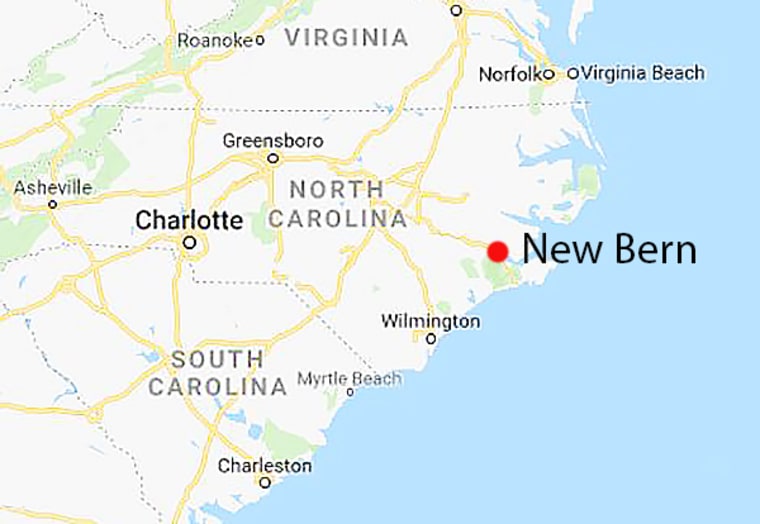
     Perhaps a line from the 85th Pennsylvania Regiment might interest you, especially as nearly half our number hail from Washington county. The 85th Pennsylvania consisted of ten companies. Companies A and B, as well as large parts of Companies D and E hailed from Washington County. I would put the percentage from Washington County at around 35-40%, more than the other three counties from which the men came (Fayette, Greene, Somerset).  We have now put in here for four months in this department. The regiment left New Bern, North Carolina in January and landed on the coast of South Carolina for a year-long siege. We came and took possession of this inhospitable island on the 5th of April, preparatory to making an advance on Charleston. They crossed an inlet from Cole Island and landed on Folly Island with no opposition, as the Confederates withdrew just before Union forces arrived. But since the naval attack on Fort Sumpter on the 7th [of April] ult., there has been little said in regard to capturing the city. This failed Union naval attack, consisting mostly of ironclads, was bombarded by Confederate shore batteries, as well guns from Fort Sumter, and withdrew. The Union naval blockade of Charleston was still intact, but Charleston didn't fall until February of 1865 when Sherman's Army caused the Confederate army to abandon the city. The most we hear is from the New York papers. They frequently speak of things which should have happened even in our own camps – things that none of us ever heard of before. Apparently "Fake News" existed during the Civil War.
     About five thousand troops are left here, and the Island is well fortified. Union forces first fortified the
Union camp on Folly Island  LOC
southern end of the island. We have been building forts and breastworks ever since we came.
When Union General Quincy Gillmore arrived in June to take command of the Department of the South, he was puzzled as to why the southern end of Folly Island was fortified instead of the northern end closer to Morris Island. He asked if Union forces planned to swing the island around in order to attack Fort Wagner, Fort Sumter and Charleston.. He soon began fortifying the northern end of Folly Island as a platform to eventually invade Morris Island. We are in view of Sumpter and a portion of the city, and the rebel camps on James Island can be seen, but not reached without a heavy force from all appearances. The rebel pickets come up to within talking distance of us every night, but keep their distance through the day.  Soldiers from the two sides soon began trading with each other (newspapers, coffee, tobacco, sugar, etc.) when the officers were not around. Sometimes they even swam together. The weather is extremely warm – equal to the month of August in Pennsylvania. We get provisions plenty, such as the army rations. All does well enough, except the hard tacks we would willing exchange for bread of some other kind. "Hardtacks" were rather tasteless biscuits made of flour and water. They were rock-hard (until softened in water or coffee) but remained edible for months, even years. The paymaster has visited us twice since we came south, though his presence the
Payday
A Soldier in the Civil War, 1886
last time failed to render satisfaction as on former occasions. Our lost clothing had to be paid for. I shall not attempt to give the causes from which our clothing was lost, as it has already been published; but during our campaign last summer and fall all who were not in hospital lost their suits of clothing and had to draw others on requisition. The run up our clothing bill far above our allowance. The government allows us forty-two dollars a year for clothing and our bills overrun our allowance from twenty to fifth dollars to each man.
The 85th PA first left their supplies behind at Seven Pines when they were overrun by Confederates. Their next set of supplies were on a transport that sank while they were on their way to South Carolina. While in North Carolina during December, 1862, the were mocked by Union troops stationed there for the ragged appearance of their often ill-fitting replacement uniforms.
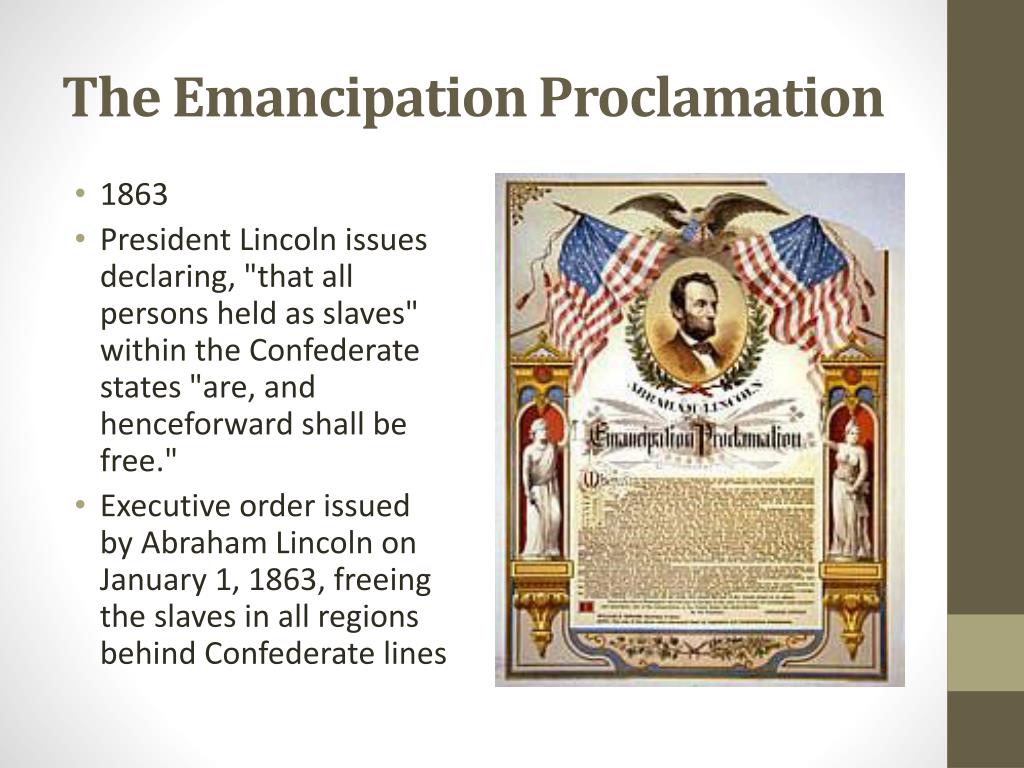
     Our officers admit that they had attended in [illegible] time this money could have been saved us. Yes, had they devoted the time they spent in drafting their resolutions March last, to our affairs, our money would not have been extracted from us. The implementation of the Emancipation Proclamation at the beginning of 1863 caused controversy in the North, as many supported the war to preserve the Union, not for the freedom of slaves. The 85th PA made national news for holding meetings in support of Lincoln’s policies and administration, with some holdouts, such as the writer of this letter. Had they [our officers] devoted the time they spent in drafting their resolutions in March last to our affairs, our money would not have been extracted from us. I see in the papers from the North many patriotic letters and most of resolutions adopted they the officers of the different regiments in this department. Their main object seems to be to denounce the whole Democratic party in general – threatening every loyal heart with the rope and bayonet who mentions conciliation and peace. Western Pennsylvania was strong Democrat Party territory. But unlike the Copperheads who favored a peace settlement to stop the fighting, most Democrats in the regiment wanted to continue the war until victory. They say the soldiers don’t want peace but are eager to fight. Allow me to say this eagerness rests wholly among those who live better than they ever did at home we are willing to fight to the bitter end for the Constitution and the old flag, but we have thus far seen the fruitless efforts to overwhelm the millions arrayed in battle. Still the encrimsoned waters of this civil war is not subsiding. Now the truth of the matter is there is not a man amongst us but would rejoice at the end of this struggle and an honorable peace. A peace satisfactory to the whole American nation is the ardent desire of every soldier in this army. Please say to those noble peace men of our country that the soldiers of the 85th will vote for any man who will bring it about.

                                                                        Truly yours, 
                                                                        A HIGH PRIVATE
                                                                        Co. D   85th P.V.

New York Times
March 21, 1863
      Interestingly, the writer kept his identity secret. Soon afterwards, Lieutenant John E. Michener of Company D sent a pro-war letter to a Republican Party newspaper in Washington (PA) signed by every man in Company D. This implies that the writer of the above letter also signed the pro-war Michener letter. This suggests that the author of the pro-peace letter was either pressured into signing Michener's pro-war resolution, he had changed his mind (unlikely), or decided to join the majority while keeping his pro-peace sentiments to himself.

     
Shore of Folly Island
The Union blockading fleet is to the right.   LOC

      The 85th Pennsylvania was soon to observe the bravery of the 54th Massachusetts who led an assault on Fort Wagner (Morris Island) with heavy losses. My book, "Such Hard and Severe Service: The 85th Pennsylvania in the Civil War," published by Monongahela Books, has several first-person accounts  of how this event changed the minds of many white troops about the bravery and discipline of black troops.