Monday, January 6, 2020

Captain Ross Rush Sanner

Captain Ross R. Sanner
Company H, 85th Pennsylvania Infantry

U.S. Army Education and Center
              Last week's post was about soldier and industrialist Norman Bruce Ream of Company H of the 85th Pennsylvania. That post mentions that Ream was saved from captivity and possibly death by his cousin, Lt. Ross R. Sanner. Ream was wounded during an assault upon Confederate forces on Whitemarsh Island, Georgia in 1864 and Sanner, also a member of Company H, assisted him back to the Union assault boats at the southwestern part of the island.

Whitemarsh Island (showing defenses) near Savannah, Georgia
LOC

        This week's post will focus on Sanner. Like Ream, Sanner taught school prior to the war as a teenager. Unlike Ream, Sanner continued his career as an educator following the war. In fact, his remarkable career as a principal and instructor spanned about 60 years. He began teaching as a teenager and  "Professor" Sanner was still teaching school at the age of 76.
    A news article five decades after the Civil War contrasted the postwar careers of the two cousins."[Ream] recovered from his wounds and became one of the greatest and richest money magnates of the United States, while Capt. Sanner elected to follow the humble though nonetheless honorable vocation of a pedagogue and in worldly goods and chattels is accounted a poor man in his old age, though rich in honor and respect shown him by the many pupils who have been under his guidance. The multi-millionaire, Norman B. Ream, remained his steadfast friends until his death, but did not remember him in his will...The writer (editor of the Republican) [William S. Livengood] had the privilege of being one of his primary pupils in 1868 and among the readers of the Republican are many who received their first instruction from this grand old pedagogue and who have ever since held him in grateful memory and high esteem." [Meyersdale Republican, February 17, 1916]
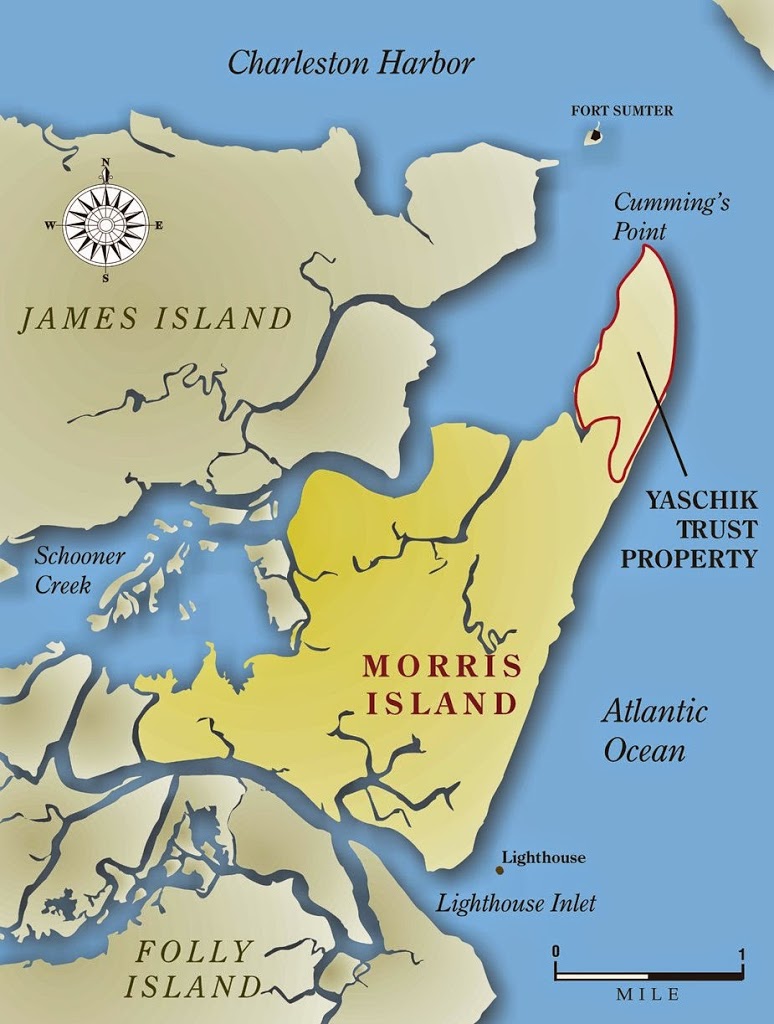
        Sanner enlisted into Company H as a 19-year old sergeant. On August 23, 1863, while stationed on Morris Island near Charleston, South Carolina, Sanner was shot in the neck by a Confederate sharpshooter. He recovered, rejoined his company and six months later saved Ream's life on Whitemarsh Island.

Sharpshooters near Fort Wagner on Morris Island, SC

         Four months after that, Sanner was wounded for the second time at Ware Bottom Church during the Bermuda Hundred Campaign and was sent to Chesapeake Hospital at Fortress Monroe. [Ream, his cousin, had also been wounded at Ware Bottom Church one day earlier]. Sanner returned to his regiment on the last day of July six weeks later, but was subsequently granted a medical discharge in September of 1864 after nearly three years of service.


Arrival of Wounded Soldiers at Fort Monroe
Frank Leslie's Illustrated Newspaper

        Sanner returned home to Somerset County but was plagued by paralysis in his arm and stiffness in his neck. He was nonetheless able to resume his teaching career, beginning in Grantsville, Maryland, just 17 miles from his birthplace.

.
        Among the various places at which he taught school were the Maryland cities of Cumberland, Frostburg, Oakland, Grantsville, Selbysport and Friendsville, as well as the Pennsylvania towns of Uniontown, Somerset and Confluence. For four years he was an instructor at the soldiers' orphan school in Jumonville, PA. He was still teaching until three weeks prior to his death.
        Sanner died in  1918. At his funeral, Dr. Walter S. Mountain, a life-long friend and fellow veteran of Company H, delivered the eulogy. Mountain said, "Capt. R.R. Sanner and I were schoolboys together and in the same company during the Civil War, hence I know something of his bravery and how well he did his duty as a soldiers...Our first fight was at Williamsburg, Va, and the captain [Sanner] was not found in the rear. He showed the same bravery at Yorktown, Fair Oaks and Malvern Hill. The next battle was at Newbern, NC, [Goldsboro Expedition] where Capt. Jackson was hiding behind a bank along a stream for fear he might be shot, and for which he was dismissed from the service for cowardice, and Capt. Sanner showed his bravery by staying on the bank where he was exposed and won his captaincy...[On Morris island]..the captain exposed his head above the ramparts and a confederate caught him in the neck with a bullet, and he was sent to the hospital. He was offered his discharge, but he said, 'No I am going back to my company to help lick the enemy.' A Confederate [at Ware Bottom Church] caught him in the arm and maimed him till the job was completed." [Meyeresdale (PA) Republican, April 11, 1918]
        Sanner is buried at Confluence, Somerset County in the Methodist Cemetery.
Sanner, age 74
Meyersdale Republican, 2-17-16


Monday, December 30, 2019

Lieutenant Norman Bruce Ream

 
Norman Bruce Ream
From Dickey's History of the 85th Pennsylvania Infantry
       Undoubtedly, in the decades following the Civil War, the two most prominent former members of the 85th Pennsylvania were Robert P. Hughes and Norman B. Ream. Hughes, who stayed in the army and rose to the rank of general,  was featured in an earlier post on this site. The current post will focus on the remarkable war and postwar careers of Ream.
       Ream was 17 years old when he enlisted into Company H in 1861 from Harnedsville, Somerset County. Prior to enlisting, he worked as a teacher and photographer. While serving as a young sergeant, Ream rallied his troops during an assault on Kinston, North Carolina in December of 1862, earning a promotion to lieutenant. The 19-year old Ream may have been the youngest private-to-first-lieutenant promotion in the Union army during the war.
       Ream was severely wounded by a bullet through his thigh during an assault on Whitemarsh Island near Savannah, GA in February of 1864. Ream's avoided capture when he was dragged to safety by his cousin, Lt. Ross Sanner of Company H.


Ross Sanner, Company H
U.S. Army Education and Heritage Center
          Ream returned to the regiment and was wounded in the right leg in the Battle of Ware Bottom Church during the Bermuda Hundred Campaign south of Richmond, VA in June of 1864. Due to his wounds, he received a discharge on the last day of August, 1864.
     [At the bottom of this page is a 1914 article in which Ream discusses a horrific night on Morris Island, near Charleston, South Carolina, 50 years earlier when his company was devastated by a single shell during trench operations].
      Following the war, Ream began a remarkable career in business that enabled him to become one of the leading industrialists in the nation, sometimes mentioned in the same class of mega-business leaders  as J.P. Morgan, Andrew Carnegie and George Pullman.  Ream first moved to Illinois and began an mercantile business. He soon relocated to Iowa and operated a grain and livestock business. By 1875, he continued in the livestock business in Chicago and became a member of the city's Board of Trade. His career in business skyrocketed in the next few decades.
      One of his largest ventures was to help form the National Biscuit Company (Nabisco). He was also involved in the Pullman Railroad Company, U.S. Steel, and the B&O Railroad.
      One newspaper article credited him with the concept of the modern skyscraper.  He was apparently riding on a train over a steel bridge on his way to Denver for a vacation. The article continued, "Sitting there alone he figured it out thus: Here is this heavy train supported over a raging river by
Ream in 1912
       LOC
this structure laid on its side. Stood on end the structure would be the safest kind of construction for a building. The idea was so refreshing he mulled it over all the way to Denver and the first thing he did on arrival there was to write to a leading architect of Chicago, directing him to draw plans for such a building and he prepared to discuss them on his return.

        “‘The Rookery’ was the result, and the result of the Rookery has made a profound change in the architecture of the great cities of the world." Even with Mr. Ream’s backing, trouble was encountered getting people to occupy the higher floors. The first eight floors rented quickly but for weeks nobody would venture above that. Mr. Ream took offices on the top floor and everybody wanting to see him was compelled to go to the top of the building. Finally the nervousness wore off and –well, there’s the Woolworth building."
        Ream made a publicized (in western Pennsylvania) visit to a reunion of the 85th PA in 1909 in Uniontown. It was the first time he had attended a regimental reunion since 1875 at Brownsville, Fayette County. He arrived on a private train car of the B & O Railroad. He spent several days in the area, and was feted at a dinner in Confluence, not far from his hometown of Harnedsville. While there, he discovered  that the town was raising funds to build a new church. Ream pledged money towards the entire construction effort of  the church, some $25,000.    
         Soon thereafter, he organized a meeting of several prominent veterans of his former regiment for the writing and publication of an extensive history of the unit. After a meeting as his Connecticut mansion, historian Luther S. Dickey was hired to write the book. This official history of the 85th Pennsylvania was published in 1915, with Ream providing a free copy to every living veteran.
        Ream did not live to see the regiment's  history in print. He died several months before it was published. One of the pallbearers for his funeral was Robert Lincoln, son of the president. Ream was buried in the Woodlawn Cemetery in New York City. He was reported as one of the 25 wealthiest men in the country at the time of his death, having amassed a fortune of around 50 million dollars. 
        This Missouri news article shortly after his death related this story about his first venture into business: In Harnedsville, Pa., where Norman B. Ream was born and where he passed his boyhood, a neighbor of the Ream family had a flock of ducks. One of the ducks had ventured too far from the water, had become entangled in a crack in the floor of the corn crib and had broken his leg. Under ordinary circumstances, this would have meant that the duck was started on the way to the dinner table, but Norman Ream, eight years old, bargained with the owner for the duck, bought the injured fowl with the pennies he had saved, splintered the broken leg, fattened the fowl, and sold him at a profit.” [Springfield Republican, February 21, 1915, p.8]
          A recent biography of Ream was published in 2012 by Paul Ryscavage. It is entitled, "Norman B. Ream: Forgotten Master of Markets."
    Several web pages offer more information  and pictures on the life of Norman Bruce Ream. They can be found here and here.


Kansas City Journal
October 20, 1898


Pittsburgh Post Gazette
August 3, 1914
Ream describes a terrifying night on Morris Island, SC


Monday, December 23, 2019

Civil War "Doughboys"


Library of Congress
       Most people associate the term "doughboys" is with American soldiers in the First World War. However, there are indications that the term was used in America as a reference to soldiers at least as far back as the Mexican War (1846-48).
     This link provides excellent information for the term as well as various references to "doughboys" in the 19th century.
      In late 1918, in the final month of World War I, James E. Sayers of Waynesburg, a veteran of the 85th Pennsylvania regiment,  wrote the following letter to the Pittsburgh Post-Gazette. Sayers was 73 years old at the time and was a prominent attorney in Greene County, PA. 
      Sayers had enlisted into the 85th Pennsylvania as an 18-year old and was with the regiment through the end of the war at Appomattox Court House. [The author used Sayers' diary as a source in his book about the regiment called, "Such Hard and Severe Service: The 85th Pennsylvania in the Civil War," published by Monongahela Books] 
       In his letter, Sayers notes that the term "doughboys" was used during the Civil War and explains the origin of the term.

Pittsburgh Post Gazette
October 23, 1918


                       Sayers' reference to the soil "kneaded into mud ('dough') by the infantry" undoubtedly was a reference to the "Mud March" in late January of 1863. This followed Burnside's disastrous loss at Fredericksburg, Virginia the previous month, [NOTE: The 85th Pennsylvania did not take part in the Battle of Fredericksburg. They were in North Carolina on the Goldsboro Expedition trying to created a diversion for the attack on Fredericksburg.] Burnside planned a winter offensive towards Richmond. But a heavy rainstorm quickly turned Burnside's planned river crossing of men and wagons into a muddy quagmire. The offensive was abandoned. 

Harper's Weekly
December 13, 1864

James E. Sayers
Greene Connections


    The following article from 1865, which appeared in a Philadelphia newspaper near the close of the war, confirms Sayers' version of "doughboys."


Philadelphia Inquirer
April 3, 1865

.     The article below from 1863 during the Civil War uses the term in the same way it was used in World War I as a reference to all infantrymen.

Buffalo Courier
May 23, 1863

 
           In any event, Sayers' premise is confirmed by the Civil War era newspapers that the term '"doughboys," although not used as extensively as it was later used in the First World War, was used to refer to soldiers during the Civil War more than 50 years earlier.

Monday, December 16, 2019

SW Pennsylvania Invasion Threats Part 7 Gettysburg


The Pittsburgh Gazette
June 12, 1863


In mid-June, coinciding with Morgan's Raid, Robert E. Lee’s Army of the Potomac began to enter central Pennsylvania as a prelude to the Battle of Gettysburg. Communities throughout the lower part of the commonwealth from Pittsburgh to Philadelphia were warned by Governor Andrew Gregg Curtin to prepare for aggressive action on the part of Lee’s army. It was thought that the state capital at Harrisburg was to be a target. In Greene County, the Waynesburg Messenger preached, “No time is to be lost, if you would save the capital of our proud old Commonwealth from the despoiling invader and our fields from devastation.” [117] 
   The Messenger noted that one hundred volunteer militiamen from Greene County were on their way to Pittsburgh under the command of a Waynesburg resident, Lieutenant Levi R. McFann, who had just completed a nine-month enlistment in the 123rd PA. McFann’s volunteers would serve under Major General William T. H. "Bully" Brooks in the newly created Department of the Monongahela. This command was organized to protect western Pennsylvania from Pittsburgh to Johnstown in Cambria County, as well as parts of West Virginia and Ohio. [118]
Wheeling Daily Ingelligencer
         June 18, 1863


General Outline of the Department of the Mononghela
            Western Pennsylvnania, parts of Ohio and (West) Virginia
    LOC

Uniontown had the unlikely benefit of infantry protection from the 27th New Jersey. The nine-month enlistments of these men had expired on June 3 while they were in Louisville, Kentucky. On their way back home to New Jersey, they learned that Lee’s troops had entered central Pennsylvania and that their rail trip back home might be blocked.  Twenty-one year old Colonel George Mindil polled his troops and they collectively agreed to extend their military service while in southwestern Pennsylvania for this emergency. The 27th New Jersey was briefly ordered to guard Uniontown before being shipped to the state capital at Harrisburg.  [119]

         The Army of the Monongahela saw little action in Ohio and West Virginia during the time of the Gettysburg Campaign. Following his defeat at Gettysburg, Lee crossed the Potomac River back into Virginia, and Pennsylvania was not threatened again for the remaining two years of the war.


Monday, December 9, 2019

SW Pennsylvania Invasion Threats Part 6 John Hunt Morgan

           
John Hunt Morgan
LOC
                  Once the Confederate invasion threat from Confederate General William "Grumble" Jones subsided in May of 1863, the attention of Greene County and Washington County soon turned from the south to the west and to another prominent Confederate raider, John Hunt Morgan. Reports were that Morgan and his band of 2,500 rebels intended to attack Pittsburgh by marauding their way from Kentucky through Indiana, Ohio and West Virginia. From there, they had only to travel through the Pennsylvania counties of Greene and/or Washington in order to threaten Pittsburgh.


Joseph Markle
History of the County of
Westmoreland, PA
  p.653


FOOTNOTE: The town of West Newton in nearby Westmoreland County, east of Pittsburgh, responded to the Morgan’s threat by forming a company led by Joseph Markle. The 86-year old Markle was born during the Revolutionary War, had served in the War of 1812 and was a former general of the Pennsylvania militia. When Markle was 17 years old in 1794, Major General Daniel Morgan used the Markle family farm as a stopover as he led his wing on the Federal army against the Whiskey Rebellion. [Robert Van Atta, Pittsburgh Tribune-Review, April 9, 2000] 


               Morgan’s raid began in June of 1863 in Tennessee and moved in a northern direction. From southern Indiana, Morgan’s Raiders headed due east until they reached Buffington Island, West Virginia. From here, Morgan took a northerly path once more and passed through Steubenville, Ohio. He was captured in late July near West Point in Columbiana County, Ohio, not far from Beaver County, Pennsylvania and just 60 miles northeast of Pittsburgh. 
       
Route of Morgan's Raid
Scott Mingus for Wikipedia
           Morgan began his raid upon the orders of General Braxton Bragg in Kentucky to create a diversion for Robert E. Lee's Army of the Potomac as Lee was marching towards central Pennsylvania and the epic confrontation at Gettysburg. Morgan was under orders from Bragg not to cross the Ohio River into northern territory, an order that Morgan ultimately ignored.

           On his 1000-mile trek, Morgan captured and paroled 6000 Union soldiers, destroyed 34 bridges, disrupted railroad traffic and generally put fear into the populace of several states, including Pennsylvania. Although Morgan never entered Pennsylvania, it was thought that the foundries, factories and federal arsenal in Pittsburgh might be a target.
         

Frank Leslie's Illustrated, 8-8-1863
Looting in Indiana by Morgan's Raiders


              In June, prior to Morgan’s capture, a small meeting of civic leaders was held at the Washington, Pennsylvania courthouse to prepare a defense of the city. Included in the four-man committee were two former officers of the 85th PA, Lieutenant Colonel Norton McGiffin and Harvey Vankirk. Like Vankirk, McGiffin had been medically discharged from the 85th PA in 1862. [Earle R. Forest, History of Washington County, Forest, 1926, p.1029] 

           A warning came from political leader James S. Jennings on June 17 for Greene and Fayette Counties to assemble local militias to meet this potential threat. “An invasion of this State by a large rebel force would be a great public calamity. It would be especially unfortunate for the farmers, who would be robbed of their stocks and produce, or paid in worthless Confederate shin-plaster [paper money]. I incline to the opinion that the Rebels will strike at Pittsburgh. The Cannon Foundries here, the Arsenal, and other establishments render this an important point just now, and it should be held at any expense or sacrifice.” [Waynesburg Messenger, June 17, 1863, p.3] 
             
John Hunt Morgan raid on Washington, Ohio
Harper's Weekly, August 15, 1863

             Local patrols began riding through both Greene and Washington counties. On one evening, some mounted men from Washington County rode into in Greene County. Fearful that they had spotted a Confederate raiding party, they burst through Waynesburg in the style of Paul Revere warning the townspeople that Morgan was on his way. The Confederate raiding party turned out to be simply a Greene County scouting party headed home from their mission to Waynesburg. [Forest, History of Washington County, 1026]


Pittsburgh Daily Post
7-28-1863


Coupled with the Confederate defeat at Gettysburg, PA in early July, the capture of Morgan's men and his imprisonment in Pittsburgh led one newspaper in that city to boast in the article at left:


Monday, December 2, 2019

SW Pennsylvania Invasion Threats Part 5 Washington County

False Rumor Report in Phila. Inquirer  4-30-1863

Postwar Story About Grumble Jones
          Bristol (VA) Herald Courier  11-7-1948
     In April of 1863, a Washington, Pennsylvania ("Little Washington") newspaper received news of the Confederate occupation of Morgantown from J. Edgar Boyers, West Virginia statehood (and Union) supporter who had fled Morgantown before he could be the apprehended by Confederate raiders. The article noted,

“The information [from Morgantown] was brought by a gentleman who resides two miles below Morgantown on the Monongahela River and who reached this place about Tuesday morning. Their [the Confederates] aim appeared to be the obtaining of supplies in the shape of horses, cattle, stores, etc. and the capture of such leading citizens as had rendered themselves conspicuous for their efforts in the Union cause. Our informant being one of this class…was compelled to flee when they were within a few yards of his house...On reaching the main road, he leaped upon one of the horses that was being brought away to avoid capture and came through Waynesburg, arriving here early on Tuesday morning as stated.” [Washington (PA) Reporter and Tribune, April 29, 1863]

While Confederate General William “Grumble” Jones was occupying Morgantown and rounding up Union supporters, another resident of the city escaped the dragnet and rode about 45 miles north to Washington, Pennsylvania to alert these citizens of transpiring events. A Pittsburgh newspaper published an alarming report of the events to their south: “The excitement in Washington, Waynesburg and Uniontown at last accounts was unabated...Messengers arrived here from Washington [PA] last evening and took out six thousand rounds of ammunition, which would be distributed to the militia there. They had five hundred men under arms, and ready to give the rebels and warm reception, but they had no ammunition.” [Pittsburgh Gazette, April 29, 1863]
 Little Washington wasted little time in responding. Late in the evening of April 28, as soon as news was received of Jones’ movement at Morgantown, the courthouse bell was sounded and a late-night meeting was held within minutes. Two couriers reported that Grumble Jones had captured Morgantown (which was true), and that Waynesburg and Washington were the next targets on the Confederates’ path to Pittsburgh (which was not true). Overnight preparations were made to form a militia company to march to Waynesburg, which had requested military assistance. The Little Washingtonians agreed with the request, choosing to confront the enemy in Waynesburg rather than wait for the raiders to appear in their own city. [AlexanderWishart, Letter to Isaac M. Wells, August 3, 1901, Courtesy of U. Grant Miller Library, Washington and Jefferson University]


Washington County Court House

The company of militiamen from Washington was hastily organized under the command of Captain Alexander Wishart and Lieutenant Harvey Vankirk. Wishart earlier had served in the 8th PA Reserves and was the current school superintendent of the city. He was wounded during the Seven Days’ Battles at Gaines Mill, Virginia in 1862 and was medically discharged several months later. Vankirk, an attorney, was also given a medical discharge from the 85th Pennsylvania in 1862.


Captain Wishart later remembered that,

“…farmers and others who had teams were asked to convey the troops to Waynesburgh. When I [asked] where the arms and ammunition was to come from, Major [John] Ewing cried out, ‘Dang it all, we’ll fight them with pitchforks!’ But a wagon was sent to the Allegheny Arsenal [in Pittsburgh] at once and arms and ammunition procured, and after their arrival the company proceeded to Waynesburgh in the wagons which had been tendered.” [Wishart letter]

Obituary for Alexander Wishart
Pittsburgh Daily Post  8-3-1906
Wishart and Vankirk led their company from the Washington Courthouse to Waynesburg, a distance of 23 miles.  A Washington newspaper said these “patriots about Washington, armed with 'Dutch’ rifles, went to Waynesburg filled with zeal and enthusiasm and determined to repel Imboden and his hordes, or die.” They arrived and found that the reports of Jones [or Imboden] making a move into Pennsylvania were unfounded and exaggerated. Wishart returned to Little Washington with him company on May 2nd. [Washington (PA) Observer, date unknown]
Invasion warnings cooled after the first few days of May as it became known that Jones had veered to the south towards Fairmont, (West) Virginia. As accounts began to report the fight at Fairmont, similar stories of the invasion of Uniontown or Waynesburg were discounted. The New York Times wrote that, “The reports for the south-western part of the State [Pennsylvania] are very contradictory owing to the excitement among the inhabitants.”  [New York Times, April 29, 1863]
On May 6, Greene County citizens were being alerted that the raid had not continued into Greene County as feared, but that the marauders were still a potential threat to the region:

“The excitement consequent on the threatened Rebel Raid on Greene and adjoining counties has almost entirely subsided. The Rebles have disappeared from Morgantown but are said to be still in the vicinity of Fairmont or Warren…On Saturday morning, all imminent danger of a Rebel incursion having passed away, the Washington lads returned to their homes and our own people resumed their usual business activities. At present all is quiet, and all alarm allayed…” [Waynesburg Messenger, May 4, 1863]
        
Finally, on May 18, the Waynesburg Messenger could report that, “On Tuesday evening the rebels all left in the direction of Fairmont on the West side of the river… At this date, all is quiet in the vicinity of Morgantown. No signs of ‘graybacks’ have been seen since Tuesday of last week.” [Waynesburg Messenger, May 10, 1863]


"Little" Washington (dot in Washington County)
PA Counties of Washington, Greene , Fayette, Somerset, Westmoreland, Allegheny
Emerging new state of West Virginia
From Maps Showing the Development of Pennsylvania (1920)


NEXT: John Hunt Morgan

Sunday, November 24, 2019

SW Pennsylvania Invasion Threats Part 4 Greene County

Greene County PA with the city of Waynesburg
Mongolia County, WV with city of Morgantown
LOC
During the Jones-Imboden Raid by Confederates into western Virginia in the spring of 1863, southwestern Pennsylvania began preparing for the possibility of invasion. Greene County residents were extremely concerned that their horses and cattle would  be confiscated by the raiders, and that the Confederates might move on to Waynesburg to steal bank funds. The Waynesburg
Waitman T. Willey
Photo by Matthew Brady   LOC
Messenger
reported that a courier sent from Morgantown by Waitman T. Willey, newly elected senator-elect from West Virginia, warned Greene Countians of events in Morgantown. Willey, the newspaper said, had escaped capture by fleeing to the Greene County community of Carmichaels. A Committee of Safety of seven prominent Waynesburg citizens was quickly organized with the goal of raising a local militia. After Confederate General Jones occupied Morgantown, the Waynesburg Messenger reported, “In view of this raid and of the fact that we are exposed here on the border to similar rebel incursions, we suggest that measures be immediately set on foot to organize the militia in the several townships.” [Waynesburg Messenger, April 29, 1863, p.3]
Among the community leaders of Waynesburg who were selected to form the Committee of Safety  was James B. Lindsay. Lindsay had been the sergeant major of the 85th Pennsylvania before returning home in early 1862 on permanent medical leave.
Lindsay in fact went on a scouting mission to Morgantown while that community was being occupied. With him was Rufus K. Campbell and Samuel A. Porter, both Union veterans.  Upon returning to Waynesburg, Lindsay reported that his small party had been chased home by Confederate raiders. Lindsay also reported that the Confederates numbers around 1,500 and were presently camped two miles from Morgantown.
Pittsburgh Gazette    April 29, 1863
         It will remembered that after confronting and defeating Jones’ force at Rowlesburg, (West) Virginia, Union Colonel John Showalter decided to withdraw his force to Uniontown and then to Wheeling. Both Waynesburg and Washington (PA) had organized local militias to support Showalter but called off the march to Morgantown when word was received that Showalter had left.
Pennsylvania Governor Andrew Curtin notified Washington, DC in late April of the potential
PA Governor Andrew Gregg Curtin
for raids progressing into Pennsylvania. However, President Lincoln astutely surmised that southwestern Pennsylvania was in no real danger. Lincoln wrote, “I do not think the people of Pennsylvania should be uneasy about an invasion. Doubtless a small force of the enemy is flourishing about in the northern part of Virginia on the ‘screwhorn principle’ on purpose to divert us in another quarter. I believe it is nothing more.” [Baylor, 142]
Word had reached the men in the regiment that some farmers back home tried to use the hilly topography to their advantage by hiding their livestock in deep ravines, while some businessmen hid their merchandise in barns and coal mines. [Robert Van Atta, Pittsburgh Tribune Review, April 9, 2000]
This part of the panic was mocked by some in the regiment, which was stationed on Folly Island near Charleston (SC) Harbor. One soldier who did not take the threat very seriously was Company G’s Mark Gordon of Greene County. In his letters
Marquis Lafayette Gordon
Experiences in the Civil War
home, Gordon had sometimes complained that his and other Union regiments were doing the dirty work for the government while many able-bodied men back home chose to sit out the war for as long as possible, if not permanently. In Gordon’s view, it was fitting that citizens back home were getting a taste of the war that he and his regiment had been attending to for the last 17 months. Gordon wrote, “Our boys had a great time after the arrival of the last mail, laughing over the scare of the people in Greene Co. had at the time of the threatened invasion by the Rebels…Some men…should have shown more pluck than to run off with their horses and cattle and leave their wives and children in the hands of a merciless vagabond band of guerillas.” [M.L. Gordon’s Experiences in the Civil War, p. 34]
Gordon was referring to the panicky atmosphere in Morgantown, just 26 miles from his hometown of Waynesburg. In a letter written by Anne Mathiot Dorsey from her farm a few miles south of Morgantown to her brother several days after the occupation, she wrote that while the raiders helped themselves to all the horses they could find in the town, most of the men had fled, leaving their wives and children to fend for themselves. [Source: Anne Mathiot Dorsey, letter to Jacob D. Mathiot, May 8, 1863, Myron B. Sharp, ed.  “The Confederate Raid at Morgantown,” Historical Society of Western Pennsylvania]
       A correspondent for a Philadelphia newspaper in Uniontown wrote, "Another person came in [from Morgantown] named FIELD and told a thrilling story, but on cross questioning, it appears he had deserted his wife and children to save one horse." (Philadelphia Inquirer, May 1, 1863)
Confederates with Confiscated Livestock
       In any event, by May 6, the Waynesburg Messenger reported that, “all imminent danger of a Rebel incursion having passed away, the Washington [PA] lads returned to their homes and our own people resumed their usual business occupations. At present, all is quiet, and all alarm allayed.


                                                NEXT: Washington County


Sunday, November 17, 2019

SW Pennsylvania invasion Threats Part 3 Fayette County


Southwestern Corner of Pennsylvania with Counties of Greene and Fayette
Pennsylvania cities of Waynesburg and Union(town)
Northeastern Virginia with city of Morgantown   LOC


George Baylor, 12th VA Cavalry
Member of Grumble Jones' Raiders
From Bull Run to Bull Run   1900

     The previous post reviewed the Jones-Imboden Confederate Raid in (West) Virginia from the Shenandoah Valley to Morgantown near the Pennsylvania state border in 1863.
      Once Confederate raiders had fought several battles and confiscated hundreds of valuable livestock to reach the brink of the Pennsylvania border, residents of the southwestern part of the Keystone State understandably became more and more alarmed. 
One of Confederate General William "Grumble" Jones’ raiders into western Virginia, George Baylor of the 12th Virginia Cavalry, revealed in his postwar  memoir that, “Passing over a bridge at Morgantown, we started in the direction of Uniontown, Pennsylvania, but prudence counseled us that a further advance into the enemy’s country was dangerous, in the extreme; we countermarched and moved south.” (Bull Run to Bull Run, George Baylor,1900)
Interestingly, Baylor states only that Jones' men "started in the direction"  and "advance[d] into tthe enemy's country," indicating that some of Jones' men did indeed cross the state border into Pennsylvania. 
Morgantown resident Anne Mathiot Dorsey (who was born in Fayette County) wrote to her brother shortly after the Confederates had left Morgantown. She wrote that her son, Henry, left Morgantown with four horses that he wished to hide from Jones' marauders. She said Jones' men chased Henry all the way to Smithfield, Pennsylvania, a few miles from Uniontown. When he got to Smithfield, he met many frightened townspeople who were moving their horses to presumed safety. Henry pushed on to Brownsville where he met more frenzied and frightened citizens. (Source: Anne Mathiot Dorsey, letter to Jacob D. Mathiot, May 8, 1863, Myron B. Sharp, ed.  “The Confederate Raid at Morgantown,” Historical Society of Western Pennsylvania)
Some (West) Virginia refugees from the Monongahela River Valley fled all the way to Pittsburgh, prompting that city to hold a citizens’ meeting in early May during which it was determined each city borough and township should raise a company of volunteer militiamen.
Philadelphia Inquirer    April 30, 1863
     One goal of Jones’ raid was to encourage the residents of western Virginia not to pursue statehood, but the methods of his men had the opposite effect. The Wheeling Intelligencer reported that “It was noticeable all along the route that in taking horses they robbed everybody – friend and foe -- alike. It was in vain that [Confederate] sympathizers plead their sympathy and asserted their friendship and good will. They only reply was that ‘if you are friends you can well afford to contribute your horses and plunder.’ This sort of dealing greatly disgusted them, and not a few of them were forced to curse their late friends in the roundest terms. They lost a great deal of sympathy in a very few hours. In fact the tour of the rebels was a complete Unionizing tour.” [Wheeliing Intelligencer, May 4, 1863]
Speculation as to Jones’ and/or Imboden’s next move after Morgantown had southwestern Pennsylvania in an uproar for several days. Wrote a Pittsburgh newspaper,

“It is only certain that the enemy are still hovering about Morgantown and vicinity, but in what numbers it is impossible to determine. Neither is it possible to ascertain with any degree of certainty where they may next appear. Waynesburg, Uniontown, Brownsville, Washington (all Pennsylvania towns) and Wheeling are spoken of as within striking distance, and some even go so far as to express fears that an attempt may yet be made on Pittsburgh…We trust the people of the western counties of Pennsylvania and [West] Virginia will be found wide awake, and ready to embrace the opportunity offered them, to meet the rebel marauders and give them such a lesson as won’t need repetition.” (Pittsburgh Gazette, 2 May 1863)

 Uniontown in Fayette County (where the 85th Pennsylvania had trained) was just 18 miles from Morgantown and was  thought to be a possible destination by the raiders on their way to the industrial center of Pittsburgh if the rebels they set foot on Pennsylvania soil.

Entrance to Allegheny Arsenal
          Pittsburgh    LOC
   After defeating Jones at Rowlesburg, Union Major John H. Showalter was reinforced with a militia company from Wheeling and four howitzers. Showalter, however, felt he was low on provisions and vastly outnumbered, and so he departed from the area with his force of 450 men. He soon received orders to defend Wheeling, a city on the Baltimore and Ohio Railroad.


Showalter by the time of his new orders had entered Morgantown after Jones’ men had departed the city. A direct march to Wheeling would have covered 75 miles. Showalter decided on an roundabout route through Pennsylvania. His 450 men would march to Uniontown, ride by rail to Pittsburgh, and then travel on the Ohio River to Wheeling. This trip would be about 150 miles, but Showalter felt he could arrive more quickly for the defense of Wheeling.
John H. Showalter
                 USGenWeb Project
Showalter’s men camped in Smithfield, Fayette County before arriving in Uniontown. The appearance of his troops in the area provided momentary relief for panic-stricken citizens, but their presence also caused much alarm. Citizens felt that Showalter's presence meant the Confederates were surely on their way to the Fayette County seat. Several false news accounts claimed that the Confederates had actually moved into Uniontown. At about this time, the Wheeling Intelligencer, in a story picked up around the country, wrote erringly that, “The rebels proceeded from Morgantown into Uniontown, where they committed some depredations, and returned by way of Blacksville towards Fairmont, passing within thirteen miles of Waynesburg.” (Wheeling (VA) Intelligencer, (April  30,1863)
A Philadelphia correspondent emphasized that Showalter’s arrival had an unsettling effect on the residents of Fayette County. “Major Showalter and his command went from Pittsburg to Wheeling and back to his old place (Rowlesburg) again, and after making an extensive circumbendibus and almost frightening the honest old farmers of the southern counties of Pennsylvania out of their propriety by the rumors of the ubiquitous ‘Stonewall’ [Jackson] was about to visit them to relieve them of their horses and produce.” (Philadelphia Enquirer, May 8, 1863, Reprinted in The Times-Picayune, New Orleans, LA, May 30, 1863, p.2)
Showalter was roundly criticized for abandoning Morgantown, but most of the residents of Uniontown seemed relieved by the brief appearance of him and his men. While in Uniontown, one of Showalter’s soldiers, George W. Weekly wrote,

“After breakfast [in Smithfield], we started for Uniontown, and before we had marched three miles the citizens came meeting us with their teams, and by the time we got to Uniontown there was not a corporal’s guard on foot. At Uniontown, we had a big dinner served in the machine shop, after which we had the usual dress parade, …We were then crowded into some hog cars and shipped to Pittsburgh…” (Clyde Cale, Preston County (WV) Journal, 24 July, 2013, p.5)
       
Meanwhile, knowing that Showalter’s stay in their city would be brief, Uniontown continued to organize their own defenses. Local citizens felled trees along Chestnut Ridge southeast of the city to create an obstruction for potential Confederate visitors. Defenses were also established on the Morgantown Road (present-day Route 119) three miles southwest the city and bank funds were sent to Pittsburgh. (Morning Herald, Uniontown, PA, December 31, 1945, p.4)
Uniontown residents formed a citizen militia, according to a Harrisburg newspaper account. “The Citizens of Uniontown had a most gratifying exhibition of the loyalty of one section of Fayette County. B.F. Hibbs, of the First Pennsylvania Cavalry, appeared in town on Wednesday afternoon at the head of forty farmers, all well mounted and each with his squirrel rifle upon his shoulder.” (Evening Telegraph, Harrisburg, PA, May 4, 1863, p.1)
A correspondent for a Philadelphia newspaper reported from Uniontown that, “Preparations have been made to defend Uniontown…At first the people were rather slow to seize the musket preferring to yield to what they considered an overwhelming force, but their enthusiasm being aroused, quite respectable forces was mustered.”  (reprinted in the Brooklyn (NY) Daily Eagle, May 1, 1863, p.3)
Alarm in Uniontown was also raised by the presence of an allegedly Confederate spy.

“Major Showalter…captured and brought with him to Uniontown David Lilly, the spy and traitor who piloted the rebel forces into Morgantown and pointed out to them the residences and property of the prominent Union men...Lilly had been in Uniontown only a few days before, doubtless for the purpose of taking observations with reference to the possibility of a raid through Fayette County.” [The Reporter and Tribune, Washington, PA, May 13, 1863]

Colonel Joshua B. Howell
Dickey's History of the 85th Pennsylvania Infantry
While stationed on Folly Island near Charleston,  South Carolina, the men of the 85th Pennsylvania received word of the Jones-Imboden Raid with varying reactions. Colonel Joshua Howell of Uniontown expressed alarm in this letter to his daughter: “We hear that the Rebels have been making a raid on Morgantown, Pa. which makes me feel extremely anxious for the safety of Uniontown and the welfare of those dear to us there.” (Francis Howell, ed., Book of John Howell and His Descendants, Volume II, 439)


         NEXT: Greene County Reacts