Showing posts with label Purviance. Show all posts

Saturday, September 17, 2022

Milton Chase Writes a Letter Home

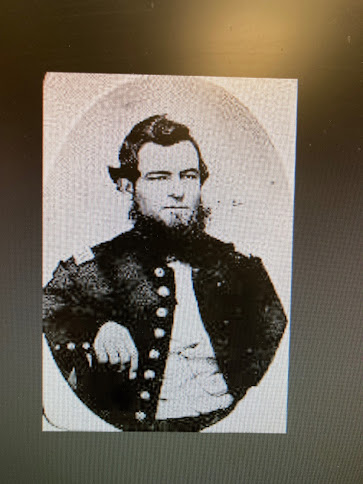
Milton B. Chase of Company E, 85th PA
Courtesy of Sherry (Chase) Reinhardt


   When the war began, the 85th had a number of reliable chroniclers whose writings became valuable primary source material in telling the story of their regiment. For example, Lieutenant Colonel Henry A. Purviance was part-owner of the Washington (PA) Tribune and Reporter and wrote half a dozen lengthy letters that were published in his own newspaper.

    Likewise, Private Robert Roddy was the brother of Edward Roddy, who owned the Genius of Liberty newspaper in Uniontown. Roddy's letters appeared every few months in his brother's newspaper.

   Most soldiers of course wrote letters home to family members, some of which have survived. Other soldiers in the regiment penned letters that were published in newspapers around western Pennsylvania and even Wheeling, West Virginia. These soldiers included  Lieutenant John Acheson, Private John F. McCoy, Captain John E. Michener, Corporal George W. Dales and others.

   But by the end of 1864, the number of potential sources in the 85th PA had dwindled. Purviance was killed by friendly fire, Roddy went home with a medical discharge, and Michener was captured by the enemy, Acheson transferred to another command, and McCoy and Dales went home when their three-year enlistment ended.

  Only about 150 men were left in the regiment by the end of 1864, those who had joined in 1862 or later or those who had re-enlisted. The pool of potential sources was limited.

   One newspaper from the Civil War era that survives is the Washington Reporter and Tribune, found online in the Google News Archives. Unlike some other online newspaper sources that require a fee, this archive is free. The catch is that there is also no reliable search button. One must look through each edition page by page in the hope of finding information.

   So I went to the newspaper and began in November of 1864, scanning each weekly edition for a potential letter from the front, or perhaps something written by a returned soldier.

    Low and behold, eventually a letter from an 85th PA soldier appeared. It was on page 1 of the Reporter and Tribune from February 8, 1865. It was written by a soldier still in the regiment who called himself 'M.B.C." His identify was easy to find. Of the remaining men in the regiment, only Private Milton B. Chase of Company E had that set of initials.

   Chase was 31 years of age at the time. A native of Washington County, PA, he was married and living in Iowa when the war broke out. After serving for three months in an Iowa regiment, he decided to go home to enlist for three more years, joining Company E of the 85th PA, which had many men from Washington County, PA. He enlisted into the regiment in April of 1862, which meant he still had a few months to serve when he wrote the following letter in 1865.  Chase worked as a teacher before and after the war, which indicates why his letter seems to be fairly well written.

   Milton went home in December of 1865 from City Point, VA and was reunited with his wife, Margaret Franks Chase, whom he had married in Iowa in 1855. The growing family soon moved from one side of the Mississippi River to the other to live in  Hampton, Illinois. Unfortunately, Chase did not enjoy a long postwar life. On April 25, 1874, he ws killed in a coal mine cave-in. Chase was buried in the Old Rapid City Cemetery in Rapid City, Rock Island County, Illinois. He was survived by his wfie, Margaret, and four children. A fifth child, Margaret, was born two months after his death.
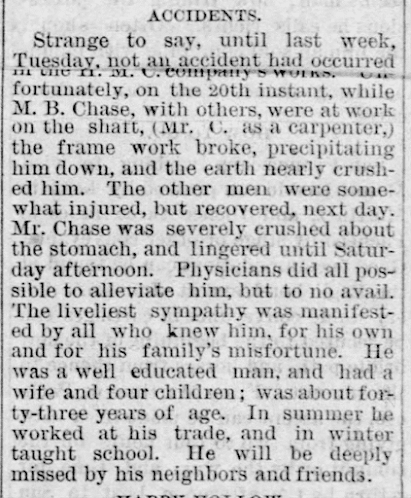
Moline [Illinois] Review-Dispatch  May 1, 1874, page 2

    His Civil War letter, written on January 25, 1865 from the camp of the 85th PA just below Richmond on the north side of the James River, first gives a review of the regiment's activities for the last nine months. These include the Bermuda Hundred Campaign, the Battle of Second Deep Bottom, the Battle of Chaffin's Farm, the Second Battle of Darbytown Road, and a description of the Battle of Trent's Reach the previous day on the James River. His letter appeared in the Reporter and Tribune on February 8, 1865.
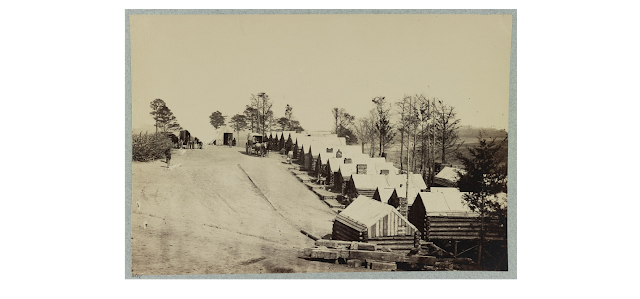
Winter Quarters along the James River   LOC

   His letter answers a few questions that were previously unknown. The acting commander of this detachment of the 85th PA was Lieutenant James Nichlow. Lieutenant Absalom Dial of Company E was the nominal head of the detachment, but records indicate that Dial was away on a special detachment for a prisoner-of-war exchange. Chase reveals that Dial was actually on convalescent leave due to wounds received at Second Deep Bottom.

   Chase also explains that during their time as provost guards at division headquarters, the 85th PA was tasked with supervising Union prisoners, some of whom were awaiting execution for desertion. 

    Milton Chase includes a cryptic paragraph about 'Mat,' 'the young one,' turning in his gun for a drum. I could find no one with the name "Mat" or "Matthew" among the 150 who remained in the regiment in 1865. The closest was Matthew C. Axton of Brownsville, Fayette County. Like Chase, Axton was from Company E; but he is listed as having gone home two months earlier in December of 1864. 


Camp of the 85th Pa Vols.

Before Richmond, VA., January 15, 1865

Dear Reporter and Tribune:

   Knowing the interest felt by many of your readers, especially by the returned veterans of the Regiment, in the detachment of the noble old 85th still in the field, permit me through your columns to communicate to them some of the changes that have taken place since they left, as well as some other items that may prove interesting to our friends generally.

   The Detachment known as the 85th Pa. Volunteers, is now doing duty as Provost Guard at Headquarters, 1st Division, 24th Army Corps, Gen. A.H. Terry's old Division, now commanded by Gen. J. R. Rawley. The 85th is commanded by 1st Lieut. acting Col. James Nichlow, formerly Sergeant Co. H, Captain R.P. [Robert] Hughes having been promoted to Lieutenant Colonel of the 199th Pa. Vols. 1st Sergeant Charles E. Eckles, Co. E, has been promoted to Captain Co. K, 199th P.V. Sergeant W. C. [Walter] Cravin Co. C [to] Captain, Co. K 199th P.V. and Sergeant O. [Oliver] Sproul is Lieutenant Co. B 199th P.V. Lieutenant [Absalom]  Dial is abroad on sick leave occasioned by wounds received in action last August. Captain R.W. [Richard] Dawson, Assistant Inspector General on Gen. [Adelbert] Ames' staff, was so careless as to put himself in the way of a rebel ball at Fort Fisher, N.C. and consequently got shot in the right arm seriously.

    'Mat,' the 'young one,' desires his friends to know that he has got rid of his 'shoot stick' and has gone to playing the drum for a living. 

   The aggregate strength of the Regiment is about 150 men; there is 110 present for duty and the remaining 40 are absent on detached service  -- sick, wounded, etc.

   In order that you may know what part we have taken in the last campaign, I will give you a hasty and brief synopsis of our movements during that time.

   Our regiment was withdrawn from the Department of the South last April and formed part of the force that accompanied the then popular, but now fallen, Gen. [Benjamin] Butler in his operation at Bermuda Hundred, VA. [above] where we landed May 5th, 1864 from which time until August our headquarters were on that front, we being almost constantly under fire duing picket duty, or working on the various defenses of that line. We participated in several engagements and many lively lttle skirmishes on that line, including the Battle of Ware Bottom Church, May 20th, battle near the same place, June 17th, and also on the same line June 18th, expedition to north side of James River, which resulted in establishing works there June 29th, second advance from Deep Bottom August 14. Severe engagement near Malvern Hill August 16th in which our brigade led the charging column led by intrepid soldier General [Alfred] Terry, then in command of our division, the 1st of the 10th Corps. The old 85th led by Captain R. P. Hughes under whose gallant leaderhip we hurled back the rebel horde from their strong works [at Second Deep Bottom], taking a number of prisoners almost equal to our number, and capturing two rebel battle flags. Near this place we quietly entrenched ourselves, having advanced as far in that direction as was thought to be either prudent or healthy, and awaited the Johnnys' assault, which they made with a considerable show of determination on the afternoon of the 18th: they found us there and promptly skedaddled. Soon after this object of the expedition being accomplished, we were ordered to the Petersburg front, where we remained in the trenches a month, constantly under fire, though the nature and completeness of our works there was such that we suffered but few casualties.

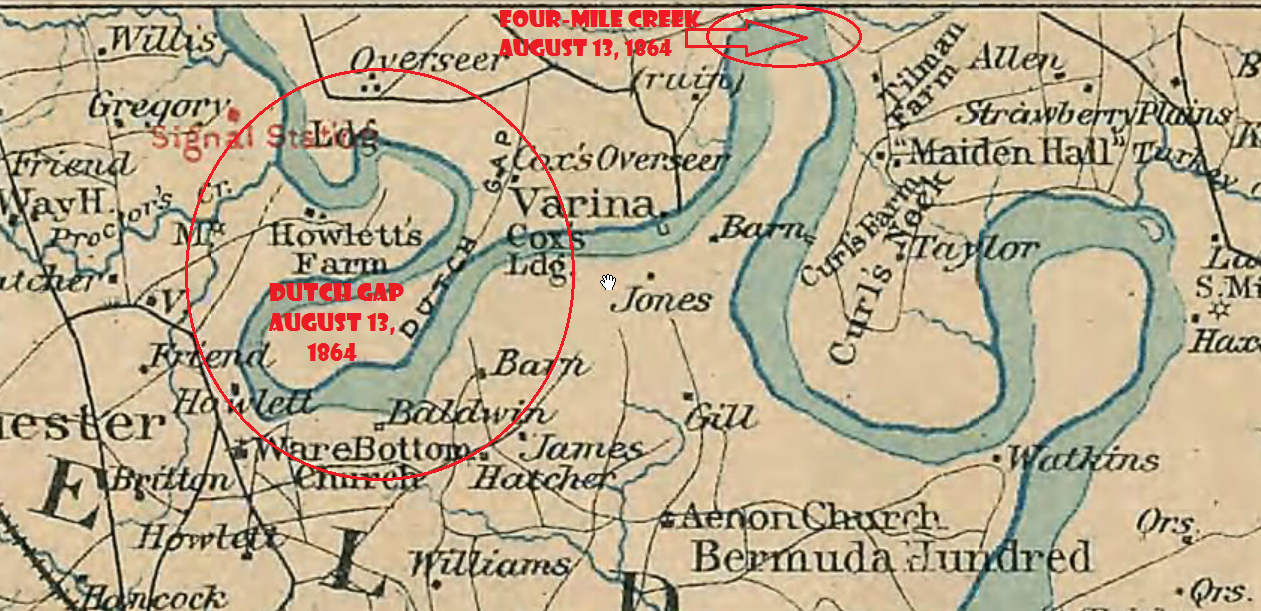
   While here we were called to part with our heroic and almost idolized Col. J.B. [Joshua] Howell, in whose loss we are depirived of a much esteemed officer and long to be remembered friend, in whom the country loses a patriot, gentleman and true soldier that it could illy spare these troublous times. Our next move was the grand advance toward Richmond on the north side of the James from Deep Bottom and Aikin's Landing, September 28, which after a bloody struggle resuled in pushing back the rebel lines almost to the suburbs of the Rebel Capitol, the capture of strong works on 'Chapin's Farm,' Fort Harrison now called Fort Burnham, and many other important Rebel works establishing our present line within seven miles of Richmond. On this line the rebels advance on our immediate front a heavy Rebel force [on] October 7th [at Darbytown Road]. A severe engagement ensued in which the rebels were repulsed with heavy loss and driven within their main works. Our next move was the reconnaisance in force [on] October 12th and 13th [also at Darbytown Road], resulting in a series of brisk little dashes on the rebel lines and extending as far as the old battle ground at Fair Oaks, the scene of McClellan's nearest approach to Richmond , in which the 85th participated under him 'in his wanderings on the Peninsula.' On the 14th of October, the time of the original organization of the old 85th having expired, all except the reenlisted Veterans and those whose time was not out were 'mustered to the rear' and in due time mustered out and permitted to return to their homes 'laden with laurel,' long may they wave, while we lonely enough but not weary in well-doing were left in the field. October 15th, we were temporarily attached to the 199th Pa. Vols., a splendid 'one year organization' raised in Philadelphia and second to none in the corps, owing to the untiring energy, strict discipline and efficient instructions of the able and energetic officers in command, for which to the skill and experience of their acqusitions from the 85th they are in a great measure indebted. The 199th already attracts the admiration and excites the envy of many other organizations. About the 1st of December, our old corps, the 10th, was consolidated with the 18th and called the 24th Army Corps; the colored troops of the 10th and 18th corps were formed into a separate organization and called the 25th Corps. On the 15th of December, we were detached from the 199th and ordered to report for duty as Provost Guard at Hd. Qrs., 1st Div. 24th A.C. and here we are in pretty snug winter quarters, enjoying ourselves as well as possible. We have charge of about one hundred prisoners, mostly in for minor offenses while a few are charged with desertion. Two courts martial are disposing of their cases as rapidly as possible. Some have already been shot and others will doubtless ere long share their hard fate. The weather is somewhat cold at present, though we have seen but little snow this winter. The Johnnies made a demonstration on the left of our line this morning with their gunboats and rams and a cooperating land force. Our monitors and batteries in the vicinity of Dutch Gap are said to have demolished two or three of their boats and the excitement over an anticipated attack has subsided. For fear that this may be disapproved, like our applications for Furlough, on account of its length I will for the present desist, promising that if our scribbling is acceptable, you shall hear from us again when anything happens worthy of note.

I am very respectfully yours, for three years or during the war,

M.B.C.

85th Regt. P.V.V.

    Chase promised to write again should future events prove newsworthy. Fort Gregg and Appomattox were certainly meaningful events in April of 1865, but I could find no more letters from Chase in the April or May editions of the Reporter and Tribune. Most of the news in late April concerned Lincoln's assassasination, so if Chase sent a letter, there simply may not, from the newspaper's point of view, have been as much space or interest in such events. 

Sunday, February 21, 2021

John E. Michener and the Attempt to Capture Battery Gregg


Morris Island, Battery Wagner and Batter Gregg
Robert Knox Sneden    LOC

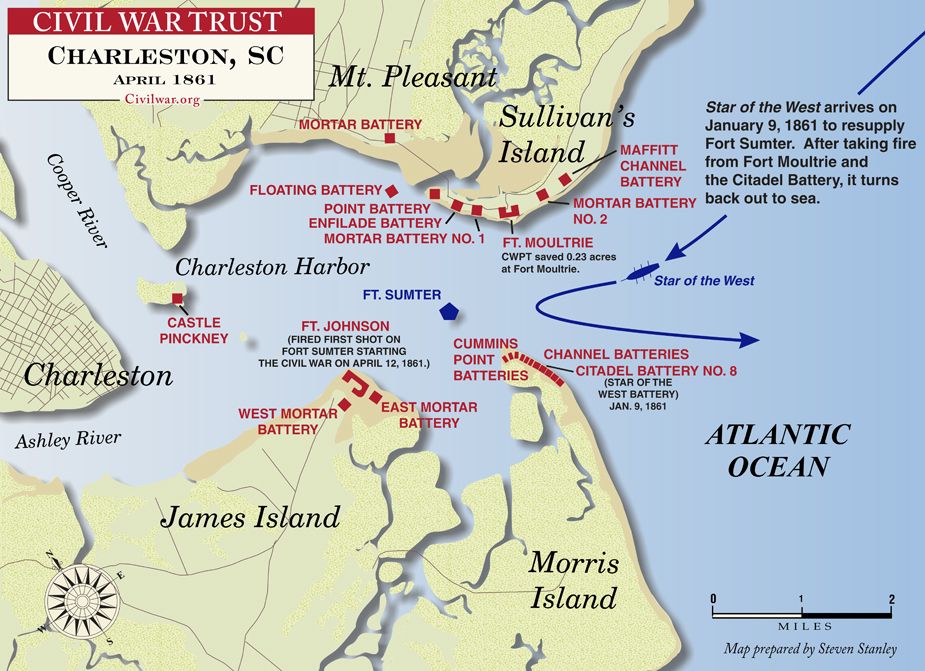
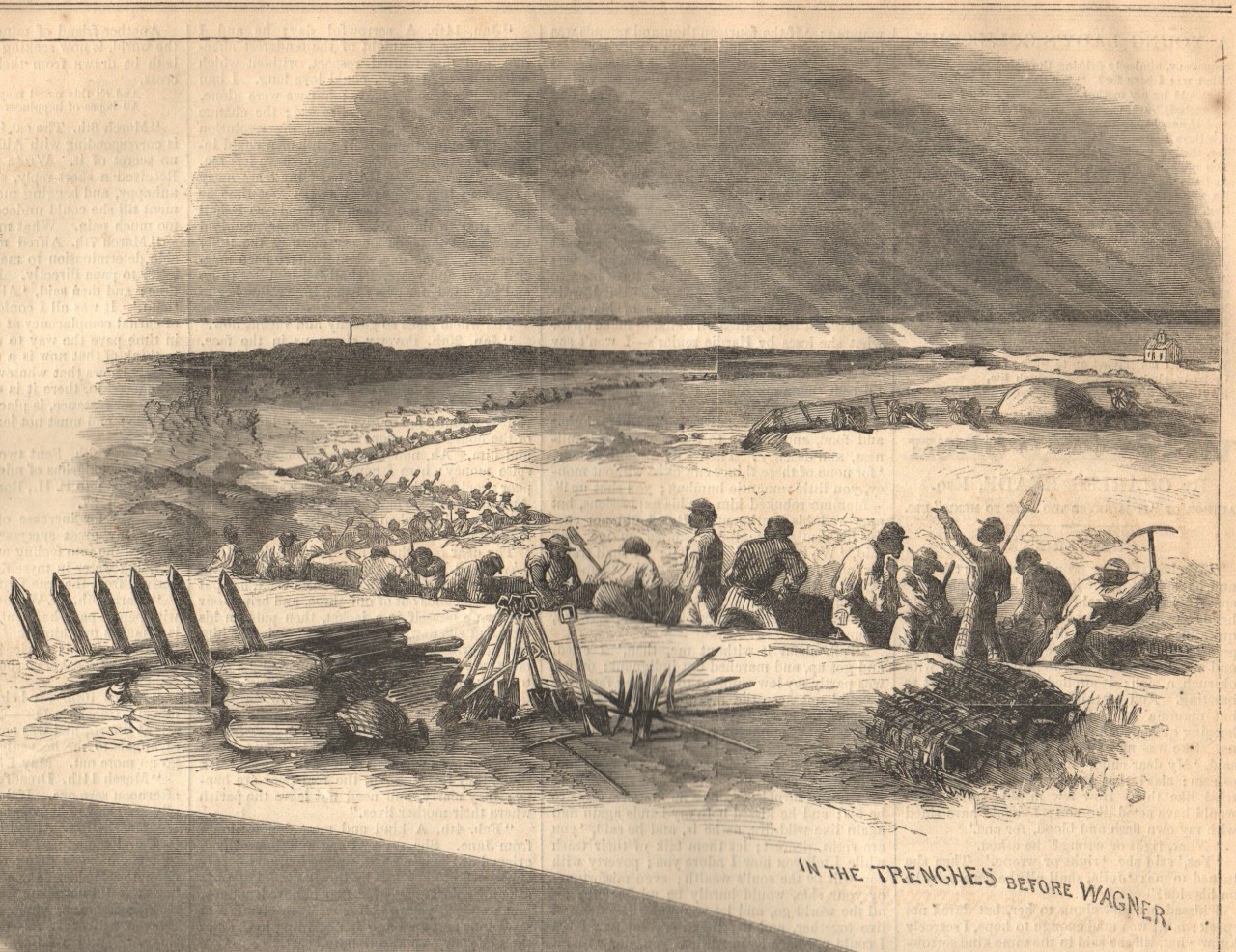
          In August of 1863, Lieutenant John E. Michener and his regiment, the 85th Pennsylvania, were stationed on Morris Island near Charleston, South Carolina. They were part of a Union effort to recapture Fort Sumter and subdue Charleston, the city considered the heart of the rebellion. The 85th Pennsylvania spent the month assigned to the arduous task of digging a series of parallels or trenches that the Union hoped would eventually lead to the capture of Battery Wagner, the key Confederate sand-walled fort. A bit farther towards the tip of the island at Cummings Point lay Battery Gregg

Lt. John E. Michener
New York Public Library

          The 85th Pennsylvania had arrived in South Carolina in late January of 1863 from New Bern, North Carolina. They first spend a few weeks at St. Helena Island. In early April, the invaded Folly Island and found it had been abandoned. The were stationed on Folly Island for several months until they crossed Light House Inlet to Morris Island, where they would spend about three months.

          In July  the 85th Pennsylvania did not participate in either of two assaults upon Battery Wagner, the key Confederate sand-walled fort that helped guard Charleston Harbor and Fort Sumter. During these two assaults, hundreds of Union soldiers fell trying to capture the structure. [Last month's blog entry was about Michener's command of the barge that ferried the famous African-American 54th Massachusetts from Folly Island to Morris Island for the second assault on Battery Wagner]. However, during the ensuing month-long work digging five parallels, the 85th Pennsylvania lost more men that any other federal regiment. Among the wounded was their leader, Colonel Joshua B. Howell who nearly died when the bombproof that he occupied had a direct hit from a Confederate shell on August 18. While Howell recovered from a severe concussion, the regiment was led by Lieutenant Colonel Henry A. Purviance. He was instantly killed by a friendly-fire incident a few days later on August 30 when a Union shell prematurely exploded directly over his head while he led his troops in a trench.

Storming Battery Wagner's Rifle Pits
Frank Leslie's Illustrated Newspaper       9-26-1863

       On August 26, with the parallels nearing completion, three hundred men from the 24th Massachusetts captured the Confederate rifle pits in front of Battery Wagner. With the distance to Battery Wagner vastly closer, for a third time, a third infantry  action to storm the walls of the structure was scheduled. Ahead of this third assault, a stealthy movement This was intended to be a stealthy up Vincent's Creek was planned to capture Battery Gregg and surround Wagner. About 150 men from four or five regiments were chosen for this assignment, including the 85th Pennsylvania, 100th New York, 3rd New Hampshire, and the 104th Pennsylvania. The mission, under the command of Major Oliver Sanford of the 7th Connecticut.

[AUTHOR NOTE: Sources differ about the number as well as which regiments participated in the assault. All agree that the 85th Pennsylvania and the 100th New York were involved. But the other regiments are varied.  Even though the commander of the assault, Oliver S. Sanford, was a member of the 7th Connecticut, the author could find no evidence that his regiment participated. Interestingly, in his 1905 "History of the Seventh Connecticut Volunteer Infantry," soldier and historian Stephen Walkley did not mention the Battery Gregg mission at all, including Sanford's role as leader.]


Path along Vincent's Creek to Battery Gregg
Map by Robert Know Sneden    LOC

       The mission against Battery Gregg was hampered by two unforeseen events. First, cloud cover evaporated and a bright moon revealed the Union boats on their way to Gregg. Second, when a Confederate boat with about 12 men aboard was spotting leaving the battery, Lieutenant Francis J. Higginson, in charge of the naval personnel and in control of the assault boats,  ordered his men to open fire. The boat was captured but the presence of Union  assaulters was revealed, and the mission was called off.

         The Union tried again the next night, but Battery Gregg, now on full alert,  immediately began shelling the Union boats before they reached the shore. Again, the mission was cancelled.

          Plans for a Union land assault upon Batteries Wagner and Gregg went forward anyway. But when the federals approached Battery Wagner on the morning of September 7, they found it had been abandoned. Battery Gregg was left unmanned as well. Confederate troops inside had escaped in the early morning hours. 

    Below is an excerpt from "Prison Life" by author T.J. Simpson, a short 1867 work about John E. Michener's war experiences, followed by a second version of the event from Lieutenant George Stowits of the 100th New York.

Carrying boats up Morris Island for the Assault
Harpers Weekly 10-3-1863
    "Two nights before the evacuation of Forts Wagner and Gregg," wrote Simpson, "a boat expedition had been planned by General [Alfred] Terry to proceed up Light-House creek to Charleston harbor, surprise Fort Gregg, capture and blow up the magazine and retire. Major [Oliver S.]  Sanford of the Sixth Connecticut was ordered to the command of the expedition. Details were made for the Eighty-fifth and One Hundred and Fourth Pennsylvania Volunteers and two other regiments, in all about two hundred men. Lieutenant Michener had charge of two boats of twenty men. Captain [Rolla] Phillips and [William] Kerr of the same [85th PA] regiment had charge also of three or four boats of the command. These small boats were manned by sailors and proceeded slowly and cautiously up the stream until they arrived in Charleston harbor, and between Forts Sumter and Gregg, the point to be assailed. As the boats arrived opposite Payne’s dock, they successfully formed on the right by filing into line and moved steadily forward for the intended assault. At the moment the boats struck the beach, the men were to rush for the fort without waiting to form in line of battle. A knowledge of their position by the enemy would have proved perilous in the extreme, for they were then directly in the center and in close range of a chain of regel forts and batteries that could have destroyed them in a moment. The moon, unfortunately for the expedition, began to rise at that moment and when they had arrived within less than a hundred yards of Fort Gregg, were discovered and repulsed.                    

          "The enemy at once sent up a signal and soon Forts Johnston and Moultrie and battery Beauregard had united in raising one continued shower of shot and shell upon them. Major Sanford, seeing the utter hopelessness of then making an attack, ordered the boats to rapidly withdraw. This order was, at first, but imperfectly understand on account of the great excitement; and hence, while some of the boats were beating a hasty retreat, others were pulling for the beach. The mistake, however, was soon rectified and all rushed to get beyond the range of the batteries, to add to the confusion, oars would get foul, boats run into each other, and some even goaground. In the midst of this dreadful dilemma a cannon ball went crashing through the side of Lieutenant Michener’s boat, and it was with the greatest difficulty kept from sinking. Astonishing as it may appear, but few lives were lost in this bold and daring adventure, and the boats returned in safety."

Approaching Battery Gregg
Harper's Weekly  10-3-1863
          Interestingly, Michener, through author Simpson, does not blame naval personnel for exposing the Union boats by firing upon the departing Confederate craft; but Michener did  state that moonlight gave away their location. Also, "Prison Life" makes no mention of the second assault upon Battery Gregg that was called off before any of the Union boats reached the shoreline.

        Perhaps the best  account of the mission against Battery Gregg came from Lieutenant Stowits of the 100th New York. Stowits was a member of the assault team, but was unimpressed by the planning and leadership prior to the assault. Many lives would have been lost in what he felt was a poorly-planned assault. 

Lt. George Stowits, 100th New York
History of the 100th Regiment   p,187
        "Five hundred men were detailed from four of the most reliable regiments, and the command of the expedition was entrusted to Maj. Sandford of the Seventh Connecticut...We remember the visit of the Chaplain to the tent of the writer to ascertain if we could swim. When assured we could, he responded that it was favorable. We knew not then of our detail for the expedition. Boats had been collected in one of the creeks, and the men assembled near the camp of the boat infantry, and awaited darkness, before embarking...Scanning the manner of Maj. Sandford [sic], and his apparent, to us, unfitness for so a responsible a work, we could not but feel that many brave men, if landed, would be destroyed.

      "Files for spiking the guns were put into the hands of men selected for that purpose. On inquiry as to what should be used for driving the files, the answer was given that anything that lay around the gun. To us, that was too uncertain. We obtained permission to leave the guns of the men selected, and ordered them to use the flat side of the bayonet, that no time should be lost in searching in the sand or battery for what might not be at hand. The orders were to head the boats for the beach, land, form, and rush for the fort, spike the guns, blow up the magazine and retire...We endeavored to impress our men with the danger, as well as the importance of the enterprise, that each man should act for himself and as though he was to do the work alone and unaided. In consequence of the limited number of boats a large number were left behind. The boats were filled with a quiet, thoughtful band. We glided along with the music of shell overhead, exploding and striking the water about. As we neared the bay a boat shot out from Gregg. She was hailed. No attention paid. We fired and brought her to. We captured a surgeon, major and ten men. The garrison was aroused, and we were ordered back. The next night a second attempt was made, with no better success. The enemy opened on the boat and drove them of. The loss was slight. Thus ended an ill-conceived and fruitless. enterprise."

Union camp on Morris Island    LOC


Monday, March 30, 2020

Charles Cox and Lt. Robert G. Taylor

 
Charles Cox
from  Percy Hart's History and Directory of the Three Towns, 1904, p.167
        
        An interesting relationship that developed in the 85th Pennsylvania during the war was between Lieutenant Robert Gillis Taylor of Company E and Charles Cox of Virginia. It was a relationship that seemingly lasted nearly 40 years and ended with a strong sense of irony as the two men passed away on the same day in 1899.
        To be frank, this article includes much speculation about Cox because records of his life are extremely sparse. The writer hopes the reader will indulge his speculations and assumptions.
         Two questions about the Taylor-Cox connection remain unanswered. What was their relationship after the Civil War, and how did Charles Cox become a prosperous member of the Brownsville, Pennsylvania community?
         Let us begin with Taylor's war service. Lieutenant Taylor enlisted at the age of 27 into Company E at Washington, PA. He was likely recruited by Captain Henry A. Purviance, the co-publisher of a Washington, PA newspaper. [See last week's post for a profile of Purviance].  Taylor served as a first lieutenant along with Thompson Purviance, a young cousin of Henry Purviance who was killed at Seven Pines.
        Taylor spent 13 months in the 85th Pennsylvania. He is listed as having been wounded at Seven Pines on May 31, 1862. He was medically dismissed for "partial paralysis" almost six months later on November 22, 1862.
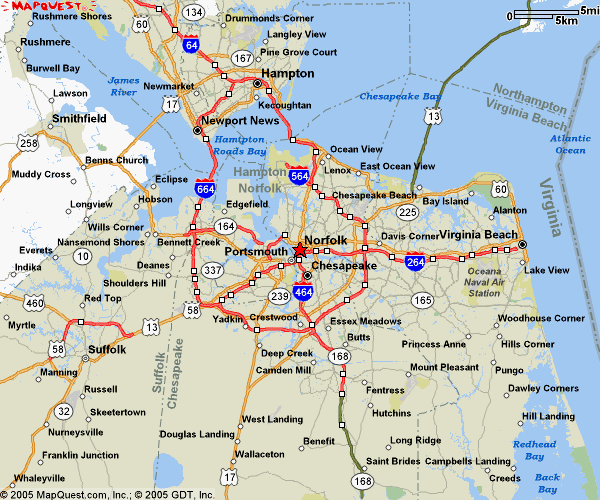
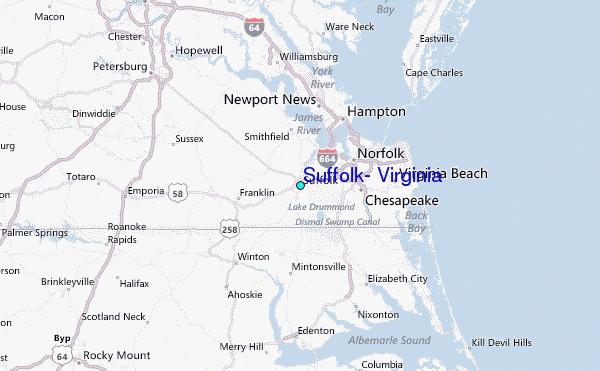
        When Taylor returned to Washington County, he was accompanied by an African-American from Virginia named Charles Cox. One source noted that Cox was from the area of Norfolk, Virginia. If so, they two probably met either when the regiment landed at Hampton Roads for the Peninsula Campaign in April of 1862 or while the regiment was stationed at nearby Suffolk, VA between September and December of 1862. Cox may have been a free man, but more likely a displaced slave who became employed by Taylor as a valet or cook during Taylor's time in the army. Cox may soon have tended to Taylor's physical needs in camp as a result of the paralysis.
      At the time of the meeting between Cox and Taylor, the issue of emancipation of slaves was highly controversial. President Abraham Lincoln had issued the Emancipation Proclamation on September 22, 1862. It was to take effect on January 1, 1863 for slaves in the states of the Confederacy. Many Americans, including Union soldiers, spent the fall of 1862 debating the issue. While abolitionists were pleased, many other northerners were concerned that the primary goal of the war, which so far had been saving the Union, would be superseded by freedom for slaves.
       Cox was around 50 or so years old when the two returned to western Pennsylvania together. Perhaps Taylor, who seems to have come from a well-to-do family (a brother became a college professor) felt he still needed help in his recovery. He may also have valued Cox's companionship and perhaps even friendship while camped at Suffolk.
        By 1880, Taylor was living in the western part of Washington County near the Monongahela River.  Cox had crossed the Monongahela River to live in Luzerne Township, a part of Brownsville, Fayette County. Cox probably did not work for Taylor at this time, but the two appear to have remained on friendly terms. By this time, Cox was married to Catherine (Peyton) and had two sons, Henry and William.
        Catherine was younger than Charles, by about 25 years, according to their shared headstone. The 1880 census lists her as having been born in Virginia, leading to the possibility that she traveled north with Taylor and Cox in 1862. Both sons are recorded as having been born Pennsylvania. Catherine would have been around 20 years of age when Taylor and Cox left the regiment.
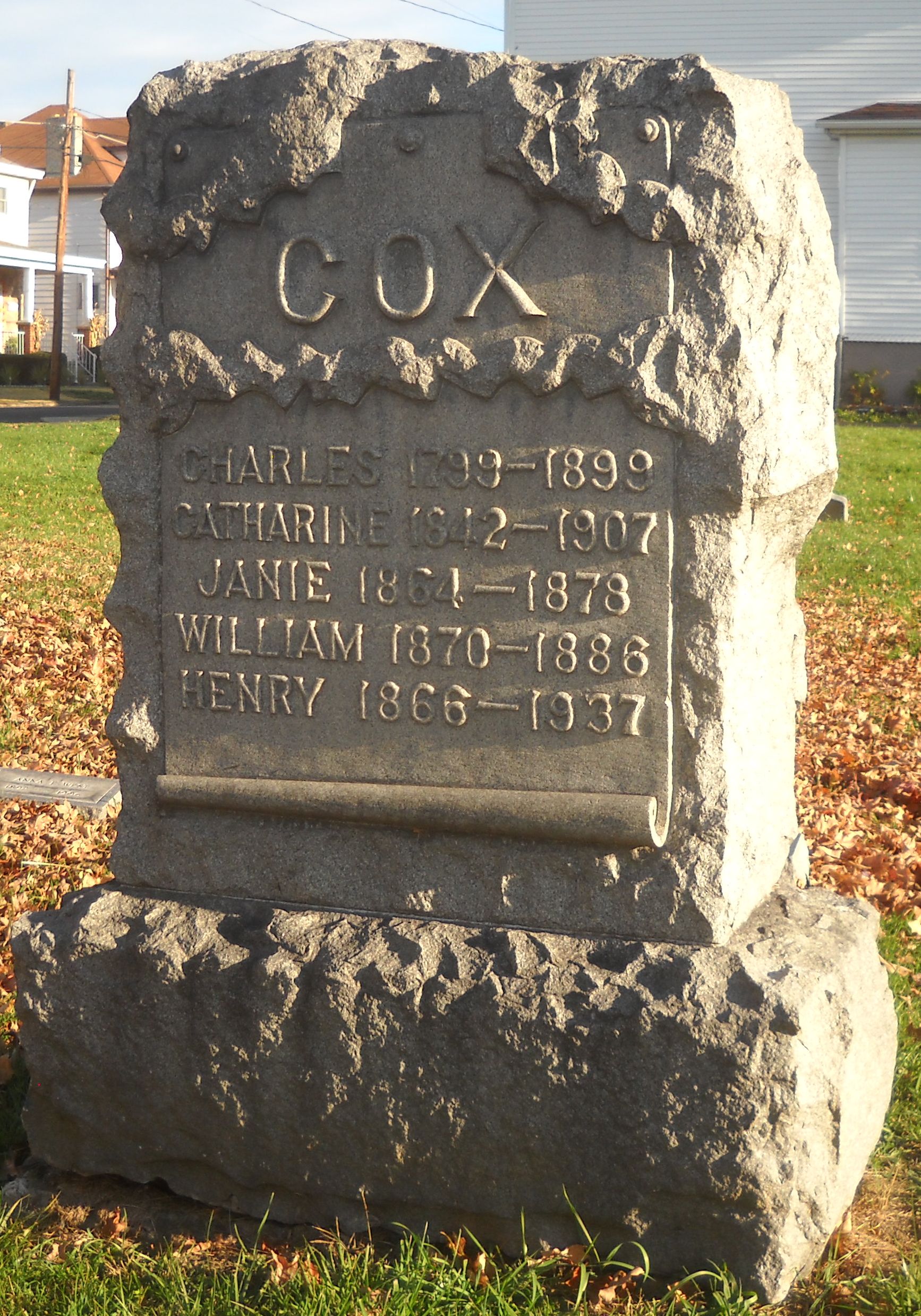
     Charles Cox is listed in the 1880 census as being employed as a laborer. Accounts of his age vary wildly. This census lists his age as 65, meaning his birth would have been round 1815. His headstone, however, lists his birth year as 1799, meaning he would have been over 80 years of age in 1880. In Percy Hart's history of Brownsville, Cox is noted as having been 107 years old at his death in 1899, making his birth year around 1792.
     Also perhaps noteworthy in the 1880 census is that Cox and his family lived among white neighbors at this time.
     In his 1904 history of the Brownsville area, local resident and author Percy Hart lists Cox among the three most prominent African American residents of the town. Hart includes a photo of Cox (top of page), who had died a few years earlier, but offers no other biographical information.
     In 1891, the Connellsville Weekly Courier carried this brief paragraph about Cox.


      Although the article highlights the fact that Cox was given a place of honor at the regimental reunion, the language used is cringe-worthy by modern standards. The article used the term "captured" to describe Cox's attachment to the regiment, which does not appear to be a matter of coercion, and does not mention Taylor's role in his migration to the North.
       Furthermore, City Point, VA was developed into a Union base in 1864, 19 months after Cox left Virginia for Pennsylvania.
     In reality, Cox probably was considered an honorary part of the regiment; his presence at the reunion may have reminded the veterans that the freedom of people like Cox was one of the positive outcomes of the war.
      The article also states Cox was captured by "the Brownsville company." This is incorrect. Company C was the company of the 85th Pennsylvania with men mostly from Brownsville and the immediate area. Taylor was a member of Company E, which were men from Washington and Greene Counties. Taylor did hail from East Bethlehem and Centreville, PA in Washington County, just a few miles from Brownsville. The fact that Cox settled near Brownsville may have led to the assumption in the article that he was first associated with the "Brownsville company."
    Taylor went on to a prominent career in local business and politics. After recovering from the paralysis, he worked as a clerk for a railroad company in Pittsburgh.  In 1886, he was appointed the commissioner of the Cumberland Road (today's Route 40 in Pennsylvania) by Governor Robert E. Pattison, replacing fellow 85th Pennsylvania veteran Moses McKeag, who had passed away. A year later, Taylor was elected as a commissioner for Washington County. (Commemorative Biographical Record of Washington County, Pennsylvania, Volume 1, 1893)

Hart's Directory, p.255

This death registry lists Taylor and Cox as having died on the same day.


Obituary for Robert G.  Taylor
Pittsburgh Daily Post, 11-21-1899, p.1


This article about the Taylor-Cox relationship seems to contain fairly accurate information about Cox, who very likely was a servant for Taylor during the war.


Obituary for Charles Cox
Pittsburgh Press, 11-21-1899, p.8
     This article notes Cox's nickname as "Captain Charlie." It is unknown where Cox picked up this moniker. If he were born near Norfolk, he may have worked at the port there. Or he may have worked on the river at Brownsville, where passenger and cargo ships were docked and maintained during the 1800's. The article notes that Cox was financially successful but does not state the kind of work in which he had engaged. 
     Cox was buried in Brownsville and has a rather prominent headstone for himself and his family, perhaps denoting that he did indeed find financial success after he crossed the Mason-Dixon Line into Pennsylvania. 


New Bethlehem (PA) Vindicator
11-24-1899, p.6


     Finally, this article from a newspaper in northeast Pennsylvania focuses on the unusual matter of the two men passing away on the same day: November 20, 1899. It also implies that they maintained some sore of relationship after returning from the war.
    Robert G. Taylor is buried in the Taylor Cemetery in Centreville, Washington County, PA.

Monday, March 23, 2020

Profile of Lieutenant Colonel Henry A. Purviance


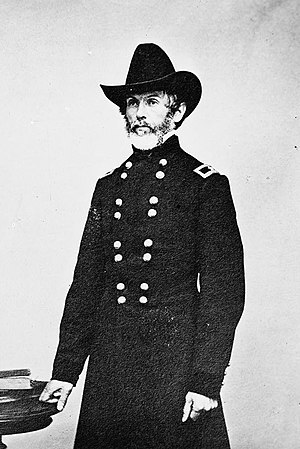
Henry A. Purviance
Photo taken in Pittsburgh
      Among the hundred or so soldier in the 85th Pennsylvania who died as the result of the battlefield during the Civil War, the most senior officer to fall was Lieutenant Colonel Henry A. Purviance. He was killed as the result of friendly fire on Morris Island, South Carolina on August 30, 1863. Temporarily in command of the regiment after Colonel Joshua B. Howell suffered a concussion  a few days earlier, Purviance was in the trenches with his men when a Union shell fired from behind his position prematurely exploded over his head. He was instantly killed. Purviance was 32 years of age.
      At the time the Civil War began in 1861, Purviance was the co-publisher of the Washington (PA) Reporter and Tribune newspaper. Every few months, Purviance would write a detailed summary of the activities of the 85th Pennsylvania which was published back home in his newspaper. 
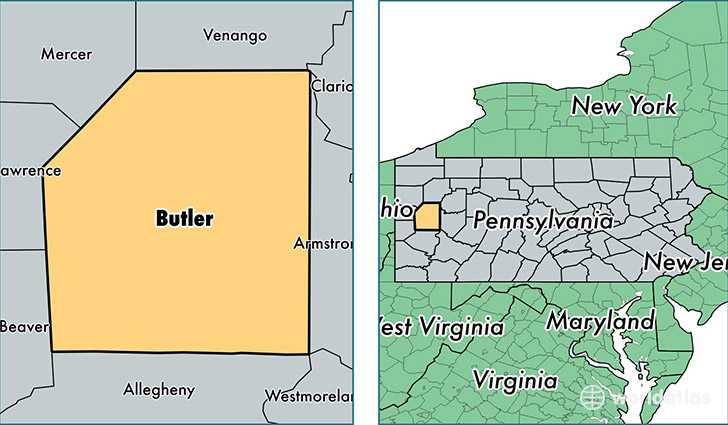
    Although born in Butler County, PA, Purviance had deep roots in Washington County. His maternal grandfather, John Hamilton (1754-1837), had been appointed sheriff of Washington County in 1793. This was the time of the Whiskey Rebellion in western Pennsylvania; the nexus of the uprising was in Washington County. Farmers protested a new excise tax on whiskey, their main source of income and barter, to defray the federal government's debt left over from the Revolutionary War. Sheriff Hamilton was involved in the early peaceful protests of the tax, but unsuccessfully tried to steer the movement away from violence. Incident included the tarring-and-feathering of tax collectors, attempted destruction of tax records and a gun fight at the home of tax collector John Neville.
     Hamilton was nevertheless charged with aiding and abetting the insurrection. After President George Washington authorized troops to quell the rebellion, Hamilton was arrested and taken to Philadelphia. However, Hamilton was exonerated and went home. In the ensuing decades, he held a variety of public offices for the next 20 years. These included a position in the Pennsylvania State Senate and in the United States House of Representatives. (Boyd Crumrine, History of Washington County, Pennsylvania, 1882, pp.305-6)


Tarring-and-Feathering of a Tax Collector      LOC

       Several decades following Hamilton's death, just after the Civil War had begun at Fort Sumter, SC in April of 1861, his grandson, Henry Purviance, enlisted into the 12th Pennsylvania infantry for three months. This regiment did not take part in the Battle of Bull Run in July of 1861 and the regiment was soon disbanded.
     But after the Union lost at Bull Run and it became obvious that the war was going to last longer than a battle or two. Eager to fight for the Union cause, Purviance organized his own company of Washington County men and took it to Pittsburgh to train.
      After some negotiation, Purviance took his company to Camp Lafayette in Uniontown, PA to join Colonel Joshua B. Howell's new regiment, the 85th Pennsylvania. Purviance would serve as captain of Company E.
     The 85th Pennsylvania was stationed for five months in Washington, DC and then was sent via transport ships to the Virginia Peninsula for George B. McClellan's campaign to capture the Confederate capital of Richmond and end the war. During this time in 1862, Purviance was elected as the regiment's lieutenant colonel, replacing Norton McGiffin, who had gone home on a medical discharge.
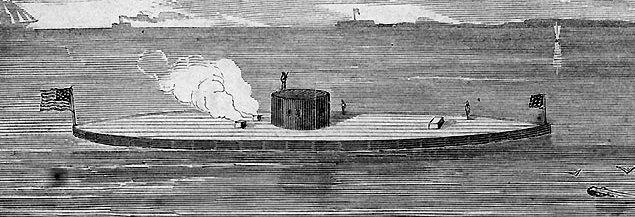
        At this time, Purviance wrote one of his first letters that was published in his newspaper. Aboard the steamship Daniel Webster near Portsmouth, VA when the regiment was on its way to the Virginia Peninsula, Purviance wrote about scanning the waters around Fort Monroe, VA to look for the ironclad Monitor, which had neutralized the Confederate ironclad Virginia (Merrimac) two weeks earlier:

Hampton Roads, VA  1862
The Gazette, Cedar Rapids Iowa
3-4-1962
“…after a very refreshing sleep, I found that our vessel was anchored out in Chesapeake Bay off Fortress Monroe. The Bay was dotted in every direction with ships of war, merchants ships and vessels of every size and description…I cared little for any of them, for my curious eyes were seeking out the famous ‘Yankee Cheese Box,’ [the ironclad Monitor] which bewildered and startled rebeldom and especially the…insolent Merrimac a few weeks ago. I could not believe the most contemptible looking whelp of a vessel in all the Bay, lying scarcely a quarter of a mile away, with nothing of her visible except the rim of the hull, her deck and revolving turret, was the Monitor. She is a wonderful contrivance and is doubtless the most formidable battery afloat…The arrival of the Monitor in Hampton Roads was so opportune as to seem providential. Not only would the vast shipping around Fortress Monroe have been at the mercy of the iron clad Merrimac…but the fort itself [might] have succumbed to the maritime monster.” (Washington Reporter and Tribune, April 17, 1862)  

         At the battle of Seven Pines, on May 31, 1862, as part of Henry Wessells' Brigade in Silas Casey's Division, the 85th Pennsylvania was in the front lines near Richmond when Confederates launched an attack against their exposed position. Casey's Division, outnumbered at least 2-to-1, held off the enemy for several hours before withdrawing. Their effort gave Union forces in the rear time to enter the fight and stall the Confederate charge. 
        The 85th Pennsylvania had about 75 casualties in the battle, including Purviance, who was shot in the leg. He was sent to a Philadelphia hospital to recover. 
        From his hospital bed, two weeks after the battle, Purviance wrote, "I am shot by a musket ball through the left leg, in the thick part below the knee. The doctors think the ball passed behind the bone and around it without fracturing...Even worse than my wound, though, does it pain me to observe misrepresentations of Casey's division in connection to the battle...Our own regiment...was absolutely the last to retire."  (Luther S. Dickey, History of the 85th Regiment Pennsylvania Volunteer Infantry, p.171)
      Purviance recovered and returned to his regiment. In December, 1862, they were sent to North Carolina for the Goldsboro Expedition, a Union effort to seize a key rail hub and to prevent enemy supplies from reaching Robert E. Lee's army near Fredericksburg, VA. The North Carolina expedition was a success, as the Union force under John G. Foster won four small battles. Unfortunately for the Union, the Goldsboro Expedition did nothing to prevent the Confederate victory at Fredericksburg. 
       
Advance of 85th PA toward Kinston (NC)  Bridge
December 14, 862
Harper's Weekly, January 10, 1863
One member of the 85th Regiment, Private John F. McCoy of Washington County, remembered Purviance's leadership as their brigade about to charge through a waist-deep swamp on their way to help capture the town of Kinston.
         McCoy wrote, "Our Lieut. Colonel, H. A. Purviance, was running from one end of the line to the other encouraging the men. One thing I heard him say, 'Remember, boys, there is no falling back with the 85th.' With such commanders as him and Colonel Howell, we knew we could fight, at least we were willing to try." (Wheeling Intelligencer, January 9, 1863)
          A few months later, the 85th Pennsylvania was transferred to South Carolina as part of the Union effort to try to recapture Fort Sumter and subdue the city of Charleston.
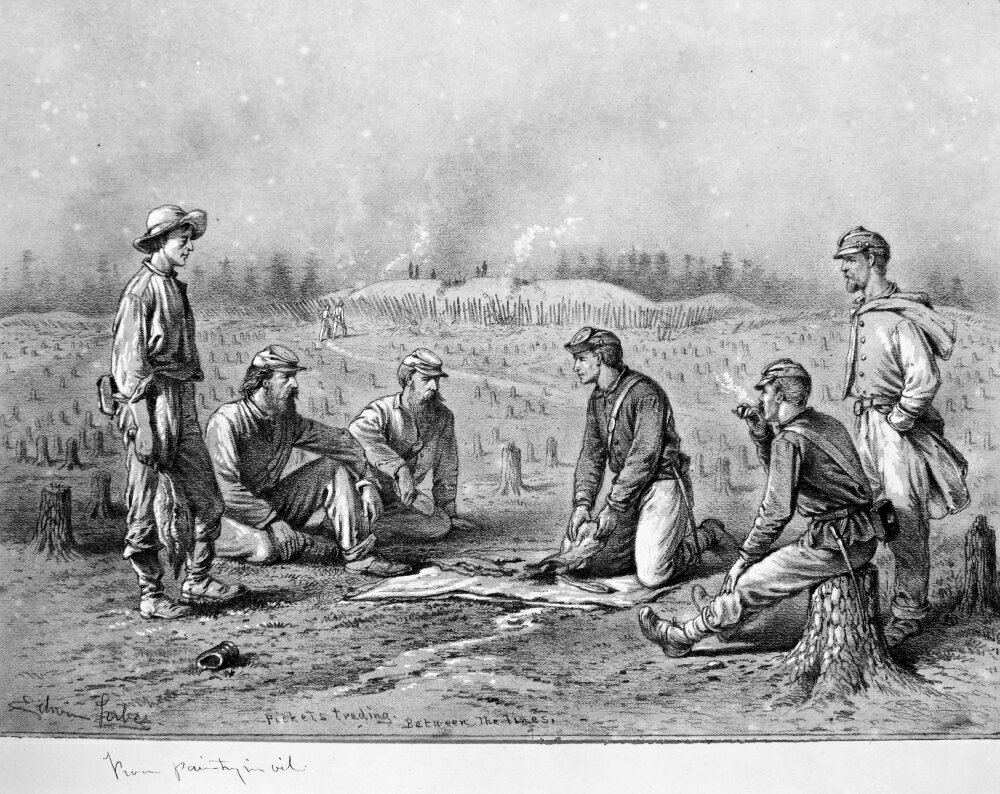
           While stationed on Folly Island, Union soldiers would sometimes trade items with Confederate soldiers, usually coffee and sugar in exchange for Confederate tobacco. Many Union officers discouraged such transactions. But as one of his letter demonstrates, Purviance allowed the following exchange to occur between Folly Island and Morris Island across Light House Inlet, perhaps because it was not face-to-face.


Light House Inlet between Folly and Morris Islands
Henry F. W. Little
The Seventh Regiment, New Hampshire Volunteers\1896, p.190

"By and by…a nautical machine popularly called a 'dug out,' a miniature craft with a tiny sail, was seen to be freighted (across Lighthouse Inlet) and launched from the other side. The wind filled the little sail, and the clumsy vessel, which was very much like a sugar trough, came tumbling over to our shore where it was at once secured and subjected to my inspection. It contained a huge cake of chewing tobacco…Our boys promptly acknowledged the courtesy. A vessel was gracefully proportioned and elegantly fashioned, conforming in its exterior appearance to the Monitor model, the turret of which was filled with coffee, was set afloat and soon made its way to the hostile shore (on Morris Island)...This sort of intercourse had been going on for weeks. (Washington Reporter and Tribune, May 20, 1863, p.2)   


       Helping to guard Fort Sumter and Charleston for the Confederates on Morris Island were Batteries Wagner and Gregg. Two Union assaults in July of 1863 upon Battery Wagner resulted in massive Union casualties.The 85th Pennsylvania was to follow up the initial assaults on both occasions, but each time the secondary assault was cancelled due to heavy Union losses.
        In late July, a new strategy was instituted. Union forces would dig a series of entrenchments or parallels to close the gap between themselves and Battery Wagner. Once Wagner's rifle pits were taken, another assault would be attempts. However, as the Union diggers closed upon them, the Confederates decided to abandon both Wagner and Gregg. Union forces were able to quietly occupy the structures. 
      During the digging part of the campaign, the 85th Pennsylvania played a key role. From late July to early September, the 85th Pennsylvania suffered more casualties than any other Union regiment. These included Colonel Howell and Lieutenant Colonel Purviance.
    During their twelve-hour shift on August 21, at work on the fourth (of five) trench or parallel, the position of the regiment was under intense firing from Confederate sharpshooters and batteries. Twenty-five men were wounded, five of whom died. 
        On August 29, Purviance formally protested to his superiors about the mounting losses in his regiment. Nonetheless, he led his men into the forward trench line at sunset. A bright moonlight presented Confederate artillery positions with a clear target. Soon a single shell killed or wounded six men. 
    After midnight, in the early morning hours of August 30, two more men were killed. They were William Grover of Company D and George Grover of Company I. 
Morris Island
 Parallels, Wagner and Gregg
LOC
    The long shift was not over. Only a week earlier, the colonel of a regiment that was in the process of relieving the 85th Pennsylvania asked Purviance where he could find the relative safety of the command position. Purviance bluntly told the colonel, "My headquarters are with my men."  (Dickey, p.278)
    In the morning hours of August 30, Purviance joined the list of those mortally wounded. He was the highest ranking officer to perish in the overall siege of Battery Wagner.
     The most detailed account of Purviance's death came from Lieutenant John E. Michener of Company D. 
     "About daylight on the morning of the 30th of August Lieutenant Colonel Purviance was instantly killed by the premature explosion of a shell from one of [Union General Quincy] Gillmore’s guns, which was being fired rapidly at Fort Wagner over the heads of the Union troops. The previous night had been one of extreme trial and excitement; the enemy desperately employing all the guns and mortars that could be brought to bear upon the persistent and determined besiegers. This noble officer, soldier, and patriot had entered the trenches that night with one hundred and seventy-five men of his regiment. Discovering indications of an assault by the enemy, he sent Lieutenant Michener, acting temporarily as adjutant, back to headquarters for additional troops. Colonel [Louis] Bell of the Fourth New Hampshire sent up, with Lieutenant Michener, two companies of the Ninth Maine, which were all that could be used to advantage. Morning dawned, however, without any attack by the enemy, yet the continued fire of the rebels upon this little devoted band, during the night, had told fearfully upon their ranks. The brave Colonel Purviance, weary and almost exhausted sat down by a small bomb-proof and generously inviting Captains R.P. Hughes and Lieutenant Michener to his side, divided some rations of boiled ham and biscuit among them. The repast being ended, Lieutenant Michener handed the colonel an overcoat and requested him to lie down and take some rest, at the same time remarking that if anything of importance occurred, he would quickly report to him. Lieutenant Michener had just turned to leave him when he [Purviance] was struck by the fatal shell and killed instantly. Thus fell one of the bravest and noblest spirits of the war, lamented by all who knew him, and mourned as a father by the brave men whom he had so often led to battle." (Washington Reporter and Tribune, October 9, 1867, page 3)
      
       Another tribute to Purviance appeared several months after his death, written by an anonymous member of the regiment. This soldier lamented the loss of Purviance, whom he gave full credit for the regiment's cohesiveness up to that time. "When the command of the 85th was entrusted to Col. Purviance, it was destitute of discipline, without prestige from former victories – in fact, a raw, untrained body of men, but containing the finest material in the world for soldiers. To mould these men into soldiers, invincible in action and distinguished for their courage and fidelity, was his constant aim and the object of his ceaseless and untiring exertions. For whatever services the 85th has rendered the nation in its struggle for self preservation and for whatever success it has achieved during the last two years of its existence, let the glory be attributed to him to whom along it is justly due – Lt. C. Purviance."  (Washington Reporter and Tribune, February 17, 1864, p.2)


     About a month after his death, his own newspaper published a lengthy obituary. 
         "The Reporter and Tribune contains the sad announcement that Col. H. A. Purviance, one of the editors and proprietors, had fallen at his post on Morris Island while operating at the head of his regiment against the rebel stronghold, Fort Wagner.
          The circumstances attending his death are, in brief, about these: On the 30th of August, while our forces were operating against the rebel fortress which may fairly be denominated the Sebastopol of America, it was the fortune of Colonel Purviance to occupy the extreme advance, and as our batteries were at the time engaged in what is no uncommon mode of operation – firing at the enemy
Exterior of Batteries Wagner and Gregg   LOC
over the heads of our own men – he was killed by a shell from one of our own guns. He was in the extreme front, watching the movements of the enemy, when a shell from our own batteries exploded immediately above him, carrying away the whole back part of his head, sending one of the fragments through the body in the immediate region of the heart, and lacerating the right arm in the most horrible manner. Of course he was killed instantly. The melancholy mishap is ascribed to the fact that the powder with which the shell was filled was somewhat damp, on account of which the fuse was cut short, and, as might naturally be effected, a wrong calculation seems to have been made either in respect to the length of the fuse or the state of the powder with the untoward result we have indicated.
          Colonel Purviance was the son of Parker C. Purviance, Esq., now of Kittanning, Pa, a native of our town, and a namesake of the celebrated Parker Campbell, one of the most distinguished lawyers of Western Pennsylvania in the early part of the present century. The subject of our brief sketch was born in Butler, Pa., in the month of May, 1831, and was, consequently, in the 32nd year of his age at the time of his decease. At an early age he developed those traits of character which later life marked him out as the man of exquisite taste and of high literary attainments. Unlike most men, he may be said to have had no childhood, so soon did he manifest a disposition to prefer the society of his books and pen to the childish sports and amusements of his youthful companions. By the time he had attained his eighth year he had accustomed himself to write short articles for the village paper, one of which – a poem on the death of a youthful friend and companion – attracted considerable interest and excited no little astonishment that a youth of such tender years should exhibit extraordinary command of language and vigor of thought. The only education which he received was such as the village school and the academy of his native place could furnish. As might be expected, he eagerly availed himself of the advantages afforded by these, and of course made most rapid progress in his studies. His father being engaged in the publication of a paper at the time, he entered the office at the age of thirteen, and with the most wonderful facility acquiring a thorough knowledge of the art, rendering the most important and valuable assistance in the various departments of the concern. His connection with the office afforded him ample opportunity to indulge his taste for varied and extensive reading, of which he did not fail to take advantage, thus storing his mind with a copious fund of useful knowledge, upon which he was enable to draw to good purpose in after life. He continued to follow his occupation as a printer without much interruption until he attained the age of nineteen, at which time the married, and soon after engaged for a brief period in the Daguerreotype business, an occupation which afforded him the requisite leisure to indulge his irrepressible taste for reading and study. During the few years of his experience as an artist, he devoted himself with more than his ordinary assiduity to literary pursuits, and his productions were sought after by such noted journalists as George D. Prentice. From time to time his effusions graced the columns of the most respectable journals of the country, all of which readily gave place to his articles, and were glad to number him among their regular contributors.
             In the midst of these pursuits, he still found some time to devote to public affairs. Having taken up his residence in the Allegheny city, he took a prominent part in the political contests of the day, and was actively engaged on the stump in Allegheny County during the presidential canvass of 1856. After the close of that struggle, with a determination to connect himself with the press so soon as an opportunity presented itself, and accordingly in June 1858, in connection with Col. [Samuel] Armstrong, he purchased the Tribune of this pace, and from that time until there breaking out of the rebellion was actively engaged in our midst in the performance of his editorial duties. In response to the President’s call for troops, after the fall of Sumter, he enlisted in the first company that left our county, and passed through the three months’ service as a private. On his return home, he took the field and recruited a company of his own and attached himself to the 85th Pa. Regiment, under command of Col. [Joshua B.] Howell. Having trained himself to do thoroughly whatever he undertook. he devoted himself entirely to the profession of arms, and soon displayed those rare qualities which marked him for promotion. So completely had he won the confidence of his companions in arms that upon the resignation of Lieut. Col. [Norton] M’Giffin on account of ill health, he was chosen to fill the place, thus leaping at a single bound from a captain’s place to the second position of the regiment. He had command of the regiment for the last year, Col. Howell having been acting in the capacity of Brigadier General during the length of time. He had passed safely through sixteen battles and skirmishes, with the exception of a severe wound which here received in the leg in the memorable conflict at Fair Oaks [Seven Pines], and it seems melancholy that one who had so often escaped the bullets of the enemy should at last have been taken away by a deadly missile from our own ranks.
          This simple and imperfect sketch of his somewhat eventful career, has spun out to such a length that we have little space left in which to dwell on those traits of character that endeared him to so large a circle of friends. As a write and speaker, Col. Purviance’s style, though somewhat diffuse, was vigorous and elegant, the readers always being captivated by the brilliancy of his thought as well as the mellifluous flow of his words. His intellect being strong imbued with the poetic elements, his copious imagery imparting a freshness and luster even to the most commonplace ideas, while the more grave and stately conceptions of his mind were made to appear like 'apples of gold in the pictures of silver.'
          As a public journalist it is scarcely necessary to speak of him; the readers of this paper who have so often enjoyed his weekly visits through our editorial columns and who have so often been charmed with the letters he from time to time contributed from the camp, know how to appreciate the loss they and we have sustained by his fall. Whatever he undertook he did with his might; and whatever cause he espoused, he labored for with all the earnestness of his nature, regardless alike of threats or blandishments. As a patriot his record is before us and the blood he has so freely poured out in defense of the Union of our fathers tells, in more forcible language that any mere word of ours, how well had loved and how faithfully he served the country that bore him. But though he as been stricken down in the prime of his manhood and in the vigor of his usefulness, he has left behind him a name to be remembered in after years in connection with that of a [Nathaniel] Lyon, an [Elmer] Ellsworth, a [Edward] Baker, and the long catalogue of worthies who have gladly yielded up their lives for the cause of free government."  (Washington Reporter and Tribune, reprinted in the Raftsman's Journal, Clearfield, Pennsylvania, October 14, 1863)
       Purviance was a widower; his wife, Mary Jane Parker Purviance, had died in 1859. He was the father of three young daughters -- Margaretta, Belle and Ada. They were raised by Purviance's brother, William, and his wife. His body was shipped home. He is buried in the Washington Cemetery in Washington, PA.