Showing posts with label 100th New York. Show all posts

Tuesday, May 25, 2021

Gambling and Alcohol Don't Mix on Folly Island


Charles Caryl Coleman in 1876
[Notice the profile obscures the left side of his face where he was shot.]
By Oliver Ingraham Lay from the Frick Digital Collections.


        For the first time on this blog, I am going to explore an event in which the 85th Pennsylvania regiment had only indirect involvement. It concerns a shooting that took place during a card game between two Union lieutenants -- one from New York and one from Massachusetts -- in the summer of 1863 on Folly Island near Charleston, South Carolina.

          At the time, May of 1863, the 85th Pennsylvania was stationed on the Folly Island near the entrance to Charleston Harbor in South Carolina. They were there in preparation for attacks against Fort Sumter and Charleston, the seat of the Confederate rebellion. Folly Island had been in in Union hands for about a month at this time.

       Until the early days of July, there were eight infantry regiments stationed on Folly Island, among them the 100th New York from the Buffalo area There were also several artillery units and one detachment of cavalry, Company I of the 1st Massachusetts.

       The war record of the 100th New York closely paralleled that of the 85th Pennsylvania. Both regiments were at Seven Pines, the Charleston Campaign (including Folly Island), Bermuda Hundred and Appomattox.

      On Folly Island, although drinking was supposed to be limited and card-playing not allowed, both officers and enlisted men frequently participated in both.

       In one of the tents occupied by the cavalry officers, a card game began one evening and the liquor began to flow. Eventually, an argument broke out between two officers during a game of cards. One or both men were described as being intoxicated. A gun was drawn, a shot was fired, and one of the participating officers was shot and nearly died. Struck in the face, he remained disfigured for life.

       The unfortunate victim was Lieutenant Charles Caryl Coleman of the 100th New York infantry. The shooter was Lieutenant Charles Varnum Holt, the commander of the 1st Massachusetts Cavalry detachment on Folly Island. Both men were in their early 20's. Although Coleman was the one shot, Holt suffered the more unfortunate after effects.

       The most detailed account of the event came from Dr. Charles Clark of the 39th Illinois. Not Xonly did Clark pen the history of his regiment and recount the incident, he also cared for Coleman in the immediate aftermath of him suffering a potentially fatal wound.

        Here is Clark's version of what happened in his regimental history, Yates Phalanx.

Dr. Charles Clark
39th Illinois
      "Gambling was prohibited in the command. Yet it was not and could not be wholly suppressed, although a careful watch was always kept and punishment often inflicted. The regimental sutlers also came under surveillance from the fact that they were constantly selling intoxicating liquors under false names...When our soldiers were not busy with the spade or on picket duty, they spent a large portion of their leisure, even intruding on bed hours, in playing poker or some other game of chance, and many were the dollars lost and won. Beans were the prevailing currency until the Paymaster arrived, when each individual bean, representing so much value, was cashed. These set-downs or squat-downs to a game of poker, euchre or 'seven-up' were frequent among both officers and men, and the invariable accompaniment was a canteen of commissary whiskey or some vile concoction from the sutler. Gatherings of this character were sometimes attended with unpleasant results. Some Veterans will remember the shooting of a Lieutenant of the 100th New York Volunteers at the quarters of Lieutenant Holt of the First Maryland [sic, Massachusetts] Cavalry in a wrangle over a game of cards. A witness to the affair thus described it to Doctor Clark, who was called to attend the wounded man: 'You see, they were drunk! and got into a skirmish over the game, and all at once Lieutenant Holt, of the cavalry, snatched a pistol from the table and said, 'Damn you!' 'I will shoot you!' And sure enough, the pistol exploded and we thought we had a dead man, but he [Coleman] rallied. The Lieutenant was badly shot through the face. He was taken into the hospital, and after recovery received a leave of absence for sixty days. He never returned to his regiment, resigning his commission. He was badly disfigured for life."

       It can be inferred from this second-hand account that Clark's unnamed source felt that both men were intoxicated.  Below are several accounts from Buffalo newspapers, which covered the story because the 100th New York soldiers came from several counties in western New York. All of these news accounts mention Coleman by name but not Holt. The first version below does state that Coleman was shot by a "cavalry officer." . The article stated that the weapon was "accidentally discharged;"  there is no mention of the drinking and gambling that played a role the shooting, whether or not it was accidental, or how much these were factors played in the event.


Buffalo Courier and Republic     June 10, 1863
  
           Dr. Clark stated that Coleman was never able to rejoin the 100th New York, but the follow-up article below stated that Coleman actually did go back to South Carolina after several months of recovery. The article stated that his facial wound was "unhealed."

Buffalo Courier and Republic   October 15, 1863
[NOTE: The 100th NY was on Morris Island at this time, not New Orleans\


         However, Coleman was not able to stay with his regiment for very long received a medical discharge. The article below does mention Coleman's intention to return to the world of art. 

Buffalo Courier and Republic     December 12, 1863

             As for Holt, no record could be found regarding military or legal consequences for the shooting. At some point, his cavalry company rejoined their regiment. Holt and the rest of the 1st Cavalry soon transferred into the newly formed 4th Massachusetts Cavalry. On July 26, 1864, Holt left the 4th Cavalry with a disability and returned home to Cambridge, Massachusetts.

           Holt married the next year to Sarah Fiske. But in 1866, just about two months after the wedding, this unfortunate article was printed in the Boston Evening Transcript of September 15. "CAMBRIDGE –Suicide. Mr. Charles V. Holt, son of V.S. Holt, shot himself through the head in his apartment at his father’s residence last evening, between five and six o’clock while the family were at tea. He was found dead upon the floor in front of the mirror immediately afterward. The deceased was thirty years old and married. No cause is assigned to the fatal act."

             Speculating on why Holt took this drastic action, there could be several reasons. Perhaps he carried guilt over the shooting of Coleman. Maybe he had a drinking problem or had PTSD issues. Although the article stated his age was 30, he was actually only 25 years of age. He was buried in Cambridge.

        Further information about Holt's life is sparse. The 1860 federal census shows that he was born in New Hampshire in 1841. His father was a grocer and Charles was a clerk, very probably in his father's store.   

Buffalo Morning Express  
February 24, 1907

         Coleman, on the other hand, was able to put  his life back together and thrived  in his professional life. Coleman lived until 1928, passing away at the age of 88. Dr. Clark wrote that Coleman would be "badly disfigured for life;" but by growing facial hair, he was able to hide his wound. Existing photographs do not show his scar. And although he moved away from Buffalo, he kept close ties to his hometown. 

         In pursuit of his career as an artist, Coleman became one of the preeminent American painters of his time. He studied in Paris prior to the Civil War. Soon after the war ended, he first moved to New York City and opened a studio. He soon thereafter moved to the island of Capri near Italy in 1867 where he spent the last five decades of his life.

          The Buffalo Courier and several other city newspapers followed his career through the decades, always prideful of his connection to the city. 

       A recent internet article on Coleman by Dr. Adrienne Baxter Bell stated, "Early in 1867, he moved to Italy and rarely looked back. There, he joined a vibrant, international community of artists that included  [Elihu] Vedder, Maitland Armstrong, William Graham, Thomas Hotchkiss, Frederic Leighton, Giovanni (Nino) Costa, and other artists in the circle of the Macchiaioli."

(link is external)     "Within a decade, Coleman became a leading artist of the International Aesthetic Movement. Ultimately, he produced at least 410 paintings, drawings, pastels, and watercolors; they reflect his intense and lasting devotion to the Medieval and Neoclassical Revivals, and to Middle Eastern and Far Eastern aesthetics."   

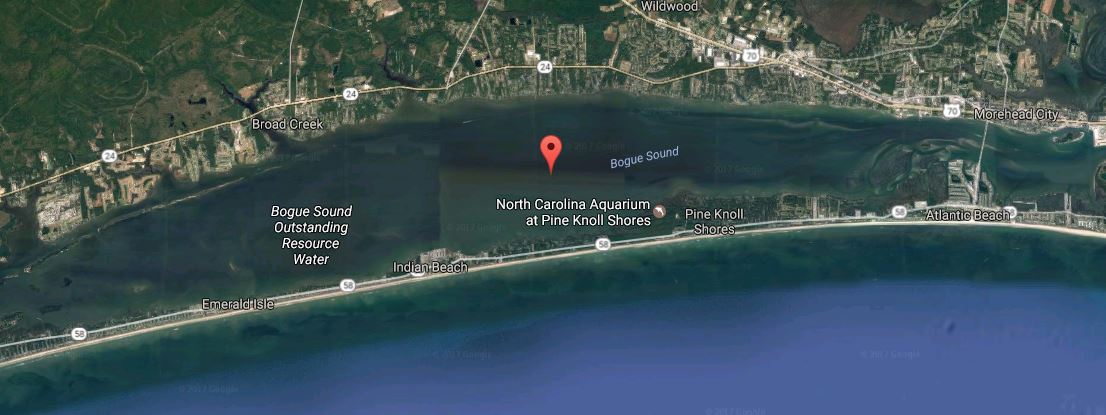
         For the most part, biographies of Coleman mention his service in the Civil War but omit both his wound and how he received it. Lieutenant George Stowits of the 100th New York, who wrote the official history of the 100th New York regiment in 1870, completely ignores the shooting incident. Stowits did mention that Coleman created a sketch of his regiment's camp in Bogue Sound near Beaufort, North Carolina in late 1862 that was hung in the Buffalo Art Gallery at the time Stowits' book was published.

         In 1902, when Coleman was in his 60's, a more heroic, though highly exaggerared, version of how he was shot was furnished to a Buffalo newspaper by Coleman himself.

Buffalo Times    May 20, 1902


           In this story, Coleman was shot by a Confederate. What is interesting is that he is recounting the story with a fellow officer in the 100th New York, Charles Walbridge, who must have known the truth. This indicates that the fabricated story was very likely for the benefit of the reporter.

          Below is a painting by Coleman. For color examples of his work, click here.

Early Moonlight, Capri    1900       LOC


Sunday, February 21, 2021

John E. Michener and the Attempt to Capture Battery Gregg


Morris Island, Battery Wagner and Batter Gregg
Robert Knox Sneden    LOC

          In August of 1863, Lieutenant John E. Michener and his regiment, the 85th Pennsylvania, were stationed on Morris Island near Charleston, South Carolina. They were part of a Union effort to recapture Fort Sumter and subdue Charleston, the city considered the heart of the rebellion. The 85th Pennsylvania spent the month assigned to the arduous task of digging a series of parallels or trenches that the Union hoped would eventually lead to the capture of Battery Wagner, the key Confederate sand-walled fort. A bit farther towards the tip of the island at Cummings Point lay Battery Gregg. 

Lt. John E. Michener
New York Public Library

          The 85th Pennsylvania had arrived in South Carolina in late January of 1863 from New Bern, North Carolina. They first spend a few weeks at St. Helena Island. In early April, the invaded Folly Island and found it had been abandoned. The were stationed on Folly Island for several months until they crossed Light House Inlet to Morris Island, where they would spend about three months.

          In July  the 85th Pennsylvania did not participate in either of two assaults upon Battery Wagner, the key Confederate sand-walled fort that helped guard Charleston Harbor and Fort Sumter. During these two assaults, hundreds of Union soldiers fell trying to capture the structure. [Last month's blog entry was about Michener's command of the barge that ferried the famous African-American 54th Massachusetts from Folly Island to Morris Island for the second assault on Battery Wagner]. However, during the ensuing month-long work digging five parallels, the 85th Pennsylvania lost more men that any other federal regiment. Among the wounded was their leader, Colonel Joshua B. Howell who nearly died when the bombproof that he occupied had a direct hit from a Confederate shell on August 18. While Howell recovered from a severe concussion, the regiment was led by Lieutenant Colonel Henry A. Purviance. He was instantly killed by a friendly-fire incident a few days later on August 30 when a Union shell prematurely exploded directly over his head while he led his troops in a trench.

Storming Battery Wagner's Rifle Pits
Frank Leslie's Illustrated Newspaper       9-26-1863

       On August 26, with the parallels nearing completion, three hundred men from the 24th Massachusetts captured the Confederate rifle pits in front of Battery Wagner. With the distance to Battery Wagner vastly closer, for a third time, a third infantry  action to storm the walls of the structure was scheduled. Ahead of this third assault, a stealthy movement This was intended to be a stealthy up Vincent's Creek was planned to capture Battery Gregg and surround Wagner. About 150 men from four or five regiments were chosen for this assignment, including the 85th Pennsylvania, 100th New York, 3rd New Hampshire, and the 104th Pennsylvania. The mission, under the command of Major Oliver Sanford of the 7th Connecticut.

[AUTHOR NOTE: Sources differ about the number as well as which regiments participated in the assault. All agree that the 85th Pennsylvania and the 100th New York were involved. But the other regiments are varied.  Even though the commander of the assault, Oliver S. Sanford, was a member of the 7th Connecticut, the author could find no evidence that his regiment participated. Interestingly, in his 1905 "History of the Seventh Connecticut Volunteer Infantry," soldier and historian Stephen Walkley did not mention the Battery Gregg mission at all, including Sanford's role as leader.]


Path along Vincent's Creek to Battery Gregg
Map by Robert Know Sneden    LOC

       The mission against Battery Gregg was hampered by two unforeseen events. First, cloud cover evaporated and a bright moon revealed the Union boats on their way to Gregg. Second, when a Confederate boat with about 12 men aboard was spotting leaving the battery, Lieutenant Francis J. Higginson, in charge of the naval personnel and in control of the assault boats,  ordered his men to open fire. The boat was captured but the presence of Union  assaulters was revealed, and the mission was called off.

         The Union tried again the next night, but Battery Gregg, now on full alert,  immediately began shelling the Union boats before they reached the shore. Again, the mission was cancelled.

          Plans for a Union land assault upon Batteries Wagner and Gregg went forward anyway. But when the federals approached Battery Wagner on the morning of September 7, they found it had been abandoned. Battery Gregg was left unmanned as well. Confederate troops inside had escaped in the early morning hours. 

    Below is an excerpt from "Prison Life" by author T.J. Simpson, a short 1867 work about John E. Michener's war experiences, followed by a second version of the event from Lieutenant George Stowits of the 100th New York.

Carrying boats up Morris Island for the Assault
Harpers Weekly 10-3-1863
    "Two nights before the evacuation of Forts Wagner and Gregg," wrote Simpson, "a boat expedition had been planned by General [Alfred] Terry to proceed up Light-House creek to Charleston harbor, surprise Fort Gregg, capture and blow up the magazine and retire. Major [Oliver S.]  Sanford of the Sixth Connecticut was ordered to the command of the expedition. Details were made for the Eighty-fifth and One Hundred and Fourth Pennsylvania Volunteers and two other regiments, in all about two hundred men. Lieutenant Michener had charge of two boats of twenty men. Captain [Rolla] Phillips and [William] Kerr of the same [85th PA] regiment had charge also of three or four boats of the command. These small boats were manned by sailors and proceeded slowly and cautiously up the stream until they arrived in Charleston harbor, and between Forts Sumter and Gregg, the point to be assailed. As the boats arrived opposite Payne’s dock, they successfully formed on the right by filing into line and moved steadily forward for the intended assault. At the moment the boats struck the beach, the men were to rush for the fort without waiting to form in line of battle. A knowledge of their position by the enemy would have proved perilous in the extreme, for they were then directly in the center and in close range of a chain of regel forts and batteries that could have destroyed them in a moment. The moon, unfortunately for the expedition, began to rise at that moment and when they had arrived within less than a hundred yards of Fort Gregg, were discovered and repulsed.                    

          "The enemy at once sent up a signal and soon Forts Johnston and Moultrie and battery Beauregard had united in raising one continued shower of shot and shell upon them. Major Sanford, seeing the utter hopelessness of then making an attack, ordered the boats to rapidly withdraw. This order was, at first, but imperfectly understand on account of the great excitement; and hence, while some of the boats were beating a hasty retreat, others were pulling for the beach. The mistake, however, was soon rectified and all rushed to get beyond the range of the batteries, to add to the confusion, oars would get foul, boats run into each other, and some even got aground. In the midst of this dreadful dilemma a cannon ball went crashing through the side of Lieutenant Michener’s boat, and it was with the greatest difficulty kept from sinking. Astonishing as it may appear, but few lives were lost in this bold and daring adventure, and the boats returned in safety."

Approaching Battery Gregg
Harper's Weekly  10-3-1863
          Interestingly, Michener, through author Simpson, does not blame naval personnel for exposing the Union boats by firing upon the departing Confederate craft; but Michener did  state that moonlight gave away their location. Also, "Prison Life" makes no mention of the second assault upon Battery Gregg that was called off before any of the Union boats reached the shoreline.

        Perhaps the best  account of the mission against Battery Gregg came from Lieutenant Stowits of the 100th New York. Stowits was a member of the assault team, but was unimpressed by the planning and leadership prior to the assault. Many lives would have been lost in what he felt was a poorly-planned assault. 

Lt. George Stowits, 100th New York
History of the 100th Regiment   p,187
        "Five hundred men were detailed from four of the most reliable regiments, and the command of the expedition was entrusted to Maj. Sandford of the Seventh Connecticut...We remember the visit of the Chaplain to the tent of the writer to ascertain if we could swim. When assured we could, he responded that it was favorable. We knew not then of our detail for the expedition. Boats had been collected in one of the creeks, and the men assembled near the camp of the boat infantry, and awaited darkness, before embarking...Scanning the manner of Maj. Sandford [sic], and his apparent, to us, unfitness for so a responsible a work, we could not but feel that many brave men, if landed, would be destroyed.

      "Files for spiking the guns were put into the hands of men selected for that purpose. On inquiry as to what should be used for driving the files, the answer was given that anything that lay around the gun. To us, that was too uncertain. We obtained permission to leave the guns of the men selected, and ordered them to use the flat side of the bayonet, that no time should be lost in searching in the sand or battery for what might not be at hand. The orders were to head the boats for the beach, land, form, and rush for the fort, spike the guns, blow up the magazine and retire...We endeavored to impress our men with the danger, as well as the importance of the enterprise, that each man should act for himself and as though he was to do the work alone and unaided. In consequence of the limited number of boats a large number were left behind. The boats were filled with a quiet, thoughtful band. We glided along with the music of shell overhead, exploding and striking the water about. As we neared the bay a boat shot out from Gregg. She was hailed. No attention paid. We fired and brought her to. We captured a surgeon, major and ten men. The garrison was aroused, and we were ordered back. The next night a second attempt was made, with no better success. The enemy opened on the boat and drove them of. The loss was slight. Thus ended an ill-conceived and fruitless. enterprise."

Union camp on Morris Island    LOC