Showing posts sorted by relevance for query prison life. Sort by date Show all posts

Sunday, December 6, 2020

Prison Life of John E. Michener Overview


Captain John E. Michener
The Miriam and Ira D. Wallach Division of Art, Prints and Photographs:
 Print Collection, The New York Public Library


             My most recent post was about an escape attempt by Captain John E. Michener of the 85th Pennsylvania in 1864. It was told partly by Michener himself but mostly through the words of the Union prisoners with whom he attempted to flee. The post explored a letter to a newspaper that Michener wrote fifteen years after the escape in which he disputed a southerner's version of the use of dogs to track down slaves and escaped Union prisoners. The story of the escape and apprehension of Michener and his comrades was largely based on a postwar memoir by Captain John A. Kellogg of Wisconsin. Kellogg was one of the five Union officers who attempted to escape with Michener from a train bound from Georgia to Charleston, SC. 

       Michener had an account of his own war experiences published just after the Civil War, but I could not find a copy to review for this post.   Thanks to George Thompson, the memoir has been found on microfilm at the New York Public Library. A copy has since been obtained and reviewed.

       Based on the title of the Michener narrative, "Prison Life," I assumed that Michener's story would mainly be a first-person about his experiences in 1864. This includes the period in which he was captured on Whitemarsh Island near Savannah, GA to his release as part of a prisoner of war exchange ten months later. In the time in between those two events, Michener spent time in several Confederate prisons and tried to escape at least twice. 

       Surprisingly, just the last third of the 40-page chapter covered Michener's time in captivity. Furthermore, the Michener account ends while he was still in prison in Macon, GA. The daring escape attempt from the train bound for Charleston that was covered in my last blog was completely ignored in this treatment. It also omitted the last few months of his imprisonment as well as how he obtained his freedom. Why the overall work was entitled "Prison Life" is therefore a bit of a mystery.

       However, what "Prison Life" does provide is a rich story of Michener's war experiences from 1861 to mid-1864. Although not written in the first person, the account certainly includes heretofore unknown details about Michener's service.

        My next several posts will explore "Prison Life." In those posts, I intend to review what is known about the events concerning Michener and his regiment, the 85th Pennsylvania, and how Michener's memoir has enhanced our knowledge of these events. I will begin with the current post which will be an overview of Michener's brief tract.

      Although at first disappointed at what was not written about in Michener's story, I now believe that these omissions are not that great of a loss. We have Captain John A. Kellogg's detailed review of the escape attempt and capture from the Charleston-bound train. We further know many of the details of Michener's time in a Charleston prison from a postwar letter that he wrote. The last few months of his time in prison was covered in several brief newspaper accounts from the period as well as the details of his exchange in the official records of the war. 

      The first two-thirds of "Prison Life" covers Michener's service in the war, from the Peninsula Campaign, to Suffolk, VA and finally to the fight at Whitemarsh where he and two others from the 85th Pennsylvania regiment were captured. Although we have several letters from Michener's family that give details of these events, "Prison Life" adds substantially to the story.

      "Prison Life" appears to be intended as an opening chapter of a larger work to be written by T. J. Simpson. The title promised illustrations of various battlefields and implied there are more chapters to follow. But for some reason, the story of Michener seems to be the only one that reached publication. Michener and Simpson probably met in Washington, DC immediately after the war. During this period, Michener worked for the postal service and was involved in the creation of an organization for former Union prisoners. 

         It is curious as to why Michener simply did not pen the chapter in the first-person. Michener is virtually the sole source of Simpson's story. From letters that Michener wrote to his family as well as letters he penned to a few newspapers during the war, it is apparent that Michener could have been quite effective if he had provided a first-person account. Perhaps Simpson had better connections to get Michener's story into print.

       Simpson seems to have used Michener's thoughts and words almost exclusively to write the chapter. One exception is a story from sutler James Clark (for whom Michener's brother Ezra worked) that is recounted. Furthermore, Simpson included some speech portions from other captured officers are used at the end of the piece. But otherwise, the remembrances seem to be from Michener alone. 

      Simpson writes in his introduction that, "...each one [story of a former Union prisoner] has some peculiarities connected with his history worthy of note, and many facts and incidents of an interesting and thrilling character which render the separate history of each one necessary to a correct and comprehensive view of the whole. The plan adopted, therefore, is to write the history of each one separately in a clear, concise and comprehensive manner."

      Simpson went overboard in exalting Michener's accomplishments. It would have enhanced the chapter if Simpson had quoted other soldiers about Michener's deeds. A reader could easily assume that Simpson attempted to portray Michener as a super soldier, or even worse that Michener himself overinflated his experiences. Having read numerous other accounts by and about Michener, I do not believe it was Michener's idea to inflate his accomplishments. 

      During the Peninsula Campaign in Virginia in 1862, many men in the Union army became sick with various ailments including typhoid fever and other potentially deadly diseases. Simpson exalted Michener for assigning his black servant, likely a former slave, to care for the sick in the 85th Pennsylvania. By modern standards, Should Michener's so-called sacrifice in this instance be the object of such praise? Michener, wrote Simpson, "threw the coffee-cup, haversack, etc. over his shoulder, prepared his own food, washed his own clothes and cheerfully accepted the 'situation.'"  

        There is little doubt that Michener was extremely patriotic and highly regarded as an officer by the men in his regiment. As "Prison Life" showed, he was constantly put in charge of special assignments, a testament to his professionalism and reliability.  Michener wrote several personal and public letters during the war denouncing antiwar sentiments and encouraging the citizenry to continue to fight to preserve the Union.

    In late 1863, Michener wrote a letter to the Reporter and Tribune, a pro-war Republican newspaper in Washington, PA. Michener stated, "How do the Copperheads feel under the rebuke administered to them by the Union men on the 13th?...I believe your Southern sympathizers to be wickedly drunk to every feeling of loyalty or attachment to the United States Government. Their open treason, manifested by their cringing sympathy for the rebels; the vindictive spite with which they assail every friend of the Federal Government, and their opposition to a war prosecuted for the salvation and perpetuation of the Union is clear evidence of their infamous purposes, and wicked treason."

        During his more than two years in the 85th Pennsylvania, Michener was often chosen to lead special assignments, such as in two incidents highlighted in Simpson's memoir; namely to shuttle prisoners and deserters aboard a schooner and being in charge of the barge that shuttled the 54th Massachusetts to Morris Island, SC for their historic charge against Fort Wagner. 

        Michener was also involved in leading men on special missions into battle, such as the assault on Battery Gregg on Morris Island and the attempt to capture a key bridge during the assault against Whitemarsh Island, GA where he was captured.

     In this event, he made sure that all of his men had the chance to escape back to their transports, and was only captured because he was the last man to attempt to re-cross the bridge back to safety.

    The best part of Michener's story is the account of his capture and the many privations suffered in prison. These evens as well as his time in the regiment prior to his capture will be explored in my next several posts in the order in which they occurred.


Thursday, December 17, 2020

John E. Michener and the Peninsula Campaign


Captain John E. Michener
Miriam and Ira D. Wallach Division of Art, Prints and Photographs
New York Public Library


       The brief, 40-page chapter in "Prison Life" (1867) about Captain John E. Michener of the 85th Pennsylvania, mentioned in my previous post, offers some heretofore little known details about his three years in the Union army, beginning with information about the Peninsula Campaign. 
        Michener, from Fredericktown, Washington County, PA, first joined the 85th Pennsylvania regiment as a lieutenant in Company D. He was 23 years of age with a wife and newborn daughter. His brother, Ezra, served as an assistant sutler attached to the regiment. Later in the war, in early 1864, Michener would be promoted to captain of Company K. 

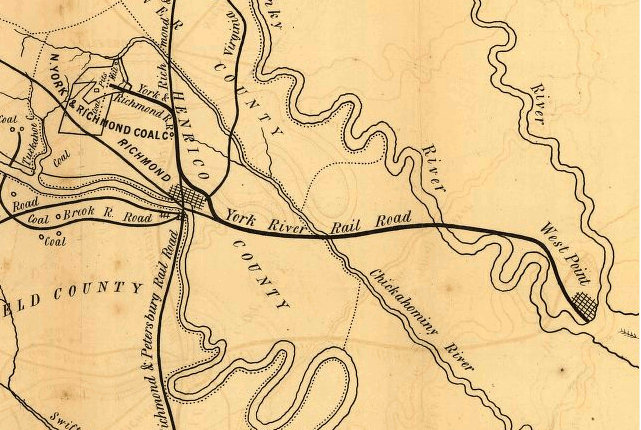
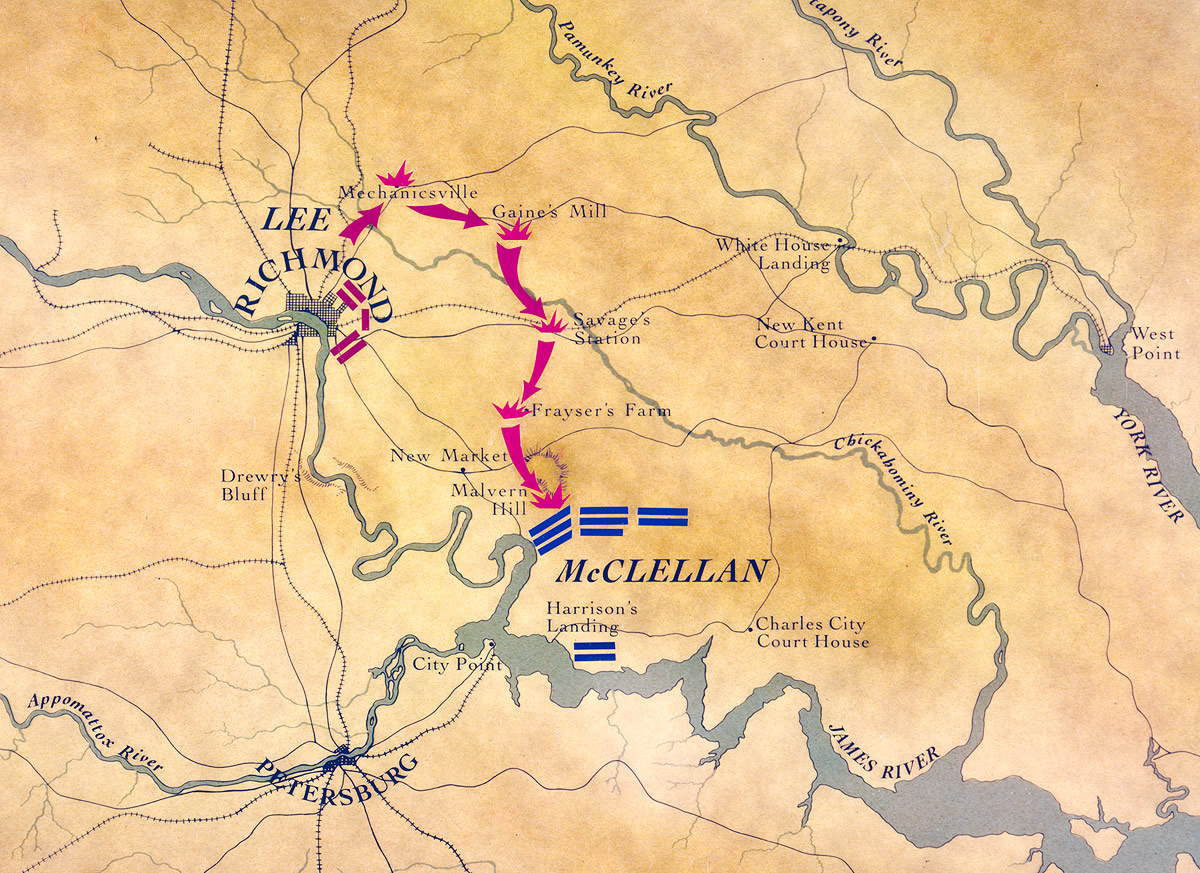
        After a brief stay in Washington, DC during the winter of 1861-62, the 85th Pennsylvania was transported to Fort Monroe, Virginia to be part of General George B. McClellan's massive movement to capture Richmond, the Confederate capital, by advancing up the peninsula between the James and York Rivers. This effort, known as the Peninsula Campaign, would prove to be a massive Union failure and starkly shattered the expectation of many northerners that victory would in a short amount of time. 

Position of Casey's Division At Williamsburg in support of Hooker and Kearney

         The first pitched battle of the of the Peninsula Campaign, was fought at Williamsburg on May 5, 1864. Union forces caught up to the rear guard of the Confederate army that was retreating from Yorktown. The battle involved over 70,000 troops and resulted in about 4,000 total casualties, but ended without a decisive winner The Union pursuit continued up the Virginia Peninsula towards Richmond. 

      The 85th Pennsylvania played a supporting role during the engagement. They were called into a line of battle line during the night of May 5, but did not fire their rifles. The men were very excited to be placed in a position to be under fire from artillery for the first time. Although shelled, the regiment suffered just two casualties, their first of the war. Also memorable was the bone-chilling weather, as they stood shivering in formation all night long during a rain storm. More information about the Battle of Williamsburg can be found here.

      What "Prison Life" adds to the story: Because of the minor role played by the 85th Pennsylvania at Williamsburg, "Prison Life" adds little to what is already known. Author T.J. Simpson exalts Michener for parading in front of his men and exhorting them to stand in readiness for an order to advance that never came. Michener deserved credit for encouraging his men, but not on the level described below by Simpson. Although placed under fire for the first time, the Confederate shells directed at them mostly fell behind the men, not upon them or in front of them. Michener displayed plenty of bravery during the war; however, it was a stretch for Simpson to highlight this incident in such sonorous language.

From "Prison Life:" [Standing in formation at Williamsburg] "Here Lieutenant Michener’s coolness and intrepidity was fearlessly displayed and won for him the admiration and confidence of all his comrades. Seizing a musket, he rushed to the front and as if wholly unconscious of danger, continued to encourage and animate his men, both by word and example, in the midst of a most deadly fire, until the close of the battle."

         The Confederate army following the battle continued their withdrawal up the peninsula towards Richmond under the command of General Joseph Johnston with McClellan in pursuit. Nearly a month after Williamsburg, the 85th Pennsylvania was in the front lines for the Battle of Seven Pines. This fight involved 73,000 troops and ended with nearly 14,000 casualties. This three-day fight, the closest ever to Richmond, ended in a draw. Confederates held off the invasion of Richmond, while the Union rallied after nearly being overwhelmed on the first day of the battle. 

        The 85th Pennsylvania, as part of Silas Casey's Division of Erasmus Keyes' Fourth Corps, was in the front lines on the first day of the battle. This inexperienced division, greatly reduced by sickness, fought extremely well, holding off a much larger Confederate strike force until re-enforcements arrived hours later from across the Chickahominy River. For more information about the Battle of Seven Pines as well as an excellent detailed map of the opening of the fight, click here.

        Michener, then a lieutenant in Company D, was on picket duty with the fight commenced along with his captain, William Horn, and a handful of men. Facing overwhelming numbers of Confederates, he and his men struggled to return to their regiment. Several of were captured. While some in others regiments panicked and fled to the rear, Michener was able to coolly lead the rest of the men back to their regiment.
    What "Prison Life" adds to the story: Specific details about Michener's role are provided. Michener, it turned out, was given charge of a group of Confederate prisoners during his return from the picket line by a colonel of another regiment. Michener through Simpson also disclosed the route of his return. 
History of the 103rd Regiment
PA Veteran Volunteer Infantry p.174
Union picket line on the far left; 85th PA to the right of the redoubt along the stage road


  From "Prison Life:"
"Lieutenant Michener was cut off from his division, with the rebels in front and rear, while he and his men were exposed to a galling fire from both friends and foes. With thirteen men belonging to his own company and four of the ninety-sixth New York, he moved through the slashing of newly-fallen timber to the York River railroad, deployed his little squad as skirmishers, and captured three prisoners with the loss of one of the New York boys, who was shot in the head while gallantly fighting at his post. Moving then to the right of the railroad, he succeeded in escaping from his dreadful dilemma and hastened to the point where [General John] Sedgwick fiercely contesting every inch of ground, finally changed defeat into victory and triumphantly closed one of the bloodiest battles of the war."

Michener's route from the picket line along the RR line to Sedgwick's position at the Battle of Seven Pines
History of the 103rd PA by L.S. Dickey, p. 166

Colonel Oliver H. Rippey
61st PA Infantry
Killed at Seven Pines
   

    "Here Lieutenant Michener was directed by Colonel [Oliver H.] Rippey, [61st PA, killed at Seven Pines] a brave and gallant officer, to take charge of some forty-five prisoners and guard them securely until they could be removed to the rear."


         The 85th Pennsylvania and Silas Casey's entire division, after a severe public rebuke from McClellan, was sent to rear during the ensuing Seven Days' Battles. In late June of 1862, McClellan gave up his plan to capture Richmond. After the final fight at Malvern Hill, the 85th Pennsylvania as part of the division of General John J. Peck (who replaced the scapegoated Casey) guarded the Union retreat. McClellan's huge army set up a defensive position at Harrison's Landing on the James River and sat for six weeks. In mid-August, McClellan's army began loading onto ships and left the peninsula. McClellan called the massive retreat a "change of base." 

       It took several days for the army to be removed aboard transport and barges from Harrison's Landing. The mood of many in the Union army as well as in the North was disappointment and confusion that the Union offensive to end the war had stalled. A Pittsburgh newspaper wrote, "Without a struggle, without even the loss of a single man, the immense Army of the Potomac, officers and men, bag and baggage, stores, tents, horses, ammunition and contrabands, are now far away from Harrison's Landing...steamer after steamer and vessel after vessel passed us steaming or sailing in the direction of Fortress Monroe heavily laden with horses and stores." [Pittsburgh Gazette, August 21, 1862, p.1]

Harrison's Landing
Harper's Weekly


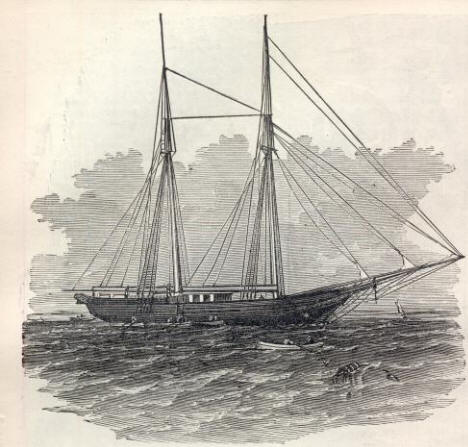
  From "Prison Life:" This vignette displayed Michener's organizational and management skills. [McClellan’s retreat] "At the evacuation of Harrison’s Landing, Lieutenant Michener was detailed to take charge of all the baggage belonging to General Peck’s division. The baggage consisted of trunks, boxes, knapsacks, etc. They had been hastily and carelessly tumbled into crazy old canal hulks by a careless and reckless quartermaster and consequently the boats rapidly filled with water and sunk at the wharf where they had been loaded. To remove this baggage out of these sunken boats to others was a slow and difficult task. In less than eighteen hours, however, Lieutenant Michener with a squad of soldiers and one hundred contrabands [former slave laborers], succeeded in transferring the whole of the baggage from the sunken boats to the schooner W. A. Ellis. After this was accomplished, he was ordered by General Peck to proceed with the schooner to Hampton Creek, Virginia, near Fortress Monroe and land the baggage."

Yellow - water route of baggage barge on the James River
Blue - land route of 85th Pennsylvania
Joel Dorman Steele, 
A Brief History of the United States 


          Most of the Army of the Potomac sailed to Fortress Monroe, Virginia and then on towards Washington, DC. They would soon fight at Second Bull Run, Virginia in August and at Antietam, Maryland in September. The 85th Pennsylvania did not board transports but instead marched back down the peninsula to Fortress Monroe where they stayed while their future assignment was being debated by McClellan and the War Department. The 85th Pennsylvania was eventually sent to Suffolk, Virginia where they spent the next three months.

 Next: John E Michener is in charge of a dangerous mission transporting deserters and stragglers.


Friday, January 29, 2021

John E. Michener and the 54th Massachusetts

Colonel Robert Gould Shaw
54th Massachusetts
LOC


         In reviewing the brief 1867 biography called "Prison Life" [acquired courtesy of the New York Public Library] about Captain John E. Michener of the 85th Pennsylvania, one of the most interesting incidents recounted was Michener's connection to the charge by the famous 54th Massachusetts regiment upon Battery Wagner near Charleston, SC in 1863. Michener, it turned out, was in command of the barge that took this entire regiment of black troops to Morris Island shortly before they led a fateful and deadly Union charge. This assault was the basis for the 1990 movie called "Glory" starring Denzel Washington, Morgan Freeman and Matthew Broderick. 

         This assault was the second failed Union attempt to capture Battery Wagner. In both cases, the 85th Pennsylvania was assigned reserve duty. While two regiments from their brigade were with the 54th Massachusetts in the attack, but the 85th Pennsylvania was assigned to follow up the initial charge once the structure was breached. In both cases, the secondary assault was called off.

         With the Emancipation Proclamation having gone into effect a few months earlier,  African American troops had begun to be used more extensively by the Union to fight the war. The charge by the 54th Massachusetts is generally considered a turning point because it demonstrated the fighting ability and tenacity of the black troops and helped them generally gain acceptance from many, perhaps most, of their white comrades. Despite their inability to hold the Battery Wagner once the walls were breached, the high number of casualties and courage they displayed dispelled many assumptions among Union soldiers that black troops lacked discipline and would not fight with military discipline. 

         Black regiments such as the 54th Massachusetts were commanded by white officers. Colonel Robert Gould Shaw was chosen to lead this regiment, which actually had troops from various states including Pennsylvania. Shaw, age 25, was from an abolitionist family from Boston.

       The 85th Pennsylvania spent a nearly a year, from February of 1863 until January of 1864, in South Carolina in what turned out to be a futile attempt to capture Fort Sumter and the city of Charleston. The campaign is remembered for the two failed assaults on Battery Wagner that cost hundreds of Union lives, followed by a trench digging operation that eventually led to the abandonment of the structure by the Confederates.  It was assumed that Fort Sumter would soon follow, but the fort where the war began in April of 1861 did not return to Union hands until the last months of the war nearly four years later. 

      In the digging operation, which lasted nearly two months, the 85th Pennsylvania lost more men than any other Union regiment. Their entire campaign around Charleston is covered extensively in my book, "Such Hard and Severe Service: The 85th Pennsylvania in the Civil War," published by Monongahela Books.

      In the two assaults, on July 10 and 17, the 85th Pennsylvania was tasked to perform secondary assault duties once the battery was taken. Since the initial assaults both failed, the 85th Pennsylvania was not called upon to attack the fort.

      The second assault on July 17 was led by the famous 54th Massachusetts, a black regiment under the command of Colonel  Shaw. Shaw was killed along nearly a hundred of his men. Another 300 were wounded. 

Union camp on Folly Island    LOC

       The profile of Lieutenant John E. Michener in  "Prison Life," an 1867 brief account of his war service, relates that the young officer from Washington County spoke with Shaw on the barge that transported the 54th Massachusetts across Lighthouse Inlet from Folly Island to Morris Island for their fateful charge. 

        Below is the passage from "Prison Life." It begins with a summary of the 85th Pennsylvania's first few months of the Charleston campaign. It is interspersed with a first-hand account of the passage by a member of the black regiment, Luis F. Emilio.

          From "Prison Life:"  "The Eighty-Fifth Pennsylvania Volunteers and the One-hundredth New York regiments were the first to get possession and establish themselves on Folly Island. Here the Eighty-fifth Pennsylvania Volunteers, the Sixty-second and Sixty-seventh Ohio, the Thirty-ninth Illinois and the One-hundredth New York regiment were assigned to the command of Brigadier General [Israel] Vogdes. Light-house Inlet intervened,

Major Israel Vogdes
National Archives
dividing Folly Island from Morris Island. General Gilmore directed General Vogdes to construct a battery under cover of darkness upon the eastern point on Folly Island, directedly opposite to and within three hundred yards of the rebel works. Here was a natural formation, sand bank, thrown up by the waves of the sea, making a complete fortification, which only required a little rounding up and strengthening.

        "The rebel pickets paced the opposite shore, wholly ignorant of our operations or intentions, and under the impression that but a small force of Yankees was there. Accordingly, the rebel only sent over a mortar shell occasionally, by way of compliment, which did but little damage. Working parties only went to the front after darkness set in, and retired before daylight the next morning.

          "Breastworks, traverses and magazine were soon completed, and the huge guns mounted. Shot, powder and shell were conveyed to the magazine in wagons drawn by horses, mules being considered too noisy for that quiet operation. Even orders and commands were required to be given in a whisper and a cough or sneeze was positively prohibited. Had the presence of a working party or our operations then been known to the enemy they could easily have destroyed the entire Union force with their heavy guns. During the last six nights, Lieutenant Michener, with one hundred men of the Eighty-fifth Pennsylvania Volunteers, had been constantly engaged upon the work, and the last night prior to the opening of the siege performed the very difficult and dangerous task of stowing away the barrels of powder in the rough and hastily constructed magazine.

Folly Island, Light House Inlet Morris Island, and Fort Sumter
National Tribune, Washington, DC, 4-30-1891, p.1


    "On the day of the assault on Fort Wagner, Major Ed. Campbell
[of the 85th Pennsylvania]…detailed Lieutenant Michener to take charge of the transportation [across Lighthouse Inlet] and furnish boats to carry troops, stores and artillery. Colonel Robert G. Shaw, with the Fifty-fourth Massachusetts (colored) regiment arrived in the afternoon to take part in the assault. Lieutenant Michener succeeded in getting the entire regiment in a large barge and had them quickly towed over to Morris Island. Colonel Shaw, after kindly proffering Lieutenant Michener a cigar and thanking him for his prompt assistance in getting his regiment across, remarked, 'That if his black boys had any show whatever, the stars and stripes would be floating over Fort Wagner before sunset.'

      From Luis F. Emilio of the 54th Regiment: "After a march of some six miles, we arrived at Light- house Inlet and rested, awaiting transportation. Tuneful voices about the colors started the song, 'When this Cruel War is Over,' and the pathetic words of the chorus were taken up by others. It was the last song of many; but few then thought it a requiem. By ascending the sand-hills, we could see the distant vessels engaging Wagner. When all was prepared, the Fifty -fourth boarded a small steamer, landed on Morris Island, about 5 p. m., and remained near the shore for further orders." [History of the 54th Regiment of Massachusetts Volunteer Infantry, p.68]


54th Massachusetts at Fort Wagner   LOC


       From "Prison Life:"  "Colonel Shaw’s regiment was the first colored regiment organized in the free States, and both the Colonel and his brave boys shared in a mutual anxiety to show to their country and the world that it was not in vain that blacks as well as whites had been summoned to battle for its life and the freedom of man. …it went forward…to take its place in the front line of the assaulting column…the distance to be crossed at double-quick was half a mile. Not many, however, of these brave men fell until the pierced but unshaken column had almost reached the ditch and was within short musket range of the fort when a sheet of fire from small arms lighted up the enshrouding darkness while howitzers in the bastions raked the ditch as our men swept across it and hand grenades from the parapet tore through them as they climbed the seamed and ragged face of the fort and planted their colors for a moment on top.

         "Here fell Colonel Shaw, killed instantly. Here also fell General [George] Strong, mortally wounded, with Colonel [John L.] Chatfield and many other brave and gallant officers…."

Thursday, June 17, 2021

Captain Michener in Prison at Camp Oglethorpe, Georgia


Union Prison Camp     LOC

        This will be the last in a series of articles about the captivity of Captain John E. Michener of the 85th Pennsylvania regiment. It covers his life from his capture on White Marsh Island near Savannah, Georgia in 1864 to his release later that year in Charleston Harbor. This segment focuses on his time in prison at Camp Oglethorpe near Macon, Georgia. Later in his confinement, he was part of an escape attempt which was chronicled here

      In this part of "Prison Life," the postwar story of Michener's incarceration as related by author T.J. Simpson in 1867, Michener focuses on the privations of prison life: lack of food being his main topic of interest. 

      In 1864, Fort Oglethorpe was being used by the Confederacy as a prison pen for Union officers. More information about Camp Oglethorpe can be found here.


LOC

        From "Prison Life--"

        Captain Michener and other Union officers were marched to Camp Oglethorpe where they were confined within a high stockade fence and guarded by two regiments of Georgia troops. Here they met some eight hundred Union officers who had just arrived from Libby and Saulsbury prisons where they had been reduced to the last extremity of suffering and, almost naked, and fearfully emaciated, were brought here to die. Before entering the gates of the stockade, Captain Michener and his companions were carefully searched by Captain W.E. Tabb, commander of the prison.

          Having no blankets and there being but two old frame buildings within the stockade, and they used only for the accommodation of the sick and convalescent, Captain Michener and his friends experienced more exposure and suffering during the first month of their confinement here than while in Charleston jail, having to lie on the bare ground with no shelter whatever, exposed to the heavy dews, frequent rains, and violent storms. 

LOC
        After the first month passed in this dreadful condition, rough pine boards were furnished with which the prisoners erected shed capable of accommodating one hundred men each. The prisoners were then divided into squads of a hundred each, the ranking officers taking command and appointing a commissar whose duty it was to receive the rations from the rebel quartermaster and divide them equally among his fellow prisoners. The rations allowed was one pint of cornmeal per day to each prisoner and twice a week a few ounces of beans. Sometimes a few worm-eaten peas and  a very small quantity of rice was given. But the quantity of rice and rotten peas was so very small indeed, that each prisoner would be compelled to save up until he would have from six to eight days allowance in order to have enough for a full meal. 

      It was truly an affecting sight to see these ragged and half-starved prisoners gathering around and with the most haggard and imploring looks, piteously but anxiously watching the commissary as he measure out their ration of meal in a tin cup, and to see how eagerly they seized it. Sometimes, from long fasting, and the irresistible carvings of hunger, their appetites were so ravenous that they would seize the rations and devour them on the spot, without cooking. Officers of all ranks were here placed upon an equality without respect of persons, having to draw and cook their own rations, wash their own clothes, and perform all other menial services and, in addition to attend two roll calls each day. Some had been fortunate enough to conceal and thereby retain  their money about their persons, at the time of their capture, and this money could be accordingly exchanged for confederate money, with which they could purchase a few vegetables and other articles of food and hence they could command a reasonable support while their money lasted. But a much largest number of prisoners had no money, it all having been taken from them at the time they were taken prisoners and hence they would exchange with the rebel guards fingerings, breast-pins, watches, knives, combs and whatever little precious  keepsake they still possessed and even their few rags of clothing in some instances for something to eat. 

          Among this large number of prisoners were men of all classes and occupations -- lawyers, doctors, preachers merchants and mechanics -- many of whom were very wealthy , noble and generous at home, but here in prison, reduced to beggary and starvation.

LOC

   Strange as it may seem, under these trying circumstances, a cold indifferent spirit of selfishness predominated and it was only in a very few instances that a prisoner could be induced to divide his little stock of money with a suffering fellow-prisoner. In some instances when offices of the same regiment would happen to meet, a more liberal spirit prevailed and under the excitement of the moment they seemed to return to their former selves and forgetting the extremity of their circumstances were readt to divide their last cent. Sometimes from four to five and even eight or ten of these starving men would form a mess to cook and sleep together and in every such instances, if anyone or more of the number were fortunate enough to have any money, it was freely and cheerfully divided among them until the last cent was gone. There were many instances also in which officers of superior rank who had no money, would cook and wash and do all kinds of menial service for those of inferior rank in order to get  a share of the provisions purchased with their money. A major of a New York regiment, a brave and talented man, destitute of money and reduced to the last extremity of suffering and starvation, gladly embraced the opportunity to act the part of a servant for two lieutenants, relieving them from any menial service whatever, simply because they were fortunate enough to have money, while had had none; showing that in this instances at least, money was the standard of merit and that 'all that a man has will he give for his life.' The prisoners were also but poorly furnished with cooking utensils with which to prepare to meagre rations they received. All that were allowed for the men was a camp-kettle and skillet and hundreds were not even supplied with them; hence borrowing become the order of the day and when this could not be done, the use of cooking utensils had to be dispensed with and the rations devoured as nature prepared them without any artificial help.

Union Officers in Prison     LOC
      Roll call was announced by a rebel soldier marching through the stockade beating with a stick in a furious manner upon an old kettle drum. The first arrangement with the prisoners for this roll call was the forming into two ranks, each squad of one hundred men, who had an adjutant selected from their own number who kept the roll of the men and the rebel commander would call their names. Afterwards, however, a new plan was adopted. The prisoners were all crowded into one end of the enclosure or stockade, a company of rebel soldiers were marched in and deployed across the center of the pen at intervals of about three paces and then two rebels officers would form a gate, themselves acting as posts through which the prisoners would all have to pass single file, and be counted after the manner of counting hogs or sheep. This roll call was generally greatly dreaded by the prisoners for it most frequently happened while they were preparing their little rations for a meager meal. Some of them would have a corn pone baking, others would have mush boiling and would have to leave all in a moment for roll call. Frequently, they were detained from one to two hours by these proceedings; for if the commandant, through his stupidity, would happen to make a mistake of one or two in the count, they were all driven back again and counted over the second or third time. Hence, when the men would return to their fires, they would often find their scanty ration burned up, and would have to wait and starve until drawing day came again.

Wednesday, March 17, 2021

The Capture of Captain John E. Michener


Whitemarsh Island Assault by Captains George H. Hooker and Robert P. Hughes
February 22, 1864     Map Courtesy of Craig Swain

         The last seven paragraphs of this entry is a lengthy quote from the 1867 book entitled "Prison Life" about the capture of Captain John E. Michener on Whitemarsh Island near Savannah, Georgia in 1864. Michener had spent the first 2 1/2 years of the war as a lieutenant in Company D of the 85th Pennsylvania. In early 1864, he was promoted to be captain of Company K. The Whitemarsh Expedition marked his first field command with his new company.

       I earlier have written about Michener's captivity in an article for Military Images magazine entitled, "Following the Torn and Bloodstained Colors: John Michener's Civil War Odyssey." This article features letters from Michener and his family as well as newspaper accounts of his captivity, courtesy of descendant Margaret Thompson.

         I have also written extensively about the Whitemarsh Island Expedition in my soon to be published Volume II history of the 85th Pennsylvania entitled, "Such Hard and Severe Service: The 85th Pennsylvania in the Civil War, 1864-1865" from by Monongahela Books.

       This author of "Prison Life," T.J. Simpson, offers further details about Michener's role the expedition and the early days of his time as a prisoner of war. Future posts will give additional details about Michener's time in captivity.

         The one-day expedition from Hilton Head to Whitemarsh Island, led by Colonel Joshua B. Howell of the 85th Pennsylvania, was intended to capture around 300 [Simpson said it was 500] contraband workers who were building defenses for the Confederacy. One report, which was accurate, said that some Confederate troops had been sent from Savannah to Florida, leaving Savannah under-defended. This action by the Confederates was meant to deal with Union General Truman's Seymour's Florida campaign that began with landing at Jacksonville and ended with a lopsided Confederate victory at Olustee.

Slaves Building Confederate Earthworks
Mississippi Dept of Archives and History
     The Whitemarsh Expedition was led by Colonel Joshua B. Howell of the 85th Pennsylvania. Accompanying the Howell regiment were elements of the 4th New Hampshire and 67th Ohio.

     The expedition landed successfully on February 22. Confederate pickets on the beachhead quickly fled with Michener and 20 men from his company (K) in hot pursuit. Michener was  under the command of Captain George Hooker, who was tasked with capturing a bridge between Whitemarsh and Oatland Islands and thus prevent the Confederates from sending re-enforcements.

       Michener and his men made it across the bridge but were confronted with an earthwork with a small two-gun battery.

Captain George H. Hooker
85th PA
Guiding the Union mission were several escaped slaves from the area who knew the terrain. But the fugitives did not know of the battery that had been built since their escape.

       Hooker's men halted their attempt to capture the Oatland Bridge. But as Simpson described, Michener and his sergeant from Company K, James C. Bailey, were trapped trying to re-cross the bridge. Near the interior of the island, another member of the 85th Pennsylvania, Private Eli F. ("Frank") Shallenberger of Company C, became separated from his Hughes' team and was also captured. Everyone in the expedition except for these three unfortunate captives were able to safely return to their boats and return to Hilton Head Island.

        This account below, in Michener's words as told to author Simpson,  is somewhat critical of Captain Hooker for not sending expected re-enforcements in a timely manner to help Michener's men escape from the other side of the bridge.

         "On the 21st of February, 1864, while the Florida campaign [Olustee] was in progress, General Joshua B. Howell, commanding the district [that consisted of] Hilton Head, St. Helena’s Island and Fort Pulaski, embarked from Hilton Head Island, with the Eighty-fifth Pennsylvania Volunteers and Fourth New Hampshire, for a small island about four miles distant from Savannah, Georgia known as White-Marsh Island. Upon this island some five hundred negroes were actively engaged in throwing up breastworks under the protection and supervision of about two hundred rebel troops. This island is about three miles wide and is connected with the main land by a wooden bridge. To destroy the [Oatland] bridge, so as to prevent succor from Savannah; attack and scatter or capture the rebel troops guarding the negroes; destroy the works and bring off these negroes to Hilton Head, were the objects of this expedition.

"Prison Life"
T.J. Simpson  1867
           "The destruction of the bridge, the first and most important object to be accomplished, was assigned to companies B, D, E, H, I and K of the Eighty-fifth Pennsylvania Volunteers under the direction of Captain George H. Hooker, acting assistant adjutant general to General Howell. The transports arriving a short distance above Fort Pulaski, dropped anchor and launched the small boats for the above-mentioned detachment. These boats were designed to carry from twenty to thirty men, each but having been lying up in the hot sun for months at Hilton Head, they were wholly unfit for the service. Many of them filled with water as soon as launched, and sunk immediately, while the others were only kept afloat by constant bailing.

           "This detachment was to proceed some three miles up a small sluggish creek and get in the rear of the enemy before the transports landed the remained of the troops at the front approaches to the island. It was long after midnight when the order 'cast off' was given and the tide coming in greatly assisted the strong but muffled paddles and caused the awkward and leaky boats to shoot through the water with astonishing rapidity.

           "The night was calm – the 'wind slept soundly'—while the twinkling stars in the hazy sky relieved the midnight darkness. The moon at length peered above the horizon and shone with a mellow light as she travelled from cloud to cloud. The snake-like stream, stirred by the many muffled oars, sparkled on its winding way, lending a soft attraction to the gloomy marsh. Far along its grassy borders the tall, green seaweed formed beautiful arches, through which the silent moonbeams crept as if to smile upon those daring men as they noiselessly glided along in their frail boats…

             "Arriving at the island, a dash was made for the shore, which was quickly gained without the loss of a man. The rebel picket only fired a single volley and then fled like frightened deer. Captain Hooker directed Captain Michener to deploy his company (K) as skirmishers – pursued the retreating pickets with all possible haste and gain the bridge before the alarm could spread among the enemy.

LOC

"After penetrating the dense timber and undergrowth for nearly a mile, Captain Michener came to a cleared field only a few hundred yards from the bridge. To his astonishment he discovered what appeared to be an earthwork but a few rods distant from the opposite end of the bridge. Halting for a moment, he sent his orderly sergeant back to confer with Captain Hooker and request him to come up. In a few moments this gallant officer arrived in company with Captain
[Rolla] Phillips of Company D. they however doubted the fact of the enemy having a fortification there and agreed with the negro-guide (who had only escaped from the rebels a few weeks before) that it was only ‘earth-houses occupied by the colored folks,’ and Captain Hooker ordered Captain Michener to advance upon the bridge. Captain Michener still insisted that it was a battery and having only twenty men of his company with him asked for more men, stating that if he found it to be an earthwork when he arrived at the bridge, he would try and take it. Captain Hooker said it was not necessary, that he would support him.  ‘Yes’ responded Captain Phillips. ‘Michener, we will be at your heels.’ Captain Michener advanced at double-quick and on arriving at the bridge, discovered that his suspicions were correct and that the enemy had a small earthwork with one gun in position and the panic-stricken rebels trying to get up a second one. Believing to retreat would expose him to a close and galling fire and seeing but few rebels in the fort, he resolved to charge it. With a shout the gallant captain and his brave boys dashed towards the bridge, which was soon gained when the rebels opened upon them with one volley of grape, but the gun being too much depressed, the shot fell short and did no other damage other than to splinter a portion of  the bridge, a fragment of which struck Captain Michener, felling him to the ground. Quickly springing to hie feet, he dashed across the bridge with only ten men, the rest stopping short of the bride and seeking shelter from the shower of musketry concentrated upon them. With this immortal ten, Captain Michener pushed fearlessly up to within fifty yards of the earthwork; but finding no support coming up, as had been promised, he at once saw the folly of hurling those few devoted followers against the fort. Seeing a small embankment near the ditch to the left, he quickly deployed his men behind it and lying flat upon the ground, opened a brisk fire upon the enemy, killing one man and two horses. Here this little Spartan band fought bravely for more than an hour, waiting for reinforcements and not permitting a rebel to raise his head above the parapet. What an hour was that! Lying almost under the very shadow of the fort, with two guns and two hundred muskets concentrated upon them, how desperately they fought and how anxiously they looked for the promised supports. A half hour passes, the enemy is still held at bay, and now they listen for the shouts of their comrades rushing to the rescue. They load and fire again, rebels fall from the parapet; another half hour passes; the bloody strife continues, but no supports have arrived; the moment is big with danger; to advance is death, to retreat is almost hopeless, to remain longer in than position was certain destruction. Oh! That relief would come. They read each other’s thoughts in their anxious countenances; death is preferable to surrender, and a soldier’s glory is to fall, if fall he must, with his face to that foe.

Lt. Norman B. Ream
Dickey's History of the 85th PA

       "Lieutenant
[Norman B.] Ream of Company H, a brave and gallant officer, had been ordered by Captain Hooker to hasten with his men to the aid of Captain Michener while he was thus being overpowered by the enemy. He had proceeded but a short distance, however, when he fell, severely wounded.  His comrades at once endeavored to carry him back to the boats, but were so hotly pursued by the rebels that the brave lieutenant requested them to lay him down and make their escape, saying it was better for him to fall into the hands of the enemy than for them all to be captured. They persistently refused, however, and finally succeeded in reaching the boats in safety with their noble but suffering leader.

         "At length, despairing of aid and knowing the hopelessness of their condition, they resolved to attempt escape at least by crawling through the marsh to the stream and swimming to the bridge. They gain the bridge; the heroic spirit that had sustained them through the last dreadful hour now yields to excitement. Captain Michener entreats them to be calm and courageous, that they would either escape or die together. He orders them to cross over, one at a time, so as not to

Captain John E. Michener
Courtesy of Ron Coddington

draw the enemy’s fire and resolves himself to bring up the rear. The first crosses, safely, and then the second and the third, but the rebels have discovered the skillful maneuver; they make a flank movement and gain the abutment of the bridge just in time to intercept the captain and his last man, Corporal
[James C.] Bailey. The captain might have escaped with the first that crossed the bride if he had consulted his own safety alone, but acting the part of a true soldier and unselfish commander, he determined to see his comrades safely over before fleeing himself from danger, and thus, on the 22nd day of February, 1864, fell into the hands of the enemy.”


NEXT: The early days of captivity for Michener, Bailey and Shallenberger.

Tuesday, January 5, 2021

John E. Michener Commands a Transport of Deserters and Stragglers


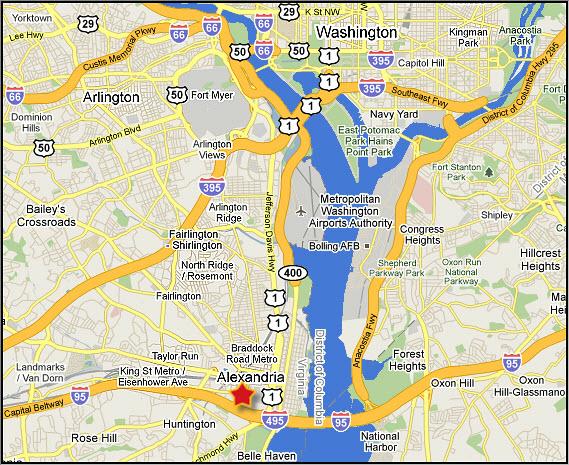
       Like  all officers, a part of Lieutenant John E. Michener's service in the Civil War had nothing to do with the battlefield. Time spent fighting accounts for a small fraction of a soldier's life. For an officer in camp, many logistical matters need to be addressed. In December of 1862, while his regiment was sent to North Carolina to participate in the Goldsboro Expedition, Michener was assigned to a precarious task of leading a transport of soldiers from Alexandria to Fort Monroe, Virginia. But these were not ordinary soldiers. They were stragglers and deserters who had been rounded up and were awaiting the return to their division. Along the trip, Michener kept a potentially volatile situation under control and completed the mission.

       An account of this event  is included in an 1867 brief biographical sketch of Michener's war service as written by author T.J. Simpson called "Prison Life." This two-paragraph narrative is quoted at the end of this post. Michener was tasked with picking up the ship load of deserters and stragglers from Alexandria and returning them to General John J. Peck's Division in southern Virginia.

        Stragglers were those who could not keep up with the rest of their compatriots on a march and dropped out of formation or fell far behind. The reasons for this action are varied. Some hesitant troops were trying to avoid a potential battle up ahead. Others could not withstand the physical demands of a long march. Eventually most rejoined their regiments. 

       Deserters, on the other hand, were those who were caught trying to permanently leave their regiment. Sometimes if caught, they would be subjected to humiliation, even execution. In late 1862, orders were issued to return both categories of soldiers from Camp Convalescent in Alexandria, Virginia to their regiments. Hence, Peck assigned Michener with the job to pick up up these men at the camp in northern Virginia who belonged to his division and bring them to Suffolk.

Execution of Five Union Deserters     LOC


         Camp Convalescent was the temporary home of three kinds of soldiers: the first were men who had recovered from illnesses or wounds at Washington, DC hospitals and were waiting to rejoin their regiment. A second camp was for stragglers and deserters commanded by Lieutenant Stephen H. Balk of the 6th U.S. Cavalry. The third camp was for recruits to the army.

Camp Convalescent
National Museum of Civil War Medicine

       The location of the Camp Convalsecent was described as being on Shuter's (or Shooter's) Hill near Fort Ellsworth. The camp was organized in August of 1862, after a series of battles around Richmond, and was under the command of Brigadier General John P. Slough, the military governor of Alexandria.

        Conditions at Camp Convalescent, also called Camp Misery,  probably had the men there is a surly mood before Michener and others arrived to take them back. One newspaper wrote, "Those not fit for duty are sent to the convalescent camp and placed in little diminutive tents six by seven on the ground. No floors nor straw to spread their blankets on, but the poor fellows just from comfortable quarter in the hospitals are turned into these pens, and compelled to sleep on the cold, damp ground, and this in a climate but little warmer than that of Massachusetts. In these miserable dog kennels the men are obliged to stay until called to to go to their respective regiments. Many of them are not cured, and the exposure here frequently brings on their old complaints and in this condition they are sent to their regiments. For rations they are fed on pork, fresh beef and bread, with occasionally a few potatoes and onions. These articles, together with sugar and coffee, are issued to the men raw, owing to the scarcity of wood. The men have to go out and pick up wood and faggots to cook their meat and boil their coffee. There is no wood to be had within a radius of two miles, and the men are obliged to go that distance for wood, or eat their rations raw. Many are without blankets and overcoats and suffer exceedingly from the inclement weather. Clothing is issued to those needing it when it can be obtained, which is but seldom. There are not less than 6,000 men in different divisions of this convalescent camp and with a few exceptions, all fare the same -- sleep on the ground, live on raw pork and bread, and in this manner eke out a miserable existence. It can hardly be called living -- it is merely staying here. No wonder the men are discouraged and dejected and desert, as they sometimes do." [The Burlington (VT) Free Press, December 11, 1862, p.2]

Camp Convalescent
Library of Congress

         Considering that they missed some of the fighting, stragglers had few defenders. One soldier however noted the life of a straggle could be perilous.

          "One of the saddest sights of the march was the great number of stragglers. We read in the newspapers of so many stragglers picked off by guerillas, or captured and missing, and one naturally supposes that these unlucky ones have willfully strayed from the command, and suffered the penalty for their carelessness and disobedience. But what is the reality? As the column goes hurrying by, you catch a glimpse of a pale face lying by the roadside, faint and weary; a few steps farther on, one with his shoes off, bathing his blistered feet; here is a poor fellow whose summer has been spent in hospital, sick of a fever, and whose little stock of strength is soon exhausted ; these are the stragglers who reach the camp long after the others have made themselves comfortable for the night, and, after a restless night, they start off the next morning with a like prospect before them, until human endurance can hold out no longer." [Charles Eustis Hubbard, The Campaign of the 45th Regiment, Massachusetts Volunteer Militia, 1882, p. 53-4]

          A journalist who was on the march to Goldsboro, NC and back with the 85th Pennsylvania in December of 1862 further explained, "I have spoken of stragglers upon the march. There are two or three distinct kinds of straggling. One is involuntary — the result of sickness or exhaustion. Another comes from laziness or the want of a spirited determination to bear up; and another from cowardice. Do not imagine that because a man enlists and goes to the wars that he necessarily does his whole duty as a soldier. There are no better opportunities for shirking than those afforded the soldier. It was noticeable upon our late march that whenever cannonading commenced at the head of the column, as it did day after day, scores of men commenced falling out and laying down by the side of the road." [Zenas T. Haines, Letters from the 44th Regiment M.V.M, 1863, p. 59]

         The deserters were who were on board the transport with Michener were a different matter. By definition their only goal was to escape military life. When things went badly on the voyage from Camp Convalescent, it would not take much imagination that these men would foment dissension or use any excuse to leave army life (again) if they had the chance.  

Map of Potomac River region showing Alexandria, Aquia Creek and Maryland Point      LOC

     The account, says Simpson was related by "J.E.C.," an assistant sutler with the 85th Pennsylvania. This is probably sutler James Clark.

          From "Prison Life:" "An instance illustrating Lieutenant Michener’s wonderful tact and skill in governing and controlling reckless and desperate men in times of peril and danger is related by J.E.C., assistant sutler of the Eighty-Fifth Pennsylvania Volunteers. In December, 1862, General [John J.] Peck, then in command of the troops at Suffolk, Virginia, detailed Lieutenant Michener to proceed to Alexandria, Virginia, and conduct from that point to Suffolk some two hundred deserters and stragglers belonging to his division. On the arrival of Lieutenant Michener at Alexandria, a number of the men refused to go and, being of a desperate character, much difficulty was apprehended. The assistance of a company of regulars was necessary to get them on board the steamer Thomas P. Swan. The officer in command at Alexandria, General Slough, offered Lieutenant Michener a guard of twenty men to accompany him to Suffolk with his reckless charge, but he declined the offer, stating that he thought he could take them without a guard. Nothing of importance occurred on the voyage until the steamer arrived off Maryland Point where she ran aground on the reefs, or kettle bottoms, as they are called. The men had only been furnished with one day’s rations, sufficient to take them to Fortress Monroe. These were now exhausted; the men became boisterous; a mutiny was threatened; they demanded the keys of the captain’s larder. In this critical moment Lieutenant Michener called the men upon the upper deck and in a brief and persuasive speech calmed their passions and prevailed upon them to wait patiently until relief should come.

Aquia Creek Landing, VA        LOC

        "A signal of distress was then thrown out and two hours later a gunboat came up and attaching a heavy hawser [large rope] to her bulkhead, parted it twice in vain attempts to pull her off. Seeing a schooner some two miles distant, Lieutenant Michener requested the captain of the steamer to send him off in a boat to the schooner, assuring the men that he would go to Aquia Creek, procure a tugboat and rations, and return at once. It was two o’clock P.M. when he left the steamer and did not arrive at Aquia Creek until after midnight. [General Ambrose] Burnside had just commenced his great but disastrous move against Fredericksburg and all was hurry and confusion at Aquia Creek. Lieutenant Michener succeeded, however, in procuring two tugboats and rations and reached the steamer at daybreak next morning. The combined efforts of the two tugboats, however, failed to get the steamer off, and Lieutenant Michener was compelled to return again to Aquia Creek for assistance. The men, however, became desperate, rage and passion burst forth, the lives of the captain and Lieutenant Michener were threatened. All seemed to be lost; it was a moment of dreadful suspense. Finding kind words and remonstrances in vain, Lieutenant Michener sprang to the deck and quickly armed ten of the most reliable and trusty soldiers and assuming a stern and commanding aspect, soon quelled the spirit of revolt. Appointing one of the ten as sergeant in command, with orders to shoot down the first man who should show feelings of revolt, he returned to Aquia Creek, procured a transport, transferred the men from the grounded steamer, started for Fortress Monroe, and arrived safely the next morning." 

       Simpson's account demonstrated Michener's strength as a leader. When the boat became stuck, he used words to calm the situation and took personal charge of trying to find a way to dislodge the Thomas P. Swan. When that attempt failed and the men became more rowdy, Michener resorted to the threat of physical harm and again returned to Aquia, this time for a replacement transport. The Simpson story stated that he had to quickly chose ten men from the group, most likely from among the stragglers who had fallen from the ranks of their regiments due to physical exhaustion and not avoidance of battle. Perhaps even sutler Clark was one of the armed men, since he could be trusted. All with the Union army in disarray following the disastrous battle of Fredericksburg just 15 miles away.

       Although not a heroic chapter from his life in battle, the story nonetheless displayed that Michener commendably pulled off his mission under dangerous circumstances without the loss of life. 

NEXT: John E. Michener's encounter with the Robert Gould Shaw and the famous 54th Massachusetts infantry just prior to their famous assault on Fort Wagner in South Carolina.